TR
TR EN
EN

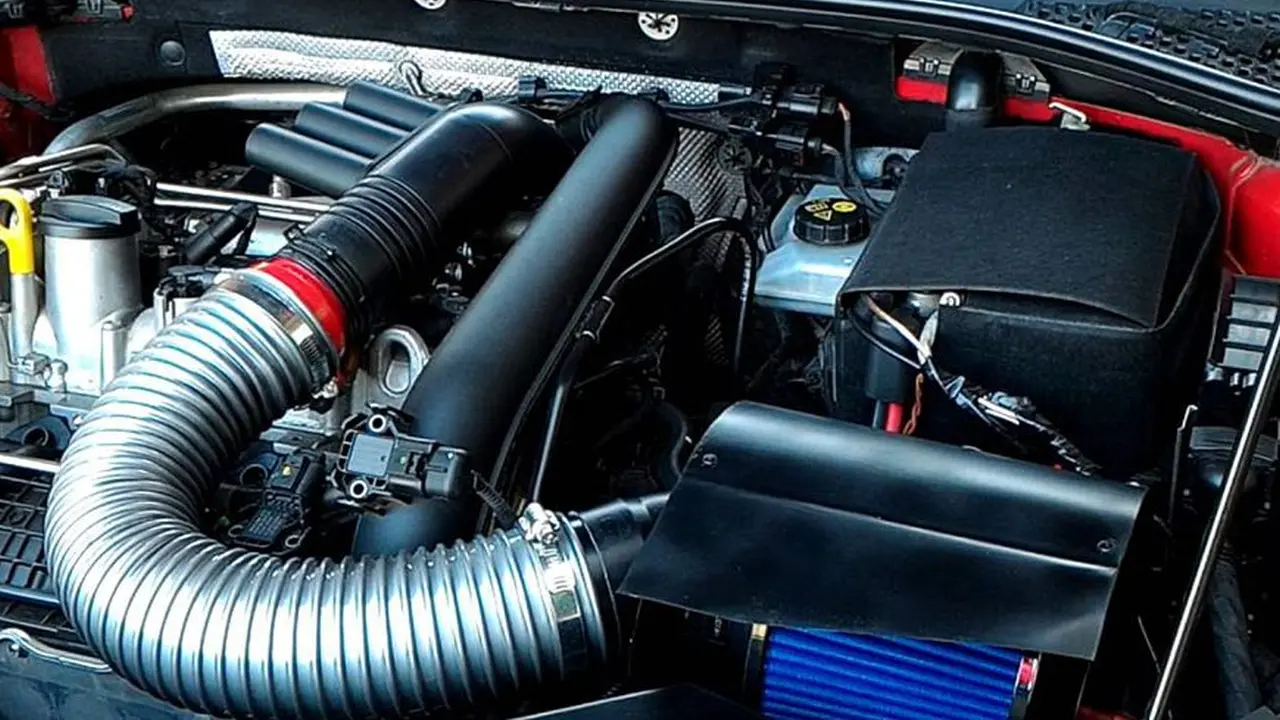
What Is a Performance Air Filter?
A performance air filter is an air filter designed to allow a higher volume of air to enter the engine with less airflow restriction than a conventional factory air filter.
A standard air filter has two primary jobs: supplying the engine with clean air and preventing dust, dirt, sand, and other particles from entering the engine. A performance filter aims to maintain this protection while allowing air to pass through more easily.
There are two main types of performance air filters commonly used in vehicles. The first is a high-flow replacement filter that fits inside the original airbox. The second is an open-cone or aftermarket intake filter, which is generally used together with a modified or completely different intake system.
However, installing a performance air filter does not automatically produce a significant increase in horsepower. Its actual benefit depends on how restrictive the original intake system is and how much air the engine needs.
How Does a Performance Air Filter Work?
An internal combustion engine needs a sufficient supply of air to produce power. As engine speed and load increase, the amount of air required by the engine also increases.
The air filter sits in the intake system and removes contaminants from the incoming air. Because the filter material creates resistance to airflow, the design of the filter has to balance two different requirements:
-
High airflow
-
Effective filtration
A performance filter generally uses a filter material or construction designed to reduce airflow resistance.
However, simply allowing more air to pass through is not enough. A good performance filter must still provide adequate protection against contaminants.
A filter that flows extremely well but provides poor filtration can potentially allow more dust and particles into the engine, which is not a desirable trade-off.
Does a Performance Air Filter Increase Horsepower?
This is one of the most common questions about performance air filters.
The short answer is: sometimes, but not necessarily by a significant amount.
If the original air filter and airbox already provide enough airflow for the engine, replacing the filter with a high-flow model may produce little or no measurable horsepower increase.
Modern engines are designed with carefully engineered intake systems. The air filter is only one part of the system. The airbox, intake pipes, resonators, throttle body, turbocharger, intercooler, and exhaust system can all influence overall engine airflow.
A performance filter can be more useful when the original filter or intake system becomes a restriction at high engine speed and high load.
This is particularly relevant to modified or high-performance engines that require more airflow than the original configuration.
Can a Performance Air Filter Improve Throttle Response?
Some drivers notice a sharper or more responsive throttle after installing a performance air filter.
This can happen when the original intake system has a measurable airflow restriction and the replacement filter reduces that restriction.
However, throttle response is influenced by many other factors, including:
-
Electronic throttle control
-
ECU calibration
-
Fuel delivery
-
Ignition timing
-
Intake air temperature
-
Turbocharger response
-
Engine condition
For this reason, a performance air filter should not automatically be expected to transform throttle response on every vehicle.
The difference may be noticeable on some engines and almost unnoticeable on others.
What Is an Open-Air Performance Filter?
An open-air performance filter, often called a cone filter, is generally installed outside the factory airbox.
Unlike a replacement high-flow filter, an open filter may require modifications to the intake system.
The main advantage is that it can provide a large filter surface area and potentially reduce intake restriction. It can also make the engine's intake sound much more noticeable.
However, there is an important disadvantage: an improperly designed open intake can draw hot air from the engine compartment.
Hot intake air is less dense than cooler air. As a result, the engine may receive less oxygen for a given volume of air.
Therefore, an open filter that flows more air on paper does not necessarily produce better real-world performance if it is exposed to excessive engine-bay heat.
Is an Open Air Filter Always Better Than the Factory Airbox?
No.
This is a common misconception.
Factory airboxes are not necessarily restrictive or poorly designed. Modern manufacturers spend considerable time developing intake systems that balance airflow, filtration, intake temperature, noise, emissions, durability, and water protection.
A properly designed factory airbox can therefore perform better than a poorly installed open filter.
For example, a factory airbox may draw relatively cool air from outside the engine compartment. If an open filter is installed directly next to a hot engine without adequate heat shielding or a proper cold-air duct, intake temperatures can rise.
In such a situation, the open filter may produce a louder intake sound without providing a meaningful performance advantage.
Does a Performance Air Filter Make the Engine Louder?
It can, particularly when an open filter or modified intake system is used.
The factory airbox and intake resonators help suppress intake noise. Removing or modifying these components can make the sound of air entering the engine much more noticeable.
The difference is usually most obvious during hard acceleration and high engine speeds.
However, a louder intake sound does not automatically mean that the engine is producing more power.
More intake noise and more horsepower are not the same thing.
Are Performance Air Filters Useful on Turbocharged Engines?
They can be.
Turbocharged engines generally have a greater demand for airflow because the turbocharger compresses and supplies additional air to the engine.
As boost pressure and engine load increase, the intake system may become more important from an airflow perspective.
A restrictive air filter or intake system can therefore be more relevant on a modified turbocharged engine than on a completely stock naturally aspirated engine.
However, replacing the air filter alone does not automatically create a major increase in turbo engine power.
Turbocharger size, boost pressure, intercooler efficiency, exhaust flow, fuel system capacity, ignition system, and ECU calibration all have a much greater influence on the final result.
Does a Performance Air Filter Reduce Fuel Consumption?
A performance air filter should not be considered a fuel-saving device.
In theory, reducing unnecessary intake restriction can reduce pumping losses under certain operating conditions. However, the actual effect on fuel consumption in normal driving is often small.
Fuel consumption depends on many variables, including:
-
Driving style
-
Traffic conditions
-
Vehicle weight
-
Tire pressure
-
Engine temperature
-
Air conditioning use
-
Engine load
-
Fuel quality
-
ECU calibration
Therefore, installing a performance air filter should not be presented as a guaranteed way to reduce fuel consumption.
If a noticeable fuel-saving effect is expected, other factors should be investigated as well.
Can a Performance Air Filter Damage the Engine?
A high-quality performance air filter that is correctly selected and maintained should not normally damage the engine.
The most important issue is filtration quality.
The purpose of an air filter is not simply to allow air into the engine. It must also prevent abrasive contaminants from entering the cylinders.
A poor-quality or incorrectly maintained filter may allow excessive amounts of dust and dirt to pass through.
Over time, contaminated intake air can contribute to wear of engine components.
Potential problems with an unsuitable filter can include:
-
Poor filtration
-
Increased intake contamination
-
MAF sensor contamination
-
Improper fitment
-
Air leaks around the filter
-
Reduced protection against dust and debris
For this reason, filter quality is at least as important as airflow capacity.
What Are Oiled Performance Air Filters?
Some reusable performance air filters use an oil-treated filter material.
The special filter oil helps the filter material capture contaminants while maintaining airflow.
However, the amount of oil applied is important.
Applying too much oil can potentially contaminate certain mass airflow sensors located downstream of the filter.
A contaminated MAF sensor may provide inaccurate airflow readings to the ECU.
This can contribute to symptoms such as:
-
Rough idle
-
Poor throttle response
-
Increased fuel consumption
-
Reduced engine performance
-
Check Engine Light
-
Fuel-trim-related fault codes
Oiled filters should therefore be cleaned and serviced according to the manufacturer's instructions.
Can a Performance Air Filter Be Washed and Reused?
That depends on the type of filter.
Some performance filters are designed to be cleaned and reused, while others are disposable and should simply be replaced.
Reusable filters should be cleaned using the method and cleaning products recommended by the manufacturer.
Using aggressive chemicals, excessive water pressure, or unsuitable detergents can damage the filter material.
If the filter requires oil after cleaning, the correct type and amount of filter oil should be applied.
Over-oiling the filter can be just as problematic as failing to maintain it.
How Often Should a Performance Air Filter Be Replaced?
There is no universal replacement interval for every performance air filter.
The correct maintenance interval depends on the filter design, manufacturer recommendations, driving conditions, and environment.
A vehicle driven regularly on dusty roads will contaminate its air filter much faster than a vehicle primarily driven in clean urban conditions.
Instead of relying exclusively on mileage, the filter should also be inspected visually.
A heavily contaminated or damaged filter should not continue to be used simply because its scheduled replacement interval has not been reached.
Can a Performance Air Filter Affect the MAF Sensor?
The filter itself does not normally damage the MAF sensor, but certain filter types and maintenance practices can contribute to sensor contamination.
This is particularly relevant to heavily oiled filters.
The MAF sensor measures the amount of air entering the engine. If its sensing element becomes contaminated, the ECU may receive inaccurate airflow information.
This can result in:
-
Unstable idle
-
Poor acceleration
-
Increased fuel consumption
-
Incorrect fuel trims
-
Reduced performance
-
Check Engine Light
Vehicles equipped with sensitive MAF systems should therefore use a filter that is known to be compatible with the vehicle and should follow the correct maintenance procedure.
Can a Performance Air Filter Be Used on an LPG Vehicle?
Yes. Performance air filters can also be used on vehicles equipped with LPG systems.
However, the effect of intake modifications can be more noticeable on some LPG systems because the air-fuel mixture must remain properly calibrated.
Older mixer-type LPG systems can be particularly sensitive to changes in the intake system.
On sequential LPG systems, the LPG ECU and engine ECU can compensate for certain changes, but this does not mean calibration should be ignored.
After making a significant intake modification, it can be useful to check:
-
Idle quality
-
Fuel trims
-
LPG calibration
-
Throttle response
-
Engine fault codes
-
Air-fuel mixture
A performance filter cannot compensate for an incorrectly calibrated LPG system.
What Should You Consider When Buying a Performance Air Filter?
The word “performance” on the packaging should not be the only factor considered.
Important points include:
Filtration efficiency
The filter must provide adequate protection against dust and contaminants.
Airflow capacity
The filter should be capable of supplying the amount of air required by the engine.
Filter surface area
A larger effective filter area can help provide good airflow without requiring an excessively porous filter material.
MAF compatibility
Vehicles equipped with MAF sensors should use a filter and intake configuration that does not create measurement problems.
Heat management
Open filters should be protected from excessive engine-bay heat and, where appropriate, supplied with cooler outside air.
Correct fitment
The filter must seal properly. Even a high-quality filter is ineffective if unfiltered air can bypass it through gaps or poorly fitted intake components.
Maintenance requirements
Check whether the filter is disposable, washable, dry-type, or oil-treated before purchasing it.
Is a Performance Air Filter Worth It?
Whether a performance air filter is worthwhile depends on the vehicle and the purpose of the modification.
For a completely stock daily-driven vehicle, a high-quality factory replacement filter may already provide sufficient airflow. In such a case, a performance filter may offer only a small improvement, if any.
For a modified engine, high-performance turbocharged engine, or an intake system that genuinely restricts airflow, a high-flow filter can become more useful.
The best results come from treating the air filter as one part of the entire intake system rather than as a standalone horsepower upgrade.
A properly selected performance air filter can reduce intake restriction, improve airflow characteristics, and sometimes provide a more responsive or engaging driving experience. However, filtration quality, intake temperature, correct fitment, and overall engine calibration are just as important as airflow capacity.