TR
TR EN
EN

What Is a Blind Spot Warning System and How Does It Work? What Are Its Failures?
A Blind Spot Warning System, also known as Blind Spot Monitoring (BSM) or Blind Spot Detection (BSD), is a driver-assistance system designed to detect vehicles or other objects in areas that are difficult for the driver to see using the mirrors.
The system is particularly useful when changing lanes.
A vehicle traveling alongside your car can sometimes remain outside the effective field of view of the interior and side mirrors. This area is commonly called the blind spot.
The blind spot warning system monitors this area using sensors and alerts the driver when another vehicle is detected.
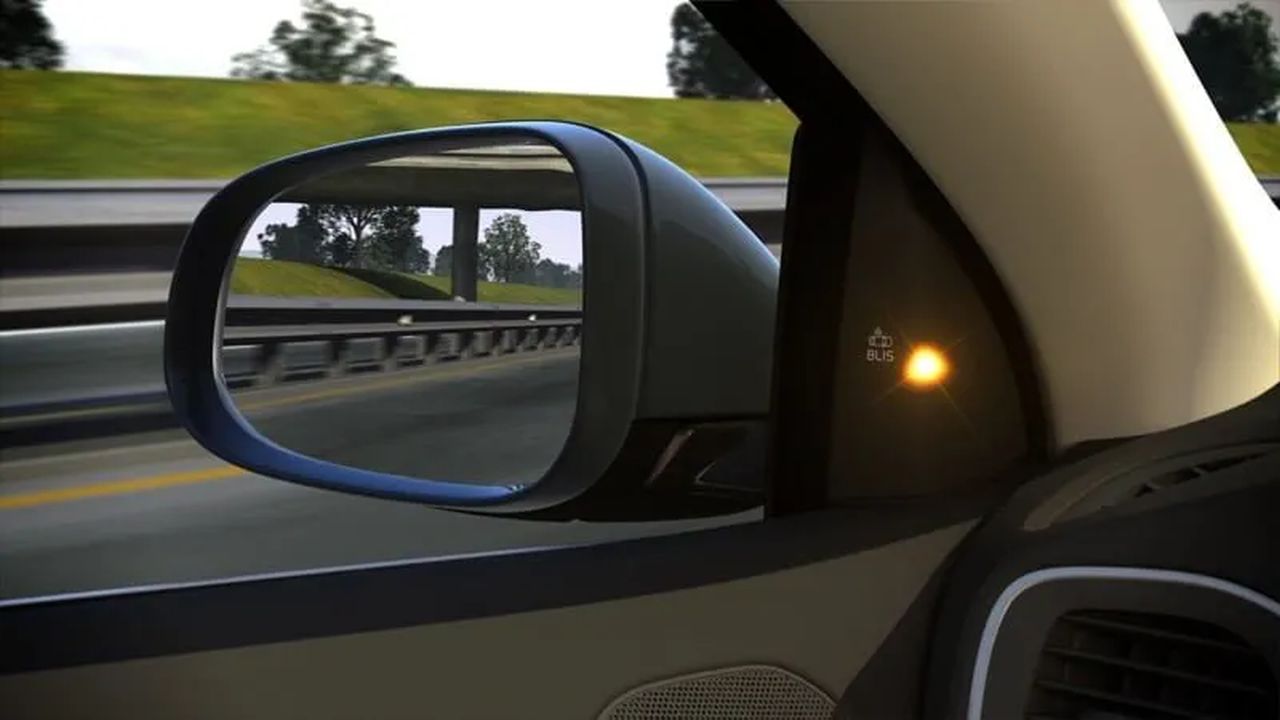
Depending on the vehicle, the warning may appear as a small indicator in the side mirror, a warning message on the instrument cluster, an audible alert, a steering-wheel vibration, or a combination of several warnings.
More advanced systems can also actively assist with steering when the driver attempts to change lanes while another vehicle is detected.
Why Is the Blind Spot Warning System Important?
Changing lanes is one of the most common situations in which a vehicle can enter the path of another road user.
Even when the driver checks the mirrors, a vehicle may temporarily disappear from view.
Blind spot monitoring is designed to provide an additional layer of awareness.
It does not replace:
-
Checking the interior mirror
-
Checking the side mirrors
-
Looking over the shoulder when appropriate
-
Using the turn signal
-
Maintaining a safe following distance
-
Paying attention to motorcycles, bicycles, and other road users
The system is an assistance feature, not a substitute for the driver's responsibility.
How Does a Blind Spot Warning System Work?
Most modern blind spot systems use radar sensors positioned toward the rear corners of the vehicle.
Depending on the vehicle, the sensors may be installed:
-
Behind the rear bumper
-
Inside the rear bumper
-
Near the rear quarter panels
-
In other areas specified by the manufacturer
The radar sensors continuously monitor the areas alongside and behind the vehicle.
When another vehicle enters the monitored area, the system evaluates information such as its position, distance, direction of movement, and relative speed.
If the system determines that the object represents a relevant blind-spot condition, it activates a warning.
A simplified operating sequence is:
Radar sensor → Control module → Object evaluation → Driver warning
The exact architecture differs between manufacturers.
What Sensors Are Used in Blind Spot Monitoring?
Radar is the most common sensing technology for conventional blind spot monitoring.
Many systems use short-range radar sensors positioned at the rear corners of the vehicle.
Some vehicles can also combine information from:
-
Radar sensors
-
Cameras
-
Ultrasonic sensors
-
Wheel-speed sensors
-
Steering-angle information
-
Turn-signal status
-
Vehicle-speed information
The system can combine these signals to determine whether a detected object is relevant to the driver's current maneuver.
Where Are Blind Spot Sensors Located?
The exact location depends on the vehicle.
On many cars, the blind spot radar sensors are positioned behind the rear bumper.
This location allows the sensors to monitor the areas behind and beside the vehicle while remaining protected from direct exposure.
Because the radar sensor may be hidden behind the bumper, the driver may not be able to see it.
This is one reason why bumper damage or incorrect bumper repairs can affect blind spot monitoring even when the sensors themselves appear intact.
What Is the Blind Spot Warning Light?
Many vehicles use a small warning indicator built into the side mirror.
For example, when another vehicle enters the blind spot, an indicator may illuminate.
If the driver activates the turn signal toward the occupied lane, the system may provide a stronger warning.
Depending on the vehicle, this can include:
-
Flashing mirror warning
-
Audible warning
-
Steering-wheel vibration
-
Instrument-cluster message
-
Head-up display warning
The exact warning strategy varies by manufacturer.
What Is the Difference Between Blind Spot Warning and Blind Spot Assist?
These terms should not be confused.
A Blind Spot Warning system primarily informs the driver that another vehicle or object has been detected in the monitored area.
A more advanced Blind Spot Assist or Blind Spot Intervention system may also provide steering or lane-control assistance.
For example, if the driver activates the turn signal and attempts to move into an occupied lane, the vehicle may provide corrective steering assistance.
Not every blind spot system has this capability.
What Are the Symptoms of Blind Spot Warning System Failure?
A malfunctioning blind spot system can produce several different symptoms.
Common signs include:
-
Blind spot system warning light
-
"Blind Spot System Unavailable" message
-
"Blind Spot Assist Fault" message
-
System unavailable warning
-
Blind spot indicators not working
-
False warnings
-
No warning when another vehicle is present
-
Intermittent operation
-
Warning after bumper repair
-
Fault codes stored in a driver-assistance control module
The exact symptom depends on the type of failure.
Blind Spot Monitoring Stops Working
The most obvious symptom is that the blind spot monitoring system becomes unavailable.
The vehicle may display a message such as:
Blind Spot Monitoring Unavailable
or
Blind Spot Assist Fault
The system may then disable itself until the problem is corrected.
This does not necessarily mean the radar sensor itself has failed.
The cause could be related to the sensor, wiring, communication network, power supply, calibration, bumper condition, or another vehicle system.
Blind Spot Warning Light Does Not Illuminate
If another vehicle is clearly alongside your vehicle but the mirror warning indicator does not illuminate, the system may not be detecting objects correctly.
However, the absence of a warning does not immediately prove that the system is defective.
The system may intentionally ignore certain objects depending on:
-
Vehicle speed
-
Relative speed
-
Object position
-
Lane position
-
Direction of travel
-
System operating conditions
The manufacturer's operating conditions should therefore be considered before diagnosing a fault.
False Blind Spot Warnings
A blind spot system can sometimes report an object that the driver does not consider relevant.
This may happen because radar sensors can detect objects other than moving vehicles.
Possible sources include:
-
Metal barriers
-
Guardrails
-
Roadside structures
-
Large signs
-
Parked vehicles
-
Narrow construction areas
-
Certain roadside objects
Temporary false warnings can therefore occur under unusual environmental conditions.
Repeated false warnings, however, should be investigated.
Blind Spot System Works Intermittently
An intermittent fault can be more difficult to diagnose than a complete failure.
The system may work normally in the morning but become unavailable later.
Possible causes include:
-
Moisture
-
Connector corrosion
-
Wiring damage
-
Low system voltage
-
Sensor overheating
-
Communication problems
-
Sensor misalignment
-
Intermittent internal sensor failure
A scan tool capable of communicating with the relevant driver-assistance modules can be especially useful in these cases.
Can a Dirty Bumper Cause Blind Spot Sensor Problems?
Yes, depending on the sensor location and vehicle design.
If radar sensors are positioned behind or near the bumper, contamination or objects attached to the bumper can interfere with the sensor's operating conditions.
Possible problems include:
-
Heavy mud
-
Snow
-
Ice
-
Thick dirt
-
Certain aftermarket accessories
-
Incorrectly fitted bumper components
A clean bumper does not guarantee that the system is functioning correctly, but keeping the sensor area clean is important.
Can a Damaged Bumper Cause Blind Spot Monitoring Failure?
Yes.
A bumper impact can change the position or orientation of a radar sensor.
Even when the bumper appears to have only minor cosmetic damage, the sensor bracket behind it may have moved.
This can cause the sensor's field of detection to change.
Possible consequences include:
-
System unavailable warning
-
Incorrect object detection
-
False warnings
-
Failure to detect vehicles
-
Calibration-related fault codes
This is particularly important after rear-end collisions or bumper replacement.
Why Does Blind Spot Monitoring Need Calibration?
Radar sensors must be positioned accurately.
The system uses the sensor's mounting position and orientation to determine where detected objects are located.
If a sensor is slightly misaligned, the system may incorrectly interpret the position of another vehicle.
Calibration may therefore be required after certain repairs.
Depending on the vehicle, calibration may be necessary after:
-
Radar sensor replacement
-
Rear bumper replacement
-
Sensor bracket replacement
-
Collision repair
-
Certain suspension repairs
-
Significant changes to vehicle ride height
-
Wheel alignment-related repairs on systems specified by the manufacturer
The exact calibration requirements vary by manufacturer.
Can Wheel Alignment Affect Blind Spot Monitoring?
Potentially.
Advanced driver-assistance systems use information about the vehicle's direction and movement.
On some vehicles, wheel alignment or changes in vehicle geometry can influence ADAS sensor calibration requirements.
However, this does not mean every wheel-alignment problem will cause a blind spot warning fault.
The manufacturer's service procedure should determine whether calibration is required.
Can Low Battery Voltage Cause Blind Spot System Failure?
Yes.
Modern driver-assistance systems rely on electronic control modules and communication networks.
If vehicle voltage becomes excessively low, one or more modules may stop operating correctly or record communication-related faults.
A weak battery can therefore sometimes produce multiple electronic warnings at the same time.
If blind spot monitoring suddenly becomes unavailable together with several other electrical warnings, battery voltage and charging-system condition should be considered.
Can a Blown Fuse Cause Blind Spot Monitoring to Stop Working?
Yes.
The blind spot control module or radar sensors receive electrical power through the vehicle's electrical system.
A blown fuse can interrupt this supply.
However, the correct fuse must be identified from the vehicle's service information.
Replacing a blown fuse without investigating why it failed is not always sufficient.
If the replacement fuse fails again, there may be an underlying electrical fault.
Can Wiring Problems Cause Blind Spot Sensor Failure?
Absolutely.
Radar sensors depend on reliable electrical connections and communication.
Possible wiring problems include:
-
Open circuit
-
Short circuit
-
Damaged wiring
-
High resistance
-
Poor ground
-
Corroded connector
-
Loose terminal
-
Water intrusion
A damaged wiring harness can create symptoms that look exactly like a failed radar sensor.
This is why replacing the sensor without testing its wiring can lead to unnecessary expense.
Can Water Damage Blind Spot Sensors?
Yes.
Although radar sensors are designed for automotive environments, water intrusion can still cause problems when sealing, connectors, or housings are damaged.
Water-related faults may occur after:
-
Collision damage
-
Incorrect bumper installation
-
Pressure washing
-
Flood exposure
-
Damaged connector seals
-
Improper repair
Corrosion can also cause an intermittent problem that becomes progressively worse over time.
What Causes Blind Spot Warning System Failure?
Several conditions can cause the system to malfunction.
Common causes include:
Radar sensor failure
The sensor itself may have an internal electronic or hardware problem.
Sensor misalignment
The sensor may have moved after an impact or repair.
Damaged wiring
The wiring between the sensor and control module may be damaged.
Connector corrosion
Moisture can cause corrosion and increase electrical resistance.
Bumper damage
A damaged or incorrectly installed bumper can affect sensor positioning or transmission conditions.
Low battery voltage
Insufficient system voltage can interfere with electronic module operation.
Communication failure
The sensor or control module may lose communication with the vehicle network.
Calibration problems
A sensor may require calibration after replacement or certain repairs.
Software problems
In some cases, a control module may require software updates or manufacturer-specific procedures.
How Is a Blind Spot System Diagnosed?
Proper diagnosis requires more than simply checking whether the warning light is illuminated.
A professional diagnostic process may include:
-
Reading diagnostic trouble codes
-
Checking the relevant control modules
-
Inspecting radar sensors
-
Inspecting wiring and connectors
-
Checking power and ground
-
Checking communication
-
Inspecting bumper condition
-
Checking sensor mounting
-
Performing manufacturer-specified calibration
-
Testing the system under controlled conditions
A scan tool capable of accessing ADAS modules may be required.
A basic OBD scanner may not be able to access all blind spot system faults.
What Diagnostic Trouble Codes Can Be Stored?
The exact codes depend on the manufacturer.
A vehicle may store faults related to:
-
Radar sensor communication
-
Sensor internal failure
-
Sensor power supply
-
Sensor alignment
-
CAN communication
-
Control module communication
-
Calibration
-
Object detection performance
Some manufacturers use standard diagnostic codes, while others use manufacturer-specific codes.
The description displayed by the diagnostic tool should therefore be interpreted together with the vehicle's service information.
Can the Blind Spot System Be Repaired?
Yes, depending on the cause.
If the problem is caused by a damaged connector or wiring issue, repairing the electrical circuit may restore normal operation.
If the sensor itself has failed, replacement may be necessary.
If the sensor is functional but incorrectly aligned, calibration may solve the problem.
Possible repairs include:
-
Wiring repair
-
Connector repair
-
Sensor replacement
-
Bracket replacement
-
Bumper repair or replacement
-
Software update
-
Sensor calibration
The correct repair depends on the diagnostic results.
Does a Blind Spot Sensor Need to Be Replaced After a Minor Accident?
Not necessarily.
A minor bumper impact does not automatically mean the radar sensor must be replaced.
However, the sensor and its mounting bracket should be inspected.
Even if there is no visible sensor damage, its alignment may have changed.
After a collision, the system may require diagnostic testing and calibration according to the manufacturer's repair procedure.
Can Aftermarket Bumpers Affect Blind Spot Monitoring?
Yes.
Blind spot radar sensors are designed to operate through specific materials and mounting arrangements.
An aftermarket bumper may have different:
-
Material
-
Thickness
-
Shape
-
Mounting position
-
Reinforcement structure
These differences can potentially affect radar performance.
This is why replacement bumper parts should be compatible with the vehicle's ADAS requirements.
Can Paint Affect Blind Spot Radar?
It can, depending on the sensor design and the location of the sensor.
If the radar sensor is designed to operate through a particular bumper area, applying unsuitable materials or excessive layers of paint, body filler, metallic coatings, or other substances can potentially interfere with sensor performance.
For this reason, manufacturers often specify particular repair and refinishing procedures around radar sensor areas.
Can Blind Spot Monitoring Be Turned Off?
Many vehicles allow the driver to temporarily disable the blind spot warning system.
The exact procedure varies.
However, turning the system off is not the same as repairing a fault.
If the system repeatedly disables itself or displays a malfunction warning, the cause should be diagnosed.
Is Blind Spot Monitoring the Same as Lane Departure Warning?
No.
These are different driver-assistance functions.
Blind Spot Monitoring primarily monitors areas alongside and behind the vehicle to detect vehicles or other relevant objects.
Lane Departure Warning monitors lane markings and determines whether the vehicle is unintentionally leaving its lane.
Some vehicles combine both functions with other ADAS technologies, but they have different purposes.
Is Blind Spot Monitoring Always Active?
Not necessarily.
The system may have operating conditions.
For example, some systems may only operate above or below particular vehicle speeds, while others may temporarily disable themselves in certain conditions.
The system may also use the turn signal and vehicle speed to determine when a warning is appropriate.
Therefore, not receiving a warning in every situation does not necessarily indicate a malfunction.
Does Blind Spot Monitoring Detect Motorcycles?
It can, but detection performance depends on the vehicle, radar system, motorcycle position, speed, and environmental conditions.
Motorcycles can present a smaller radar target than passenger cars.
They can also move through blind spots quickly.
Therefore, the driver should never assume that the blind spot system will detect every motorcycle in every situation.
Does Blind Spot Monitoring Detect Bicycles and Pedestrians?
Detection capability varies significantly between systems.
Some advanced systems can recognize a wider range of road users, while conventional blind spot monitoring is primarily designed around vehicle detection.
The driver should not rely on the system to detect every pedestrian, bicycle, scooter, or other vulnerable road user.
What Should You Do When the Blind Spot System Fails?
If the vehicle displays a blind spot system malfunction warning, continue driving only when it is safe to do so and remember that the system may no longer provide its normal assistance.
Use the mirrors and direct observation as normal.
If the warning remains active, the system should be diagnosed.
Particular attention should be paid if the warning appears after:
-
A collision
-
Rear bumper replacement
-
Body repair
-
Battery replacement
-
Electrical work
-
Sensor replacement
These events can provide useful clues about the cause.
Final Thoughts
The Blind Spot Warning System is an important driver-assistance technology designed to reduce the risk associated with vehicles traveling in areas that are difficult to see using conventional mirrors.
Modern systems commonly use radar sensors positioned near the rear corners of the vehicle. These sensors monitor the surrounding area and provide a warning when another vehicle enters a relevant blind spot.
A malfunctioning system can produce symptoms such as warning messages, inactive mirror indicators, false warnings, intermittent operation, or complete system unavailability.
The cause is not always a defective radar sensor.
Bumper damage, sensor misalignment, damaged wiring, connector corrosion, low battery voltage, communication problems, incorrect installation, and calibration issues can all cause similar symptoms.
This is particularly important after a bumper repair or collision because the radar sensor may remain physically intact while its mounting position or calibration has changed.
Blind spot monitoring should also never be treated as a replacement for mirrors and direct observation. Its purpose is to provide additional information to the driver, not to eliminate the need for safe driving practices.
When the system reports a fault, the best approach is to read the relevant diagnostic codes, inspect the sensor and wiring, verify power and communication, and perform the manufacturer's required calibration or testing procedures before replacing expensive components.