TR
TR EN
EN

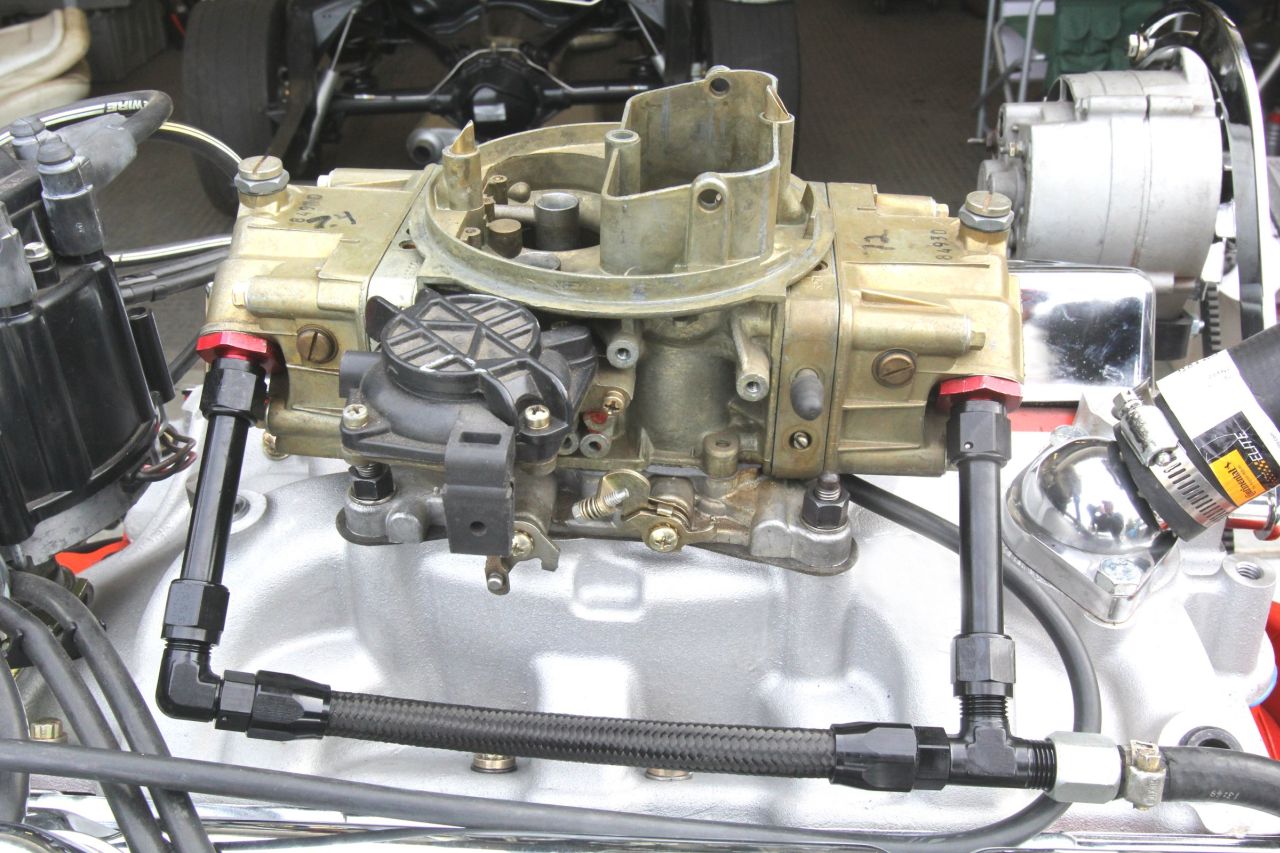
What Is a Carburetor? What Are the Symptoms of Carburetor Failure?
A carburetor is a mechanical device used in many older gasoline engines to mix air and fuel in the correct proportion before the mixture enters the engine cylinders.
Before electronic fuel injection became standard, carburetors were one of the most common methods of supplying fuel to gasoline engines.
Although most modern passenger cars use electronic fuel injection, carburetors are still found in many classic cars, older motorcycles, small engines, generators, lawn equipment, agricultural machinery, and other applications.
The basic purpose of a carburetor is simple:
It must provide the engine with the right amount of fuel and air for the current operating condition.
However, achieving the correct mixture is more complicated than it may initially appear.
The engine needs different amounts of fuel and air when starting from cold, idling, accelerating, cruising, or operating under heavy load. A properly designed carburetor uses mechanical systems such as the venturi, throttle valve, float chamber, jets, accelerator pump, choke, and various passages to respond to these changing conditions.
How Does a Carburetor Work?
A carburetor uses the movement of air through the intake system to draw fuel into the airflow.
As the engine operates, air is pulled through the carburetor toward the intake manifold.
Inside the carburetor is a narrowed passage called a venturi.
When air passes through the venturi, its velocity increases and pressure decreases. This pressure difference allows fuel to be drawn from the carburetor's fuel circuit into the incoming air.
The fuel and air then mix before entering the engine.
The throttle controls how much air can enter the engine.
When the driver presses the accelerator, the throttle opens further, allowing more air into the engine. The carburetor then supplies additional fuel so that the mixture remains suitable for combustion.
This process occurs continuously while the engine is running.
What Are the Main Parts of a Carburetor?
A carburetor contains several components that work together.
Venturi
The venturi is the narrowed section through which intake air passes. It creates the pressure difference required to draw fuel into the airflow.
Throttle valve
The throttle controls the amount of air entering the engine and therefore plays an important role in controlling engine power.
Float chamber
The float chamber stores a small quantity of fuel and helps maintain a relatively constant fuel level.
Float
The float moves according to the fuel level and controls the needle valve that regulates incoming fuel.
Needle and seat
These components control fuel entering the float chamber.
Main jet
The main jet controls fuel delivery during normal running and higher engine loads.
Idle jet or pilot circuit
This circuit supplies fuel when the throttle is nearly closed and the engine is operating at idle or low speed.
Choke
The choke enriches the mixture during cold starting by reducing the amount of air entering the engine.
Accelerator pump
The accelerator pump provides an additional shot of fuel when the throttle is opened quickly. This helps prevent hesitation during sudden acceleration.
Mixture adjustment system
Depending on the carburetor design, an adjustment screw or another mechanism may control the air-fuel mixture at idle or during certain operating conditions.
Why Does a Carburetor Need a Float?
The float system is one of the most important parts of a conventional carburetor.
The engine needs a relatively stable fuel level so that the carburetor can deliver fuel consistently.
As fuel enters the float chamber, the float rises.
When the fuel reaches the specified level, the float moves the needle valve toward its seat and restricts additional fuel entering the chamber.
As fuel is consumed, the fuel level falls and the float moves downward, allowing the needle valve to open again.
If the float becomes damaged, sticks, or is incorrectly adjusted, the fuel level can become too high or too low.
This can significantly affect engine operation.
What Are the Symptoms of Carburetor Failure?
A faulty or incorrectly adjusted carburetor can produce many different symptoms.
Common symptoms include:
-
Difficult starting
-
Engine flooding
-
Hard cold starting
-
Rough idle
-
Stalling
-
Hesitation during acceleration
-
Poor throttle response
-
Engine misfires
-
Loss of power
-
Excessive fuel consumption
-
Black exhaust smoke
-
Lean running
-
Rich running
-
Surging
-
Engine backfiring
-
Fuel leaking from the carburetor
-
Strong gasoline smell
-
Unstable engine speed
The exact symptoms depend on which part of the carburetor has a problem.
Difficult Engine Starting
One of the most common signs of a carburetor problem is difficult starting.
A carbureted engine requires an appropriate air-fuel mixture during cranking.
If the mixture is too lean, there may not be enough fuel for reliable combustion.
If the mixture is too rich, there may be too much fuel and not enough oxygen.
Both situations can make starting difficult.
Possible causes include:
-
Incorrect choke operation
-
Blocked jet
-
Dirty carburetor passages
-
Incorrect float level
-
Fuel delivery problem
-
Vacuum leak
-
Incorrect mixture adjustment
-
Weak accelerator pump
-
Fuel contamination
Hard Cold Starting
Carbureted engines generally require a richer mixture when cold.
The choke system helps achieve this by restricting airflow and increasing the fuel concentration of the mixture.
If the choke does not close properly, the engine may be too lean during cold starting.
If the choke remains closed too long, the mixture may become excessively rich.
This can result in:
-
Long cranking
-
Repeated starting attempts
-
Engine stalling shortly after starting
-
Black smoke
-
Strong fuel smell
Engine Flooding
A flooded engine has received too much fuel relative to the available air.
This can happen when:
-
The choke remains closed
-
The float level is too high
-
The needle valve does not seal correctly
-
Fuel pressure is too high
-
The carburetor is overfilled
-
The accelerator pump is delivering excessive fuel
-
The driver repeatedly pumps the accelerator during starting
A flooded engine may crank normally but fail to start.
The smell of gasoline can sometimes be noticeable around the engine.
Rough Idle
A carburetor that does not provide a stable mixture can cause rough or unstable idle.
The engine may:
-
Shake
-
Vibrate
-
Run unevenly
-
Change RPM repeatedly
-
Stall when the throttle is released
Possible causes include a blocked idle circuit, incorrect mixture adjustment, vacuum leak, incorrect float level, or throttle-related problems.
However, rough idle is not always caused by the carburetor.
Ignition timing, spark plugs, compression, valve adjustment, and intake leaks can produce similar symptoms.
Engine Stalling at Idle
If the idle circuit cannot supply enough fuel, the engine may run normally at higher RPM but stall when the throttle closes.
This can happen when an idle jet or passage becomes partially blocked.
A vacuum leak can produce a similar symptom by allowing unmetered air into the intake system.
This is why cleaning the carburetor without checking for vacuum leaks may not solve an idle problem.
Hesitation During Acceleration
An engine that hesitates when the accelerator is pressed may have a problem with the carburetor's acceleration circuit.
When the throttle is opened suddenly, airflow increases quickly.
If fuel delivery does not increase quickly enough, the mixture can temporarily become too lean.
The accelerator pump is designed to provide additional fuel during this transition.
A damaged accelerator-pump diaphragm, blocked passage, or incorrect adjustment can therefore cause a noticeable hesitation.
Loss of Engine Power
A carburetor problem can also reduce engine performance.
If the engine is not receiving enough fuel at higher load, it may struggle to produce normal power.
Possible causes include:
-
Blocked main jet
-
Restricted fuel passage
-
Low float level
-
Weak fuel supply
-
Incorrect mixture
-
Secondary throttle problem
-
Vacuum-operated secondary fault
-
Dirty air filter
A restricted exhaust or ignition problem can produce similar symptoms, so the entire engine should be evaluated.
Excessive Fuel Consumption
A carburetor that supplies too much fuel can significantly increase fuel consumption.
A rich mixture may be caused by:
-
Incorrect float level
-
Leaking needle valve
-
Choke remaining partially closed
-
Incorrect mixture adjustment
-
Oversized jet
-
Fuel pressure that is too high
-
Damaged enrichment system
The driver may notice that the vehicle uses significantly more fuel than before.
A strong gasoline smell or black exhaust smoke may accompany the problem.
Black Smoke From the Exhaust
Black smoke from a gasoline engine generally indicates that the combustion mixture is excessively rich.
A carburetor that delivers too much fuel can be one possible cause.
Other possibilities include a stuck choke, incorrect float level, leaking needle valve, or excessive fuel pressure.
Black smoke should not be ignored because prolonged rich operation can contaminate engine oil, increase carbon deposits, damage the catalytic converter on equipped vehicles, and increase fuel consumption.
Lean Mixture Symptoms
A carburetor can also supply too little fuel.
A lean mixture contains too much air relative to fuel.
Possible symptoms include:
-
Hesitation
-
Poor acceleration
-
Surging
-
Engine overheating
-
Backfiring through the intake
-
Rough running
-
Difficult starting
-
Loss of power
A lean condition can be caused by a blocked jet, low fuel level, vacuum leak, insufficient fuel supply, or incorrect carburetor adjustment.
Fuel Leakage From the Carburetor
Fuel leaking from a carburetor is a serious problem.
Possible causes include:
-
Stuck float
-
Damaged float
-
Leaking needle valve
-
Excessive fuel pressure
-
Damaged gasket
-
Cracked carburetor body
-
Incorrect assembly
-
Overflow passage problems
Fuel leakage creates a fire hazard and should be addressed before continued operation.
Strong Gasoline Smell
A strong gasoline smell around the vehicle can indicate excessive fuel delivery or an external fuel leak.
If the smell appears around the carburetor, the float system, fuel inlet, gasket surfaces, or fuel lines should be inspected.
A gasoline smell inside a vehicle or around a hot engine should never be treated as normal.
What Causes Carburetor Failure?
Carburetors are mechanical systems, and their operation can deteriorate over time.
Common causes include:
Dirt and deposits
Small jets and passages can become restricted by dirt, varnish, or fuel deposits.
Old gasoline
Fuel that remains in a carburetor for long periods can deteriorate and leave deposits.
Water contamination
Water in fuel can interfere with normal fuel delivery and combustion.
Worn components
Needle valves, gaskets, diaphragms, shafts, and other components can wear over time.
Incorrect adjustment
Improper adjustment can produce a mixture that is too rich or too lean.
Vacuum leaks
Cracked hoses, damaged gaskets, or worn throttle-shaft seals can allow additional air into the intake system.
Incorrect fuel pressure
The fuel pressure must be appropriate for the carburetor design. Excessive pressure can overwhelm the float and needle-valve system.
What Are the Types of Carburetors?
Carburetors can be classified in several different ways.
They can be categorized according to the direction of airflow, the number of barrels, the throttle arrangement, or the method used to control fuel delivery.
Some of the most common types include:
-
Downdraft carburetor
-
Updraft carburetor
-
Sidedraft carburetor
-
Single-barrel carburetor
-
Two-barrel carburetor
-
Four-barrel carburetor
-
Constant-vacuum or variable-venturi carburetor
-
Fixed-venturi carburetor
The design chosen depends on the engine and its intended application.
What Is a Downdraft Carburetor?
A downdraft carburetor is designed so that airflow generally moves downward through the carburetor toward the intake manifold.
This arrangement became very common in automotive applications.
One advantage is that gravity can assist the movement of the air-fuel mixture toward the intake manifold.
Downdraft carburetors were widely used in passenger cars and performance applications.
What Is an Updraft Carburetor?
An updraft carburetor directs airflow upward from the carburetor toward the engine.
This design was used on many older engines, including some automotive, agricultural, industrial, and heavy-equipment applications.
Updraft carburetors are less common in modern automotive applications but remain important when working on historical and vintage engines.
What Is a Sidedraft Carburetor?
A sidedraft carburetor directs airflow horizontally through the carburetor.
This configuration can provide a relatively direct intake path and has been used extensively in performance-oriented engines.
Multiple sidedraft carburetors are also associated with certain classic and racing engine configurations.
They can provide strong airflow characteristics but generally require careful synchronization and adjustment when multiple carburetors are used.
What Is a Single-Barrel Carburetor?
A single-barrel carburetor has one primary airflow passage.
It is relatively simple in design and was commonly used on smaller engines and lower-performance applications.
Its simplicity can make maintenance easier, although its ability to supply a large amount of air and fuel is more limited than that of larger multi-barrel designs.
What Is a Two-Barrel Carburetor?
A two-barrel carburetor has two throttle bores.
Depending on the design, both barrels may operate together or one may function as the primary barrel while the second opens under greater engine demand.
This allows the carburetor to provide good drivability during normal operation while supplying additional airflow when the engine needs more power.
What Is a Four-Barrel Carburetor?
A four-barrel carburetor contains four throttle bores.
Many four-barrel designs use a primary and secondary arrangement.
The primary side is used during normal driving.
The secondary side opens when additional airflow is required.
This allows the engine to operate economically under light load while still having access to greater airflow during acceleration and high-load operation.
Four-barrel carburetors became particularly well known in high-performance and American V8 applications.
What Is a Constant-Vacuum Carburetor?
A constant-vacuum carburetor, also called a constant-velocity or CV carburetor, uses engine vacuum to control the position of a slide or similar airflow-control component.
Unlike a simple mechanically linked throttle arrangement, the slide position responds to airflow demand and pressure conditions.
CV carburetors have been widely used on motorcycles because they can provide smooth throttle response over a broad range of operating conditions.
What Is a Fixed-Venturi Carburetor?
A fixed-venturi carburetor has a venturi whose geometry is essentially fixed.
Fuel delivery is controlled using jets and other circuits designed to respond to changes in airflow and engine operating conditions.
Many traditional automotive carburetors use a fixed-venturi design.
What Is a Variable-Venturi Carburetor?
A variable-venturi carburetor changes the effective airflow area according to engine demand.
This can help maintain suitable airflow velocity across different operating conditions.
The term can describe several different mechanical designs, including systems that use a movable slide or other mechanism.
The exact operating principle depends on the carburetor.
What Is the Difference Between a Carburetor and Fuel Injection?
A carburetor is primarily a mechanical fuel-metering device.
Fuel injection systems use electronically controlled injectors to deliver fuel.
Modern fuel injection systems can use information from sensors such as:
-
Mass airflow sensor
-
Manifold absolute pressure sensor
-
Throttle position sensor
-
Engine coolant temperature sensor
-
Oxygen sensor
-
Crankshaft position sensor
The engine control module uses this information to determine how much fuel should be injected.
Fuel injection generally provides more precise fuel control, especially under changing operating conditions.
This is one of the main reasons modern vehicles moved away from carburetors.
Can a Carburetor Be Repaired?
Yes.
Many carburetors can be cleaned, rebuilt, adjusted, or repaired.
A carburetor rebuild may involve replacing components such as:
-
Gaskets
-
Needle valve
-
Seat
-
Float
-
Diaphragm
-
O-rings
-
Seals
-
Other wear components
However, not every carburetor should automatically be rebuilt.
A severely worn throttle shaft, damaged body, heavily corroded passages, or significant structural damage may make replacement a better option.
Does a Carburetor Need Regular Adjustment?
Some carburetors require periodic adjustment, particularly on older vehicles and engines.
Adjustment requirements depend on the design and condition of the carburetor.
Possible adjustments include:
-
Idle speed
-
Idle mixture
-
Float level
-
Choke operation
-
Accelerator pump
-
Secondary opening
-
Throttle linkage
However, adjustments should not be made randomly.
If an engine suddenly develops a problem, turning mixture screws without diagnosis can hide the real cause.
A blocked jet, vacuum leak, ignition problem, or fuel-pressure issue should be ruled out first.
How Do You Diagnose a Carburetor Problem?
Diagnosis should begin by identifying exactly when the problem occurs.
For example:
-
Only during cold starting
-
Only at idle
-
During sudden acceleration
-
At high RPM
-
Under heavy load
-
After the engine becomes hot
-
After extended storage
This information can help identify the relevant carburetor circuit.
A technician may inspect:
-
Fuel level
-
Float operation
-
Needle valve
-
Jets
-
Fuel passages
-
Choke
-
Accelerator pump
-
Throttle linkage
-
Vacuum hoses
-
Gaskets
-
Fuel pressure
-
Ignition system
The carburetor should not be blamed before other possible causes have been eliminated.
Can a Dirty Carburetor Cause Poor Performance?
Yes.
Even a small amount of contamination can affect the tiny passages and jets inside a carburetor.
A partially restricted jet may reduce fuel delivery enough to cause hesitation or poor acceleration without completely preventing the engine from running.
This is why an engine can sometimes idle reasonably well but perform poorly when the throttle is opened.
Different carburetor circuits operate under different conditions.
Does a Carburetor Have a Fuel Filter?
The fuel system may use a separate fuel filter, and some carburetors also contain a small inlet filter or screen.
The condition of the filter is important because restricted fuel flow can create symptoms that resemble carburetor failure.
A carburetor cannot operate correctly if it does not receive a sufficient and consistent fuel supply.
Can Old Fuel Damage a Carburetor?
Yes.
Old gasoline can oxidize and leave deposits that restrict jets and passages.
Vehicles and equipment that remain unused for long periods are particularly susceptible to this problem.
The fuel may also deteriorate inside the float chamber.
This is why long-term storage requires appropriate fuel-system preparation.
Final Thoughts
A carburetor is a mechanical device that mixes gasoline and air in the proportions required for combustion.
Although carburetors have largely been replaced by electronic fuel injection in modern passenger vehicles, they remain important in classic cars, older motorcycles, small engines, generators, agricultural equipment, and many other applications.
Carburetor problems can produce symptoms such as hard starting, rough idle, stalling, hesitation, loss of power, excessive fuel consumption, black smoke, backfiring, flooding, and fuel leakage.
The cause may be as simple as a dirty jet or incorrect adjustment, but it can also involve a damaged float, worn needle valve, vacuum leak, fuel-pressure problem, or another engine-system fault.
Carburetors are available in many different designs, including downdraft, updraft, sidedraft, single-barrel, two-barrel, four-barrel, fixed-venturi, and constant-vacuum types.
Understanding which type of carburetor is fitted to an engine is important because the operating principle, adjustment procedure, and possible failure points can differ considerably.
When diagnosing a carburetor problem, it is important not to adjust or replace parts based only on symptoms. Fuel supply, ignition, intake leaks, engine compression, and other related systems should also be considered.
A properly maintained and correctly adjusted carburetor can provide reliable engine operation for many years, despite the fact that modern vehicles have largely moved to electronically controlled fuel injection.