TR
TR EN
EN

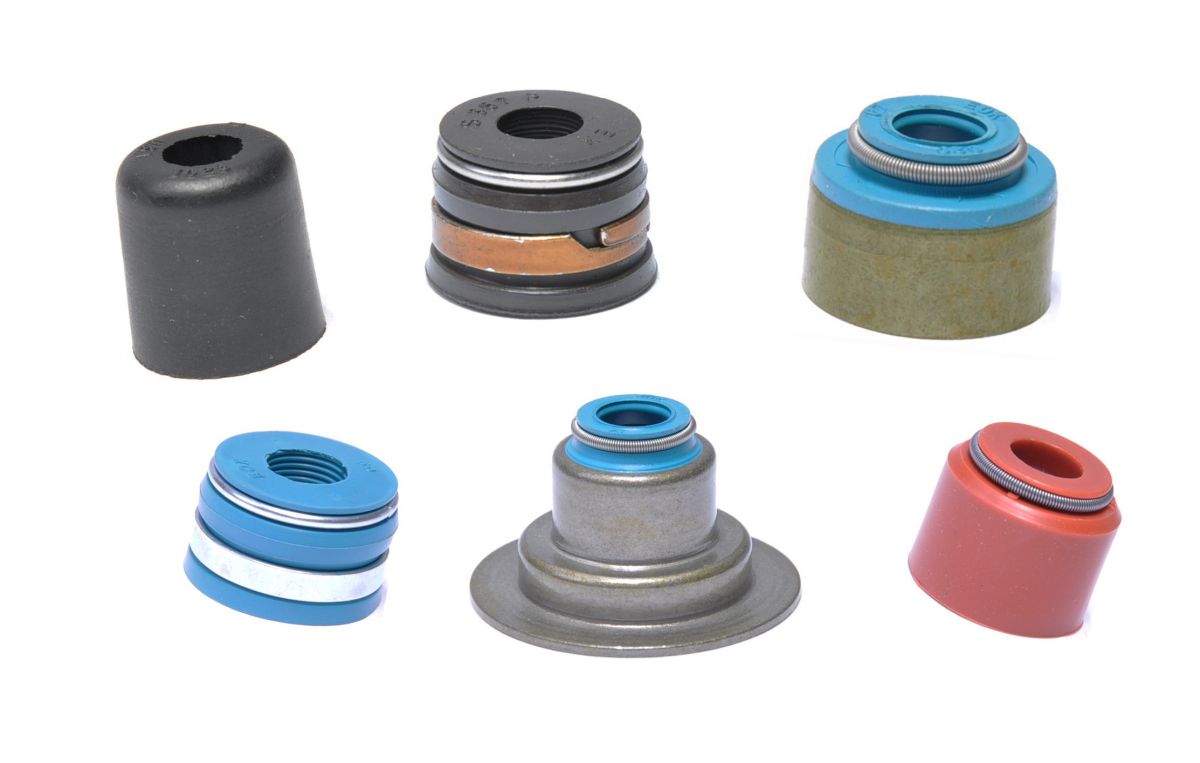
What Is a Valve Stem Seal? What Are the Symptoms of Valve Stem Seal Failure?
The valve stem seal is a small but important component installed in the cylinder head around the valve stem. Its primary purpose is to control the amount of engine oil that reaches the valve stem and valve guide while preventing excessive oil from entering the combustion chamber.
Although valve stem seals are inexpensive compared with major engine components, their failure can cause noticeable oil consumption, blue exhaust smoke, carbon deposits, spark plug fouling, and in severe cases, catalytic converter damage.
A worn valve stem seal is particularly important to distinguish from worn piston rings, valve guide wear, or turbocharger oil leakage because these problems can produce similar symptoms.
What Is a Valve Stem Seal?
A valve stem seal is a small rubber, polymer, or elastomer-based seal fitted around the valve stem in the cylinder head.
The valve stem moves continuously through the valve guide as the engine runs. Engine oil is required to lubricate this area, but too much oil must not enter the combustion chamber.
The valve stem seal performs a balancing function:
-
It allows sufficient lubrication of the valve stem.
-
It limits excessive oil flow down the valve stem.
-
It helps prevent engine oil from entering the combustion chamber.
-
It reduces oil consumption.
-
It helps maintain cleaner combustion.
The design and material of valve stem seals vary between engines.
Where Is the Valve Stem Seal Located?
The valve stem seal is located at the upper end of the valve guide, around the valve stem.
A simplified arrangement is:
Valve spring → valve retainer → valve stem → valve stem seal → valve guide → valve seat → combustion chamber
The exact arrangement varies depending on the engine design.
Because the seal is located inside the cylinder head and underneath the valve-train components, it is not normally visible during a basic engine inspection.
How Does a Valve Stem Seal Work?
Engine oil is circulated throughout the cylinder head to lubricate the camshaft, rocker arms, hydraulic lifters, valve-train components, and valve stems.
The valve stem passes through the valve guide, and a small amount of oil is needed for lubrication.
The valve stem seal controls this oil supply.
If the seal is in good condition, it prevents excessive oil from traveling down the valve stem into the combustion chamber.
When the seal becomes hardened, cracked, worn, or damaged, excessive oil can pass along the valve stem.
That oil can then enter the combustion chamber and burn with the air-fuel mixture.
What Causes Valve Stem Seal Failure?
Valve stem seals operate in a hot and mechanically demanding environment. Several factors can cause them to deteriorate.
Age and Heat
One of the most common causes is aging.
The constant exposure to engine heat causes the sealing material to gradually harden.
After many years of operation, the seal can lose its flexibility and no longer maintain proper contact with the valve stem.
High Engine Temperature
Repeated overheating can accelerate deterioration of the seal material.
An engine that has experienced severe overheating may develop valve stem seal problems earlier than expected.
High Mileage
The valve stem moves thousands of times during normal engine operation.
Over time, the repeated movement combined with heat and oil exposure can wear the sealing lip.
Poor-Quality Oil or Incorrect Oil
Engine oil quality can affect the service life of rubber and elastomer components.
Using an incorrect oil specification or extending oil-change intervals excessively can contribute to sludge and deposits around the valve-train area.
The manufacturer's recommended oil specification should always be followed.
Sludge and Deposits
Heavy engine sludge can interfere with proper oil flow around the cylinder head.
Deposits can also affect valve-train components and contribute to abnormal operating conditions.
Incorrect Installation
Valve stem seals can be damaged during installation.
If a seal is installed incorrectly, cut during installation, installed at the wrong depth, or damaged by the valve stem or a sharp edge, it may begin leaking prematurely.
Worn Valve Guides
Valve stem seals and valve guides work together.
If the valve guide is severely worn, the valve stem can move excessively from side to side.
This excessive movement can prevent the seal from controlling oil properly and can accelerate seal wear.
This is why replacing the valve stem seals without checking the valve guides may not always solve an oil-consumption problem.
What Are the Symptoms of Valve Stem Seal Failure?
Valve stem seal failure can produce several recognizable symptoms.
The most characteristic symptom is often blue or blue-gray exhaust smoke under specific operating conditions, rather than continuous smoke.
Blue Smoke From the Exhaust
Blue exhaust smoke indicates that engine oil is being burned inside the combustion chamber.
A failed valve stem seal can allow oil to enter the combustion chamber through the valve stem area.
The smoke may be particularly noticeable:
-
After the engine has been idling
-
When accelerating after a long period of deceleration
-
During certain cold-start conditions
-
After the vehicle has been parked
-
During changes in engine load
The exact smoke pattern depends on the engine design and the severity of the leak.
Blue Smoke After Startup
A classic symptom of valve stem seal problems can be a brief puff of blue smoke immediately after starting the engine.
While the engine is parked, oil can accumulate in areas around the valve stem.
If the seal is no longer controlling oil properly, some of that oil can enter the combustion chamber.
After the engine starts, the oil burns and produces a temporary blue smoke cloud.
However, startup smoke is not exclusive to valve stem seals.
Other causes must also be considered.
Blue Smoke After Idling
Another common pattern is blue smoke after the engine has been allowed to idle for several minutes.
The engine may appear to run normally during idle, but when the accelerator is pressed, a noticeable cloud of blue smoke may appear.
This can occur because engine operating conditions during idle can promote oil movement through worn valve-stem sealing areas.
Blue Smoke After Deceleration
Blue smoke appearing after prolonged engine braking can also point toward valve-stem-related oil leakage.
During closed-throttle deceleration, intake manifold vacuum can become high on many gasoline engines.
This can encourage oil to move past worn valve stem seals or excessive valve-guide clearance.
When the throttle is opened again, the accumulated oil can burn and produce visible blue smoke.
Increased Engine Oil Consumption
A leaking valve stem seal can cause the engine to consume more oil.
You may notice that the engine oil level gradually falls even though there is no obvious external oil leak.
The amount of oil consumption can range from relatively small to significant depending on the severity of the seal failure.
However, increased oil consumption has many possible causes, including:
-
Piston ring wear
-
Cylinder wear
-
Valve guide wear
-
Turbocharger oil leakage
-
Crankcase ventilation problems
-
External oil leaks
-
Valve stem seal failure
Therefore, oil consumption alone cannot confirm a valve stem seal problem.
Fouled Spark Plugs
On gasoline engines, oil entering the combustion chamber can contaminate the spark plug.
The affected spark plug may develop:
-
Oil deposits
-
Carbon buildup
-
Poor ignition performance
-
Misfires
If only one or two cylinders show unusually heavy oil contamination, this can provide a useful diagnostic clue.
Engine Misfires
Severe oil leakage through the valve stem area can interfere with normal combustion.
The result may be:
-
Rough idle
-
Hesitation
-
Misfires
-
Poor acceleration
-
Increased emissions
A check engine light may appear if the engine control module detects persistent or significant misfires.
However, an engine misfire should never automatically be blamed on valve stem seals.
Ignition coils, spark plugs, injectors, compression problems, fuel pressure, air leaks, and other faults can cause the same symptom.
Rough Idle
If oil contamination becomes severe enough to affect combustion, the engine may run unevenly at idle.
The driver may notice:
-
Engine vibration
-
Uneven idle speed
-
Occasional misfires
-
Poor throttle response
In mild cases, valve stem seal failure may cause oil consumption and smoke without producing any noticeable idle problem.
Reduced Engine Performance
A severely contaminated combustion chamber or fouled spark plug can affect engine performance.
Possible symptoms include:
-
Poor acceleration
-
Reduced throttle response
-
Engine hesitation
-
Reduced power
-
Increased fuel consumption
These symptoms generally appear after the oil leakage has become significant.
Carbon Deposits
Oil entering the combustion chamber can contribute to carbon deposits.
Over time, these deposits can accumulate on:
-
Pistons
-
Combustion chambers
-
Valves
-
Spark plugs
Excessive deposits can affect combustion and may contribute to pre-ignition, knocking, or other combustion abnormalities depending on the engine.
Catalytic Converter Damage
Burning engine oil sends oil-derived combustion products into the exhaust system.
Long-term excessive oil consumption can contaminate and overburden the catalytic converter.
This can eventually contribute to reduced catalyst efficiency and emissions-related faults.
A catalytic converter problem caused by oil consumption should therefore be treated as a consequence of the underlying engine problem rather than simply replacing the converter.
Can a Bad Valve Stem Seal Cause White Smoke?
Normally, valve stem seal failure produces blue or blue-gray smoke, not true white coolant smoke.
White exhaust smoke can be associated with coolant entering the combustion chamber, particularly when it is thick and persistent after the engine reaches operating temperature.
Blue smoke generally points more toward oil consumption.
Color can be difficult to judge under different lighting conditions, so other diagnostic evidence should also be considered.
Can a Bad Valve Stem Seal Cause Black Smoke?
A valve stem seal does not normally cause black exhaust smoke.
Black smoke generally indicates excessive fuel relative to available air or incomplete combustion.
Possible causes include:
-
Rich fuel mixture
-
Faulty injectors
-
MAF sensor problems
-
Fuel pressure problems
-
Restricted air intake
-
Other fuel or air-management problems
Valve stem seal problems are primarily associated with oil consumption and blue smoke.
Valve Stem Seal vs. Piston Ring Failure
This is one of the most important diagnostic distinctions.
Both worn piston rings and worn valve stem seals can cause:
-
Blue exhaust smoke
-
Oil consumption
-
Carbon deposits
-
Fouled spark plugs
However, the smoke pattern can provide clues.
Valve stem seal problems often produce smoke during conditions such as:
-
Startup
-
After extended idling
-
After deceleration followed by acceleration
Piston ring problems can produce more persistent oil consumption and smoke, particularly under acceleration and load.
These patterns are clues rather than absolute rules.
A compression test, leak-down test, crankcase pressure assessment, and inspection of the cylinder head may be required.
Valve Stem Seal vs. Valve Guide Wear
The valve stem seal controls oil flow.
The valve guide supports and aligns the valve stem.
If the valve guide is worn, the valve can move excessively inside the guide.
This movement can damage or overwhelm the valve stem seal and allow oil into the combustion chamber.
Therefore, a proper cylinder-head inspection should consider both components.
Replacing only the seal may not provide a lasting repair if the valve guide clearance is already excessive.
Valve Stem Seal vs. Turbocharger Oil Leakage
Turbocharged engines require additional attention because a leaking turbocharger can also cause blue exhaust smoke and oil consumption.
Turbocharger oil leakage may result in oil entering the intake or exhaust system.
Possible accompanying symptoms include:
-
Increased oil consumption
-
Blue smoke
-
Turbocharger noise
-
Reduced boost
-
Oil accumulation in charge-air components
-
Poor engine performance
If a turbocharged engine produces blue smoke, the turbocharger should be inspected before assuming the problem is the valve stem seals.
How Are Valve Stem Seals Diagnosed?
Diagnosis should begin by determining the exact pattern of oil consumption and exhaust smoke.
Observe When the Smoke Appears
The timing of the smoke is important.
A technician may observe the exhaust:
-
Immediately after startup
-
After several minutes of idling
-
During acceleration
-
During engine braking
-
After deceleration
-
Under heavy engine load
The pattern can help narrow down the possible cause.
Check Engine Oil Consumption
The actual oil consumption should be measured rather than estimated.
The engine should be checked for external oil leaks before concluding that oil is being burned internally.
Inspect the Spark Plugs
Removing the spark plugs can provide useful information.
If one cylinder has significantly different deposits from the others, that cylinder may have a localized oil-control or combustion problem.
Spark plug appearance should be interpreted together with other diagnostic tests.
Perform a Compression Test
A compression test can help identify cylinder sealing problems.
However, normal compression does not necessarily rule out valve stem seal failure.
Valve stem seals primarily control oil rather than cylinder compression.
Perform a Leak-Down Test
A leak-down test can help identify problems involving:
-
Intake valves
-
Exhaust valves
-
Piston rings
-
Cylinder sealing
It is particularly useful when oil consumption is accompanied by low compression or suspected valve leakage.
Inspect the Valve Train
If the cylinder head is accessible, the valve stem seals can be visually inspected for:
-
Hardening
-
Cracking
-
Damage
-
Incorrect installation
-
Loss of sealing tension
The valve stems and guides should also be checked.
Measure Valve Guide Clearance
This is important because excessive valve guide clearance can create symptoms similar to valve stem seal failure.
The valve stem and guide should be measured using appropriate precision tools and compared with the manufacturer's specifications.
Can Valve Stem Seals Be Replaced Without Removing the Cylinder Head?
On some engines, yes.
Depending on the engine design, valve stem seals can sometimes be replaced with the cylinder head still installed.
Specialized tools and a method for preventing the valve from falling into the cylinder are typically required.
Compressed air or an appropriate cylinder-support method may be used depending on the manufacturer's procedure.
However, this is highly engine-specific.
If the valve guides, valve seats, valves, or other cylinder-head components also require repair, cylinder-head removal may be necessary.
How Are Valve Stem Seals Replaced?
The exact procedure varies significantly between engines.
A typical repair may involve:
-
Removing the necessary valve-train components
-
Positioning the engine correctly
-
Preventing the valve from dropping into the cylinder
-
Removing the valve spring
-
Removing the old valve stem seal
-
Inspecting the valve stem and guide
-
Installing the correct replacement seal
-
Reinstalling the valve spring and retainer
-
Reassembling the valve-train
-
Checking valve operation
-
Starting the engine and checking for leaks and smoke
Correct installation is extremely important because a damaged new seal can leak almost immediately.
How Long Do Valve Stem Seals Last?
There is no universal replacement interval.
Valve stem seals are generally replaced when symptoms or inspection indicate that they have deteriorated.
Their service life depends on:
-
Engine temperature
-
Oil quality
-
Engine design
-
Mileage
-
Valve-train condition
-
Maintenance
-
Seal material
-
Previous overheating
Many valve stem seals can last for a very long time, but aging eventually causes the sealing material to harden.
Can a Bad Valve Stem Seal Damage the Engine?
A leaking valve stem seal may not immediately cause catastrophic engine failure, but prolonged oil consumption should not be ignored.
Continued oil burning can contribute to:
-
Carbon deposits
-
Spark plug fouling
-
Misfires
-
Catalytic converter damage
-
Increased emissions
-
Low engine oil level
If the engine is allowed to operate with insufficient oil, the consequences can become much more serious.
Can You Drive With Bad Valve Stem Seals?
A vehicle may continue to run with moderately worn valve stem seals, but continued driving is not ideal.
If oil consumption is significant, the oil level should be monitored closely.
The vehicle should be inspected promptly if you notice:
-
Heavy blue smoke
-
Rapid oil loss
-
Frequent misfires
-
Low oil pressure
-
Severe engine performance problems
-
Catalytic converter-related faults
The most important risk is allowing the engine oil level to become dangerously low.
How Can Valve Stem Seal Problems Be Prevented?
Valve stem seals naturally wear over time, but proper engine maintenance can help extend their service life.
Important practices include:
-
Use the correct engine oil specification.
-
Change the oil at the recommended interval.
-
Maintain the correct oil level.
-
Prevent engine overheating.
-
Keep the cooling system in good condition.
-
Repair excessive oil consumption promptly.
-
Maintain the crankcase ventilation system.
-
Use quality replacement seals during repairs.
-
Inspect valve guides when rebuilding the cylinder head.
Final Thoughts
The valve stem seal is a small component, but it plays an essential role in controlling engine oil inside the cylinder head.
When the seal becomes hardened, cracked, worn, or damaged, excessive oil can travel along the valve stem and enter the combustion chamber. The most recognizable symptoms are blue exhaust smoke, increased oil consumption, spark plug fouling, carbon deposits, and sometimes misfires or rough running.
One of the most useful diagnostic clues is when the blue smoke appears. Smoke immediately after startup, after extended idling, or following engine braking can point toward valve-stem-related oil leakage.
However, valve stem seal failure should not be diagnosed from smoke color alone. Worn valve guides, piston rings, cylinder wear, turbocharger oil leakage, and crankcase ventilation problems can produce similar symptoms.
A proper diagnosis combines smoke-pattern observation, oil-consumption measurement, spark plug inspection, compression and leak-down testing, and, when necessary, direct inspection of the valve stem seals and valve guide clearance.
Replacing the seals can be a relatively straightforward repair on some engines, while others require substantial cylinder-head work. The correct repair method depends entirely on the engine design and the condition of the surrounding valve-train components.