TR
TR EN
EN

Why Doesn't the Reverse Light Work?
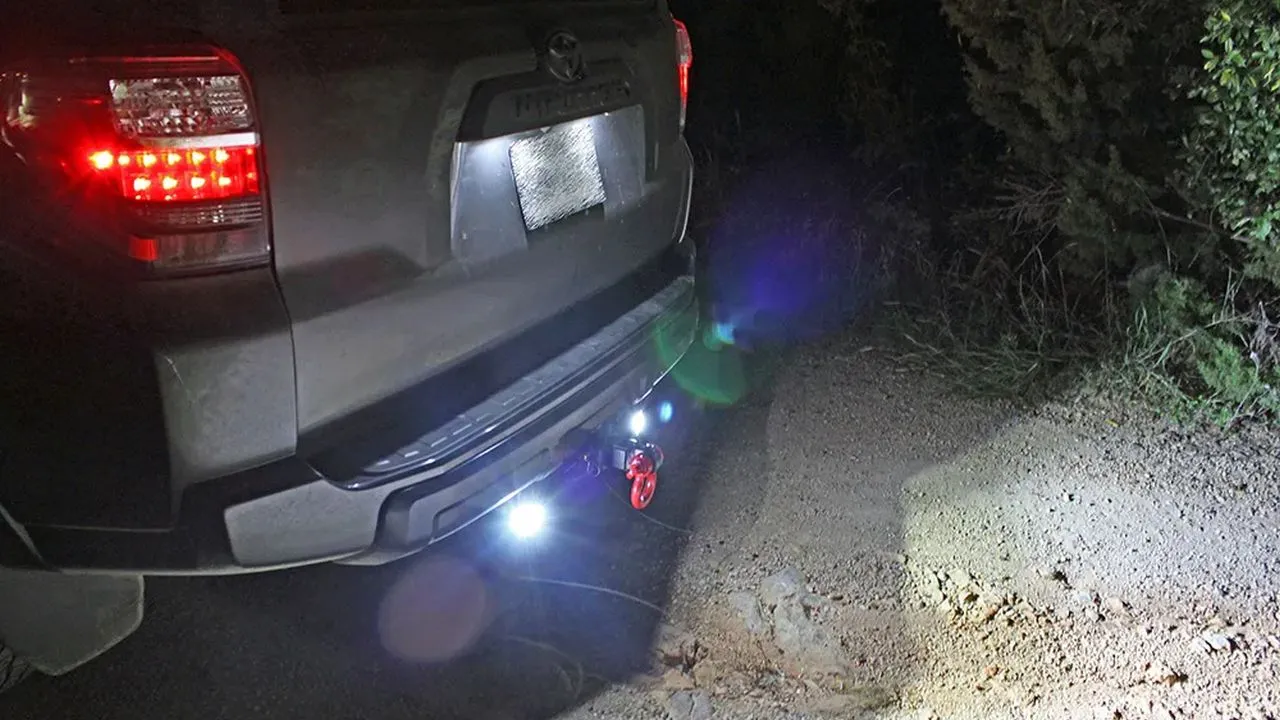
The reverse lights are an important part of a vehicle's lighting and safety system. They illuminate when the driver selects reverse gear and also warn other road users that the vehicle is moving or preparing to move backward.
When the reverse light does not come on, the problem may be as simple as a burned-out bulb. However, a faulty fuse, damaged wiring, a defective reverse light switch, a transmission problem, or an electronic control module can also prevent the lights from working.
The exact cause depends largely on whether the vehicle has a manual transmission, conventional automatic transmission, automated manual transmission, or electronically controlled transmission.
What Are Reverse Lights?
Reverse lights are usually white lights located at the rear of the vehicle.
Their primary purposes are to:
-
Illuminate the area behind the vehicle.
-
Inform pedestrians and other drivers that reverse gear has been selected.
-
Improve visibility when reversing at night or in poorly lit areas.
-
Provide a visual indication that the vehicle is moving backward.
Most vehicles have one or two reverse lights, depending on the vehicle's design and market configuration.
The Most Common Reasons Reverse Lights Do Not Work
If the reverse lights remain off when reverse gear is selected, several components should be considered.
The most common causes include:
-
Burned-out reverse light bulb
-
Blown fuse
-
Faulty reverse light switch
-
Damaged wiring
-
Corroded or loose electrical connector
-
Poor ground connection
-
Faulty transmission range sensor
-
Gear selector position sensor problem
-
Transmission control system fault
-
Body control module or lighting control module problem
-
Incorrectly adjusted switch
-
LED light assembly failure
The first step is determining whether one reverse light or all reverse lights are affected.
If Only One Reverse Light Is Not Working
When one reverse light works but the other does not, the problem is usually local to the non-working side.
Possible causes include:
Burned-out bulb
A conventional bulb can simply reach the end of its service life.
Faulty LED
On vehicles with LED rear light assemblies, the problem may involve an individual LED, an internal circuit board, or the entire lamp assembly.
Poor connector contact
Moisture, corrosion, or a loose terminal can interrupt electrical power to the lamp.
Damaged wiring
A broken wire near the lamp housing or trunk/tailgate area can cause one side to stop working.
Poor ground
A poor ground connection can cause dim, intermittent, or completely inoperative lighting.
If the other reverse light works normally, a blown fuse or transmission switch is generally less likely because these components often affect the reverse-light circuit as a whole.
If Both Reverse Lights Do Not Work
When both reverse lights stop working at the same time, the diagnosis should move upstream toward components shared by both lamps.
Possible causes include:
-
Blown fuse
-
Faulty reverse light switch
-
Transmission range sensor problem
-
Wiring fault
-
Missing power supply
-
Control module problem
-
Gear selection signal problem
The bulb should still be checked, but if both lights fail simultaneously, it is less likely that two conventional bulbs happened to burn out at exactly the same time.
A Burned-Out Reverse Light Bulb
This is one of the simplest explanations.
Conventional incandescent bulbs contain a filament that eventually wears out.
Before replacing the bulb, it is useful to inspect the socket and connector. If the socket shows signs of overheating or corrosion, simply installing a new bulb may not permanently solve the problem.
If the replacement bulb fails again shortly afterward, the underlying electrical problem should be investigated.
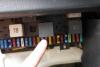
Blown Fuse
The reverse-light circuit may be protected by a fuse.
If the fuse is blown, electrical power may not reach the reverse lights.
However, replacing a blown fuse without investigating why it failed is not always appropriate.
A fuse normally blows because the circuit has experienced excessive current. Possible causes include:
-
Short circuit
-
Damaged wiring
-
Water intrusion
-
Faulty lamp assembly
-
Incorrect bulb
-
Internal component failure
If a replacement fuse blows again, repeatedly installing new fuses is not a solution. The circuit should be diagnosed for the underlying fault.
Faulty Reverse Light Switch
Many manual-transmission vehicles use a reverse light switch, sometimes called a reverse gear switch or backup light switch.
This switch is usually installed on the transmission.
When reverse gear is selected, the mechanism inside the transmission activates the switch. The switch then completes or sends the electrical signal required to turn on the reverse lights.
If the switch fails, the transmission can operate normally while the reverse lights remain off.
This is an important distinction: a vehicle can shift into reverse normally even when the reverse light switch is defective.
How Does a Reverse Light Switch Work?
The basic system is relatively simple on many older or conventional vehicles.
The circuit may work approximately like this:
Ignition power → fuse → reverse switch → reverse lights → ground
When reverse gear is selected, the switch changes its electrical state and allows current to reach the lamps.
Modern vehicles may use a more complicated architecture.
Instead of directly powering the lamps through a mechanical switch, the transmission or gear selector may send a reverse-position signal to an electronic control module. The module then commands the rear lights.
Therefore, not every modern vehicle has a traditional two-wire mechanical reverse switch.
Automatic Transmission Reverse Light Problems
Automatic transmissions can use a transmission range sensor, also known as a transmission position sensor or inhibitor switch.
This sensor informs the vehicle's control system about the selected transmission position:
-
Park
-
Reverse
-
Neutral
-
Drive
-
Other available positions
If the vehicle does not correctly recognize that the transmission is in Reverse, the reverse lights may remain off.
Depending on the vehicle, other symptoms may occur at the same time, such as:
-
Incorrect gear indication
-
Starting problems
-
Delayed engagement
-
Transmission warning light
-
Gear selection errors
However, these symptoms are not present on every vehicle.
Manual Transmission Reverse Light Problems
Manual vehicles commonly use a dedicated reverse light switch mounted on the transmission.
If the vehicle shifts into reverse normally but the reverse lights do not illuminate, the switch and its wiring are important diagnostic points.
A switch can fail because of:
-
Internal electrical wear
-
Mechanical damage
-
Contamination
-
Connector corrosion
-
Wiring problems
-
Incorrect adjustment
The exact switch design varies between vehicle manufacturers and transmission types.
Gear Selector Problems
In some modern vehicles, the gear selector itself communicates electronically with the transmission or body control system.
If the vehicle fails to recognize the selected position, the reverse lights may not activate.
For example, the transmission may mechanically engage reverse while the electronic system does not correctly receive the reverse-position signal.
This is one reason why diagnosing modern reverse-light problems can require a scan tool rather than simply replacing a bulb or switch.
Wiring and Connector Problems
Electrical wiring is often overlooked.
A reverse-light circuit can develop problems because of:
-
Broken wires
-
Chafed insulation
-
Corrosion
-
Loose terminals
-
Water intrusion
-
Previous accident damage
-
Poor aftermarket electrical work
The wiring near the trunk, tailgate, or rear lamp assembly can be particularly vulnerable to repeated movement on some vehicles.
Intermittent reverse lights can be a strong indication of a wiring or connector problem.
Poor Ground Connection
A lamp requires a proper electrical path for current to flow.
If the ground connection is corroded, loose, or damaged, the reverse light may:
-
Remain completely off
-
Become very dim
-
Flicker
-
Work intermittently
A poor ground can sometimes create unusual behavior in other rear lights as well.
For this reason, the ground circuit should be checked rather than assuming that the bulb itself is defective.
LED Reverse Light Problems
Modern vehicles increasingly use LED lighting instead of conventional bulbs.
LED reverse lights can have advantages such as:
-
Longer service life
-
Lower electrical consumption
-
Faster illumination
-
Compact design
However, an LED lamp is not necessarily as simple to replace as a conventional bulb.
Depending on the vehicle, the LED may be integrated into the rear light assembly.
A failure can therefore involve:
-
LED element
-
Internal circuit board
-
Driver electronics
-
Connector
-
Wiring
-
Control module
In such cases, the correct repair may involve replacing a component or the complete lamp assembly, depending on the manufacturer's design.
Can a Weak Battery Cause Reverse Lights Not to Work?
A weak battery is not normally the first thing to suspect when the reverse lights do not illuminate.
However, modern vehicles contain numerous electronic control modules, and abnormal system voltage can sometimes cause electronic faults.
If the vehicle also has:
-
Multiple warning lights
-
Electrical malfunctions
-
Starting problems
-
Intermittent electronic issues
then battery and charging-system voltage may be worth checking.
A reverse light that is consistently inoperative with an otherwise healthy electrical system is more likely to have a localized circuit or control problem.
How to Diagnose Reverse Lights That Do Not Work
Diagnosis should begin with the simplest possibilities before moving toward the transmission or electronic control system.
1. Check whether one or both lights are affected
This immediately helps narrow down the possible causes.
2. Inspect the bulb
If the vehicle uses replaceable bulbs, check the correct bulb type and condition.
3. Check the fuse
Locate the fuse associated with the reverse or backup light circuit and inspect it according to the vehicle's documentation.
4. Inspect the lamp socket and connector
Look for corrosion, moisture, overheating, loose terminals, or physical damage.
5. Check the wiring
Inspect the circuit between the transmission/selector system and the rear lights.
6. Check the reverse signal
On vehicles with a conventional reverse switch, the switch circuit can be diagnosed according to the manufacturer's procedure.
On electronically controlled vehicles, a scan tool may be required to determine whether the vehicle recognizes Reverse correctly.
7. Check the control module
If the vehicle uses body or lighting control electronics, diagnostic trouble codes and live data may provide useful information.
Can You Test the Reverse Light Switch With a Multimeter?
A reverse light switch can sometimes be tested with a multimeter, but the correct method depends on the switch design.
Some switches operate as simple on/off contacts. Others are part of a more complex electronic circuit.
For a conventional switch, the expected electrical state should be compared with the manufacturer's specifications when reverse gear is selected and when it is not selected.
The switch should not be tested by blindly applying voltage or shorting terminals, especially on modern vehicles where the circuit may be monitored by an electronic control module.
Why Do Reverse Lights Work Sometimes and Not Others?
An intermittent reverse light usually points toward a connection, switch, wiring, or electronic signal problem.
Possible causes include:
-
Loose connector
-
Corroded terminal
-
Damaged wire
-
Failing reverse switch
-
Transmission position sensor issue
-
Gear selector signal problem
-
Control module communication problem
If gently moving the gear selector causes the reverse light to flicker, that may provide a useful diagnostic clue, but it does not by itself prove that the selector is faulty.
Reverse Lights Stay On Even When Reverse Is Not Selected
The opposite problem can also occur.
If the reverse lights remain illuminated after leaving reverse gear, possible causes include:
-
Stuck reverse light switch
-
Incorrectly adjusted switch
-
Faulty transmission range sensor
-
Gear selector position problem
-
Wiring short circuit
-
Control module fault
On a manual transmission, a mechanically stuck switch can cause the lights to remain on.
On electronically controlled vehicles, an incorrect Reverse signal may cause the same symptom.
Can a Reverse Light Problem Cause a Vehicle to Fail Inspection?
Potentially, yes.
Lighting requirements and inspection rules vary by country and vehicle type. In many jurisdictions, required rear lighting must operate correctly.
A vehicle with an inoperative reverse lamp may therefore have an inspection issue depending on local regulations and the exact vehicle configuration.
For a vehicle being prepared for inspection, it is advisable to repair any non-functioning reverse light rather than assuming it is unimportant.
Why Should You Repair a Non-Working Reverse Light?
A reverse light is not simply a convenience feature.
When reversing at night, it provides useful illumination behind the vehicle and gives pedestrians and other road users an immediate visual warning.
A vehicle can mechanically and electrically operate normally while still having an important safety-related lighting fault.
For that reason, a failed reverse light should be repaired as soon as reasonably possible.
Final Thoughts
When a reverse light does not work, the cause can range from a simple burned-out bulb to a more complex transmission-position or electronic control problem.
If only one light is out, the bulb, socket, connector, wiring, or lamp assembly should be investigated first.
If both reverse lights are out, the diagnosis should also include the fuse, reverse light switch, transmission range sensor, reverse signal, wiring, and relevant control modules.
Manual-transmission vehicles often use a dedicated reverse light switch, while many modern automatic vehicles rely on transmission position sensors and electronic control systems.
The most important point is not to replace parts based solely on the symptom. Determine whether the vehicle is actually recognizing Reverse, then follow the electrical signal from the transmission or control system toward the rear lamps.
A systematic diagnosis is usually faster, cheaper, and more reliable than replacing the bulb, switch, or control module without confirming the actual cause.