TR
TR EN
EN

What Is a Fuel Temperature Sensor?
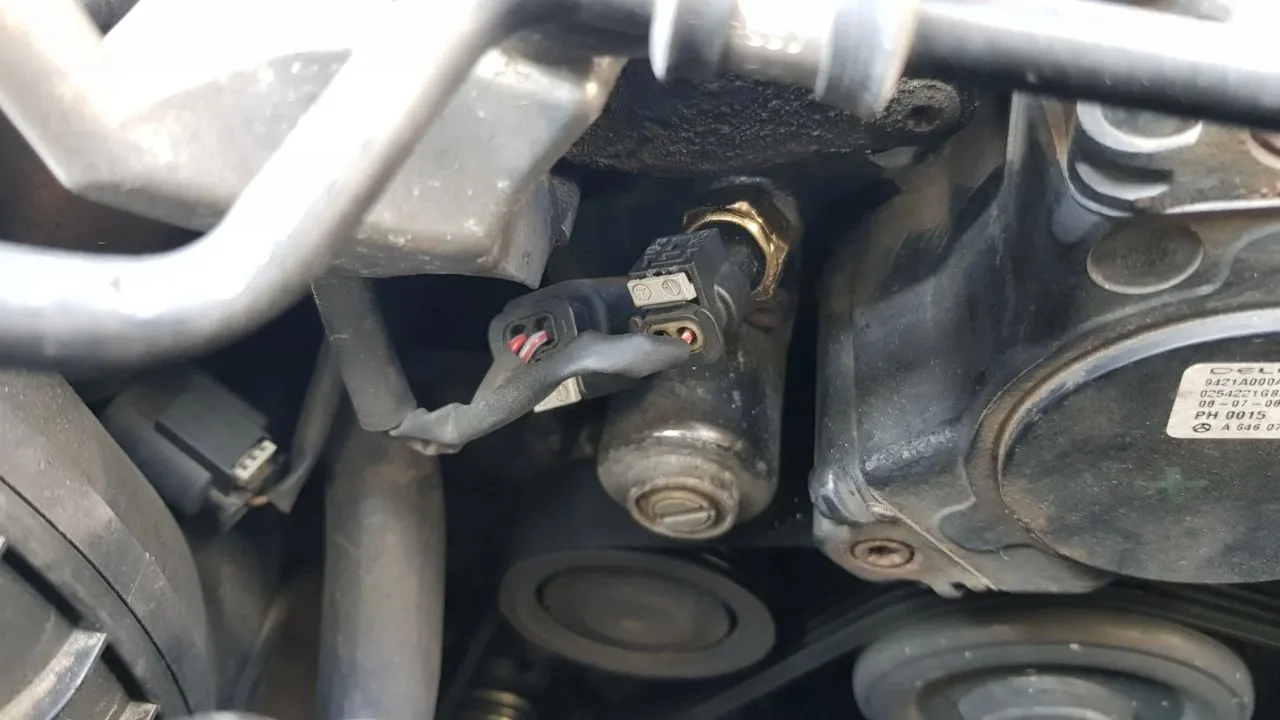
The Fuel Temperature Sensor (FTS) is an electronic sensor that measures the temperature of the fuel in a vehicle's fuel system and sends this information to the engine control unit (ECU).
Fuel temperature can affect fuel density, viscosity, and the amount of fuel delivered to the engine. For this reason, the ECU may use fuel temperature information when calculating fuel quantity, injection timing, fuel pressure control, and other engine-management parameters.
Fuel temperature sensors are found in different types of vehicles, including gasoline and diesel engines. Their exact location and function can vary depending on the vehicle's fuel system and engine management strategy.
A fuel temperature sensor is particularly important on diesel engines because changes in diesel fuel temperature can significantly affect fuel density and therefore the actual mass of fuel being injected.
How Does a Fuel Temperature Sensor Work?
Most fuel temperature sensors use a thermistor, usually an NTC (Negative Temperature Coefficient) type.
An NTC thermistor changes its electrical resistance according to temperature.
As the fuel temperature increases, the resistance of an NTC sensor generally decreases. As the fuel becomes colder, its resistance increases.
The ECU supplies a reference voltage to the sensor circuit and monitors the resulting voltage. From this voltage signal, the ECU can determine the approximate fuel temperature.
The basic operating principle is:
Fuel temperature changes → sensor resistance changes → signal voltage changes → ECU calculates fuel temperature.
The ECU does not normally receive a direct temperature value from the sensor. Instead, it interprets the electrical signal and converts it into a calculated temperature.
Why Does the ECU Need Fuel Temperature Information?
Fuel temperature can influence the characteristics of the fuel.
When fuel gets hotter, its density generally decreases. This means the same volume of fuel contains less mass than the same volume at a lower temperature.
This is particularly important for systems that precisely meter fuel.
The ECU can therefore use fuel temperature information to compensate for changes in fuel characteristics and maintain appropriate engine operation.
Depending on the vehicle, fuel temperature information may be used together with data from sensors such as:
-
Engine coolant temperature sensor
-
Intake air temperature sensor
-
Mass airflow sensor
-
Manifold absolute pressure sensor
-
Fuel pressure sensor
-
Crankshaft position sensor
-
Camshaft position sensor
The ECU combines these signals rather than relying on the fuel temperature sensor alone.
Where Is the Fuel Temperature Sensor Located?
The location depends heavily on the vehicle's fuel system.
The sensor may be installed:
-
Inside the fuel tank
-
On the fuel pump assembly
-
In the fuel supply line
-
In the fuel rail
-
Inside or near a diesel fuel filter housing
-
Integrated into another fuel-system component
On some vehicles, the fuel temperature sensor is a separate component. On others, it may be integrated into a fuel temperature/pressure assembly or another sensor module.
Therefore, there is no universal location that applies to every vehicle.
The vehicle's wiring diagram and manufacturer service information should be used to identify the exact sensor location.
What Happens When Fuel Temperature Changes?
Fuel temperature naturally changes during vehicle operation.
For example, fuel can become warmer because of:
-
Heat from the engine compartment
-
Hot fuel returning to the tank
-
High ambient temperature
-
Long periods of driving
-
Fuel-system pressure
-
Heat transferred from other components
Fuel can also become very cold during winter operation.
These temperature changes alter fuel properties, so the ECU may compensate for them using the fuel temperature signal.
What Are the Symptoms of a Faulty Fuel Temperature Sensor?
A defective fuel temperature sensor can cause different symptoms depending on the vehicle and the type of failure.
Possible symptoms include:
Check Engine Light
The ECU may detect that the fuel temperature signal is outside the expected range and store a diagnostic trouble code (DTC).
Hard Starting
Incorrect fuel temperature information can affect fuel calculations during starting. In some vehicles, this may result in difficult starting, especially under certain temperature conditions.
Poor Engine Performance
If the ECU receives an incorrect temperature signal, fuel calculations may not be optimal.
The driver may notice:
-
Hesitation
-
Reduced power
-
Rough running
-
Poor throttle response
-
Unstable engine operation
Increased Fuel Consumption
An incorrect fuel temperature signal can contribute to inaccurate fuel calculations in some vehicles, potentially increasing fuel consumption.
Irregular Idle
If the sensor provides an implausible temperature signal, the ECU may make inappropriate corrections that affect engine operation.
Incorrect Temperature Reading in Live Data
A diagnostic scanner may display a fuel temperature value that is clearly inconsistent with the actual conditions.
For example, a completely cold engine and fuel system showing an extremely high fuel temperature may indicate a sensor or circuit problem.
Can a Fuel Temperature Sensor Cause a No-Start Condition?
It can, depending on the vehicle and the nature of the fault.
A fuel temperature sensor is generally not the primary sensor responsible for determining whether an engine can start. However, modern engine management systems use multiple sensor inputs to calculate fuel delivery.
If the sensor signal is severely incorrect or the fault causes the ECU to enter a protective strategy, starting and engine operation can be affected.
A no-start condition should therefore not automatically be attributed to the fuel temperature sensor.
Other systems, such as fuel pressure, crankshaft position, injector control, immobilizer operation, and electrical supply, should also be checked.
What Causes Fuel Temperature Sensor Failure?
A fuel temperature sensor can fail electrically or mechanically.
Common causes include:
-
Internal sensor failure
-
Damaged wiring
-
Broken wires
-
Short circuit
-
Open circuit
-
Corroded electrical terminals
-
Loose connector
-
Fuel contamination
-
Water or moisture entering the connector
-
Damage to the fuel-system component containing the sensor
-
Excessive heat
-
Previous repair work
-
Problems with the ECU reference or ground circuit
In some cases, the sensor itself is perfectly functional and the actual problem is somewhere in the wiring.
What Does a Fuel Temperature Sensor Fault Code Mean?
Diagnostic trouble codes related to fuel temperature sensors can indicate several different types of electrical or performance problems.
Depending on the vehicle, a code may indicate:
-
Fuel temperature sensor circuit low
-
Fuel temperature sensor circuit high
-
Fuel temperature sensor range/performance
-
Fuel temperature sensor intermittent signal
-
Fuel temperature sensor circuit malfunction
For example, the generic OBD-II code P0180 is associated with the Fuel Temperature Sensor "A" Circuit.
Other codes in the P018x range can identify different fuel temperature sensor circuit conditions.
However, the exact interpretation can vary depending on the vehicle manufacturer and engine configuration.
A diagnostic code should therefore be treated as a starting point for diagnosis rather than proof that the sensor itself must be replaced.
How Is a Fuel Temperature Sensor Diagnosed?
Proper diagnosis normally begins by reading the stored fault codes and examining live data.
A technician may compare the fuel temperature reading with other available temperature information.
For example, after a vehicle has been sitting for several hours, the fuel temperature should generally be reasonably consistent with the surrounding temperature.
If the scan tool shows an implausible value, the sensor circuit should be investigated.
The diagnostic process may include:
1. Read the fault codes
Determine which DTC has been stored and whether other related codes are present.
2. Check live data
Look at the fuel temperature value reported by the ECU.
3. Compare the reading with actual conditions
An obviously unrealistic temperature reading can provide an important diagnostic clue.
4. Inspect the connector
Check for corrosion, loose terminals, contamination, or physical damage.
5. Inspect the wiring
Look for broken, damaged, shorted, or incorrectly repaired wires.
6. Test the sensor according to manufacturer specifications
If the sensor uses an NTC thermistor, its resistance can change according to temperature. However, the correct resistance-temperature characteristics must be obtained from the vehicle manufacturer.
7. Check the reference and ground circuits
A problem with the sensor's power/reference or ground circuit can produce symptoms that appear to indicate a faulty sensor.
Can a Fuel Temperature Sensor Be Cleaned?
In most cases, cleaning does not repair an internally defective fuel temperature sensor.
If the problem is caused by contamination or corrosion at the electrical connector, carefully addressing the connector problem may restore proper operation.
However, the sensor itself should not be treated like a conventional filter or mechanical component that can simply be cleaned.
If the sensor's internal thermistor has failed, replacement is normally required.
Can a Fuel Temperature Sensor Be Tested With a Multimeter?
A multimeter can sometimes be used to check the sensor circuit, but the correct testing procedure depends on the vehicle.
For an NTC-type sensor, resistance should change as temperature changes.
However, simply measuring resistance and deciding that a sensor is good or bad without knowing the manufacturer's specifications can lead to an incorrect diagnosis.
A proper test may require checking:
-
Sensor resistance
-
Reference voltage
-
Ground
-
Signal voltage
-
Wiring continuity
-
Short circuits
-
Open circuits
The expected values should always be compared with the specifications for that particular vehicle.
Fuel Temperature Sensor vs. Engine Coolant Temperature Sensor
These two sensors measure completely different things.
The Engine Coolant Temperature (ECT) Sensor measures engine coolant temperature.
The Fuel Temperature Sensor measures fuel temperature.
The ECU may use both signals simultaneously.
For example, the coolant temperature can indicate how warm the engine is, while the fuel temperature provides information about the condition of the fuel itself.
Confusing these two sensors during diagnosis can lead to unnecessary parts replacement.
Fuel Temperature Sensor vs. Intake Air Temperature Sensor
The Intake Air Temperature (IAT) Sensor measures the temperature of the air entering the engine.
The Fuel Temperature Sensor measures the temperature of the fuel.
Both sensors can use similar thermistor technology, but they serve different purposes and are installed in different parts of the vehicle.
Their resistance characteristics and electrical specifications may also differ.
Why Is the Fuel Temperature Sensor Especially Important on Diesel Engines?
Fuel temperature can be particularly significant in diesel fuel systems.
Diesel fuel density changes with temperature. Since modern diesel engines rely on highly precise fuel metering and high-pressure injection, the ECU may use fuel temperature information to improve the accuracy of fuel calculations.
Diesel fuel systems can also experience significant fuel heating because fuel may circulate through the high-pressure system and return to the fuel tank.
For this reason, fuel temperature monitoring can be an important part of diesel engine management.
Does Fuel Temperature Affect Fuel Pressure?
Fuel temperature and fuel pressure are related to fuel properties and fuel-system operation, but the fuel temperature sensor itself does not normally control pressure directly.
Instead, the ECU can use temperature information along with pressure feedback and other operating parameters to manage the fuel system.
A fuel pressure problem should therefore not automatically be diagnosed as a fuel temperature sensor problem.
Fuel pressure should be measured and evaluated according to the vehicle manufacturer's specifications.
Can a Faulty Fuel Temperature Sensor Increase Fuel Consumption?
Yes, it can contribute to increased fuel consumption in some vehicles.
If the ECU receives an incorrect fuel temperature signal, it may calculate fuel quantity or related operating parameters incorrectly.
However, increased fuel consumption has many possible causes, including:
-
Faulty oxygen sensor
-
Airflow measurement problems
-
Fuel pressure problems
-
Injector problems
-
Thermostat or coolant temperature issues
-
Intake air leaks
-
Ignition problems
-
Poor tire pressure
-
Driving conditions
Therefore, replacing the fuel temperature sensor solely because fuel consumption has increased is not an appropriate diagnostic approach.
Can a Faulty Fuel Temperature Sensor Cause Black Smoke?
In diesel vehicles, an incorrect fuel temperature signal may contribute to incorrect fueling under certain conditions, potentially affecting exhaust smoke.
However, black smoke is much more commonly associated with an air-fuel imbalance, excessive fueling, poor air supply, injector problems, turbocharger issues, EGR problems, or other engine-management faults.
A fuel temperature sensor should not be blamed for black smoke without diagnostic evidence.
What Happens If the Fuel Temperature Sensor Is Disconnected?
The result depends on the vehicle's ECU strategy.
When the sensor is disconnected, the ECU may detect an open circuit and store a fault code. It may then substitute a default or calculated temperature value.
Some vehicles may continue operating with limited effects, while others may experience drivability or starting problems.
Disconnecting the sensor should not be used as a general diagnostic test unless the manufacturer's procedure specifically calls for it.
How Long Does a Fuel Temperature Sensor Last?
There is no universal replacement interval for a fuel temperature sensor.
Unlike engine oil, air filters, or fuel filters, it is generally not a scheduled maintenance item.
A properly functioning sensor can last for many years, while another may fail earlier because of heat, contamination, wiring problems, or environmental conditions.
The sensor should normally be replaced when testing confirms that it is defective.
Should You Replace the Fuel Temperature Sensor Immediately When a Fault Code Appears?
Not necessarily.
A fuel temperature sensor fault code tells you that the ECU has detected a problem with the sensor signal or circuit. It does not automatically prove that the sensor itself is defective.
The first step should be to determine whether the problem is caused by:
-
The sensor
-
Wiring
-
Connector
-
Reference voltage
-
Ground
-
Fuel-system component
-
ECU
-
An intermittent electrical fault
Replacing the sensor without checking these possibilities can result in unnecessary expense.
Final Thoughts
The Fuel Temperature Sensor is a small component, but it can provide important information to the engine management system.
By monitoring fuel temperature, the ECU can account for changes in fuel characteristics and use this information when controlling fuel delivery and other engine parameters.
Most fuel temperature sensors work using a thermistor whose resistance changes with temperature. The ECU interprets the resulting electrical signal to calculate fuel temperature.
When a fault occurs, symptoms may include a Check Engine Light, hard starting, rough running, poor performance, increased fuel consumption, or an implausible fuel temperature reading.
However, these symptoms are not exclusive to the fuel temperature sensor. A proper diagnosis should always distinguish between sensor failure, wiring problems, connector faults, and other fuel-system or engine-management issues.
For this reason, the best approach is to read the relevant diagnostic trouble codes, examine live data, inspect the electrical circuit, and compare measurements with the manufacturer's specifications before replacing any component.