TR
TR EN
EN

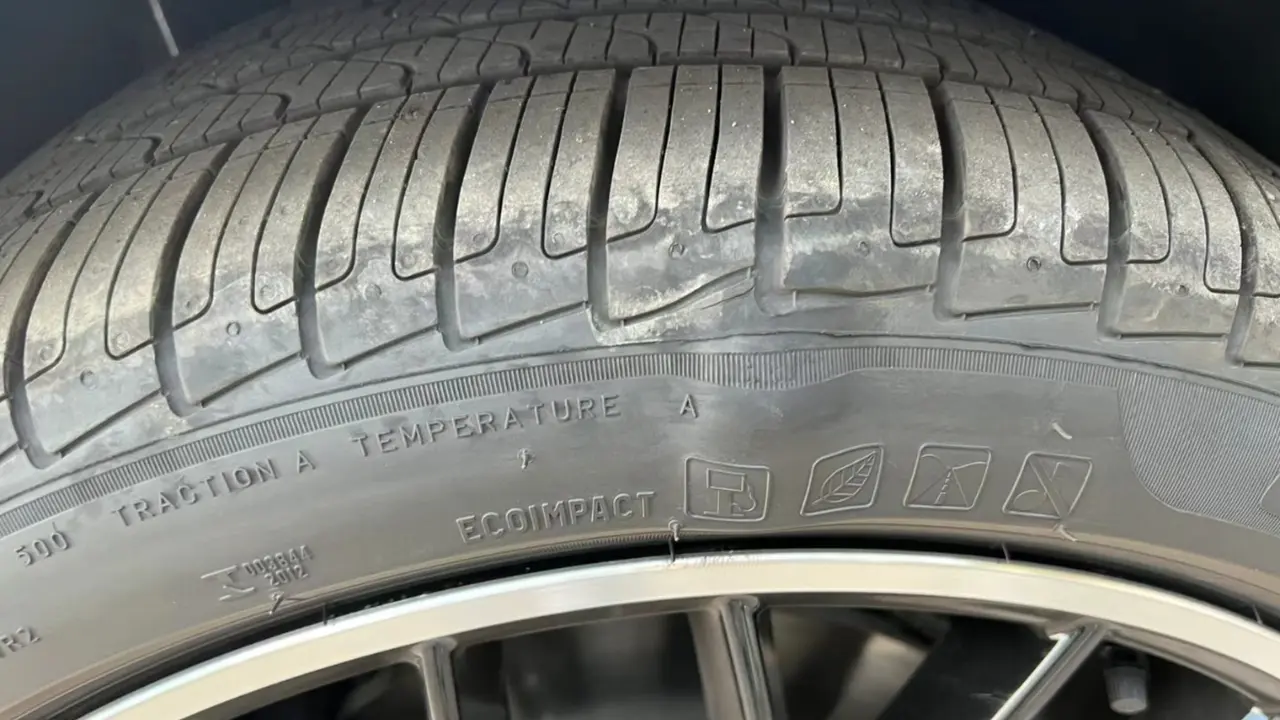
Tire Bulging and Tire Collapse: Causes, Differences, and What They Mean
When you look at a properly functioning tire, the sidewall should have a relatively smooth and consistent shape. However, sometimes a tire may develop a localized bulge that pushes outward, commonly called a “bubble” or “bulge.” In other cases, part of the tire may appear to sink inward, creating a localized depression, hollow, or valley.
These two conditions may look like opposite forms of deformation, but both can be related to the tire's construction, manufacturing characteristics, impact damage, or other factors.
It is important to understand the difference because not every irregularity in a tire's shape automatically means that the tire is unsafe. At the same time, a deformation that appears suddenly should never simply be ignored.
What Is a Tire Bulge?
A tire bulge occurs when a localized section of the tire, most commonly the sidewall, protrudes outward compared with the surrounding area.
A tire sidewall is designed to maintain its shape while supporting the vehicle and absorbing part of the forces generated during driving. Inside the tire are layers of cords and reinforcing materials that contribute to its structural strength.
If these internal components become damaged, the tire may no longer be able to maintain its normal shape in that particular area. As a result, the air pressure inside the tire can push the weakened section outward, producing a visible bulge.
A noticeable bulge on the sidewall should therefore not be considered merely a cosmetic problem.
Why Do Tires Develop Bulges?
One of the most common causes of a tire bulge is a hard impact.
For example, when a vehicle hits a deep pothole at speed, the tire can be compressed violently between the road surface and the wheel. Even if there is no obvious cut or tear on the outside of the tire, the internal cords may be damaged.
This type of damage can result in:
-
A bulge on the sidewall
-
Broken or separated internal cords
-
Reduced structural strength
-
Localized deformation
-
Progressive enlargement of the damaged area
Hitting a curb hard can produce a similar type of damage.
A particularly severe impact can compress the sidewall against the wheel rim, placing extreme stress on the tire's internal structure.
Can Low Tire Pressure Contribute to a Bulge?
Driving with significantly low tire pressure can increase the amount of flexing that occurs in the sidewall.
When a tire is underinflated, the sidewall flexes more than intended. This becomes more problematic when combined with heavy loads, high speeds, hot weather, or poor road conditions.
However, an important distinction should be made:
Low tire pressure does not mean that every tire bulge is simply caused by insufficient air pressure.
A pronounced bulge, particularly on the sidewall, can indicate structural damage. Increasing the tire pressure may change the appearance of the bulge, but it does not repair damaged internal cords.
What Is Tire Collapse?
In this context, tire collapse does not mean a flat tire or a tire that has lost all of its air.
Tire collapse refers to a localized area of the tire surface that moves inward compared with the surrounding section, creating a depression, hollow, or valley-like appearance.
This can sometimes be seen on the sidewall. The rest of the sidewall may have a normal shape while one particular section appears slightly pulled inward.
Depending on the tire and the type of deformation, the affected area may look like:
-
A small indentation
-
A shallow depression
-
A longer valley-shaped area
-
An irregular section of the sidewall
-
A localized change in the normal curvature of the tire
This is the type of “collapse” that is often meant when people describe a tire as having an inward deformation.
Is Every Sidewall Depression a Problem?
No.
Some tires naturally have minor variations in the appearance of their sidewalls. Radial tires are constructed from multiple layers of rubber, cords, and reinforcing materials, and these components do not always produce a perfectly uniform visual surface.
A very slight indentation may therefore be a characteristic of the tire's construction rather than a sign of failure.
A minor deformation is less concerning when:
-
It has been present since the tire was installed.
-
It is very subtle.
-
The tire maintains normal pressure.
-
There are no cracks, cuts, or other visible damage.
-
There is no unusual vibration while driving.
-
The deformation does not appear to be getting worse.
-
Other tires of the same type show a similar characteristic.
However, a new, pronounced, or rapidly changing depression deserves closer inspection.
Structural Damage Can Cause Tire Collapse
A tire's shape is largely determined by its internal structure.
Inside a modern tire are several layers, including reinforcing cords and other structural components. If these components become damaged or deformed, the tire may not maintain its original shape in a particular area.
The resulting deformation does not always have to point outward.
Depending on where and how the internal structure has been affected, the tire may develop:
-
An outward bulge
-
An inward depression
-
An irregular sidewall
-
A localized deformation in the tread
-
An uneven or distorted profile
This is why the absence of an obvious bulge does not automatically prove that the tire has no structural damage.
Can an Impact Cause an Inward Tire Depression?
Yes.
A hard impact with a pothole, curb, road edge, or another obstacle can affect the internal structure of a tire.
Not every impact produces an outward bubble.
The location and nature of the internal damage can determine how the tire changes shape. In some cases, the result may be an outward bulge, while in others the tire may show an inward depression or an irregular section.
After a significant impact, any new change in the tire's shape should therefore be taken seriously.
What Is a Tread Depression?
Deformation is not limited to the sidewall.
A localized irregularity can also occur in the tread area, which is the part of the tire that contacts the road.
A deformed tread may cause one section of the tire to sit or rotate differently from the surrounding areas. Depending on the severity of the problem, this can contribute to:
-
Steering-wheel vibration
-
Road noise
-
Irregular handling
-
Uneven tread wear
-
A sensation that the wheel is not rotating smoothly
However, these symptoms are not exclusive to tire deformation. A bent wheel, wheel imbalance, alignment problem, or suspension issue can produce similar symptoms.
What Is the Difference Between a Tire Bulge and a Tire Collapse?
The simplest distinction is the direction of the deformation.
A tire bulge is an area that protrudes outward from the normal tire surface.
A tire collapse or depression is an area that moves inward relative to the surrounding surface.
However, the direction alone does not tell you whether the tire is safe or unsafe.
The size of the deformation, its location, whether it appeared suddenly, whether the tire has experienced an impact, and whether the internal structure has been damaged are all important factors.
Why Does a Tire Develop an Inward Depression?
There are several possible explanations.
Manufacturing-related irregularity
Some tires have minor visual variations caused by their construction. A small indentation may simply reflect how the internal layers and cords are arranged.
Impact-related deformation
A hard impact can deform the internal structure of the tire. Depending on the location of the damage, this may appear as an inward depression rather than an outward bulge.
Damage to the carcass or cords
The carcass and reinforcing cords provide much of the tire's structural integrity. If these components are damaged, a localized section may lose its normal shape.
Wheel damage
Sometimes what appears to be a tire deformation is actually related to the wheel. A bent or damaged wheel can affect how the tire sits on the rim and how it rotates.
Long-term stress and uneven wear
Incorrect tire pressure, excessive vehicle loads, alignment problems, and suspension issues can place abnormal stress on a tire over time. In some circumstances, this can contribute to irregular wear or deformation.
Can a Slight Sidewall Depression Be Normal?
In some cases, yes.
A very slight inward or outward variation in the sidewall does not automatically mean that the tire is defective. The construction of radial tires can naturally produce minor visual irregularities.
The important question is whether the shape represents a normal construction characteristic or an actual structural deformation.
A depression that is very pronounced, sharply localized, appeared recently, or developed after a strong impact deserves much more attention.
Comparing the tire with another tire of the same size and model can also be useful. If a similar indentation is visible on another tire of the same type, the feature may be related to the tire's construction rather than damage.
Is It Safe to Drive With a Tire Bulge?
A tire with a significant sidewall bulge should not be considered safe for normal driving.
A bulge can indicate damage to the internal structure of the tire. The damaged area may be subjected to additional stress as the tire rotates, flexes, heats up, and carries the weight of the vehicle.
The risk can become greater at high speeds or under heavy loads.
For this reason, a clearly visible structural bulge in the sidewall generally means that the tire should be replaced rather than repaired.
The fact that the bulge appears relatively small does not necessarily mean that the damage is harmless.
Can You Drive With a Collapsed or Depressed Tire?
The answer depends on the type and severity of the deformation.
A very mild, factory-related sidewall irregularity is different from a new and pronounced depression that appeared after a pothole impact.
If the deformation:
-
Appeared recently,
-
Is becoming more noticeable,
-
Occurs after an impact,
-
Is accompanied by vibration,
-
Produces unusual road noise,
-
Causes irregular tread wear,
-
Or is accompanied by changes in handling,
the tire should be professionally inspected.
If there is a significant deformation in the sidewall, simply checking the air pressure is not enough. The tire itself and the wheel should be examined.
How Should a Tire Bulge or Depression Be Inspected?
Start by examining the overall shape of the tire.
Park the vehicle on a level surface and inspect the sidewall from several angles. Compare the affected section with the surrounding parts of the tire.
Then check:
-
Tire pressure
-
Sidewall cuts or cracks
-
Bulges or depressions
-
Signs of impact damage
-
Wheel condition
-
Irregular tread wear
-
The tire's age and overall condition
In some cases, the tire may need to be removed from the wheel so that the inside can be properly inspected.
This is important because some structural damage cannot be accurately identified from the outside.
Can a Tire Bulge Be Repaired?
A structural sidewall bulge generally should not be repaired.
Repairing the visible rubber does not restore damaged internal cords or structural layers.
For this reason, a significant sidewall bulge caused by internal structural damage normally requires tire replacement.
The same principle applies to a pronounced structural depression. The underlying cause needs to be identified rather than simply trying to alter the visible shape of the tire.
Can Tire Deformation Be Mistaken for a Wheel Balance Problem?
Yes.
A deformation in the tread or sidewall can sometimes produce symptoms that feel like a wheel-balancing problem.
For example, the driver may notice vibration at a particular speed range. Wheel balancing should certainly be checked in such a situation, but if the balance is correct and the vibration remains, the tire and wheel should also be inspected carefully.
A balancing machine can identify an imbalance and indicate where balancing weights may be required. However, a correct balance result does not automatically prove that the tire itself is structurally sound.
How Can Tire Deformation Be Prevented?
Regular tire maintenance is about more than simply checking tread depth.
To reduce the risk of tire deformation:
-
Maintain the manufacturer's recommended tire pressure.
-
Check tire pressure regularly.
-
Avoid hitting potholes at high speed.
-
Approach curbs carefully.
-
Avoid overloading the vehicle.
-
Inspect the tires after a significant impact.
-
Pay attention to unusual tread wear.
-
Inspect the tires before long journeys.
-
Have the wheel and tire checked if a new deformation appears.
If a tire develops a new bulge or depression after hitting a pothole or curb, it should not simply be assumed that the deformation will disappear on its own.
A Tire's Shape Can Tell You a Lot
A tire does not always have to be perfectly smooth and geometrically uniform to be safe. Small variations can occur as a result of its construction.
What matters is recognizing the difference between a normal visual characteristic and a new structural deformation.
An outward bulge on the sidewall is particularly important because it can indicate damage to the internal reinforcing structure. An inward depression may be harmless in some cases, but a new, pronounced, or impact-related depression should be inspected rather than ignored.
In short, a tire that looks slightly different is not necessarily damaged. But when the shape of a tire changes noticeably, especially after an impact, the tire should be evaluated as a safety component rather than treated as a purely cosmetic issue.
The most important point is that tire pressure alone cannot determine whether a deformed tire is safe. The condition of the sidewall, carcass, tread, internal structure, and wheel all need to be considered when evaluating an unusual tire shape.