TR
TR EN
EN

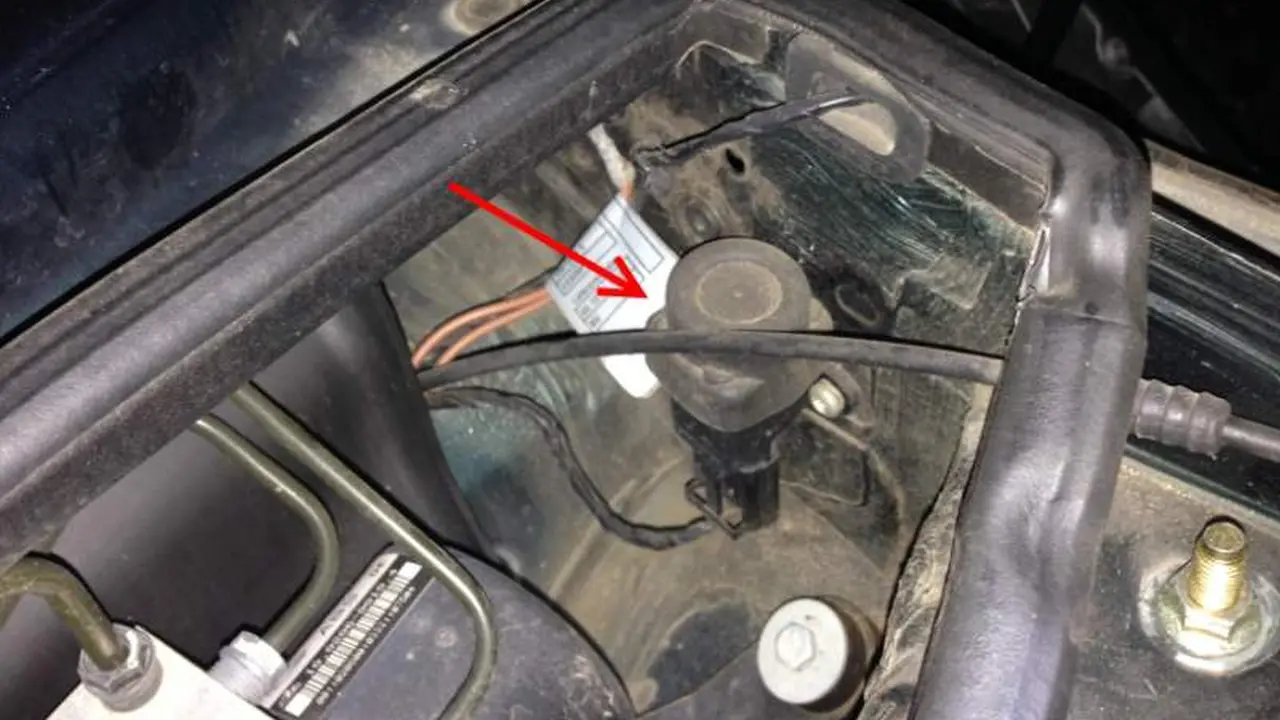
What Is an Impact Sensor and How Does It Work?
Modern vehicles contain a network of sensors designed to detect what is happening around and inside the vehicle. Some monitor engine operation, others measure wheel speed or vehicle movement, while certain sensors have a much more critical safety function.
An impact sensor, also called a crash sensor or collision sensor, is one of the components used by a vehicle's passive safety system to detect a significant impact.
Its main purpose is to provide information to the Supplemental Restraint System (SRS) or airbag control unit when the vehicle experiences a sudden deceleration or collision.
The sensor itself does not normally decide whether an airbag should deploy. Instead, it supplies acceleration or impact-related information to the restraint control system, which combines that information with other data and determines whether deployment is necessary.
This distinction is important because an impact sensor is not simply an electrical switch that turns the airbag on when it is hit.
What Is an Impact Sensor?
An impact sensor is an electronic sensing device designed to detect sudden changes in vehicle acceleration or deceleration associated with a collision.
Depending on the vehicle design, sensors may be positioned at different locations, including:
-
Front crash zones
-
Front structural areas
-
Side doors or side structural areas
-
B-pillars
-
C-pillars
-
Other parts of the vehicle body
Modern vehicles may use several impact sensors together with a central SRS control module.
The exact number, location, and type of sensors vary significantly between manufacturers and vehicle generations.
What Does an Impact Sensor Do?
The basic job of an impact sensor is to detect an abnormal acceleration event and communicate relevant information to the SRS control system.
During a collision, the vehicle can experience extremely rapid changes in velocity.
For example, a vehicle traveling forward may decelerate dramatically within a very short period when it strikes an obstacle.
The impact sensor detects the resulting acceleration characteristics.
The SRS control unit then evaluates this information along with other available signals.
If the collision meets the system's deployment criteria, the control unit can activate the appropriate restraint devices.
Depending on the vehicle, these may include:
-
Front airbags
-
Side airbags
-
Curtain airbags
-
Seat belt pretensioners
-
Knee airbags
-
Other supplemental restraint devices
Not every crash activates every restraint device.
How Does an Impact Sensor Work?
Modern impact sensors are commonly based on accelerometer technology.
Many use MEMS technology, which stands for Micro-Electro-Mechanical Systems.
A MEMS accelerometer contains microscopic mechanical structures capable of responding to acceleration.
When the vehicle experiences a sudden change in acceleration, the internal sensing element moves relative to its reference structure.
The sensor electronics convert this movement into an electrical signal.
The SRS control unit can then analyze the signal to determine the characteristics of the event.
The important factor is not simply "how hard was the impact?"
The system can also consider:
-
Direction of acceleration
-
Magnitude of acceleration
-
Duration of the event
-
Rate of change
-
Vehicle speed
-
Information from other sensors
-
Collision characteristics
This allows the restraint system to distinguish a serious crash from many ordinary vehicle movements.
Is an Impact Sensor the Same as an Airbag Sensor?
The terminology can be confusing because different manufacturers use different names.
An impact sensor is a sensor that detects acceleration or collision-related events.
The SRS control module is the electronic control unit responsible for evaluating sensor information and controlling the restraint system.
Some vehicles use multiple dedicated satellite impact sensors.
Other systems rely more heavily on acceleration sensors integrated into the SRS control module.
Therefore, when someone says "airbag sensor," they may be referring to an external impact sensor, an acceleration sensor inside the SRS module, or another component of the restraint system.
Where Are Impact Sensors Located?
Sensor placement depends on the type of collision the vehicle is designed to detect.
Front impact sensors
These may be positioned toward the front of the vehicle so the SRS system can detect characteristics of a frontal collision.
Side impact sensors
These are commonly positioned in areas such as doors or pillars to detect rapid lateral acceleration.
Side-impact detection is particularly important because the available space between the occupant and the outside structure can be limited.
Central acceleration sensors
Some vehicles incorporate acceleration sensors directly into the SRS control module.
These sensors can monitor vehicle acceleration from a more central location.
A vehicle may therefore have both external impact sensors and acceleration sensors integrated into the central restraint control unit.
Why Are Multiple Impact Sensors Used?
A collision is a three-dimensional event.
The vehicle may experience acceleration in different directions depending on the type of crash.
A frontal collision, side impact, rear impact, rollover, and angled collision can produce very different acceleration patterns.
Using multiple sensors allows the SRS system to obtain more information about the event.
The control unit can compare signals and determine whether the collision characteristics correspond to a deployment condition.
This approach can reduce the risk of unnecessary airbag deployment during situations that produce strong but non-crash-related acceleration.
Does the Impact Sensor Directly Trigger the Airbag?
Normally, the sensor itself does not independently command the airbag to deploy.
The SRS control unit is responsible for making the deployment decision.
The sensor provides information.
The control unit evaluates that information and, when the programmed safety criteria are satisfied, sends an electrical activation signal to the relevant restraint device.
This architecture is important because airbag deployment is a serious event.
The system must be able to distinguish a genuine collision from potholes, hard braking, curb impacts, vibration, or other normal vehicle events.
What Happens During a Collision?
A simplified sequence looks like this:
1. The vehicle experiences a sudden impact.
The vehicle's velocity changes rapidly.
2. The impact sensors detect acceleration changes.
Sensors measure the characteristics of the vehicle's movement.
3. The signals reach the SRS control unit.
The restraint control system processes the available information.
4. The SRS system evaluates the crash.
The control unit determines whether the event meets the deployment criteria for particular restraints.
5. The appropriate restraint devices are activated.
Depending on the collision and vehicle design, airbags and/or seat belt pretensioners may deploy.
The entire process takes place extremely quickly.
Why Doesn't the Airbag Deploy During Hard Braking?
Hard braking can produce substantial deceleration, but braking and collision events have different characteristics.
The SRS system is designed to analyze the acceleration pattern rather than simply respond to any large deceleration.
The vehicle may experience strong longitudinal deceleration during emergency braking without an impact.
The system therefore uses sensor data and programmed algorithms to distinguish different types of events.
This is one reason an impact sensor should not be thought of as a simple "force switch."
Can Hitting a Pothole Damage an Impact Sensor?
A severe pothole or curb impact can potentially damage an impact sensor, its mounting point, or its wiring.
However, a pothole does not normally mean that the sensor has failed.
If an SRS warning appears after a severe impact, the system should be scanned and inspected.
Possible causes may include:
-
Sensor damage
-
Wiring damage
-
Connector problems
-
Mounting damage
-
SRS control module fault
-
Other restraint-system faults
The warning should not automatically be interpreted as proof that the impact sensor itself is defective.
What Are the Symptoms of a Faulty Impact Sensor?
An impact sensor does not usually produce noticeable driving symptoms because it is part of the passive safety system.
The most common indication is an airbag or SRS warning light.
Other possible symptoms include:
-
SRS warning message
-
Airbag system fault code
-
Communication-related fault
-
Seat belt pretensioner warning
-
Airbag system becoming unavailable
The exact warning depends on the vehicle.
A faulty sensor can therefore exist without affecting engine performance, steering, braking, or transmission operation.
Can a Faulty Impact Sensor Prevent Airbag Deployment?
A fault in the crash sensing system can cause the SRS system to disable some or all deployment functions as a safety precaution.
This is why an illuminated airbag warning light should never be ignored.
The exact behavior depends on the vehicle's SRS architecture and the nature of the fault.
A vehicle with an SRS warning may still drive normally while having reduced passive safety functionality.
What Causes Impact Sensor Failure?
Impact sensors are generally designed to be durable, but they can still fail.
Potential causes include:
-
Previous collision damage
-
Water intrusion
-
Corrosion
-
Damaged wiring
-
Loose connectors
-
Incorrect installation
-
Physical damage
-
Electrical faults
-
Incorrect replacement procedures
-
Sensor internal failure
A sensor can also be incorrectly diagnosed when the real problem is somewhere else in the SRS circuit.
Can Water Damage an Impact Sensor?
Yes.
Water intrusion can cause corrosion or electrical problems in sensors, connectors, and wiring.
This can be particularly relevant when sensors or connectors are located in areas exposed to moisture.
Possible sources include:
-
Flooding
-
Water leaks
-
Damaged seals
-
Door moisture
-
Improper body repairs
-
Incorrectly installed trim or panels
An SRS fault appearing after water intrusion deserves careful inspection.
What Happens to Impact Sensors After an Accident?
This depends on the vehicle and the severity of the collision.
A sensor does not necessarily need to be replaced after every accident.
However, if a sensor has been involved in a crash, its physical condition, mounting, wiring, and diagnostic status should be checked according to the manufacturer's repair procedure.
Some restraint components are designed as one-time-use devices.
This is especially important for components such as airbags and certain seat belt pretensioners.
The correct post-crash replacement procedure is vehicle-specific.
Can an Impact Sensor Be Repaired?
Impact sensors are generally treated as safety-critical components.
If the sensor itself is confirmed to be defective, replacement with the correct component is normally preferred over attempting an internal repair.
Opening, modifying, or bypassing an SRS sensor can create an unsafe system and may interfere with proper crash detection.
Because the restraint system is safety-critical, repairs should follow the manufacturer's service information.
How Is an Impact Sensor Tested?
Diagnosis normally begins with an SRS-capable diagnostic scanner.
A generic engine OBD scanner may not be able to access all SRS functions.
A technician may check:
-
SRS diagnostic trouble codes
-
Sensor communication
-
Sensor electrical circuits
-
Power and ground
-
Wiring continuity
-
Connector condition
-
Sensor mounting
-
Live data where supported
-
SRS control-module status
The technician should identify the specific fault code and follow the manufacturer's diagnostic procedure.
Simply measuring resistance across an airbag or impact-sensor circuit without knowing the correct procedure can be unsafe.
Can You Test an Impact Sensor With a Multimeter?
Extreme caution is required.
Airbag and restraint systems contain pyrotechnic devices and safety-critical circuits.
Using a multimeter, test light, external power source, or improvised electrical testing method on an airbag or pyrotechnic circuit can be dangerous and may trigger a restraint device.
The correct testing procedure varies by vehicle and component.
Professional technicians use manufacturer-approved procedures and appropriate SRS diagnostic equipment.
Should You Disconnect the Battery Before Working on an Impact Sensor?
Many vehicle manufacturers specify procedures for disabling the SRS system before certain repairs.
However, simply disconnecting the battery does not automatically make an airbag system safe.
SRS systems can contain stored electrical energy, and the manufacturer's specified waiting period and disabling procedure must be followed.
The correct procedure should always come from the vehicle's service documentation.
Can an Impact Sensor Cause an Airbag Warning Light?
Yes.
A sensor circuit fault can cause the SRS control unit to illuminate the airbag warning light.
However, the same warning can be caused by many other problems.
For example:
-
Seat occupancy sensor
-
Seat belt pretensioner
-
Clock spring
-
Wiring
-
SRS control module
-
Airbag connector
-
Battery voltage problem
-
Other restraint-system components
Therefore, replacing an impact sensor simply because the airbag light is on is not a reliable diagnostic method.
What Is the Difference Between an Impact Sensor and a Seat Occupancy Sensor?
They perform completely different functions.
An impact sensor detects acceleration or crash-related events.
A seat occupancy sensor determines whether a seat is occupied and, depending on the vehicle, may provide information used to control restraint deployment strategies.
The SRS control unit can use information from several sensors to determine which restraints should operate during a collision.
What Is the Difference Between an Impact Sensor and a Yaw Rate Sensor?
These sensors measure vehicle movement for very different purposes.
An impact sensor is primarily associated with crash detection and the SRS system.
A yaw rate sensor measures the vehicle's rotational movement around its vertical axis and is primarily used by systems such as ESC/ESP.
Both may measure acceleration or vehicle motion in some form, but they are not interchangeable.
The yaw-rate sensor helps determine whether the vehicle is rotating as expected during cornering.
The impact sensor helps the restraint system identify collision-related acceleration events.
Do Airbags Deploy in Every Accident?
No.
Airbag deployment depends on factors such as:
-
Collision direction
-
Severity
-
Deceleration characteristics
-
Vehicle speed
-
Occupant information
-
Seat position
-
Restraint-system configuration
-
Manufacturer's deployment strategy
A visible vehicle damage level does not always correspond directly to whether an airbag will deploy.
Similarly, a relatively small-looking area of body damage can sometimes be associated with significant acceleration characteristics.
The SRS system evaluates the crash based on sensor data and programmed deployment criteria.
Can an Impact Sensor Trigger a False Airbag Deployment?
Modern restraint systems are designed to minimize unintended deployment.
The SRS control unit does not normally rely on a single simplistic measurement.
It evaluates sensor information and crash characteristics before activating restraint devices.
Nevertheless, a malfunctioning SRS system should never be ignored because incorrect sensor signals or electrical faults can affect system operation.
If an airbag warning is present, the system should be diagnosed rather than bypassed.
Why Is Sensor Mounting Position Important?
The physical location and orientation of an impact sensor are critical.
The sensor is calibrated and installed according to the vehicle's engineering design.
If it is installed incorrectly, mounted loosely, or positioned in the wrong location, its measurements may not accurately represent the vehicle's crash acceleration.
This is why an impact sensor should not simply be relocated or mounted in a different position after body repairs.
The manufacturer's specified mounting location and fastening procedure should be followed.
What Happens If an Impact Sensor Is Installed Incorrectly?
An incorrectly installed sensor may produce:
-
SRS fault codes
-
Incorrect sensor readings
-
Communication faults
-
System warnings
-
Reduced restraint-system functionality
In severe cases, incorrect installation could compromise crash detection.
This is why body repairs involving areas around impact sensors should include a proper SRS inspection.
Are Impact Sensors Expensive?
The cost varies considerably between vehicles.
The price depends on:
-
Vehicle make and model
-
Sensor type
-
Sensor location
-
OEM or aftermarket availability
-
Labor
-
Diagnostic requirements
-
Additional SRS components affected by the fault
A sensor replacement itself may be relatively straightforward on some vehicles, while accessing a sensor located behind body panels can require additional labor.
Should an Airbag Fault Be Ignored If the Car Drives Normally?
No.
This is one of the most important points about SRS faults.
An airbag warning may have no effect on the vehicle's ability to start, accelerate, steer, or brake.
The car may feel completely normal during everyday driving.
However, the restraint system may not be fully operational.
Because airbags and seat belt pretensioners are designed to protect occupants during a crash, an SRS warning should be diagnosed as soon as practical.
Final Thoughts
An impact sensor is an important part of a modern vehicle's passive safety system.
Its job is to detect rapid acceleration or deceleration associated with a collision and provide this information to the SRS control unit.
Modern impact sensors commonly use accelerometer technology, including MEMS-based designs, and may be installed in different parts of the vehicle depending on the type of collision they are intended to detect.
The sensor itself does not normally make the final decision to deploy an airbag. The SRS control unit evaluates information from the impact sensors and other vehicle systems before activating the appropriate restraints.
An illuminated airbag or SRS warning light should therefore not automatically be interpreted as a failed impact sensor. Wiring, connectors, other sensors, the SRS module, power supply, or other restraint components can produce similar warnings.
Because the SRS is a safety-critical system, diagnosis and repair should follow the vehicle manufacturer's procedures. Improvised electrical testing, bypassing sensors, or installing components in an incorrect position can compromise the system.
The key point is simple: the impact sensor detects the vehicle's crash-related motion, while the SRS control unit interprets that information and determines how the restraint system should respond.