TR
TR EN
EN

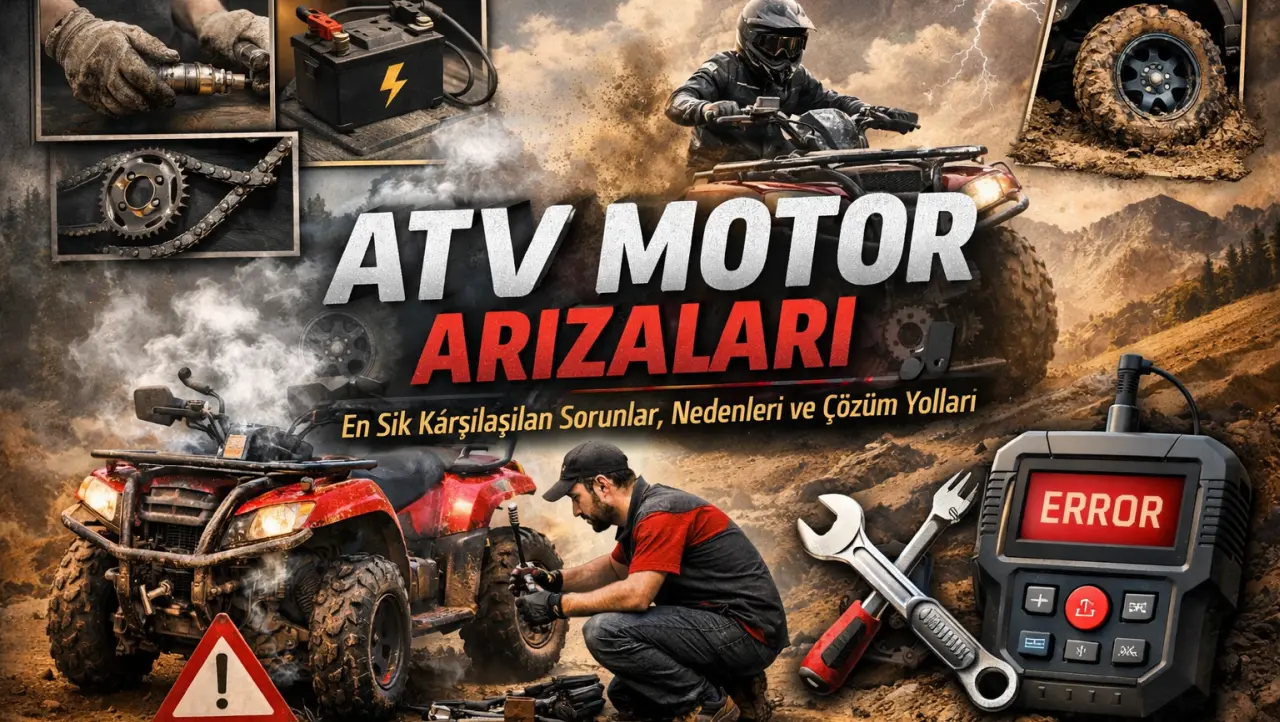
ATV General Engine Problems: Most Common Issues, Causes and Solutions
ATVs (All Terrain Vehicles) are durable vehicles that can deliver high performance under challenging terrain conditions. Used in many areas such as agriculture, forestry, camping, hunting and outdoor sports, ATVs may experience various mechanical and electrical failures when regular maintenance is neglected. A small mistake can turn into major repair costs over time.
Main Causes of ATV Engine Problems
Most ATV engine failures are caused by the following reasons:
• Lack of regular maintenance
• Using low-quality fuel
• Delayed oil changes
• Dirty air filter
• Failure to clean the vehicle after water and mud use
• Corrosion in the electrical system
• Incorrect usage
• Carrying excessive loads
• Using low-quality spare parts
• Leaving the vehicle unused for a long period
1. ATV Engine Does Not Start
This is one of the most common problems.
Symptoms
• The engine does not start even though the starter is turning.
• The engine does not crank at all.
• The engine starts briefly and then stalls.
Possible Causes
• The battery may be discharged.
• The spark plug may be faulty.
• Fuel may not be reaching the engine.
• The fuel filter may be clogged.
• The ignition coil may be faulty.
• The CDI unit may have failed.
• The starter relay may be damaged.
• The fuel pump may not be working.
Solution
First, the battery voltage should be measured. Then the spark plug should be checked and the fuel system should be inspected.
2. Engine Misfiring
The ATV may run irregularly even though it starts.
Symptoms
• Hesitation occurs when accelerating.
• The engine runs with vibration.
• Performance decreases.
Causes
• Dirty spark plug
• Low-quality fuel
• Incorrect carburetor adjustment
• Clogged injector
• Ignition system failure
• Dirty air filter
3. Engine Power Loss
This is one of the most common complaints during off-road use.
Symptoms
• The ATV cannot climb hills.
• Throttle response becomes weak.
• Maximum speed decreases.
Possible Causes
• Low compression
• Worn piston rings
• Valve leakage
• Clogged air filter
• Blocked exhaust system
• Worn clutch system
• CVT belt slipping
4. ATV Engine Overheating
Overheating can seriously reduce engine life.
Symptoms
• The temperature warning light comes on.
• Engine power decreases.
• The engine may stall.
• A burning oil smell occurs.
Causes
• Low coolant level in the radiator
• Cooling fan not working
• Thermostat failure
• Water pump failure
• Low engine oil level
• Radiator fins blocked with mud
5. Black Smoke Coming From the Exhaust
Causes
• The fuel mixture is too rich.
• The air filter is clogged.
• The injector is spraying too much fuel.
• The carburetor adjustment is incorrect.
6. Blue Smoke Coming From the Exhaust
This usually indicates that the engine is burning oil.
Causes
• Worn piston rings
• Cylinder wear
• Worn valve stem seals
• Turbocharger failure if equipped
7. White Smoke Coming From the Exhaust
Causes
• The cylinder head gasket may be damaged.
• Coolant may be entering the combustion chamber.
• Water may have entered the engine.
8. ATV Cranks but Does Not Start
Things to Check
• Is fuel reaching the engine?
• Is there an ignition spark?
• Does the spark plug produce a spark?
• Is the CDI unit working properly?
• Is the fuel pump operating?
• Is the injector spraying fuel?
9. Battery Keeps Going Flat
Causes
• Alternator failure
• Voltage regulator failure
• Battery has reached the end of its service life
• Parasitic electrical drain
• Loose battery terminals
10. Transmission Problems
Especially common in automatic (CVT) ATVs.
Symptoms
• Vibration during takeoff
• Belt noise
• The vehicle does not move when throttle is applied
• Reduced pulling power on hills
Causes
• The CVT belt is worn.
• The clutch plates are worn out.
• The variator is faulty.
• The pulley is worn.
11. Differential Problems
Under off-road conditions, the differential is exposed to heavy loads.
Symptoms
• Whining noise
• Knocking sounds
• Difficulty while turning
• Oil leakage
12. Brake Problems
Symptoms
• Increased braking distance
• Soft brake pedal
• Noise coming from the brake discs
Causes
• Worn brake pads
• Warped brake discs
• Low brake fluid level
• Sticking caliper
13. Steering Becomes Stiff
Causes
• Worn tie rod ends
• Steering joint failure
• Bearing failure
• Mud and corrosion
14. Suspension Problems
During off-road driving, shock absorbers operate under heavy loads.
Symptoms
• Harsh ride
• Excessive bouncing
• Oil leakage
• Vehicle leaning to one side
15. Electrical Problems
The electrical system is very important in modern ATVs.
Common Problems
• Headlights do not work.
• Starter does not operate.
• Dashboard does not function.
• Cooling fan does not activate.
• Turn signals do not work.
Possible Causes
• Fuse failure
• Corroded connectors
• Broken wiring
• Voltage regulator failure
• Ground connection problems
16. Fuel System Problems
The fuel system directly affects performance.
Problems
• Fuel pump failure
• Clogged injector
• Dirty carburetor
• Blocked fuel filter
• Water contamination in the fuel tank
17. Chain and Drive Problems
Common in chain-driven ATV models.
Symptoms
• Chain noise
• Excessive looseness
• Worn sprockets
• Chain coming off
18. 4x4 System Not Working
This problem may occur from time to time in four-wheel-drive ATVs.
Causes
• Actuator failure
• Electrical connection problems
• Vacuum system failure
• Differential problem
Ways to Extend ATV Engine Life
Regular maintenance is essential for the engine to operate smoothly for many years.
Things to Consider
• Change the engine oil at the mileage or operating hour intervals recommended by the manufacturer.
• Clean the air filter regularly.
• Replace the fuel filter at recommended intervals.
• Use quality fuel.
• Keep the radiator and cooling system clean.
• Check chain tension regularly.
• Inspect the CVT belt periodically.
• Protect electrical connectors from water and mud.
• Wash and dry the vehicle after muddy use.
• If the ATV will not be used for a long time, disconnect the battery or use a battery maintainer.
When Should You Visit a Service Center for ATV Problems?
Continuing to use the vehicle in the following situations may cause more serious damage:
• The engine is constantly overheating.
• Heavy blue or white smoke is coming from the exhaust.
• Metal rubbing or knocking noises are heard.
• The oil pressure warning light is on.
• The transmission does not transfer power properly.
• The brake system is not operating safely.
• Electrical fuses keep blowing.
• A loud whining or knocking noise comes from the differential.
Most ATV engine problems can be prevented through regular maintenance, proper usage and timely inspections. Oil changes, filter maintenance, cooling system checks and regular inspection of electrical connections improve vehicle performance and help prevent expensive repairs. Taking action when the first signs of problems appear is very important for safe riding in off-road conditions and protecting engine life. Regular servicing and the use of quality spare parts will help your ATV provide reliable service for many years.