TR
TR EN
EN

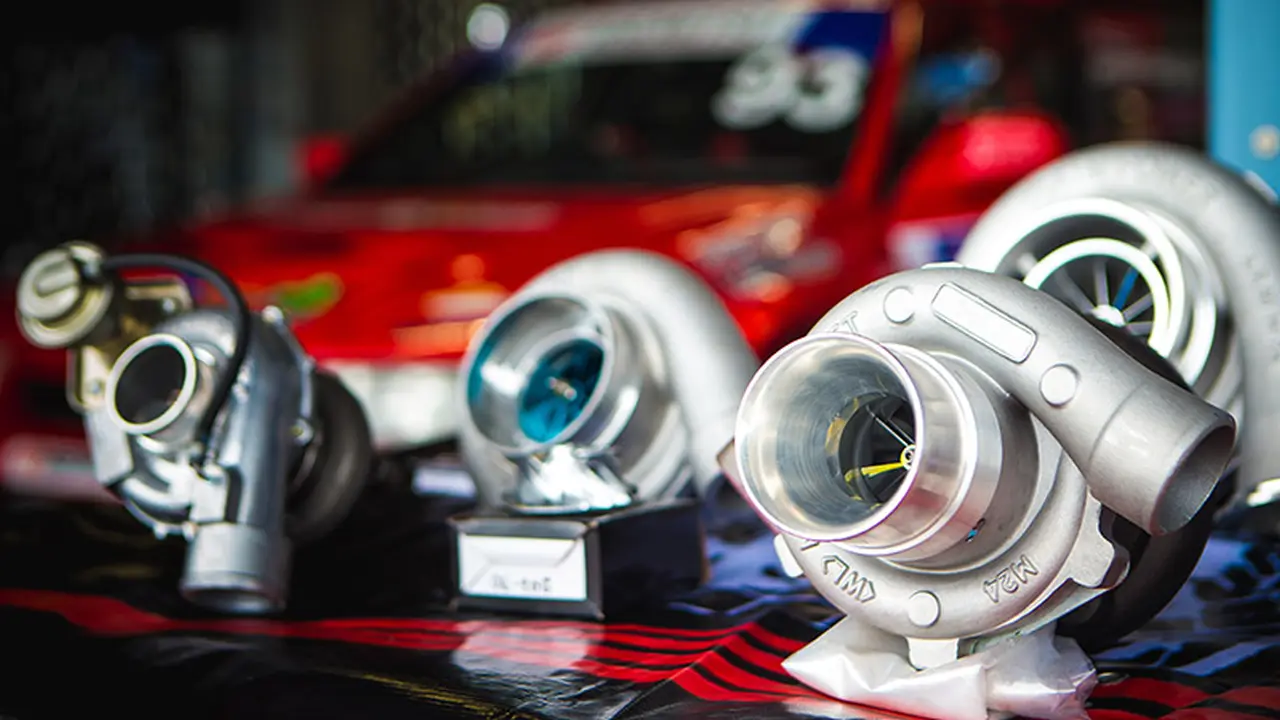
What Is Turbo Lag?
Turbo lag is the delay between pressing the accelerator and the turbocharger producing enough boost pressure to deliver the expected increase in engine power.
It is one of the most commonly discussed characteristics of turbocharged engines.
When the driver suddenly presses the accelerator, the engine does not always produce maximum turbocharged power immediately. There can be a short period during which the engine responds normally or only moderately before the turbocharger builds the required boost.
This delay is called turbo lag.
Turbo lag is not necessarily a sign of a faulty turbocharger. A certain amount of response delay is a normal characteristic of many turbocharged engines.
However, excessive or suddenly increased turbo lag can indicate a mechanical, electrical, or air-management problem.
How Does Turbo Lag Occur?
To understand turbo lag, it is necessary to understand how a turbocharger works.
A turbocharger uses exhaust gases produced by the engine to spin a turbine.
The turbine is connected to a compressor wheel by a common shaft.
As exhaust gas flow increases, the turbine accelerates. The compressor then draws in fresh air and compresses it before sending it into the engine.
The problem is that the turbocharger cannot instantly reach its required operating speed.
When the engine is running at low RPM and the driver suddenly demands acceleration, exhaust gas flow may initially be insufficient to accelerate the turbocharger quickly.
The turbocharger needs time to build rotational speed and generate the required boost pressure.
That short delay is what the driver experiences as turbo lag.
Turbo Lag vs. Turbocharger Failure
This distinction is extremely important.
Turbo lag is not automatically a turbocharger fault.
A turbocharged engine may have some delay before full boost arrives even when the turbocharger is working perfectly.
A problem exists when the delay becomes excessive compared with the vehicle's normal behavior or when it is accompanied by other symptoms.
For example, if a vehicle that normally produces strong acceleration suddenly becomes extremely slow to build boost, possible causes include:
-
Boost leaks
-
Damaged charge-air hoses
-
Wastegate problems
-
Variable geometry turbocharger problems
-
Faulty boost control solenoid
-
Restricted air intake
-
Exhaust restriction
-
Turbocharger wear
-
Faulty sensors
-
EGR-related problems
-
Intercooler or aftercooler leaks
Therefore, turbo lag should be evaluated according to the vehicle's normal operating characteristics.
What Causes Turbo Lag?
Several factors influence turbocharger response.
The most important include turbocharger size, engine RPM, exhaust gas flow, boost pressure requirements, turbine design, compressor design, engine displacement, and the calibration of the engine management system.
Large Turbocharger
A larger turbocharger can produce substantial airflow and support high engine power, but it generally requires more exhaust energy to accelerate.
This can increase low-RPM response time.
This is one reason high-performance engines may use larger turbochargers or multiple turbochargers.
A large turbocharger may provide excellent high-RPM performance while sacrificing some low-RPM response.
Small Turbocharger
A smaller turbocharger generally requires less exhaust energy to accelerate.
As a result, it can respond quickly at low engine speeds.
However, a small turbocharger has limitations.
At high engine speeds and high airflow requirements, it may not be capable of supplying enough air efficiently for a high-power application.
Engine manufacturers therefore have to balance low-RPM response with high-RPM airflow capacity.
Engine RPM and Exhaust Gas Flow
Turbocharger response is strongly related to exhaust gas energy.
At low RPM, the engine may produce relatively little exhaust gas energy.
As engine speed and load increase, exhaust flow increases and the turbocharger accelerates more quickly.
This is why turbocharged engines often feel different at different engine speeds.
A turbocharger may feel relatively inactive at very low RPM and then suddenly begin producing strong torque as it reaches its effective operating range.
This transition is sometimes incorrectly described as turbo lag.
In reality, part of what the driver feels may simply be the normal boost threshold of the engine.
Boost Threshold vs. Turbo Lag
These two concepts are related but not identical.
Turbo lag refers to the delay between a change in driver demand and the turbocharger responding with increased boost.
Boost threshold refers to the engine speed and operating conditions at which the turbocharger begins producing meaningful boost.
For example, a turbocharged engine may naturally produce little boost at 1,200 RPM and become much stronger around 1,800 RPM.
That does not necessarily mean the turbocharger is suffering from excessive lag.
It may simply be operating below its effective boost range.
Understanding this distinction is important when diagnosing turbocharger behavior.
Variable Geometry Turbochargers and Turbo Response
Many modern diesel engines use variable geometry turbochargers (VGT or VNT).
These turbochargers use adjustable vanes to control exhaust gas flow around the turbine.
At low engine speed, the vanes can be positioned to increase exhaust gas velocity and help the turbocharger spool more quickly.
At higher engine speeds, the vane position changes to control turbine speed and boost pressure.
This technology can significantly improve low-speed response.
However, the mechanism can develop problems.
If the variable geometry vanes become contaminated with carbon deposits or become mechanically stuck, turbocharger response can become abnormal.
Possible symptoms include:
-
Excessive turbo lag
-
Underboost
-
Overboost
-
Poor acceleration
-
Reduced engine power
-
Limp mode
-
Check Engine Light
Wastegate Operation and Turbo Lag
A wastegate controls the amount of exhaust gas reaching the turbine in many turbocharger systems.
If the wastegate opens when it should remain closed, exhaust energy can bypass the turbine.
The turbocharger may then take longer to build boost.
A faulty wastegate actuator or control system can therefore cause symptoms that resemble excessive turbo lag.
Depending on the fault, the vehicle may experience either underboost or overboost.
Boost Leaks Can Feel Like Turbo Lag
A boost leak is another common reason a vehicle may feel slow to develop power.
The turbocharger may be producing compressed air, but some of that air escapes before reaching the engine.
Potential leak points include:
-
Intercooler or aftercooler
-
Charge-air hoses
-
Charge pipes
-
Hose connections
-
Clamps
-
O-rings
-
Intake manifold connections
-
Throttle-body connections
A boost leak can cause the turbocharger to work harder while the engine still fails to achieve the expected boost pressure.
The driver may describe this as "the turbo comes in late."
In reality, the turbocharger may be producing boost, but the boost is not reaching the engine correctly.
Air Filter Restriction
A severely restricted air filter can also affect turbocharger operation.
The turbocharger needs a sufficient supply of fresh air.
If the air filter is heavily blocked, airflow into the compressor can be restricted.
This can contribute to poor engine response and reduced performance.
An air filter is inexpensive compared with a turbocharger, so basic intake-system checks should always be performed before assuming that the turbocharger itself has failed.
Exhaust Restriction
Turbochargers depend on exhaust gas energy.
A restricted exhaust system can interfere with the flow of exhaust gases through the turbocharger.
On diesel engines, a heavily loaded or malfunctioning diesel particulate filter (DPF) can create significant exhaust backpressure.
Other possible causes include:
-
Blocked catalytic converter
-
Damaged exhaust components
-
Excessive soot accumulation
-
Exhaust manifold problems
An exhaust restriction can produce poor acceleration and abnormal turbocharger behavior.
Turbocharger Wear
Mechanical wear inside the turbocharger can also cause slow response.
A turbocharger contains high-speed rotating components that operate under significant temperature and mechanical stress.
Possible signs of turbocharger wear include:
-
Excessive shaft play
-
Damaged compressor wheel
-
Damaged turbine wheel
-
Oil leakage
-
Abnormal turbocharger noise
-
Reduced boost pressure
-
Excessive smoke
-
Increased oil consumption
A worn turbocharger may fail to build boost as efficiently as it did when new.
However, turbocharger replacement should not be based solely on slow acceleration.
The complete turbocharger system should be tested first.
Faulty Boost Control Solenoid
Many turbocharged engines use an electronically or pneumatically controlled boost management system.
A boost control solenoid can regulate vacuum, pressure, or actuator movement depending on the system.
If the solenoid is malfunctioning, the turbocharger may not respond correctly to ECU commands.
This can result in:
-
Slow boost response
-
Underboost
-
Overboost
-
Inconsistent acceleration
-
Limp mode
-
Diagnostic trouble codes
Testing the control system can therefore be essential when diagnosing unusual turbo behavior.
Faulty MAP or MAF Sensor
Sensors play an important role in modern turbocharged engines.
The MAP sensor measures manifold absolute pressure, while the MAF sensor measures the amount of air entering the engine in systems equipped with one.
If sensor readings are incorrect, the ECU may make incorrect decisions regarding fuel delivery, boost control, or engine load.
A sensor problem can therefore feel like a turbocharger problem even when the turbocharger is mechanically healthy.
EGR System Problems
On many diesel and gasoline engines, the Exhaust Gas Recirculation (EGR) system affects the amount of fresh air entering the engine.
If the EGR valve becomes stuck or operates incorrectly, engine airflow and combustion conditions can change.
This can result in poor acceleration and a feeling of delayed turbocharger response.
Carbon buildup around the EGR system can also contribute to airflow restrictions.
What Does Excessive Turbo Lag Feel Like?
Drivers may describe excessive turbo lag in several different ways.
Common complaints include:
-
"The car does not accelerate when I press the pedal."
-
"The turbo comes in very late."
-
"The car suddenly becomes powerful after a certain RPM."
-
"There is no power at low RPM."
-
"The engine feels normal, then suddenly starts pulling."
-
"The vehicle takes too long to build boost."
The exact sensation depends on the engine and turbocharger configuration.
A small amount of delay can be completely normal.
A sudden change in behavior compared with the vehicle's previous performance is much more significant.
Can Turbo Lag Be Reduced?
Yes.
Modern engine manufacturers use several technologies to reduce turbo lag.
These include:
-
Smaller or optimized turbochargers
-
Variable geometry turbochargers
-
Twin-scroll turbochargers
-
Sequential turbocharging
-
Electrically assisted turbochargers
-
Advanced wastegate control
-
Electronic throttle control
-
Sophisticated engine management software
-
Optimized exhaust manifold design
Each technology attempts to improve the relationship between engine demand and turbocharger response.
Twin-Scroll Turbochargers
A twin-scroll turbocharger separates exhaust pulses from different groups of cylinders before they reach the turbine.
This helps preserve exhaust energy and can improve turbine response.
The result can be stronger low- and mid-range response without necessarily using an extremely small turbocharger.
This technology is particularly useful in engines where manufacturers want a combination of quick response and high airflow capacity.
Electrically Assisted Turbochargers
Some modern engines use an electric motor to assist turbocharger acceleration.
Instead of relying exclusively on exhaust gas energy, the electric motor can accelerate the turbocharger more quickly.
This can significantly reduce response delay.
Electrically assisted turbocharging is particularly useful in modern powertrains where fast torque delivery and emissions control are important.
Does Higher Boost Always Mean Less Turbo Lag?
No.
Increasing boost pressure does not automatically eliminate turbo lag.
In fact, a turbocharger that must produce very high boost pressure may require more energy and more sophisticated control.
Turbocharger sizing, turbine design, compressor characteristics, engine displacement and control strategy all affect response.
The goal is not simply to produce maximum boost.
The goal is to produce the right amount of boost at the right time.
How Is Turbo Lag Diagnosed?
A proper diagnosis should begin by determining whether the vehicle's behavior is actually abnormal.
A technician can use a diagnostic scanner to monitor parameters such as:
-
Requested boost pressure
-
Actual boost pressure
-
Engine RPM
-
Intake-air temperature
-
MAP sensor readings
-
MAF readings
-
Turbocharger actuator position
-
Wastegate position
-
Engine load
A road test with live data can be particularly useful.
If the ECU requests a certain boost level but actual boost rises very slowly, the technician can investigate the cause.
The next step may include inspecting the air intake, charge-air system, turbocharger control components and exhaust system.
How Are Boost Leaks Tested?
A charge-air pressure test can help locate leaks.
The system is pressurized using appropriate equipment and within safe manufacturer-recommended limits.
Technicians can then look for escaping air.
Smoke testing may also be useful in certain applications.
It is important not to apply excessive pressure to the system because components such as seals, hoses and sensors can be damaged.
Is Turbo Lag Normal?
A certain amount of turbo lag is normal on many turbocharged engines.
The amount depends on the design of the engine and turbocharger.
A small gasoline engine with a modern small turbo may respond very quickly, while a large diesel or high-performance engine with a larger turbocharger may have a more noticeable delay.
Therefore, turbo lag should always be evaluated relative to the specific engine.
The most important warning sign is a change from the vehicle's normal behavior.
If the vehicle has always had a small amount of turbo lag, this may simply be part of its design.
If the delay suddenly becomes much worse, a fault should be investigated.
Final Thoughts
Turbo lag is the temporary delay between demanding acceleration and the turbocharger building the required boost pressure.
It is primarily related to the time required for the turbocharger to accelerate and for the engine management system to establish the desired boost conditions.
A certain amount of turbo lag is normal and depends on turbocharger size, engine characteristics, exhaust flow, boost requirements and control strategy.
However, excessive turbo lag can indicate a problem.
Boost leaks, damaged hoses, wastegate faults, variable geometry turbocharger problems, restricted intake or exhaust systems, faulty sensors, boost-control problems and turbocharger wear can all produce symptoms that resemble turbo lag.
For this reason, replacing the turbocharger should not be the first diagnostic step.
A proper inspection of the complete intake, charge-air, exhaust and boost-control systems is a much more reliable way to identify the actual cause.
In a healthy turbocharged engine, the objective is not to eliminate every fraction of a second of response delay. Instead, the turbocharger should build boost predictably, efficiently and consistently according to the engine's design.