TR
TR EN
EN

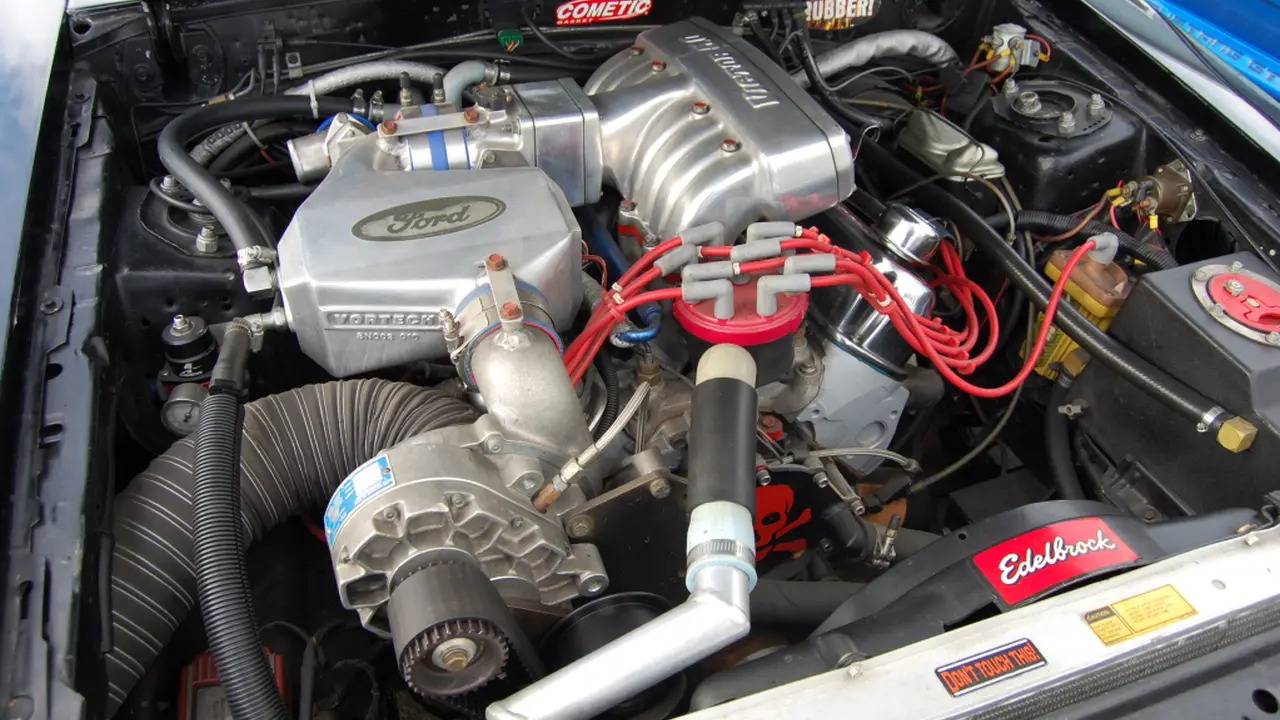
What Is an Aftercooler? What Are the Symptoms of Aftercooler Failure?
An aftercooler is a component designed to reduce the temperature of compressed intake air before it enters the engine.
It is mainly found on turbocharged and supercharged engines, where the intake air is compressed to increase the amount of air entering the cylinders.
Although the term aftercooler is technically used in different ways depending on the application, in automotive terminology it is often used to describe a charge-air cooler, similar to what is commonly called an intercooler.
The basic idea is simple: the turbocharger or supercharger compresses the air, compression makes the air hotter, and the aftercooler removes some of that heat before the air reaches the engine.
This cooling process is important because cooler air is denser than hot air. As a result, the engine can receive a greater mass of oxygen, helping maintain efficient combustion and stable performance.
A damaged aftercooler, however, can create problems ranging from reduced engine performance to boost pressure loss, increased intake-air temperatures and, in certain systems, coolant leakage.
Why Does a Turbocharged Engine Need an Aftercooler?
To understand the importance of an aftercooler, it is necessary to look at what happens when a turbocharger compresses air.
A turbocharger draws air into its compressor and increases the pressure of that air.
When the air is compressed, its temperature rises.
This is a natural consequence of compression.
The problem is that hot air is less dense than cool air. Therefore, simply increasing the pressure of intake air does not guarantee that the engine will receive the maximum possible amount of oxygen.
The aftercooler reduces the temperature of the compressed air.
When the temperature decreases, the air becomes denser. More oxygen can therefore enter the cylinders for a given volume of intake air.
This can help the engine achieve:
-
Better combustion
-
More consistent power
-
Improved charge-air temperature control
-
Better engine efficiency
-
Greater resistance to excessive intake temperatures
-
More stable performance under heavy load
In gasoline engines, controlling intake-air temperature can also be important for reducing the tendency toward abnormal combustion or knock, particularly when the engine is operating under high load and elevated boost pressure.
How Does an Aftercooler Work?
The aftercooler is installed in the charge-air path between the compressor and the engine intake system.
The exact location depends on the vehicle.
In a typical turbocharged engine, the process is approximately:
Air filter → Turbocharger → Hot compressed air → Aftercooler → Throttle body → Intake manifold → Engine
The turbocharger compresses the air and increases its temperature.
The hot compressed air then travels through a charge pipe toward the aftercooler.
Inside the aftercooler, heat is transferred away from the compressed air.
The cooled air then continues toward the intake manifold.
The aftercooler does not produce boost pressure. Its job is to manage the temperature of the air that has already been compressed.
Air-to-Air Aftercooler
One of the most common aftercooler designs is the air-to-air system.
In this design, the compressed intake air flows through the internal passages of the aftercooler while outside air passes over its cooling fins.
Heat moves from the hot charge air into the cooler external air.
Vehicle speed can provide a significant amount of airflow through the cooler, while cooling fans may also contribute depending on the vehicle's design.
The effectiveness of an air-to-air aftercooler depends on factors such as:
-
Outside air temperature
-
Vehicle speed
-
Airflow through the cooler
-
Cooler core size
-
Core design
-
Charge-air temperature
-
Boost pressure
-
Engine load
-
Condition of the external fins
A vehicle may therefore perform differently on a cold day compared with a very hot day, even when the engine itself has no mechanical fault.
Air-to-Water Aftercooler
Some engines use an air-to-water aftercooler instead.
In this system, liquid coolant removes heat from the compressed air.
The charge air passes through a heat exchanger, while coolant flows through another section of the system.
The coolant absorbs heat from the compressed air and carries it away.
The heated coolant is then cooled through a separate heat exchanger or radiator and circulated again.
This design can be useful when the manufacturer needs a compact charge-air cooling system.
Air-to-water systems can also provide strong cooling performance during certain transient operating conditions because the coolant circuit can absorb heat rapidly.
However, they contain additional components that can fail.
A typical system may include:
-
Aftercooler core
-
Coolant pump
-
Coolant lines
-
Heat exchanger
-
Temperature sensors
-
Seals and O-rings
-
Expansion reservoir or related coolant components
A failure in any of these components can affect charge-air temperature.
What Are the Symptoms of Aftercooler Failure?
An aftercooler does not always fail in the same way.
It can develop an external crack, an internal leak, a damaged connection, restricted airflow, damaged cooling fins or a problem with its associated hoses and seals.
The symptoms therefore depend on the type and severity of the failure.
Common symptoms include:
-
Loss of engine power
-
Poor acceleration
-
Reduced turbocharger performance
-
Low or unstable boost pressure
-
Hissing or air-leak noises
-
Increased intake-air temperature
-
Engine hesitation
-
Poor throttle response
-
Increased fuel consumption
-
Check Engine Light
-
Reduced performance under heavy load
-
Excessive oil residue around charge-air connections
-
Black smoke on some diesel engines
-
Coolant loss on liquid-cooled systems
Not every vehicle will display all of these symptoms.
Loss of Engine Power
One of the most noticeable symptoms is loss of power.
If the aftercooler or its charge-air connections develop a leak, some of the compressed air produced by the turbocharger may escape before reaching the engine.
The turbocharger may still be producing boost, but the engine does not receive the expected amount of air.
The driver may notice that the vehicle feels weaker during acceleration.
This can be particularly obvious when:
-
Accelerating uphill
-
Overtaking
-
Driving at high engine speed
-
Using high boost pressure
-
Carrying a heavy load
-
Towing a trailer
A small leak may only become noticeable under high boost.
Poor Acceleration
A damaged aftercooler system can also cause slow or inconsistent acceleration.
The engine may feel relatively normal during light driving but become noticeably weaker when the accelerator is pressed harder.
In some cases, acceleration may initially feel normal and then deteriorate as boost pressure increases.
This happens because a small crack or weak hose connection may remain relatively sealed at low pressure but open further as pressure increases.
Reduced or Unstable Boost Pressure
A leak in the charge-air system can prevent the engine from reaching its expected boost pressure.
The engine control system may compare the expected boost with the measured boost.
If the actual pressure remains lower than expected, the vehicle may record an underboost-related diagnostic trouble code.
However, low boost does not automatically mean that the aftercooler itself is defective.
The problem could also be caused by:
-
Cracked charge pipes
-
Loose clamps
-
Damaged O-rings
-
Leaking intake connections
-
Turbocharger problems
-
Wastegate problems
-
Variable geometry turbocharger problems
-
Boost control solenoid faults
-
Diverter or bypass valve problems
-
MAP sensor problems
This is why the entire boost system should be tested before replacing the aftercooler.
Hissing or Whistling Noise
A leaking aftercooler or charge-air connection may produce a hissing sound during acceleration.
The sound usually becomes more noticeable when the turbocharger produces higher boost pressure.
A small leak may sound like a faint hiss, while a larger leak can produce a much louder rushing-air noise.
A whistling sound does not necessarily mean that the turbocharger is damaged.
The sound may originate from a cracked hose, loose connection or damaged aftercooler end tank.
Locating the exact source of the noise is therefore important.
Increased Intake-Air Temperature
Another important symptom is higher-than-expected intake-air temperature.
If the aftercooler cannot remove sufficient heat, the air entering the engine may remain excessively hot.
The engine's intake-air temperature sensor can often provide useful information through diagnostic equipment.
High intake-air temperature may occur because of:
-
A damaged aftercooler
-
Restricted airflow
-
Heat-soaked cooler
-
Blocked external fins
-
Excessive charge temperature
-
High ambient temperature
-
Poor coolant circulation in an air-to-water system
A high IAT reading alone does not prove that the aftercooler is defective.
Engine Hesitation and Poor Throttle Response
A charge-air leak can cause hesitation during acceleration.
The driver may press the accelerator and notice that the engine does not respond as quickly or smoothly as expected.
The problem may become more noticeable when the turbocharger begins producing significant boost.
On some engines, the ECU may reduce engine output when it detects that boost pressure or airflow does not match the expected values.
Increased Fuel Consumption
A malfunctioning charge-air cooling system can sometimes contribute to increased fuel consumption.
The relationship is not always direct.
If the system has a significant boost leak, the engine may not achieve its intended operating conditions. The engine management system may adjust fueling and boost control in response to the detected conditions.
The result can be reduced efficiency and higher fuel consumption.
However, increased fuel consumption should never be attributed to the aftercooler without proper diagnosis.
Many other faults can produce the same symptom.
Black Smoke From a Diesel Engine
On diesel engines, a significant charge-air leak can sometimes produce black smoke, especially during acceleration.
Diesel combustion depends heavily on the amount of available air.
If the engine receives less air than expected while fuel delivery remains high, combustion can become incomplete.
This can result in excessive soot and visible black smoke.
A leaking charge-air hose, cracked aftercooler or damaged connection can therefore be one possible cause.
However, black smoke can also be caused by injector problems, EGR faults, turbocharger problems, air filter restriction and other engine-management issues.
Oil Around the Aftercooler or Charge Pipes
Oil residue around an aftercooler or charge pipe often attracts attention.
A small amount of oily film inside a turbocharged intake system is not necessarily abnormal.
Turbocharged engines can carry some oil vapor through the crankcase ventilation system, and a small amount can accumulate in the charge-air system.
However, excessive oil accumulation or oil leaking from a charge-air connection deserves investigation.
It may indicate a leaking connection, excessive crankcase ventilation oil mist or a turbocharger-related problem.
Oil around the aftercooler does not automatically mean that the turbocharger has failed.
The source must be identified before replacing expensive components.
Coolant Loss in an Air-to-Water Aftercooler
Air-to-water systems have a specific additional failure possibility: coolant leakage.
If the aftercooler core develops an internal leak, coolant may enter the charge-air system.
Depending on the design and location of the cooler, this can create a serious problem.
Possible signs include:
-
Unexplained coolant loss
-
Reduced charge-air cooling
-
Moisture in the intake system
-
Engine running problems
-
White exhaust smoke in certain failure conditions
-
Abnormal combustion symptoms
A coolant leak into the intake system should be investigated promptly.
The vehicle should not continue to be driven normally if a significant internal coolant leak is suspected.
Can an Aftercooler Become Blocked?
Yes.
An aftercooler can become restricted internally or externally.
External blockage usually involves dirt, mud, insects, leaves or other debris covering the cooling fins.
This reduces airflow and makes heat transfer less effective.
Internal restriction can be caused by contamination or excessive deposits in certain systems.
A restricted aftercooler can increase intake-air temperature and reduce performance.
The external fins should therefore be kept reasonably clean, but they must be cleaned carefully.
Aggressive pressure washing can bend the delicate fins and make airflow worse.
Can the Aftercooler Crack?
Yes.
Aftercoolers are exposed to:
-
Heat
-
Pressure
-
Vibration
-
Thermal expansion
-
Mechanical stress
-
Road debris
-
Corrosion
Over time, these conditions can cause cracks or damage.
The end tanks and connection areas can be particularly important inspection points.
A crack may be difficult to see during a simple visual inspection because it may only open when the system is pressurized.
This is why pressure testing is often more useful than simply looking at the cooler.
Why Does an Aftercooler Leak?
A leaking aftercooler is one of the more common problems in charge-air systems.
Possible causes include:
Physical damage
A road object can damage the cooler, particularly when it is mounted in an exposed position.
Cracked end tanks
Repeated heating and cooling cycles can eventually weaken certain materials.
Corrosion
Long-term exposure to moisture, salt and contaminants can cause corrosion.
Loose connections
A damaged or improperly tightened clamp can allow compressed air to escape.
Damaged seals
O-rings and other seals can become hard, cracked or deformed with age.
Excessive boost pressure
Operating the engine outside its intended boost range can place additional stress on the charge-air system.
How Is an Aftercooler Diagnosed?
Proper diagnosis should begin with the entire charge-air system rather than immediately replacing the aftercooler.
A technician will normally start with a visual inspection.
The following components should be examined:
-
Aftercooler core
-
End tanks
-
Charge-air hoses
-
Charge pipes
-
Clamps
-
O-rings
-
Intake connections
-
Throttle-body connection
-
Intake manifold connections
-
Boost control components
The system should also be checked for evidence of oil residue, physical damage or loose connections.
Pressure Testing the Charge-Air System
A pressure test is one of the most useful methods for finding a boost leak.
The system is pressurized using appropriate diagnostic equipment and within the manufacturer's specified limits.
The technician then checks for escaping air.
A leak may produce an audible hiss or may be located using another suitable leak-detection method.
The system should never be pressurized beyond safe limits.
Excessive test pressure can damage components that were not originally defective.
Checking Boost Pressure With a Diagnostic Scanner
A scan tool can provide valuable information.
Depending on the vehicle, the technician may be able to compare:
-
Requested boost pressure
-
Actual boost pressure
-
Intake-air temperature
-
MAP sensor readings
-
Mass airflow readings
-
Turbocharger control position
-
Engine load
If requested boost is significantly higher than actual boost, further investigation is necessary.
This information can help determine whether the problem is related to a charge-air leak, turbocharger control system or sensor issue.
Checking Intake-Air Temperature
The intake-air temperature should also be evaluated.
A functioning aftercooler should reduce the temperature of compressed intake air under appropriate operating conditions.
However, there is no single universal temperature value that applies to every vehicle.
The expected temperature depends on:
-
Engine design
-
Turbocharger size
-
Boost pressure
-
Outside temperature
-
Vehicle speed
-
Engine load
-
Aftercooler design
For this reason, the manufacturer's specifications and live-data behavior are more useful than relying on one generic temperature number.
How Is an Air-to-Water Aftercooler Diagnosed?
Air-to-water systems require additional checks.
The technician may inspect:
-
Coolant level
-
Coolant hoses
-
Coolant pump operation
-
Heat exchanger condition
-
Electrical connections
-
Temperature sensors
-
Internal cooler leakage
If the coolant pump is not circulating coolant correctly, the charge-air temperature can rise even if the aftercooler core itself is perfectly intact.
Therefore, replacing the cooler without checking the pump and coolant circuit can result in an unnecessary repair.
Can You Drive With a Bad Aftercooler?
It depends on the type and severity of the failure.
A small external leak may allow the vehicle to continue running, but engine performance may be reduced.
A major boost leak can cause significant loss of power and abnormal turbocharger operation.
If an air-to-water aftercooler is leaking coolant internally, the situation can be considerably more serious.
Continuing to drive with a known major charge-air or coolant-system problem is therefore not recommended.
If the engine is losing substantial power, producing unusual smoke, consuming coolant or showing serious warning lights, the vehicle should be inspected as soon as possible.
Can a Bad Aftercooler Damage the Turbocharger?
A defective aftercooler does not normally damage the turbocharger simply because its cooling performance is reduced.
However, a major charge-air leak can change the operating conditions of the turbocharger and engine control system.
The ECU may attempt to maintain the requested boost, depending on the system design, which can cause the turbocharger to work harder.
The exact consequences depend on the engine management strategy and the location and size of the leak.
A severely damaged charge-air system should therefore not be ignored.
Can a Bad Aftercooler Damage the Engine?
A simple external air leak usually causes performance and efficiency problems rather than immediate catastrophic engine damage.
However, certain failure modes can be more serious.
For example, an internal coolant leak in an air-to-water aftercooler can potentially introduce coolant into the intake system.
If a large quantity of liquid enters a cylinder, severe engine damage can occur.
This is not the normal failure mode of an aftercooler, but it is one reason why unexplained coolant loss combined with intake-system problems should be investigated quickly.
Is Oil Inside an Aftercooler Normal?
A small amount of oil residue can be normal in some turbocharged engines.
Crankcase ventilation systems can introduce oil vapor into the intake system, and turbocharger systems can also contribute to a small amount of oil mist.
Therefore, finding a thin oily film inside a charge-air pipe does not automatically mean that the turbocharger is defective.
The situation becomes more concerning when there is:
-
Large amounts of liquid oil
-
Rapid oil consumption
-
Heavy smoke
-
Significant oil accumulation
-
Turbocharger shaft or seal problems
-
Oil pooling inside the charge-air system
The entire intake and turbocharger system should be evaluated before drawing a conclusion.
Common Problems That Are Mistaken for Aftercooler Failure
One of the biggest diagnostic mistakes is assuming that every boost-related problem comes from the aftercooler.
Several other components can produce very similar symptoms.
These include:
Turbocharger
A worn or damaged turbocharger can cause low boost, abnormal noise and poor acceleration.
Charge-air hoses
A cracked hose can create a major boost leak even when the aftercooler itself is perfectly healthy.
Boost control solenoid
A faulty control solenoid can prevent the turbocharger from producing the expected boost pressure.
Wastegate
A wastegate that does not operate correctly can cause underboost or overboost.
Variable geometry turbocharger mechanism
On diesel engines with variable geometry turbochargers, sticking vanes can cause significant boost-control problems.
MAP sensor
An inaccurate manifold absolute pressure sensor can cause incorrect boost calculations and misleading diagnostic symptoms.
Mass airflow sensor
An inaccurate MAF sensor can affect engine fueling and turbocharger control.
Throttle body or intake system
A restriction or leakage further downstream can also affect engine performance.
This is why replacing the aftercooler without testing the system can waste both time and money.
Does Every Turbocharged Car Have an Aftercooler?
Not necessarily.
Many modern turbocharged vehicles use a charge-air cooling system, but the design and terminology vary.
Some manufacturers call the component an intercooler.
Others use the term charge-air cooler or aftercooler.
Some engines use air-to-air cooling, while others use air-to-water technology.
Naturally aspirated engines generally do not require an aftercooler because they do not compress the intake air with a turbocharger or supercharger.
How Can Aftercooler Problems Be Prevented?
There is usually no universal replacement interval for an aftercooler.
A properly designed aftercooler can last for many years.
Preventive maintenance mainly involves keeping the complete charge-air system in good condition.
Useful practices include:
-
Inspect charge-air hoses regularly
-
Check clamps and connections
-
Look for oil residue around joints
-
Keep external cooling fins reasonably clean
-
Avoid damaging the fins during cleaning
-
Check coolant levels on liquid-cooled systems
-
Investigate unexplained coolant loss
-
Repair boost leaks promptly
-
Do not operate the engine with uncontrolled excessive boost
-
Follow the manufacturer's service recommendations
When Should the Aftercooler Be Replaced?
An aftercooler should normally be replaced when it has been confirmed to be physically damaged, internally leaking, severely corroded, blocked beyond practical repair or otherwise unable to perform its intended function.
A small external issue may sometimes be repairable depending on the cooler design and manufacturer's recommendations.
However, repairability depends heavily on construction material and location.
Before replacing an expensive aftercooler, the technician should confirm that the cooler itself is actually responsible for the problem.
A leaking hose or failed O-ring is much cheaper to replace than the entire cooler.
Final Thoughts
The aftercooler plays an important role in modern forced-induction engines.
Its job is not to create boost but to control the temperature of compressed intake air.
By reducing charge-air temperature, it helps increase air density and allows the engine to operate more effectively under boost.
The most common signs of an aftercooler or charge-air system problem include loss of power, poor acceleration, low boost pressure, hissing noises, high intake-air temperature, hesitation and increased fuel consumption.
On air-to-water systems, coolant loss can also be an important warning sign.
However, these symptoms are not exclusive to the aftercooler. Turbochargers, charge pipes, hoses, clamps, sensors, boost-control components and intake-system leaks can create very similar symptoms.
For this reason, the correct approach is to diagnose the complete charge-air system rather than replacing the aftercooler based only on symptoms.
A visual inspection combined with boost-pressure data, intake-air temperature readings and an appropriate pressure test can usually provide much stronger evidence of the actual fault.
In short, an aftercooler may be a relatively simple component, but its condition has a direct influence on the performance and temperature management of a turbocharged or supercharged engine.