TR
TR EN
EN

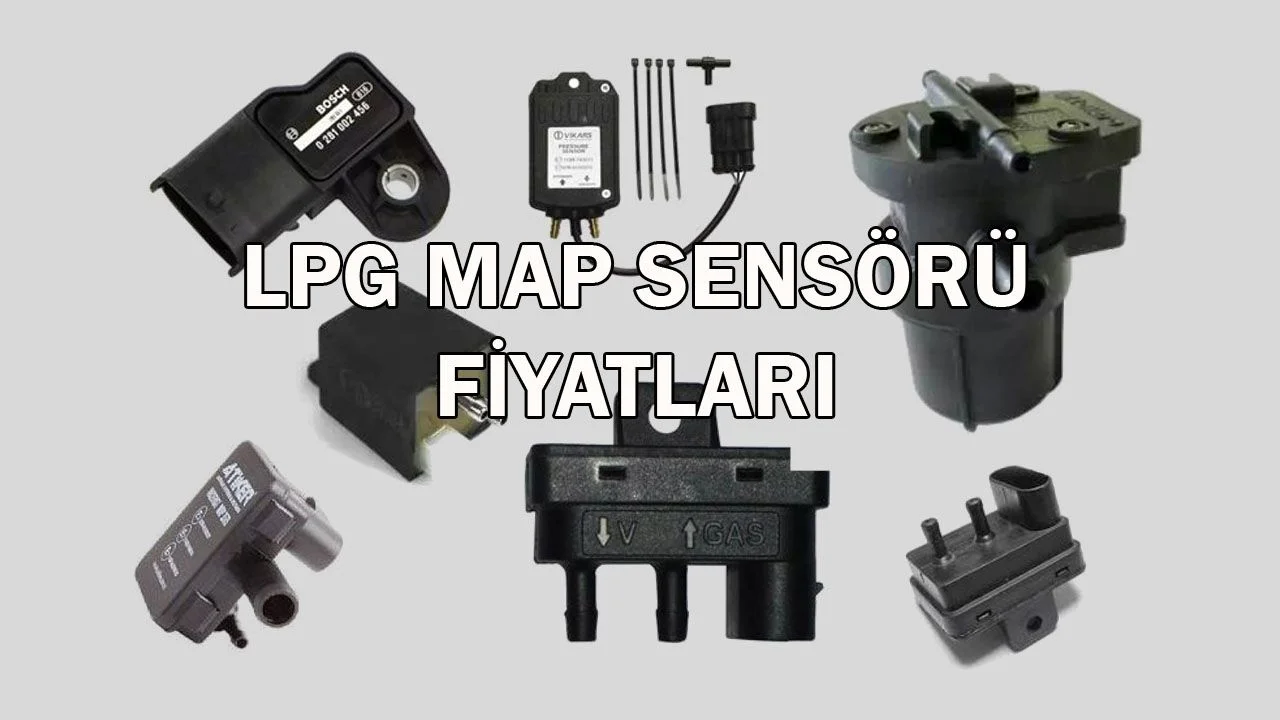
LPG MAP Sensor Prices 2026: Price List
The MAP sensor is an important component in sequential LPG systems. It measures pressure in the intake manifold and is therefore also commonly referred to as a pressure sensor.
The information provided by the MAP sensor is used by the LPG ECU to determine engine load and adjust LPG injection accordingly. When the sensor and LPG system are correctly calibrated, this helps the engine maintain operation on LPG that is as stable and efficient as possible.
MAP sensor problems can cause various drivability issues. Depending on the LPG system and the type of failure, the vehicle may have difficulty switching to LPG, experience a significant loss of power, consume more fuel, run roughly, or trigger an engine warning light.
Before replacing a MAP sensor, however, the MAP hose should always be inspected. A cracked, loose, disconnected, or damaged hose can cause incorrect pressure readings and produce symptoms that look like a sensor failure. In such a case, replacing the sensor unnecessarily increases the repair cost.
Note: The prices below are provided for informational purposes only. No product sales are made through this article. Prices can change depending on exchange rates, suppliers, stock availability, and market conditions.
Last Updated: January 1, 2026
2026 LPG MAP Sensor Prices
The following price list is based on the Turkish market. Some products are listed in Turkish lira, while others are priced in euros.
AEB
-
MAP sensor: 1,800 TL
-
Micro MAP sensor: 1,900 TL
AKL
-
Powerfast MAP sensor: 1,300 TL
-
Micro MAP sensor: 1,800 TL
Atiker
-
Multifast MAP sensor: 1,500 TL
-
Safefast 3515 MAP sensor: 1,500 TL
-
Microfast MAP sensor: 1,500 TL
-
Nanofast 3345 MAP sensor: 1,500 TL
-
Fast MAP sensor: 1,350 TL
-
Atikfast 3517 MAP sensor: 1,500 TL
-
Atikfast 3576 MAP sensor, gray: 1,500 TL
Aldesa
-
Start MAP sensor: 1,500 TL
-
Galaxy MAP sensor: 1,800 TL
-
Technoseq MAP sensor: 1,800 TL
-
Zenit MAP sensor: 1,800 TL
BRC
-
PTS MAP sensor: €50
-
Sequent 24 MAP sensor: €60
-
Sequent P&D MAP sensor: €70
Cangas
-
MAP sensor: 1,500 TL
Destro
-
MAP sensor: 1,500 TL
Ecotech
-
Compatible MAP sensor: 1,500 TL
Emer
-
MAP sensor: 1,500 TL
Emmegas
-
MAP sensor: 1,500 TL
-
Simple MAP sensor: 1,800 TL
Fema
-
MAP sensor: 1,500 TL
Gasitaly
-
F1 MAP sensor: 1,600 TL
-
F5 MAP sensor: 1,600 TL
GFI
-
PTS MAP sensor: 1,800 TL
Kitmtm
-
PTS MAP sensor: 2,000 TL
KME
-
PS-CC1 MAP sensor: 1,800 TL
-
CCT6 MAP sensor: 2,400 TL
Landi
-
LSI-One MAP sensor: €35
-
Bosch MAP sensor: €36
Landirenzo
-
Bosch MAP sensor: €36
-
LR025 MAP sensor: €30
-
Omegas PVS MAP sensor: €35
-
Sensata MAP sensor: €50
Lovato
-
EGO MAP sensor: €40
-
Easyfast OBDII filtered MAP sensor: €62
-
Smart MAP sensor: €58
-
Bosch MAP sensor: €36
Milano
-
MAP sensor: 1,500 TL
Mimgas
-
MAP sensor: 1,500 TL
OMVL
-
Compatible MAP sensor: 1,500 TL
Platinca
-
MAP sensor: 1,500 TL
Prins
-
Technomax MAP sensor: 1,500 TL
-
Ecomax MAP sensor: 1,500 TL
-
Bosch MAP sensor: €36
Romano
-
Romano RisN MAP sensor: 1,500 TL
Tartarini
-
MAP sensor: 1,800 TL
-
Compatible MAP sensor: 1,500 TL
Teleflex – GFI
-
Bosch MAP sensor: €36
Tomasetto
-
Compatible MAP sensor: 1,500 TL
Vikars
-
SC24 MAP sensor: 1,500 TL
-
Performance MAP sensor: 1,500 TL
-
Europe MAP sensor: 1,500 TL
Zavoli
-
PTS MAP sensor: €40
-
Compatible MAP sensor: 1,500 TL
Wentgas
-
Micro MAP sensor: 1,500 TL
-
Fast MAP sensor: 1,500 TL
What Does an LPG MAP Sensor Do?
The MAP sensor measures pressure in the intake manifold and/or the pressure information required by the LPG control system, depending on the specific LPG system design.
The LPG ECU uses this information together with other parameters to estimate engine load and determine the appropriate LPG injection strategy.
The sensor may also be integrated into a pressure-temperature sensor assembly on some LPG systems.
This means that the exact function and measured parameters can vary between LPG kits.
A MAP sensor should therefore be considered as part of the overall LPG control system rather than as a simple standalone pressure switch.
Why Is the MAP Sensor Important for LPG?
An LPG ECU needs accurate information about engine operating conditions.
If the pressure information is incorrect, the ECU may calculate an inappropriate LPG injection quantity.
Depending on the system, this can lead to:
-
Poor acceleration
-
Rough idle
-
Hesitation
-
Increased LPG consumption
-
Difficulty switching to LPG
-
LPG system fault warnings
-
Engine warning light
-
Switching back to gasoline
-
Poor high-load performance
The exact symptoms depend on whether the sensor is reading too high, too low, intermittently, or not communicating with the ECU at all.
What Causes an LPG MAP Sensor to Fail?
MAP sensors can fail for several reasons.
Electrical problems: Damaged wiring, poor grounds, loose connectors, corrosion, or power-supply problems can cause incorrect readings.
Pressure hose problems: A cracked, disconnected, blocked, or leaking hose can prevent the sensor from receiving the correct pressure signal.
Contamination: Oil vapor, LPG residues, or other contaminants can affect the sensor or its pressure connection.
Age and wear: Sensors can eventually develop internal electrical faults.
Incorrect installation: A poorly routed or damaged hose can create unstable pressure readings.
ECU-related problems: In some cases, the sensor itself is healthy and the actual problem is within the LPG ECU, wiring, or its power supply.
For this reason, replacing the sensor immediately after seeing an abnormal reading is not always the correct solution.
Always Check the MAP Hose Before Replacing the Sensor
This is one of the most important diagnostic points.
The hose connecting the MAP sensor to the intake or LPG pressure measurement point can develop:
-
Cracks
-
Small leaks
-
Loose connections
-
Blockages
-
Kinks
-
Disconnections
A small leak can be enough to produce an incorrect pressure signal.
If the sensor itself is functioning correctly but the hose is leaking, installing a new sensor will not solve the problem.
The hose should therefore be inspected before purchasing a replacement sensor.
Can a Bad MAP Sensor Prevent LPG Switching?
Yes, depending on the LPG system.
Many sequential LPG systems use pressure information as part of their strategy for determining whether the engine is operating under suitable conditions for LPG operation.
If the sensor provides an implausible signal, the LPG ECU may prevent the system from switching to LPG or may switch the vehicle back to gasoline.
However, failure to switch to LPG does not automatically mean the MAP sensor is defective.
Coolant temperature, RPM signal, LPG pressure, regulator temperature, injector operation, ECU settings, and other parameters can also affect LPG switching.
Can an LPG MAP Sensor Cause High Fuel Consumption?
It can contribute to increased consumption if incorrect pressure information causes the LPG ECU to calculate an incorrect fuel quantity.
However, excessive LPG consumption has many possible causes.
Other possibilities include:
-
Incorrect LPG calibration
-
Incorrect LPG pressure
-
Dirty or worn injectors
-
Incorrect injector sizing
-
Faulty oxygen sensor
-
Vacuum leaks
-
Air intake problems
-
Poor ignition performance
-
Regulator problems
-
Incorrect fuel trims
-
Engine mechanical problems
A MAP sensor should therefore be tested rather than replaced solely because fuel consumption has increased.
What Are the Symptoms of a Faulty LPG MAP Sensor?
Common symptoms can include:
-
Engine hesitation on LPG
-
Poor throttle response
-
Reduced engine power
-
Unstable idle
-
Increased LPG consumption
-
Difficulty switching to LPG
-
Switching from LPG back to gasoline
-
Misfires
-
LPG ECU fault warnings
-
Check Engine Light
-
Inconsistent LPG operation under load
Some failures may be intermittent. In such cases, the vehicle may operate normally for a while and then suddenly develop a problem.
Does a MAP Sensor Affect Engine Performance on Gasoline?
It depends on the LPG system and how the sensor is integrated.
Some LPG MAP sensors primarily provide information to the LPG ECU, while certain systems may also interact with or monitor engine-management parameters.
If the problem is isolated to the LPG system, the vehicle may run normally on gasoline but poorly on LPG.
This distinction can be useful during diagnosis.
For example, if the engine operates smoothly on gasoline but develops hesitation and power loss immediately after switching to LPG, the LPG system—including its MAP sensor, pressure circuit, regulator, injectors, and calibration—deserves particular attention.
How Is an LPG MAP Sensor Tested?
A proper diagnosis should not rely only on a visual inspection.
A technician can check:
-
Sensor power supply
-
Ground
-
Signal voltage
-
Wiring continuity
-
Connector condition
-
MAP hose condition
-
LPG pressure
-
Sensor readings through LPG software
-
Pressure readings at different engine loads
-
Sensor response during acceleration
-
Stored LPG ECU fault codes
Live data is particularly useful because the technician can observe whether the sensor value changes logically as engine load changes.
If the sensor reading remains fixed, changes erratically, or does not correspond with actual engine operating conditions, further investigation is required.
Should You Buy an Original or Compatible MAP Sensor?
The correct choice depends on the LPG ECU and sensor specifications.
An original sensor designed for the particular LPG system generally provides the safest compatibility.
Compatible sensors can also work correctly when they are genuinely designed for that system and have the correct electrical and pressure characteristics.
The word "compatible" should not be interpreted as meaning that every LPG MAP sensor can be substituted for another.
The following should be checked before installation:
-
Connector type
-
Electrical characteristics
-
Pressure range
-
Sensor output
-
LPG ECU compatibility
-
Hose connection
-
Calibration requirements
A sensor that physically fits the connector may still provide an incorrect signal if its specifications are different.
Do MAP Sensors Need Regular Replacement?
There is generally no universal replacement interval for an LPG MAP sensor.
Unlike an LPG filter, which is a routine maintenance item, the MAP sensor is normally replaced when testing indicates that it has become defective or unreliable.
Regular LPG maintenance can nevertheless help protect the overall system.
Keeping filters in good condition and addressing pressure or contamination problems early can reduce unnecessary stress on other LPG components.
How Much Does an LPG MAP Sensor Cost in 2026?
Based on the Turkey-market price list above, many LPG MAP sensors are around 1,300–2,400 TL, while some branded European products are listed in euros.
In this list, the lowest listed TL price is approximately 1,300 TL, while the highest listed TL price is 2,400 TL.
Euro-denominated examples range from approximately €30 to €70 for the products listed.
These figures are not fixed retail prices. The final cost can change because of exchange rates, supplier pricing, availability, product version, and whether the sensor is sold as an original or compatible replacement.
Installation labor may also be charged separately.
Is the Most Expensive MAP Sensor the Best Choice?
Not necessarily.
The correct MAP sensor is the one that is compatible with the LPG system and provides the required pressure measurement range and electrical signal.
A more expensive sensor from another LPG system may not work correctly with your ECU.
Therefore, selecting a sensor by price or brand alone is not recommended.
The LPG ECU model and the exact sensor specification should be checked before ordering.
LPG MAP Sensor Prices 2026: Important Note
The prices in this article represent a Turkey-market price list updated on January 1, 2026. They are intended for informational purposes and are not fixed or guaranteed sales prices.
Actual prices may vary depending on:
-
Exchange rates
-
Supplier
-
Stock availability
-
Region
-
Product model
-
Original or compatible status
-
LPG system generation
-
Installation costs
For this reason, the exact part number and compatibility should be confirmed before purchasing.
A MAP sensor is relatively small compared with other LPG components, but it plays an important role in pressure measurement and LPG control. When a problem occurs, replacing it without checking the hose, wiring, pressure, connectors, and live data can lead to unnecessary expense.