TR
TR EN
EN

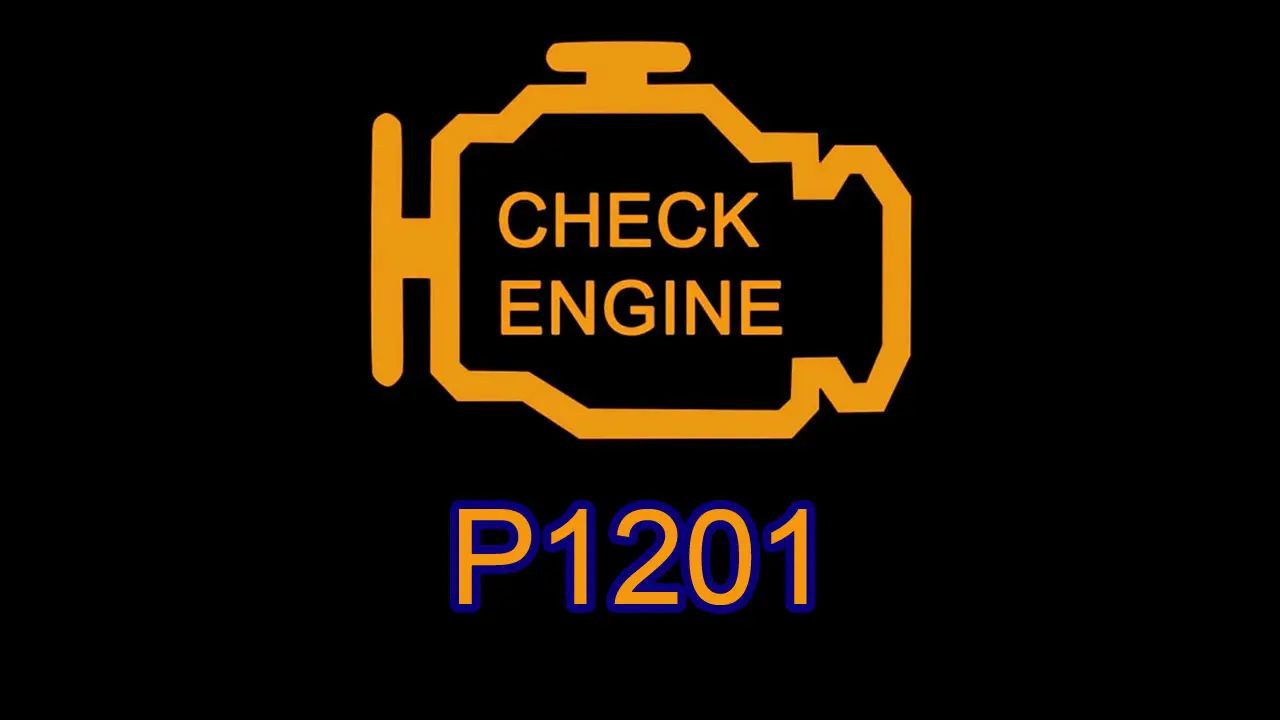
P1201 Injector Circuit Open / Short Cylinder #1
The P1201 trouble code indicates that the engine control module (ECM/PCM) has detected an open circuit or short circuit in the electrical circuit controlling the fuel injector for Cylinder #1.
This is primarily an electrical circuit fault. The code does not automatically mean that Cylinder #1's injector has failed.
The injector itself may be defective, but the same code can also be caused by a damaged wire, loose connector, poor terminal contact, shorted wiring, a shared power-supply problem, or an issue with the injector driver inside the ECM.
That distinction matters because replacing the injector without testing the circuit can leave the original problem untouched.
What P1201 Is Actually Telling You
A fuel injector needs an electrical command from the ECM to deliver fuel at the correct time.
The control system can be simplified as:
ECM → injector control circuit → Cylinder #1 injector → fuel delivery
When the ECM detects that the electrical behavior of this circuit is not what it expects, it can set P1201.
There are two fundamental conditions described by the code:
Open circuit
The electrical path is interrupted.
Short circuit
The circuit is connected to an unintended electrical path or has an abnormal electrical load.
The exact circuit arrangement depends on the vehicle. Some systems provide a shared injector power supply and control the individual injectors on the ground side, while other designs use different architectures.
What Does “Open” Mean?
An open circuit means that current cannot travel through the intended electrical path.
For Cylinder #1, this could happen because of:
-
A broken injector wire
-
A disconnected connector
-
A loose terminal
-
A damaged injector terminal
-
Corrosion inside the connector
-
An internally open injector coil
-
A broken wire inside the harness
-
A damaged ECM-to-injector circuit
A broken wire does not always look broken.
A conductor can fracture internally while the insulation remains intact. Under some conditions it may still make contact, while engine vibration or temperature changes cause the circuit to open.
This can make an intermittent P1201 particularly difficult to reproduce.
What Does “Short” Mean?
A short circuit means the injector circuit is not behaving as an isolated electrical path.
Depending on the vehicle's design, the circuit may be:
-
Shorted to ground
-
Shorted to battery voltage
-
Shorted to another circuit
-
Internally shorted inside the injector
A short can cause excessive current or an abnormal control signal.
Modern ECUs often monitor injector current and electrical response very closely. If the expected electrical pattern is missing or abnormal, the ECM can recognize the problem and store a diagnostic code.
Why Cylinder #1 Is Important
P1201 specifically identifies Cylinder #1.
However, cylinder numbering is not identical on every engine.
On many inline engines, Cylinder #1 is located at one end of the engine, but the exact location depends on the manufacturer's design.
On V-type engines, cylinder numbering can be more difficult to determine from physical appearance alone.
The correct cylinder and injector should therefore be identified using the vehicle's service information rather than assuming which injector is Cylinder #1.
The Injector Is Only One Possibility
It is tempting to interpret P1201 as:
“Cylinder #1 injector is bad.”
That is too narrow.
The ECM cannot necessarily distinguish the physical cause from the initial circuit observation.
For example, these two situations can produce similar symptoms:
Situation A
The injector coil is internally open.
Situation B
The injector is perfectly healthy, but one of its control wires is broken.
In both cases, the ECM may detect that it cannot control the injector correctly.
This is why circuit testing comes before unnecessary parts replacement.
Common Causes of P1201
Defective Cylinder #1 injector
The injector's internal electrical winding or solenoid can fail.
Depending on the design, an internal open or short can trigger the code.
Damaged injector wiring
The harness may be:
-
Broken
-
Chafed
-
Melted
-
Pinched
-
Stretched
-
Corroded
-
Damaged by previous engine work
Injector wiring operates in a harsh environment, with considerable heat and vibration.
Loose injector connector
A connector that is not fully seated can intermittently disconnect the injector.
This can cause the engine to run normally at one moment and develop a severe misfire after vibration or movement.
Corroded terminals
Water, moisture, oil and contamination can interfere with electrical contact.
Even if the connector appears physically connected, increased contact resistance can affect injector operation.
Short to ground
Damaged insulation can allow the control circuit to contact the engine or another grounded component.
Short to voltage
The injector control wire may contact a power source because of damaged insulation or an incorrect previous repair.
Shared injector power problem
Some engines use a common power supply for multiple injectors.
If this supply fails, more than one injector may stop operating.
This becomes especially important if P1201 appears together with other injector circuit codes.
ECM injector driver problem
The ECM contains electronic circuitry that controls the injector.
If the driver fails, the injector and external wiring can test correctly while the ECM remains unable to operate it.
This is possible, but the external circuit should be thoroughly tested before condemning the ECM.
Symptoms You May Notice
The symptoms depend on whether Cylinder #1 receives no fuel, intermittent fuel, or abnormal injector control.
Common symptoms include:
-
Check Engine Light
-
Rough idle
-
Engine misfire
-
Engine vibration
-
Hesitation
-
Poor acceleration
-
Reduced engine power
-
Poor throttle response
-
Increased fuel consumption
-
Difficult starting
-
Extended cranking
-
Engine stalling
-
Increased emissions
If the injector circuit completely fails, Cylinder #1 may contribute little or nothing to engine power.
On a four-cylinder engine, the effect can be particularly noticeable because one cylinder represents a relatively large portion of total engine output.
Why the Engine May Shake
If Cylinder #1 is not receiving its correct fuel injection command, combustion in that cylinder can become weak or disappear completely.
The other cylinders continue producing power, but the engine's torque becomes uneven.
That can create:
-
Rough idle
-
Strong vibration
-
Uneven acceleration
-
Engine shaking
-
Misfire sensations
The ECM may also recognize the resulting combustion problem and store a separate misfire-related DTC.
In that situation, the injector circuit fault may be the underlying cause, while the misfire code is a secondary consequence.
A Flashing Check Engine Light Deserves Attention
If P1201 is accompanied by a flashing Check Engine Light, severe shaking, or a significant misfire, continued driving should be avoided where possible.
On gasoline engines, a severe misfire can allow unburned fuel to enter the exhaust system and overheat the catalytic converter.
The vehicle does not have to remain completely undriveable for the condition to become damaging.
How to Diagnose P1201 Properly
A good diagnosis should establish whether the problem exists at the injector, in the wiring, or at the ECM.
Start With All Stored Codes
Scan the vehicle for stored and pending DTCs.
Pay attention to:
-
Other injector circuit codes
-
Cylinder-specific misfire codes
-
Fuel-pressure codes
-
Battery-voltage codes
-
Engine-control codes
The combination of codes can be more informative than P1201 alone.
If multiple injectors suddenly report electrical faults, investigate shared circuits before replacing several injectors.
Check Freeze-Frame Information
If available, freeze-frame data can show the conditions under which the ECM detected the fault.
Look at:
-
Engine RPM
-
Vehicle speed
-
Engine load
-
Coolant temperature
-
Battery voltage
-
Fuel pressure
-
Engine operating conditions
If P1201 repeatedly appears at a particular RPM or engine temperature, that can help identify an intermittent harness or component problem.
Inspect the Cylinder #1 Injector Connector
Begin with a careful visual inspection.
Look for:
-
Broken connector locks
-
Bent terminals
-
Corrosion
-
Loose terminals
-
Terminals pushed backward
-
Damaged seals
-
Oil contamination
-
Water intrusion
-
Signs of overheating
Do not assume that a connector is good simply because it appears plugged in.
Terminal tension and electrical contact are just as important as physical connection.
Inspect the Harness
Follow the injector wiring away from Cylinder #1.
Look for contact with:
-
Exhaust components
-
Sharp brackets
-
Engine mounts
-
Moving components
-
Hot surfaces
-
Metal edges
Also check areas that may have been disturbed during previous repairs.
A harness that was pinched or stretched during an engine repair can produce an injector circuit fault weeks or months later.
Test the Injector Electrically
The injector should be tested according to the manufacturer's specifications.
Depending on the injector and engine, the technician may check:
-
Coil resistance
-
Continuity
-
Current draw
-
Control waveform
-
Injector activation
-
Electrical response
There is no universal injector resistance specification.
Different injectors use different coil designs and control strategies, so the manufacturer's specification should always be used.
Why a Resistance Test May Not Be Enough
A basic resistance measurement is useful, but it can miss certain problems.
For example, an injector may have acceptable resistance when cold but develop an internal electrical problem after reaching operating temperature.
Similarly, wiring may show continuity when the engine is stationary but lose contact when the harness moves.
For difficult or intermittent P1201 faults, dynamic testing can provide considerably more information.
Check the Injector Control Waveform
Where appropriate, an oscilloscope can be used to observe the injector control signal.
This allows the technician to see whether the ECM is actually commanding the injector and whether the electrical response looks normal.
The waveform can be compared with a known-good injector on the same engine.
Depending on the system, useful information may include:
-
Command timing
-
Pulse duration
-
Current ramp
-
Switching behavior
-
Abnormal voltage spikes
-
Missing commands
-
Irregular current response
The exact waveform depends on the injector technology.
Check Shared Power Supplies
If the engine uses a common injector power feed, this should be checked carefully.
Suppose Cylinder #1, Cylinder #2 and Cylinder #3 all use the same power supply.
If that supply is lost, several injectors can stop operating simultaneously.
If only P1201 is present, an isolated Cylinder #1 problem is more likely, but shared circuits should still be considered according to the vehicle's wiring architecture.
Compare Cylinder #1 With Another Injector
When permitted by the manufacturer's diagnostic procedure, comparing Cylinder #1's electrical circuit with another known-good injector can be very useful.
The technician may compare:
Cylinder #1 ↔ known-good injector circuit
If the electrical problem follows the injector during an appropriate swap test, the injector becomes more suspicious.
If the problem remains associated with the Cylinder #1 wiring position, the harness or control circuit becomes more likely.
This should not be performed blindly. Some injectors require coding, have different characteristics, or should not be interchanged.
Check the ECM Driver Last
If the injector and wiring test correctly but the injector is still not being controlled, the ECM's injector driver may need to be tested.
The technician should verify that:
-
The ECM has proper power
-
ECM grounds are good
-
The injector circuit reaches the correct ECM terminal
-
There are no unwanted shorts
-
The ECM is generating the expected control signal
Only after these checks should an ECM fault become a serious possibility.
Gasoline and Diesel Injectors Are Not the Same
P1201 can appear on different engine types, but the injector technology varies significantly.
A gasoline port injector, gasoline direct injector, and diesel common-rail injector have very different electrical and fuel-pressure requirements.
Diesel common-rail systems can operate at extremely high fuel pressures.
Fuel-system components should therefore not be loosened or disconnected casually on a running or recently operated high-pressure diesel system.
The manufacturer's safety and depressurization procedures should be followed.
Can Low Fuel Pressure Cause P1201?
Low fuel pressure can cause poor engine operation, but it does not normally create an open or short in the injector electrical circuit.
This distinction is important.
If the injector has no electrical command, P1201 makes sense.
If the injector has a correct electrical command but insufficient fuel reaches it, a fuel-pressure or fuel-delivery problem should be investigated separately.
Both conditions can also exist simultaneously.
P1201 vs a Cylinder #1 Misfire Code
These are not necessarily the same problem.
A misfire code tells you that the ECM has detected abnormal combustion in Cylinder #1.
P1201 specifically points toward the injector's electrical circuit.
For example:
P1201 → injector electrical failure → insufficient/no injection → Cylinder #1 misfire
In this scenario, repairing the injector circuit may resolve both the P1201 and the resulting misfire.
P1201 vs P1202
The two codes have the same basic type of fault but identify different cylinders:
P1201 — Injector Circuit Open / Short Cylinder #1
P1202 — Injector Circuit Open / Short Cylinder #2
The diagnostic method is essentially similar, but the technician must follow the wiring and injector associated with the specified cylinder.
If both codes appear together, however, the possibility of a shared circuit problem becomes more important.
Is P1201 Safe to Drive With?
A vehicle may continue to run with P1201, but that does not mean it should be driven normally for a long period.
If Cylinder #1 is not being fueled correctly, the engine may experience a significant misfire.
Potential consequences include:
-
Poor performance
-
Increased fuel consumption
-
Increased emissions
-
Catalytic-converter damage on gasoline engines
-
Engine stalling
-
Difficulty restarting
If the engine is shaking heavily or the Check Engine Light is flashing, diagnosis should be treated as a priority.
Possible Repairs
Once the cause has been confirmed, the repair may involve:
-
Replacing the Cylinder #1 injector
-
Repairing a broken injector wire
-
Replacing damaged wiring
-
Repairing injector connector terminals
-
Correcting corrosion
-
Repairing a short to ground
-
Repairing a short to voltage
-
Restoring a shared injector power supply
-
Repairing an ECM injector control circuit
-
Replacing or repairing the ECM when the driver is conclusively proven faulty
Some modern injectors may require coding, calibration, or adaptation after replacement. The vehicle manufacturer's procedure should be followed.
A Simple Diagnostic Logic for P1201
The fault can be narrowed down by following the circuit from one end to the other.
Does the injector have the correct electrical characteristics?
If not, investigate the injector.
Is the connector making reliable contact?
If not, repair the connector or terminals.
Is the wiring intact from the injector to the ECM?
If not, repair the harness.
Is the injector receiving the required electrical supply?
If not, investigate the shared supply and related circuits.
Is the ECM sending the correct control signal?
If not, investigate the ECM control circuit.
This approach prevents a circuit fault from turning into an unnecessary injector replacement.
The Real Meaning of P1201
P1201 Injector Circuit Open / Short Cylinder #1 is best viewed as a warning that the ECM cannot see the expected electrical behavior from the circuit responsible for controlling the Cylinder #1 injector.
It does not identify the exact failed component.
The problem could be inside the injector, but it could just as easily be in the connector, wiring, power supply, control circuit, or ECM driver.
The most reliable diagnosis is therefore based on following the electrical path:
Injector → connector → wiring → power/control circuit → ECM
Once that path has been tested, the actual cause of P1201 can be identified without relying on guesswork or replacing expensive components unnecessarily.