TR
TR EN
EN

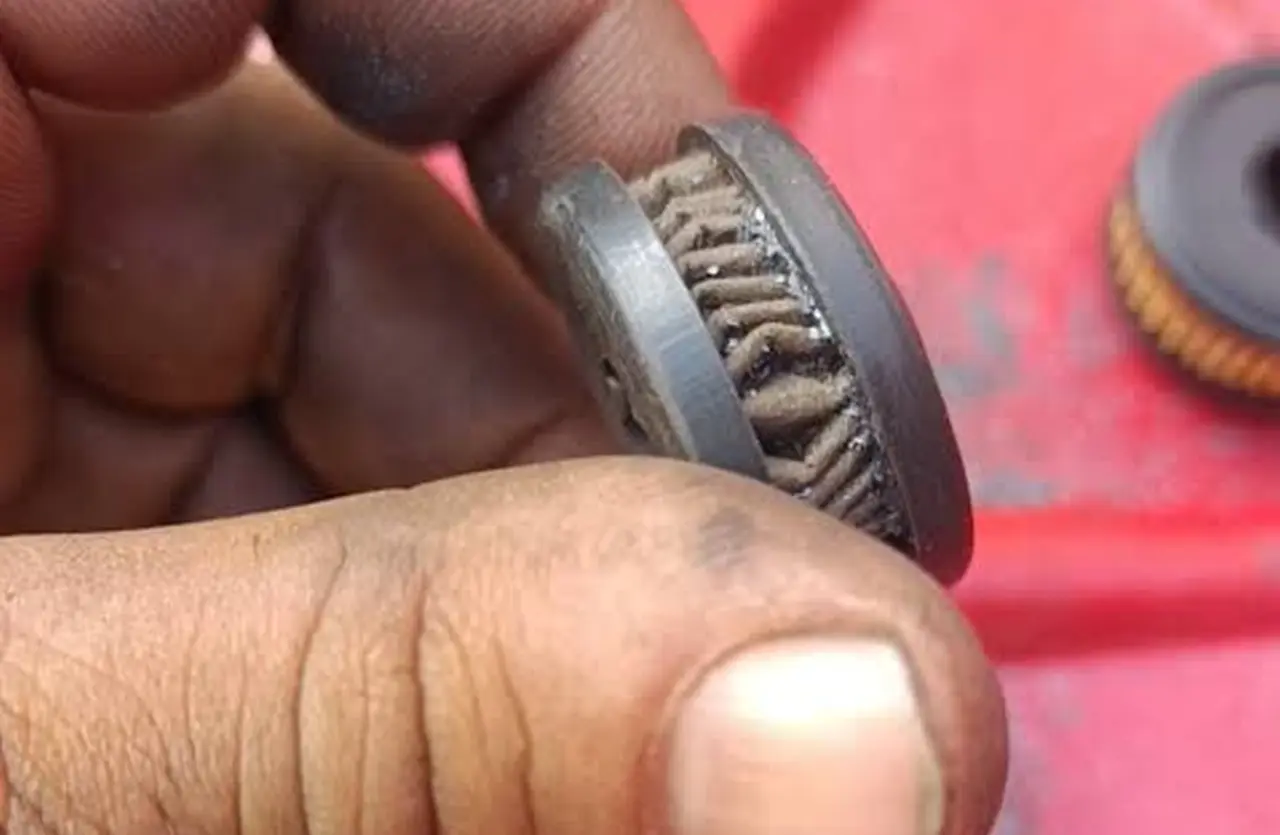
Symptoms of a Clogged LPG Filter
The LPG filter is a small but important component of an LPG fuel system. Its main purpose is to help prevent dirt, oil residues, and other contaminants from reaching sensitive components such as the LPG injectors.
As the filter becomes contaminated, LPG flow can gradually become restricted. At first, the driver may notice only a slight loss of performance. As the restriction becomes more severe, the symptoms can become much more obvious, especially during hard acceleration, high engine speeds, and uphill driving.
A clogged LPG filter does not always cause the same symptoms on every vehicle. The design of the LPG system, filter type, regulator, injector capacity, fuel quality, and calibration all affect how the problem appears.
What Does an LPG Filter Do?
LPG filters are designed to reduce the amount of contaminants reaching the sensitive components of the fuel system.
Depending on the LPG system, there may be a liquid-phase filter, a vapor-phase filter, or both.
The filter can help protect LPG injectors and other components from:
-
Dirt and particles
-
Oil residues
-
Contaminants carried by LPG
-
Deposits from the fuel system
-
Contamination generated over time
Because LPG injectors operate with relatively precise fuel metering, contamination can affect their operation.
The filter therefore has an important role not only in fuel cleanliness but also in maintaining consistent LPG system operation.
Why Does an LPG Filter Become Clogged?
LPG filters naturally collect contaminants over time.
The rate at which a filter becomes restricted depends on several factors, including:
-
LPG fuel quality
-
Vehicle usage
-
Type of LPG system
-
Filter design
-
Regulator condition
-
Service intervals
-
Amount of contamination in the LPG system
A filter used for a long time without replacement can gradually accumulate material and restrict fuel flow.
This is why LPG filter replacement is considered a normal part of LPG system maintenance.
What Happens When an LPG Filter Is Clogged?
A clogged filter restricts the amount of LPG that can pass through the fuel system.
The problem may be difficult to notice when the engine is operating under light load because fuel demand is relatively low.
During hard acceleration, high RPM, or uphill driving, however, the engine requires significantly more fuel. A restricted filter may then prevent the LPG system from supplying enough fuel.
This is why some vehicles can appear to run perfectly during normal city driving but lose power when the driver demands more performance.
Common Symptoms of a Clogged LPG Filter
Loss of power during acceleration
One of the most common symptoms is reduced acceleration on LPG.
The vehicle may feel slower than usual when the accelerator is pressed harder. The problem can become particularly noticeable when trying to accelerate quickly or overtake another vehicle.
Power loss at high RPM
A clogged LPG filter can become more noticeable as engine speed increases.
At higher RPM, the engine requires more fuel. If the filter restricts LPG flow, the system may struggle to maintain the required fuel supply.
The vehicle may accelerate normally at lower RPM but become increasingly weak as engine speed rises.
Poor performance uphill
A vehicle with a restricted LPG fuel supply may lose power more noticeably on hills.
Uphill driving increases engine load and therefore increases fuel demand. If the LPG system cannot supply enough fuel, the engine may hesitate or lose power.
Hesitation during hard acceleration
The engine may hesitate, stumble, or briefly jerk when the accelerator is pressed aggressively.
This can happen when LPG demand suddenly increases but the fuel system cannot deliver the required amount of gas.
However, hesitation is not specific to a clogged filter. LPG injectors, the regulator, fuel pressure, ignition system, vacuum leaks, and calibration problems can produce similar symptoms.
Switching from LPG to gasoline
Some LPG systems automatically switch back to gasoline when LPG pressure or fuel supply falls outside the permitted operating range.
If a clogged filter causes insufficient LPG flow, this may become more noticeable during heavy acceleration or high engine load.
The driver may experience a sudden switch from LPG to gasoline, particularly when climbing a hill or accelerating at higher RPM.
Rough idle
A severely restricted filter can sometimes affect idle quality.
The engine may shake, idle unevenly, or feel close to stalling when operating on LPG.
However, rough idle has many possible causes. LPG injector condition, regulator pressure, MAP sensor readings, vacuum leaks, ignition problems, and calibration must also be considered.
Can a Clogged LPG Filter Increase Fuel Consumption?
It can contribute to abnormal fuel consumption, but increased consumption alone does not prove that the LPG filter is clogged.
If restricted fuel flow causes the LPG system to operate outside its expected conditions, fuel corrections and injection times may change.
However, high LPG consumption can also be caused by:
-
Incorrect LPG calibration
-
Dirty or faulty injectors
-
Regulator problems
-
Ignition problems
-
Faulty oxygen sensors
-
Vacuum leaks
-
Engine mechanical problems
-
Low tire pressure
-
Driving conditions
Therefore, fuel consumption should be considered together with other symptoms.
Can a Clogged LPG Filter Cause a Lean Mixture?
Yes, a significantly restricted LPG filter can contribute to a lean mixture, particularly under high engine load.
If the engine receives less LPG than required while the amount of incoming air remains sufficient, the air-fuel mixture can become too lean.
A lean condition can lead to:
-
Hesitation
-
Misfires
-
Loss of power
-
Poor acceleration
-
Check Engine light
-
Fuel-trim-related fault codes
-
Increased engine operating temperatures under certain conditions
However, a lean-mixture fault code does not automatically mean that the LPG filter is clogged.
A vacuum leak, MAF/MAP sensor problem, injector issue, regulator problem, or incorrect calibration can produce the same type of fault.
Can a Clogged LPG Filter Turn on the Check Engine Light?
It can, but not every clogged filter will trigger the Check Engine light.
A mildly contaminated filter may cause only a noticeable loss of performance.
If the restriction becomes severe enough to affect fuel pressure or mixture control, the engine ECU may detect abnormal combustion or mixture conditions.
Depending on the vehicle, this can lead to:
-
Lean-mixture fault codes
-
Misfire codes
-
Fuel-trim-related codes
-
LPG system-related faults
The fault code should not be interpreted as proof that the filter itself has failed. It is a starting point for diagnosis.
How Does the LPG Filter Affect the Injectors?
The LPG filter helps protect the injectors from contaminants.
If the filter is neglected for a long period, contaminants can accumulate and eventually affect fuel flow.
Contaminated LPG injectors may have difficulty opening or closing consistently. This can result in uneven fuel delivery between cylinders.
Possible symptoms include:
-
Rough idle
-
Misfires
-
Uneven acceleration
-
Increased fuel consumption
-
Loss of power
-
Check Engine light
This is one reason why replacing the filter at the recommended service interval is important even if the vehicle does not currently show obvious symptoms.
How Can You Diagnose a Clogged LPG Filter?
The best diagnosis does not rely on one symptom or simply replacing parts randomly.
A useful first step is to compare the vehicle's operation on gasoline and LPG.
If the engine operates normally on gasoline but loses power, hesitates, or switches back to gasoline under heavy load on LPG, the LPG fuel system deserves closer inspection.
A technician can check:
-
LPG pressure
-
Regulator pressure
-
LPG injector operation
-
Injector pulse times
-
Gas temperature
-
Fuel trims
-
LPG ECU data
-
System pressure under load
The filter itself can also be inspected or replaced when its service interval has been reached.
In some cases, examining the old filter can provide useful information about the level of contamination inside the LPG system.
Can You Tell if an LPG Filter Is Clogged Just by Looking at It?
Not always.
Some filters can look relatively clean from the outside while still restricting fuel flow internally.
Likewise, a dirty-looking filter does not necessarily tell you exactly how much fuel-flow restriction it is causing.
For this reason, fuel pressure and system behavior are often more useful diagnostic information than visual inspection alone.
Should You Replace the LPG Filter as a Diagnostic Test?
Replacing the filter can be a sensible maintenance procedure if the filter is overdue for replacement.
However, repeatedly replacing parts without measuring the system is not a proper diagnostic strategy.
For example, if a vehicle has severe power loss at high RPM, replacing the filter may be reasonable if it has not been serviced for a long time. If the problem remains after replacement, the next step should be checking regulator pressure, injector capacity, LPG calibration, sensors, and ignition rather than installing another filter.
This is especially important because several LPG system problems can produce almost identical symptoms.
How Often Should an LPG Filter Be Replaced?
There is no single replacement interval that applies to every LPG system.
The correct interval depends on the LPG kit manufacturer, filter type, vehicle, operating conditions, and fuel quality.
The LPG manufacturer's maintenance schedule should therefore be followed.
If the vehicle is used heavily or there has been evidence of contaminated LPG fuel, the filter may require attention sooner.
The filter should also be replaced if inspection or diagnosis indicates that it is excessively contaminated or restricting fuel flow.
What Happens If You Never Replace the LPG Filter?
A filter that is left in service for too long can gradually accumulate contaminants.
As restriction increases, the vehicle may begin to show:
-
Reduced acceleration
-
High-RPM power loss
-
Poor uphill performance
-
Hesitation
-
Misfires
-
Switching from LPG to gasoline
-
Lean-mixture symptoms
-
Check Engine light
In addition to restricting fuel flow, a neglected filter may no longer provide effective protection for sensitive LPG components.
Long-term neglect can therefore turn a relatively inexpensive maintenance item into a more complicated fuel-system problem.
Can a Clogged LPG Filter Damage the Regulator?
A clogged filter and a faulty regulator are two different problems, but they can affect each other indirectly.
If the filter restricts the amount of LPG reaching the regulator, the regulator may not receive enough fuel under high-demand conditions.
This can create symptoms that look like a regulator problem.
However, the regulator itself can also have issues such as:
-
Diaphragm wear
-
Incorrect pressure
-
Pressure instability
-
Temperature-related problems
-
Insufficient capacity
Therefore, the regulator should not automatically be replaced simply because the vehicle loses power on LPG.
Pressure should be checked under the conditions where the problem occurs.
Why Does the Vehicle Run Normally on Gasoline?
This is an important diagnostic clue.
Gasoline and LPG use separate fuel-delivery systems. A restriction in the LPG filter does not directly restrict gasoline fuel flow.
Therefore, if the engine runs normally on gasoline but loses power or hesitates on LPG, the LPG system becomes a logical area to investigate.
This does not prove that the filter is clogged, but it helps narrow the diagnostic process toward LPG-specific components.
Can a Clogged LPG Filter Cause Misfires?
Yes.
If insufficient LPG reaches the engine, the air-fuel mixture may become too lean under certain operating conditions.
The result can be unstable combustion and misfires.
However, misfires on LPG are not necessarily caused by the filter. LPG systems are particularly sensitive to ignition-system condition, so worn spark plugs, incorrect plug gaps, weak ignition coils, and other ignition problems should also be considered.
This is why replacing the LPG filter alone may not solve a misfire problem.
How Can LPG Filter Problems Be Prevented?
The simplest way to reduce the risk of a severely clogged LPG filter is to follow the manufacturer's maintenance schedule.
It is also important to use the correct filter for the specific LPG system.
During filter replacement, the technician should also pay attention to the condition of:
-
LPG hoses
-
Connections
-
Regulator
-
Injectors
-
Pressure sensors
-
Fuel lines
A filter replacement is a good opportunity to inspect the surrounding LPG system rather than treating the filter as an isolated component.
Can a Clogged LPG Filter Affect Engine Performance?
Yes, particularly when the engine requires a large amount of fuel.
A lightly contaminated filter may have almost no noticeable effect during normal driving. As the restriction increases, however, the engine may struggle to receive sufficient LPG during high-load operation.
This is why symptoms such as power loss at high RPM, hesitation during hard acceleration, poor uphill performance, or switching back to gasoline under heavy load are particularly relevant.
Final Considerations
A clogged LPG filter primarily creates a fuel-flow restriction, and its effects are often most noticeable when the engine demands more fuel.
Loss of power, hesitation, rough running, misfires, high-RPM performance problems, switching from LPG to gasoline, and lean-mixture symptoms can all occur when LPG flow becomes insufficient.
However, none of these symptoms proves that the filter is clogged by itself. Regulator pressure, LPG injectors, pressure sensors, calibration, ignition components, and air leaks can produce very similar problems.
For this reason, the best approach is to replace the LPG filter according to the manufacturer's maintenance schedule and use actual system measurements when a performance problem occurs. Checking LPG pressure and system behavior under load can prevent unnecessary replacement of expensive components and make it much easier to identify the real cause of the problem.