TR
TR EN
EN

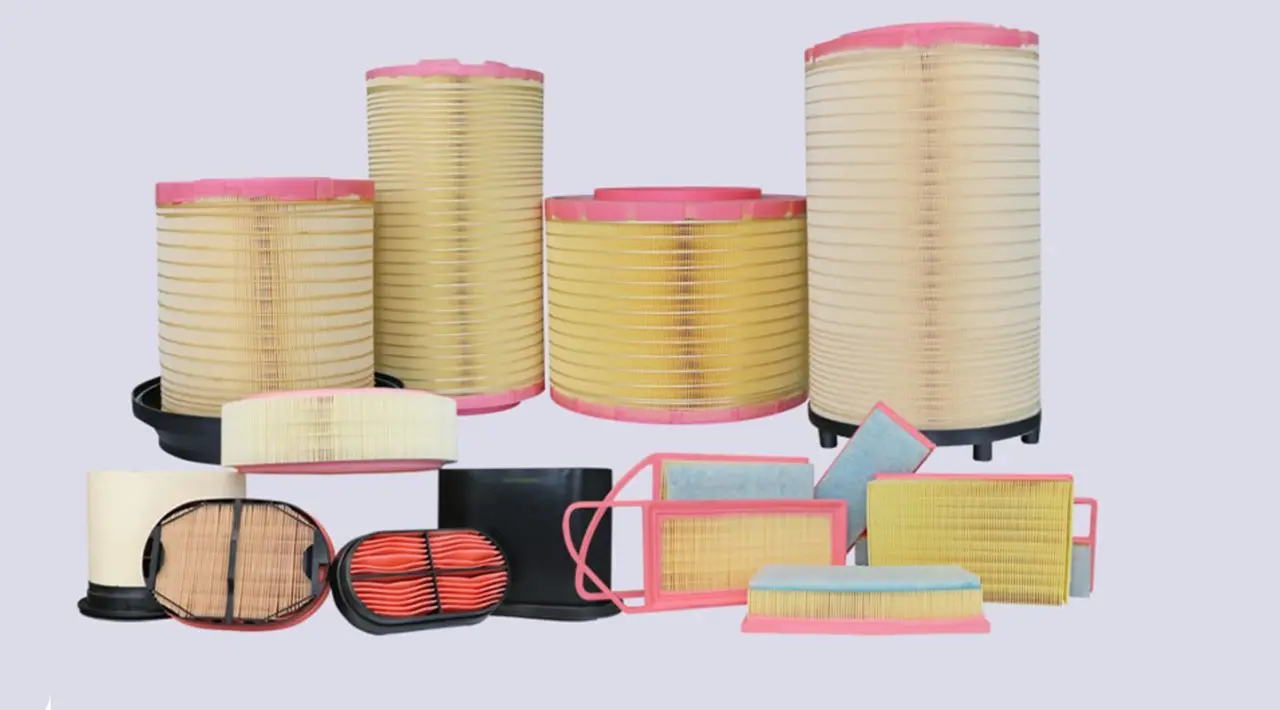
How Many Filters Does Your Car Have? When Should They Be Replaced?
Filters are among the most frequently overlooked maintenance components in a vehicle. They may be small and relatively inexpensive, but they play an important role in protecting the engine, improving air quality inside the cabin, maintaining fuel-system performance, and helping the vehicle operate efficiently.
So, how many filters does a typical car actually have?
There is no single number that applies to every vehicle. Depending on the engine, fuel system, transmission, climate-control system, and vehicle design, a car may have several different filters.
The most common ones are the engine air filter, cabin air filter, fuel filter, and transmission filter. Some vehicles may also have additional filters or strainers, particularly in automatic transmissions, diesel fuel systems, hybrid systems, or specialized emissions equipment.
Understanding what each filter does and when it should be replaced can prevent unnecessary problems and help keep your vehicle reliable.
1. Engine Air Filter
The engine air filter is one of the most important filters in a conventional internal combustion engine.
Its job is to prevent dust, dirt, sand, insects, and other airborne particles from entering the engine through the intake system.
The engine needs a large amount of clean air for combustion. If the air filter becomes heavily contaminated, airflow can be restricted.
A dirty air filter may contribute to:
-
Reduced engine performance
-
Poor throttle response
-
Increased fuel consumption
-
Difficulty reaching higher RPM
-
Reduced acceleration
-
Increased intake restriction
However, a slightly dirty air filter does not automatically cause a major increase in fuel consumption. Modern engine management systems can compensate for many changes in airflow, so the actual effect depends on the vehicle and how restricted the filter has become.
When should the engine air filter be replaced?
The replacement interval varies by manufacturer and operating conditions. Many vehicles specify an inspection at regular service intervals and replacement at a longer interval.
Vehicles driven in:
-
Dusty areas
-
Construction zones
-
Unpaved roads
-
Heavy traffic
-
Agricultural environments
may require more frequent air-filter inspection and replacement.
A visual inspection can provide useful information, but the filter should not be judged solely by its color. Some filters become dark from normal use without being excessively restricted.
2. Cabin Air Filter
The cabin air filter, also known as the pollen filter or passenger-compartment air filter, cleans the air entering the vehicle's interior through the heating and ventilation system.
Depending on the design, it can help reduce:
-
Dust
-
Pollen
-
Road debris
-
Certain airborne particles
-
Leaves and other contaminants
Some cabin filters also contain activated carbon to help reduce certain odors and gaseous pollutants.
A clogged cabin filter can restrict airflow through the ventilation system.
Common symptoms include:
-
Weak airflow from the vents
-
Reduced heating or cooling airflow
-
Fan noise without strong airflow
-
Unpleasant odors
-
Windows fogging more easily in some conditions
-
Increased blower effort
When should the cabin air filter be replaced?
The replacement interval varies considerably. Many manufacturers recommend replacement approximately every 15,000 to 30,000 kilometers or around once a year, but the correct interval should always be checked against the vehicle manufacturer's maintenance schedule.
In dusty or polluted environments, the filter may need to be replaced more frequently.
If the cabin filter is visibly dirty, damaged, damp, or producing an unpleasant odor, replacement may be appropriate even if the scheduled interval has not yet been reached.
3. Fuel Filter
The fuel filter protects the fuel system by removing contaminants from the fuel before they reach sensitive components such as the fuel pump and injectors.
Its importance depends heavily on the type of fuel system.
A restricted fuel filter can potentially cause:
-
Difficult starting
-
Engine hesitation
-
Loss of power
-
Poor acceleration
-
Engine stalling
-
Misfires under load
-
Reduced fuel pressure
In severe cases, insufficient fuel delivery can prevent the engine from running correctly.
When should the fuel filter be replaced?
There is no universal replacement interval.
Some vehicles have a serviceable external fuel filter that is replaced at a specified mileage. Other vehicles use a fuel filter integrated into the fuel-pump module inside the fuel tank and may have a much longer service interval.
Diesel engines can be particularly sensitive to fuel contamination because their high-pressure injection systems operate at extremely high pressures and have very tight tolerances.
Some diesel fuel filters also include a water separator or water-detection system.
If the vehicle manufacturer specifies a fuel-filter replacement interval, following it is important even if the vehicle appears to run normally.
4. Transmission Filter
Some automatic transmissions use a dedicated transmission filter to remove contaminants from the transmission fluid.
The filter helps protect hydraulic passages, valves, solenoids, bearings, and other internal components from debris.
A restricted or contaminated transmission filter can contribute to:
-
Delayed engagement
-
Harsh shifting
-
Shift quality problems
-
Slipping
-
Poor hydraulic pressure
-
Transmission overheating
-
Transmission fault codes
However, transmission design varies significantly between vehicles.
Some automatic transmissions have a replaceable filter inside the transmission pan. Others use a filter integrated into the transmission assembly or a different filtration arrangement.
Manual transmissions generally do not have a conventional replaceable transmission filter like many automatic transmissions do.
When should the transmission filter be replaced?
The correct interval depends entirely on the transmission and manufacturer's maintenance schedule.
Some manufacturers specify transmission-fluid and filter service at a particular mileage. Others may classify the transmission as having long-life fluid or specify inspection rather than routine filter replacement.
The exact service procedure should therefore be based on the vehicle and transmission code rather than a generic mileage recommendation.
5. Diesel Fuel System Filters and Additional Filtration
Diesel vehicles may have more sophisticated fuel filtration than gasoline vehicles.
A diesel fuel system can include:
-
Primary fuel filtration
-
Secondary fuel filtration
-
Water separation
-
Fuel heaters
-
Water-in-fuel sensors
Because modern diesel injection systems operate at extremely high pressures, fuel cleanliness is critical.
Water or dirt entering the high-pressure fuel system can cause expensive damage to the fuel pump and injectors.
For this reason, diesel fuel-filter maintenance should be taken seriously, especially in vehicles operating under demanding conditions.
6. Oil Filter
The oil filter is another essential engine filter.
It removes contaminants and particles from the engine oil as the oil circulates through the lubrication system.
The oil filter helps reduce the amount of harmful debris reaching components such as:
-
Main bearings
-
Connecting-rod bearings
-
Camshafts
-
Valve-train components
-
Turbochargers
-
Variable valve timing components
Unlike the air filter, the oil filter is normally replaced together with the engine oil.
When should the oil filter be replaced?
In most vehicles, the oil filter should be replaced at every engine oil change unless the manufacturer specifies otherwise.
Installing a new filter while leaving old, contaminated engine oil in the system makes little sense. Similarly, using an incorrect or poor-quality filter can compromise filtration or oil-flow characteristics.
The correct filter specification is more important than simply choosing a filter that physically fits the engine.
7. Does Every Car Have All of These Filters?
No.
Vehicle filtration systems vary depending on:
-
Engine type
-
Fuel type
-
Transmission type
-
Vehicle age
-
Manufacturer
-
Model
-
Market
-
Emissions system
-
Hybrid or electric powertrain design
For example, a gasoline vehicle with a sealed fuel-pump module may not have a conventional externally replaceable fuel filter.
An automatic transmission may have a replaceable filter, while another transmission may use an internal filter that is serviced differently.
Hybrid and electric vehicles also use different filtration systems because they do not have the same combustion-engine requirements.
How Often Should Car Filters Be Changed?
There is no single replacement schedule for every filter.
A practical approach is to follow the manufacturer's maintenance schedule and consider the vehicle's operating environment.
For example:
Engine air filter: Inspect regularly and replace according to the manufacturer's interval or when sufficiently restricted or damaged.
Cabin air filter: Often replaced approximately once a year or according to mileage, with more frequent replacement in dusty or polluted environments.
Fuel filter: Follow the manufacturer's specified interval because designs vary greatly between gasoline and diesel vehicles.
Oil filter: Normally replace at every engine oil change.
Transmission filter: Replace according to the specific transmission's service requirements.
What Happens If Filters Are Not Replaced?
Ignoring filter maintenance does not necessarily cause an immediate failure.
The problem is that restrictions and contamination gradually increase.
Depending on the filter, this can lead to:
-
Reduced airflow
-
Poor engine performance
-
Reduced fuel-system efficiency
-
Poor cabin ventilation
-
Fuel-delivery problems
-
Transmission shifting problems
-
Increased component wear
A filter is designed to collect contamination. Once it becomes excessively restricted, it can no longer perform its job efficiently.
Should You Replace a Filter Based Only on Its Appearance?
Not always.
A filter can look dirty and still provide acceptable airflow, while a filter can have internal damage or contamination that is not obvious from a quick visual inspection.
The best approach is to consider:
-
Manufacturer replacement interval
-
Mileage
-
Time since replacement
-
Driving environment
-
Symptoms
-
Physical condition
-
Service history
For critical filters, the manufacturer's specification should take priority over general rules.
Are More Expensive Filters Always Better?
Not necessarily.
The important factors are filtration efficiency, airflow characteristics, construction quality, compatibility, and compliance with the vehicle manufacturer's specifications.
A very restrictive filter is not automatically better simply because it captures more particles. The filter must provide the appropriate balance between filtration and airflow for the specific system.
Likewise, an extremely cheap filter from an unknown source may not provide the same filtration quality or durability as a properly specified component.
What About Reusable or Washable Filters?
Some aftermarket engine air filters are designed to be cleaned and reused.
However, these products are not suitable for every vehicle or every application.
A reusable filter must be maintained correctly. Over-cleaning, incorrect cleaning products, improper oiling on filters that require oil, or installation errors can create problems.
For many vehicles, a conventional replacement filter is the simplest and safest option when following the manufacturer's maintenance strategy.
A Simple Way to Keep Track of Your Filters
Filter maintenance becomes much easier when it is included in the regular service schedule.
Whenever the vehicle is serviced, it is useful to check:
-
Engine oil and oil filter
-
Engine air filter
-
Cabin air filter
-
Fuel filter, if serviceable
-
Transmission filter, if applicable
The service history should record the date and mileage of each replacement.
This is especially useful when buying a used vehicle because neglected filter maintenance can indicate that other scheduled maintenance may also have been overlooked.
Final Thoughts
Most modern cars use several different types of filters, but there is no universal number because filtration systems vary between vehicles.
The most common are the engine air filter, cabin air filter, fuel filter, and oil filter, while many automatic transmissions also use a transmission filter.
The important point is not simply how many filters your car has, but whether each one is being maintained at the correct interval.
Replacing an engine air filter, cabin filter, fuel filter, oil filter, or transmission filter at the appropriate time is relatively simple compared with the cost of repairing an engine, fuel system, or transmission damaged by neglected maintenance.
Always check the manufacturer's maintenance schedule for your exact engine and vehicle rather than relying on a generic mileage interval.