TR
TR EN
EN

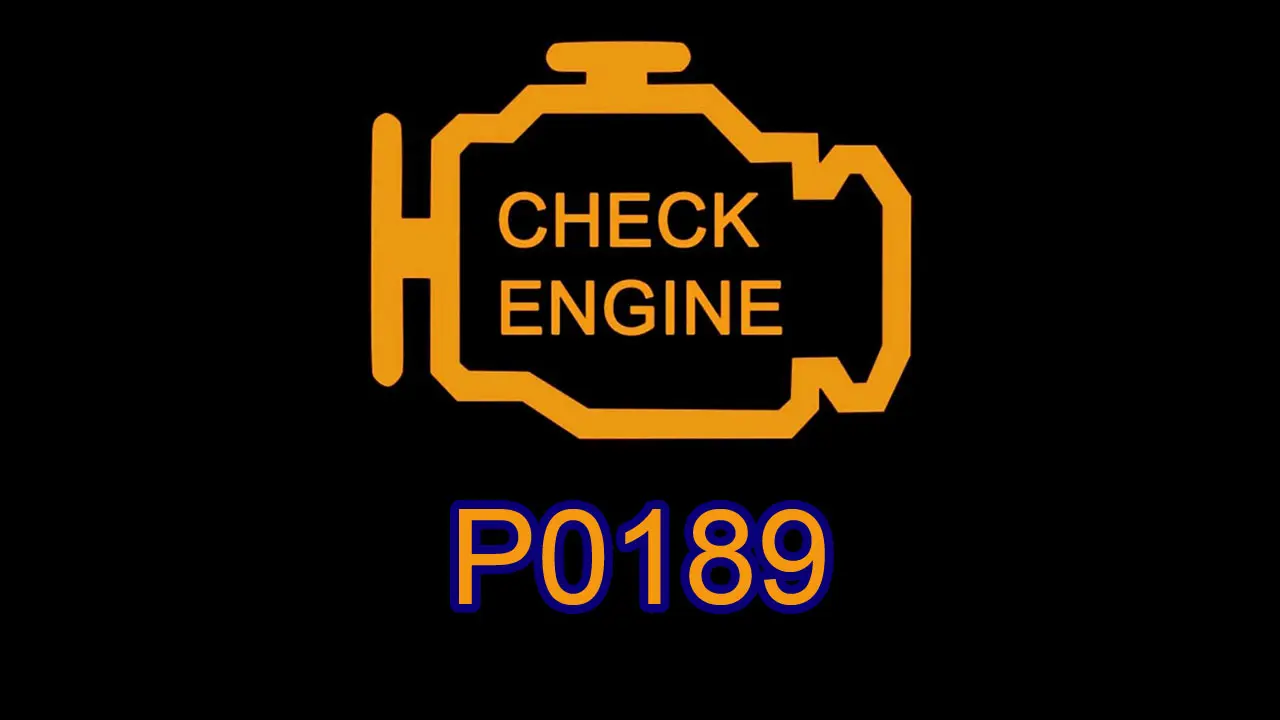
P0189 Fuel Temperature Sensor "B" Circuit Intermittent
P0189 is an OBD-II diagnostic trouble code indicating that the engine control module (ECM) has detected an intermittent signal from the Fuel Temperature Sensor “B” circuit.
This is an electrical and signal-quality fault rather than a direct statement that the fuel itself is too hot or too cold.
The ECM expects the fuel-temperature signal to change in a believable and relatively smooth way. If the signal suddenly disappears, jumps to an implausible value, or changes in a way that does not match actual fuel-temperature conditions, P0189 may be stored.
The fault can come from the sensor itself, but wiring, connector terminals, reference voltage, sensor ground, or an intermittent circuit connection can be equally important suspects.
The Important Word in P0189: “Intermittent”
P0189 is different from a straightforward high-input or low-input code.
The ECM is essentially detecting a signal that comes and goes or behaves erratically.
For example, imagine fuel temperature gradually changing like this:
35°C → 36°C → 37°C → 38°C → 39°C
That would be a believable pattern.
But if the ECM suddenly sees:
35°C → 36°C → -40°C → 37°C
or
38°C → 39°C → 150°C → 40°C
the physical fuel temperature obviously did not change that dramatically in an instant.
An electrical interruption or unstable sensor signal becomes much more likely.
What Is Fuel Temperature Sensor “B”?
Fuel temperature sensors monitor the temperature of fuel and provide information to the ECM.
The exact purpose and physical location vary between vehicles.
Fuel temperature information can be used for:
-
Fuel-density calculations
-
Fuel quantity calculations
-
Injection control
-
Fuel-system protection
-
Emissions management
-
Cold-start strategy
-
Fuel-pressure calculations
-
Thermal management
On diesel systems, fuel temperature can be particularly important because fuel density changes with temperature and the fuel itself may also be used to lubricate and cool certain fuel-system components.
The designation “B” is manufacturer and system dependent.
It does not universally mean that there are exactly two identical sensors or that Sensor B is physically located in a particular place.
P0189 Does Not Automatically Mean the Sensor Is Bad
This is the first thing to keep in mind when diagnosing the code.
A scan tool may tell you:
Fuel Temperature Sensor B Circuit Intermittent
but it cannot tell you that the sensor itself is definitely defective.
The complete electrical path needs to be considered:
Sensor → connector → wiring → reference/ground circuits → ECM
An intermittent fault anywhere along this path can produce P0189.
Possible Symptoms
Because the problem is intermittent, symptoms can be inconsistent.
A vehicle may drive normally one moment and behave differently later.
Possible symptoms include:
-
Check Engine Light
-
Poor fuel economy
-
Hard starting
-
Extended cranking
-
Hesitation
-
Reduced acceleration
-
Rough engine operation
-
Reduced engine power
-
Limp mode
-
Engine stalling
-
Changes in fuel-pressure control
Some vehicles may show no noticeable drivability symptoms at all.
The ECM may simply substitute a calculated or default fuel-temperature value when the signal becomes unreliable.
Common Causes of P0189
Faulty Fuel Temperature Sensor “B”
The sensor can develop an internal intermittent fault.
Its electrical resistance may suddenly change or become unstable.
Loose connector
A connector that does not maintain proper terminal contact can interrupt the signal when the engine or fuel system vibrates.
Corroded terminals
Corrosion increases electrical resistance and can cause intermittent signal problems.
Damaged wiring
The harness may be damaged by:
-
Vibration
-
Heat
-
Chafing
-
Fuel contamination
-
Oil contamination
-
Engine movement
-
Previous repairs
-
Rodent damage
Partially broken wire
A wire can break internally while its outer insulation remains intact.
This is one of the classic causes of intermittent sensor codes.
Poor sensor ground
A weak or unstable sensor ground can make the output signal unreliable.
Reference-voltage problem
If the sensor uses a regulated reference supply, an unstable reference can produce an intermittent signal.
ECM connector problem
Corrosion or poor terminal contact at the ECM can interrupt the sensor circuit.
ECM fault
An internal ECM problem is possible, but it should normally be considered only after the external circuit has been proven good.
Gasoline and Diesel Applications Differ
P0189 can appear on different types of fuel systems, and the diagnostic approach depends on the vehicle.
A conventional gasoline system, gasoline direct-injection system, and diesel common-rail system can have very different fuel-temperature sensor arrangements.
The sensor may be integrated into:
-
Fuel lines
-
Fuel rails
-
Fuel filters
-
Fuel pumps
-
Fuel-management modules
-
Other fuel-system assemblies
Always identify the exact system before attempting diagnosis.
Start With a Complete Scan
Because P0189 is an intermittent code, other stored or pending codes can be extremely useful.
Scan all modules and record:
-
Stored DTCs
-
Pending DTCs
-
Freeze-frame data
-
Fuel-pressure codes
-
Fuel-pressure control codes
-
Fuel-pump codes
-
Sensor reference-voltage codes
-
Low-voltage codes
-
Communication codes
If several sensors show intermittent circuit faults, a shared electrical problem may be more likely than several sensors failing simultaneously.
Freeze-Frame Data Can Reveal the Pattern
Look at the conditions under which P0189 was stored.
Important information includes:
-
Engine RPM
-
Engine load
-
Vehicle speed
-
Coolant temperature
-
Fuel temperature
-
Fuel pressure
-
Battery voltage
-
Fuel pressure sensor data
Suppose the code repeatedly appears during acceleration.
That immediately raises suspicion about harness movement and vibration.
If it occurs only when the engine is fully warmed up, heat-related wiring or sensor failure becomes more interesting.
If it appears immediately after starting, inspect the circuit before assuming a genuine fuel-temperature change.
Check Fuel Temperature With the Engine Cold
A very useful first comparison is made before the engine is started.
After the vehicle has been parked long enough to cool completely, compare the fuel-temperature reading with other temperature values, such as:
-
Engine coolant temperature
-
Intake air temperature
-
Ambient temperature, where available
They should generally be reasonably close.
If Fuel Temperature Sensor B suddenly displays an extreme or implausible value while the engine and fuel system are cold, investigate the electrical circuit.
Watch the Reading During Operation
Monitor fuel temperature continuously while the vehicle warms up and during a test drive.
The reading should behave plausibly.
An example of suspicious behavior would be:
32°C → 34°C → 35°C → 98°C → 36°C
A rapid jump like this does not necessarily represent a real fuel-temperature event.
It may indicate a temporary loss of electrical contact.
Perform a Wiggle Test
P0189 is particularly suitable for a controlled harness movement test.
Monitor the fuel-temperature value while carefully moving:
-
Sensor connector
-
Wiring near the sensor
-
Harness retaining points
-
Sections near hot components
-
Areas where the harness moves with the engine
If the temperature value suddenly changes while the harness is moved, investigate the wiring and connector.
This can expose faults that are impossible to find with a simple visual inspection.
Inspect the Sensor Connector
Disconnect the connector according to the manufacturer's procedure and inspect it carefully.
Look for:
-
Corrosion
-
Loose terminals
-
Bent terminals
-
Poor terminal tension
-
Water intrusion
-
Fuel contamination
-
Oil contamination
-
Broken locking tabs
-
Damaged seals
A connector can look clean while still having insufficient terminal tension.
Inspect the Harness
Follow the wiring from the sensor as far as possible.
Pay particular attention to areas where the harness is exposed to:
-
Engine vibration
-
Heat
-
Sharp edges
-
Moving components
-
Fuel contamination
-
Brackets
-
Clips and retaining points
If the harness has previously been repaired, inspect the repair closely.
Poor splices can create intermittent resistance or open circuits.
Check the Sensor Circuit
Depending on the vehicle, the Fuel Temperature Sensor B may use a thermistor-based circuit.
If so, its resistance changes with temperature.
The ECM interprets that change as fuel temperature.
The exact resistance values are manufacturer-specific.
Do not assume that a generic temperature-sensor resistance chart applies to every vehicle.
Test the Sensor at Different Temperatures
An intermittent sensor can sometimes pass a normal resistance test at room temperature.
The problem may appear only when the sensor becomes hot.
For example:
-
Cold: normal
-
Warm: normal
-
Hot: intermittent
In that situation, a basic cold resistance measurement can falsely suggest that the sensor is good.
Where the manufacturer's procedure allows it, monitor or test the sensor at different temperatures.
Check Reference Voltage and Ground
If the sensor uses a reference supply, verify it.
Also verify the sensor ground.
The exact voltage specifications depend on the vehicle.
Look for:
-
Stable reference voltage
-
Good sensor ground
-
Low voltage drop
-
No intermittent ground connection
If the reference or ground suddenly changes while the sensor signal becomes abnormal, the sensor itself may not be the problem.
Continuity Testing Alone Can Miss P0189
This is especially important with intermittent faults.
A partially broken wire may show continuity when tested while stationary.
Then the engine vibrates.
The damaged wire moves.
The electrical connection opens for a fraction of a second.
The ECM sees an impossible fuel-temperature value.
P0189 is stored.
The technician then checks the same wire later and finds continuity again.
This is why intermittent faults often require dynamic testing, not just a static resistance or continuity test.
Check for Shared Sensor Circuits
Some vehicles use shared reference or ground circuits for multiple sensors.
If P0189 appears together with other sensor-related DTCs, investigate whether they share:
-
Reference voltage
-
Sensor ground
-
Power supply
-
Wiring sections
-
ECM connector terminals
A single electrical fault can create several sensor codes.
P0189 vs. P0180
P0180 is a general Fuel Temperature Sensor “A” Circuit malfunction.
P0189 concerns Fuel Temperature Sensor “B” Circuit Intermittent.
The letters A and B are application-specific.
Do not assume that Sensor A and Sensor B correspond to particular physical locations without the vehicle's service information.
P0189 vs. P0187 and P0188
The related codes provide more information about the electrical condition.
P0187 indicates a low input.
P0188 indicates a high input.
P0189 indicates an intermittent condition.
This distinction helps determine whether the signal is consistently abnormal or only becomes abnormal occasionally.
P0189 vs. P0194
These codes both describe intermittent sensor signals, but they monitor different systems.
P0189 concerns Fuel Temperature Sensor “B”.
P0194 concerns Fuel Rail Pressure Sensor “A”.
The symptoms can sometimes overlap because both systems are involved in fuel management, but the circuits should be diagnosed independently.
Can Fuel Temperature Actually Become High?
Yes.
Fuel can become warmer due to:
-
High engine-compartment temperature
-
Fuel recirculation
-
Long periods of operation
-
High ambient temperature
-
Fuel-system design
-
Return-flow heating
However, actual fuel-temperature changes should still be physically plausible.
A sudden jump from a normal temperature to an extreme value and immediately back is much more suspicious for an electrical signal problem.
Can Fuel Quality Cause P0189?
Poor or contaminated fuel can create many fuel-system problems, but it does not automatically explain an intermittent electrical sensor circuit.
If fuel contamination is present, it should certainly be addressed.
However, an intermittent P0189 still requires inspection of the sensor and electrical circuit.
Can a Fuel Filter Cause P0189?
A restricted fuel filter can cause fuel-delivery and pressure problems.
It does not normally create an electrical intermittent sensor signal by itself.
If P0189 is accompanied by fuel-pressure problems, both issues should be investigated rather than assuming that the filter caused the sensor code.
Could Low Battery Voltage Cause P0189?
It can contribute to electronic faults.
If P0189 appears together with multiple unrelated electrical codes, check:
-
Battery voltage
-
Charging-system output
-
Battery terminals
-
Engine grounds
-
ECM power supply
If the rest of the electrical system is stable and only Fuel Temperature Sensor B behaves erratically, concentrate on that circuit.
Could the ECM Be Faulty?
An ECM fault is possible, but it is usually much less common than a sensor, connector, or wiring problem.
Before blaming the ECM, verify:
-
Sensor condition
-
Reference voltage
-
Sensor ground
-
Signal circuit
-
Wiring integrity
-
Connector terminals
-
ECM connector
-
ECM power and grounds
Only after the external circuit has been proven correct should an internal ECM fault become a serious possibility.
A Practical Diagnostic Example
Imagine a diesel vehicle that occasionally illuminates the Check Engine Light and stores P0189.
The technician monitors fuel temperature during a road test.
The temperature gradually increases as expected.
During acceleration, the scan tool suddenly shows an extremely low temperature for an instant before returning to normal.
The technician performs a controlled harness movement test.
The temperature signal changes when the harness near the fuel-temperature sensor is moved.
Inspection reveals a partially broken conductor near the connector.
The sensor itself tests correctly.
The intermittent P0189 was caused by the wiring.
Another Possible Scenario
A different vehicle shows P0189 repeatedly.
The connector is clean.
The wiring remains stable during the wiggle test.
Reference voltage and sensor ground are correct.
The sensor is then tested at several temperatures.
At higher temperature, its resistance suddenly becomes unstable.
The sensor is internally defective.
In this case, replacing the Fuel Temperature Sensor B is justified.
How Should P0189 Be Repaired?
The repair depends on the actual cause.
Possible repairs include:
-
Replacing Fuel Temperature Sensor B
-
Repairing damaged wiring
-
Replacing the sensor connector
-
Repairing loose terminals
-
Correcting sensor-ground problems
-
Repairing the reference-voltage circuit
-
Repairing ECM connector terminals
-
Correcting shared electrical circuit problems
-
Repairing or replacing the ECM after an internal fault is conclusively confirmed
After the repair, clear the code and reproduce the conditions under which the fault originally occurred.
Monitor the fuel-temperature signal during the test.
Final Diagnosis
P0189 – Fuel Temperature Sensor “B” Circuit Intermittent means the ECM has detected an intermittent or unstable electrical signal from Fuel Temperature Sensor B.
The most important suspects are:
-
Fuel temperature sensor
-
Loose or corroded connector
-
Damaged wiring
-
Partially broken conductor
-
Poor sensor ground
-
Unstable reference voltage
-
ECM connector
-
ECM input circuit
The best diagnostic approach is:
Scan all codes → check freeze-frame data → compare cold fuel-temperature data with other temperature sensors → monitor the signal during warm-up → inspect the connector → perform a wiggle test → verify reference and ground circuits → test the sensor at different temperatures → inspect the wiring dynamically → evaluate the ECM last.
The key point is that P0189 does not necessarily mean the fuel temperature itself is changing abnormally.
An intermittent electrical connection can make a perfectly normal fuel temperature appear to suddenly jump, disappear, or become implausible to the ECM. For this reason, wiring and connector inspection are just as important as testing the sensor itself.