TR
TR EN
EN

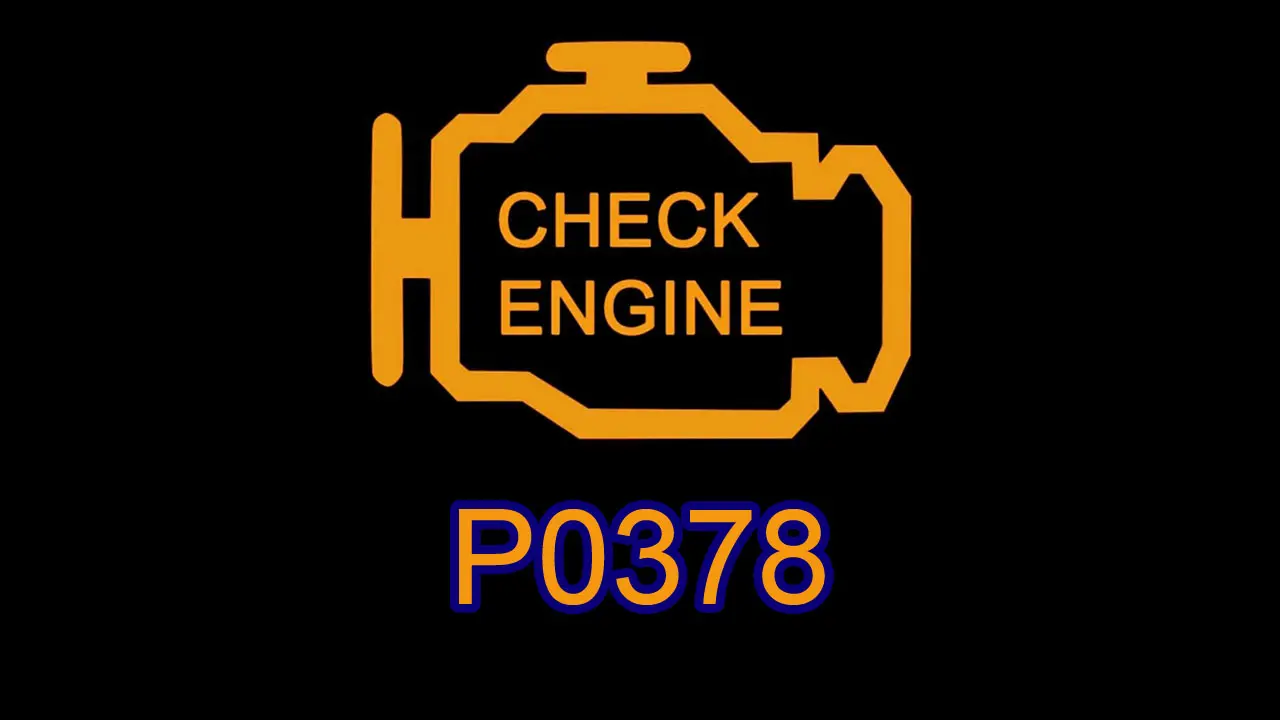
P0378 Timing Reference High Resolution Signal "B" Intermittent
P0378 is an OBD-II diagnostic trouble code indicating that the engine control module (ECM/PCM) has detected an intermittent problem with the high-resolution timing reference signal “B.”
This is a timing-signal problem rather than a conventional sensor code. The ECM is receiving a timing reference signal, but the signal periodically becomes missing, unstable, distorted, or otherwise inconsistent with what the control module expects.
The word “Intermittent” is especially important. The circuit may work perfectly much of the time and fail only under certain conditions such as engine vibration, heat, high RPM, acceleration, or movement of the wiring harness.
What Is a High-Resolution Timing Reference Signal?
Modern engine management systems need extremely precise information about crankshaft and camshaft position.
A basic engine-speed signal tells the ECM how fast the engine is turning. A high-resolution timing reference signal provides much more detailed information about the rotational position of the engine.
The ECM can use these high-resolution timing signals for functions such as:
-
Precise fuel injection timing
-
Ignition timing
-
Engine synchronization
-
Misfire detection
-
Variable valve timing
-
Crankshaft acceleration/deceleration analysis
-
High-speed engine control
The exact source and architecture of the “B” signal vary between manufacturers.
It may be associated with a crankshaft timing reference system, a dedicated timing sensor, a reluctor/trigger arrangement, or another manufacturer-specific engine-speed/timing circuit.
Therefore, P0378 should not automatically be interpreted as a conventional “bad crankshaft sensor” code.
What Does “High Resolution” Mean?
High resolution refers to the ECM receiving fine timing information rather than simply a general engine-speed measurement.
The signal may contain a large number of timing events during each crankshaft revolution. The ECM uses these events to determine extremely small changes in crankshaft position.
Because engine control depends on accurate timing, even a brief interruption in the signal can be significant.
An intermittent missing pulse that lasts only a fraction of a second may be enough to trigger P0378 even if the engine continues running normally.
What Does “Intermittent” Mean?
P0378 does not necessarily mean that the signal is permanently missing.
Instead, the ECM has detected a problem that occurs periodically.
For example, the signal may be normal:
-
At idle
-
When the engine is cold
-
During normal cruising
but become unreliable:
-
After the engine warms up
-
During hard acceleration
-
At high RPM
-
During engine vibration
-
When the wiring harness moves
-
During hot restarting
This is why intermittent timing-reference faults can be much harder to diagnose than a permanent open circuit.
Common Causes of P0378
Failing timing reference sensor
If the system uses a dedicated sensor, internal failure can cause intermittent signal loss.
A sensor can become unreliable with increasing temperature or engine speed even though it passes a basic test when cold.
Damaged wiring
A partially broken conductor can maintain electrical contact under normal conditions but lose contact when the engine vibrates.
Harness damage can also result from:
-
Chafing
-
Heat exposure
-
Oil contamination
-
Engine movement
-
Previous repairs
-
Poor harness routing
Loose or corroded connector
A connector with poor terminal tension can create a momentary open circuit.
Corrosion or moisture can also increase resistance and distort a timing signal.
Electrical interference
High-resolution timing signals can be sensitive to electrical noise.
Poor shielding, damaged wiring, incorrect routing, or interference from another circuit can introduce unwanted disturbances into the signal.
Damaged reluctor or timing target
The sensor depends on a physical trigger target.
A damaged tooth, missing section, loose reluctor, excessive runout, or incorrect installation can produce an abnormal timing pattern.
Incorrect sensor clearance
On systems where sensor-to-target distance is critical, excessive or inconsistent clearance can weaken or distort the signal.
Mechanical timing problem
A mechanical problem involving the crankshaft, camshaft, timing components, or trigger mechanism can alter the expected timing relationship.
However, P0378 by itself does not prove that the timing chain or belt is defective.
Sensor power or ground problem
If the system uses an active sensor, an unstable power supply or poor ground can cause intermittent signal loss.
ECM/PCM problem
An internal ECM input or signal-processing problem is possible, but it should be considered only after the external circuit has been thoroughly checked.
Symptoms of P0378
Symptoms can range from almost nothing noticeable to severe drivability problems.
Possible symptoms include:
-
Check Engine Light
-
Difficult starting
-
Extended cranking
-
Intermittent no-start
-
Engine hesitation
-
Rough running
-
Misfires
-
Engine stalling
-
Unstable RPM
-
Reduced engine performance
-
Poor acceleration
-
Increased fuel consumption
In some cases, the driver may notice nothing except the Check Engine Light.
This is possible when the timing reference signal only drops out briefly and the ECM can continue operating using other available information.
How P0378 Should Be Diagnosed
The first step is to scan the vehicle for all stored and pending codes.
Look for additional faults involving:
-
Crankshaft position
-
Camshaft position
-
Engine synchronization
-
Timing reference
-
VVT
-
Misfire
-
Engine speed
-
Low system voltage
The freeze-frame data should also be examined.
If P0378 repeatedly occurs at a particular engine speed or temperature, that information can be extremely valuable.
Identify the Exact “B” Circuit
The designation “Signal B” is manufacturer-specific.
Before testing, determine from the manufacturer's service information:
-
What generates Signal B
-
Which sensor or circuit produces it
-
Which connector and pins are involved
-
Whether the signal is analog, digital, or pulse-based
-
What voltage or waveform is expected
-
What trigger target the sensor reads
This prevents a common diagnostic mistake: testing the wrong sensor simply because the code description contains the word “timing.”
Inspect the Wiring and Connector
Because P0378 is intermittent, the harness deserves particular attention.
Look for:
-
Broken insulation
-
Harness rubbing
-
Heat damage
-
Oil contamination
-
Corroded terminals
-
Loose pins
-
Poor previous repairs
-
Incorrect routing
-
Damaged shielding
A wiggle test can be useful while monitoring the timing signal or scan-tool data.
If moving the harness causes the signal to disappear, the wiring or connector becomes a strong suspect.
Check the Signal With an Oscilloscope
An oscilloscope is often one of the most useful tools for diagnosing a high-resolution timing signal.
A multimeter may show that voltage is present, but it cannot adequately display the precise timing relationship of a rapidly changing pulse signal.
A scope can reveal:
-
Missing pulses
-
Irregular pulse spacing
-
Signal dropouts
-
Electrical noise
-
Distorted waveform
-
Incorrect amplitude
-
Abnormal timing patterns
-
Problems that occur only at high RPM
For an intermittent P0378, capturing the waveform while the fault occurs can be much more valuable than repeatedly replacing sensors.
Compare the Timing Signals
Where the vehicle provides multiple timing references, comparing them can help determine where the problem originates.
For example, the technician may compare:
-
Timing Reference B
-
Crankshaft position signal
-
Camshaft position signal
-
Engine RPM information
If one signal suddenly disappears while the others remain stable, the affected circuit becomes much easier to isolate.
If the signals remain electrically clean but their mechanical relationship is incorrect, mechanical timing should receive more attention.
Could a Bad Crankshaft Sensor Cause P0378?
It can, depending on the manufacturer's implementation.
However, the code does not automatically mean that the crankshaft position sensor needs to be replaced.
A failing sensor is only one possible cause. The same symptom can be produced by:
-
Wiring
-
Connector
-
Sensor power
-
Sensor ground
-
Trigger target
-
Electrical interference
-
Mechanical timing
The actual signal should be evaluated before replacing the sensor.
Could a Timing Chain Cause P0378?
A timing chain or belt problem can potentially affect timing-reference signals, but P0378 alone does not establish a mechanical timing failure.
A mechanical timing problem becomes more suspicious when the vehicle also has:
-
Cam/crank correlation codes
-
VVT faults
-
Multiple synchronization codes
-
Abnormal camshaft timing
-
Evidence of timing-chain wear
-
An incorrect relationship between crankshaft and camshaft waveforms
If the electrical timing signal itself is intermittently disappearing, the electrical circuit should be investigated first.
Could Low Battery Voltage Cause P0378?
A severely unstable electrical system can cause multiple engine-management faults, particularly during cranking.
If P0378 appears together with several low-voltage or module communication codes, the battery, charging system, grounds, and main power connections should be checked.
However, low battery voltage should not automatically be blamed for an intermittent high-resolution timing signal fault.
A timing signal that drops out during normal engine operation requires its own diagnosis.
P0378 vs P0377
These codes both involve Timing Reference Signal B but describe different electrical behavior.
P0378 indicates that the Signal B problem is intermittent.
P0377 generally indicates a low-resolution/low signal condition for the corresponding timing reference system.
The distinction matters because an intermittent fault directs attention toward problems that change with vibration, temperature, movement, or operating conditions.
P0378 vs P0379
P0378 identifies an intermittent problem with Timing Reference High Resolution Signal B.
P0379 generally indicates an intermittent problem involving a different timing-reference signal designation.
The exact application depends on the manufacturer and engine-control architecture.
What Should Be Repaired?
The correct repair depends entirely on what the testing reveals.
Possible repairs include:
-
Replacing a proven faulty timing sensor
-
Repairing damaged wiring
-
Repairing connector terminals
-
Restoring sensor power or ground
-
Repairing shielding or signal routing
-
Correcting sensor installation or clearance
-
Repairing a damaged reluctor or trigger target
-
Correcting a mechanical timing problem
-
Addressing an electrical interference source
-
Diagnosing the ECM only after the external circuit has been verified
After the repair, the vehicle should be tested under the conditions that originally caused the intermittent fault.
Final Diagnostic Point
P0378 means the ECM has detected an intermittent problem with Timing Reference High Resolution Signal “B.”
The most important word is “intermittent.” The signal may be completely normal most of the time and fail only under specific temperature, vibration, RPM, or load conditions.
For that reason, simply replacing a timing sensor is not a reliable diagnostic strategy.
The correct approach is to identify exactly what Signal B represents on the particular engine, inspect the wiring and connectors, verify power and ground where applicable, and—when necessary—capture the actual timing waveform with an oscilloscope.
If the electrical signal is clean but the timing relationship is mechanically incorrect, then the investigation can move toward the reluctor, timing components, or VVT system.