TR
TR EN
EN

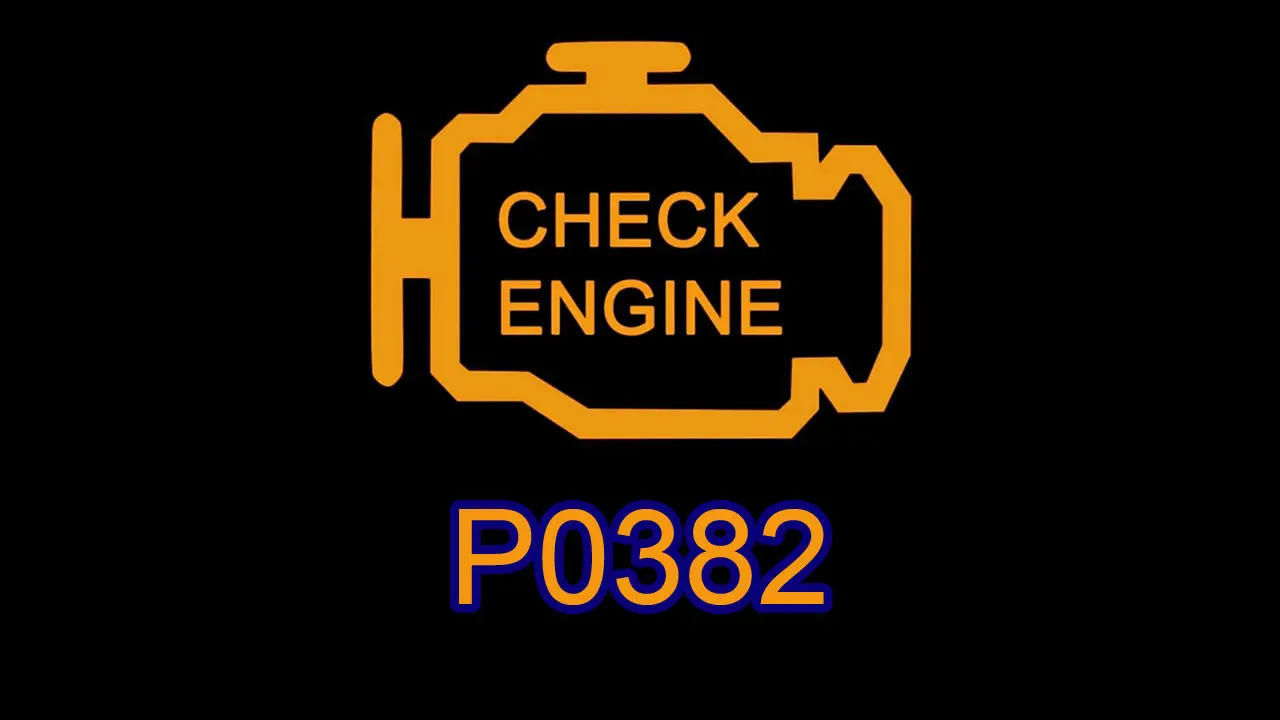
P0382 Glow Plug/Heater Circuit "B" Malfunction
P0382 is an OBD-II diagnostic trouble code indicating that the engine control module (ECM/PCM) has detected a malfunction in Glow Plug/Heater Circuit “B.”
This is a broad circuit fault code. It does not automatically mean that a particular glow plug has failed.
The exact meaning of Circuit “B” is manufacturer-specific. Depending on the engine, it may refer to a particular glow plug circuit, a group of glow plugs, a heater circuit, or part of the glow plug control system.
For this reason, the vehicle-specific wiring diagram is important before deciding which component is responsible.
What Is the Glow Plug/Heater Circuit?
Glow plugs are used primarily on diesel engines to improve combustion during cold starting.
When the engine is cold, the ECM determines whether additional heating is required. It then activates the glow plug system through a relay, glow plug control module, or electronic driver.
The system may operate the glow plugs:
-
Before engine cranking
-
During cranking
-
Immediately after startup
-
For a longer period in very cold conditions
This helps the engine start more easily and reduces incomplete combustion during the first moments of operation.
Modern diesel engines can control glow plug current much more precisely than older systems. Some systems monitor individual glow plugs, while others control them in groups.
What Does “Circuit B” Mean?
The “B” designation does not universally identify one particular glow plug.
On one engine, Circuit B may correspond to a specific group of glow plugs. On another, it may identify a particular heater-control circuit.
Therefore, it would be incorrect to say that P0382 always means “glow plug number two is faulty.”
The manufacturer's wiring diagram and diagnostic information should be used to determine exactly what Circuit B represents on the specific vehicle.
What Does “Malfunction” Mean?
Unlike codes that specifically say “Circuit High” or “Circuit Low,” P0382 uses the broader term “Malfunction.”
This means the ECM has detected that the electrical behavior of Circuit B is not what it expects.
Possible electrical problems include:
-
Open circuit
-
Short to ground
-
Short to voltage
-
Excessive resistance
-
Poor electrical connection
-
Incorrect current draw
-
Failed glow plug
-
Failed relay
-
Failed glow plug control module
-
Damaged wiring
-
Poor ground
-
Control-side fault
The code therefore identifies the affected circuit, but not necessarily the failed component.
Common Causes of P0382
Failed glow plug
A glow plug can develop an open circuit or abnormal resistance. On systems that monitor glow plug current, an individual failed plug can affect the expected behavior of the circuit.
Damaged wiring
Glow plug wiring operates in a hot and mechanically demanding area of the engine.
The harness can suffer from:
-
Heat damage
-
Melted insulation
-
Chafing
-
Corrosion
-
Broken conductors
-
Previous incorrect repairs
Corroded or loose connections
A connector or terminal with excessive resistance can prevent the glow plug system from drawing the expected current.
This can be particularly important because a connection may look acceptable visually while performing poorly under electrical load.
Faulty glow plug relay
Older diesel engines may use a dedicated glow plug relay. Internal contacts can burn, stick, or develop excessive resistance.
Faulty glow plug control module
Newer diesel engines frequently use an electronic glow plug control module. A failure inside the module can prevent Circuit B from being controlled correctly.
Poor ground
A weak ground connection can interfere with glow plug operation and produce circuit-related diagnostic codes.
Power supply problem
A blown fuse, damaged power cable, weak connection, or inadequate battery supply can prevent the circuit from operating correctly.
Incorrect glow plug
Glow plugs are not universally interchangeable. Installing a plug with the wrong electrical characteristics can alter the current draw and cause monitoring problems.
ECM/PCM control problem
A fault in the ECM's control circuit is possible, but it should normally be investigated only after the external circuit has been tested.
Symptoms of P0382
The symptoms can vary considerably depending on the engine and ambient temperature.
Possible symptoms include:
-
Check Engine Light
-
Glow plug warning light
-
Difficult cold starting
-
Longer cranking time
-
Rough running immediately after startup
-
White or gray smoke during cold starting
-
Increased emissions
-
Poor cold-engine performance
-
Uneven idle immediately after starting
In warm weather, the vehicle may start almost normally because the glow plugs are less critical when the engine is already relatively warm.
The same vehicle may become difficult to start during very cold weather.
How P0382 Should Be Diagnosed
The diagnosis should begin with a complete scan of the vehicle.
Check for additional codes related to:
-
Individual glow plugs
-
Glow plug control modules
-
Glow plug relays
-
Battery voltage
-
Engine coolant temperature
-
Other heater circuits
Freeze-frame data can also provide useful information about the conditions when P0382 was stored.
Next, determine exactly what Circuit B represents on that particular engine.
Only then should the relevant wiring and components be tested.
Inspect the Glow Plug Circuit
A visual inspection can reveal obvious problems quickly.
Check the relevant circuit for:
-
Burned wiring
-
Melted insulation
-
Loose connectors
-
Corroded terminals
-
Damaged glow plug connectors
-
Poor previous repairs
-
Loose power connections
-
Signs of overheating
Pay particular attention to high-current connections.
A glow plug circuit can carry substantial current, so a connection with excessive resistance may generate significant heat.
Test the Glow Plugs
Individual glow plugs can be tested according to the manufacturer's specifications.
Depending on the glow plug design, testing may involve measuring resistance or current draw.
However, resistance measurements must be interpreted carefully.
Modern glow plugs can have very low resistance, so an inexpensive multimeter may not provide sufficiently precise information to distinguish a healthy plug from a marginal one.
A current-based test can sometimes provide more useful information because it evaluates how much current the glow plug actually draws when energized.
The correct specification should always come from the manufacturer.
Check the Relay or Control Module
If the glow plugs themselves test correctly, the next step is the device that controls them.
Older systems may use a relay, while newer systems may use an electronic glow plug control module.
The technician should verify:
-
Module/relay power supply
-
Ground
-
Input control
-
Output voltage
-
Output current where applicable
-
Connector condition
-
Communication with the ECM where applicable
If the module receives the correct command but does not provide the expected output, the module or relay becomes a strong suspect.
Voltage Drop Testing Is Important
Glow plug systems are high-current circuits, so checking for voltage alone can be misleading.
A circuit may show battery voltage with almost no electrical load but experience a significant voltage drop once the glow plugs are activated.
Voltage-drop testing can identify:
-
High-resistance terminals
-
Corroded connections
-
Damaged power cables
-
Weak grounds
-
Poor relay contacts
This is often more useful than simply checking continuity with an ohmmeter.
Can P0382 Be Caused by One Bad Glow Plug?
Yes, depending on the vehicle's monitoring strategy.
If the ECM or glow plug control module monitors individual glow plug current, a single defective plug can cause a circuit malfunction code or another glow plug-specific code.
However, this is not universal.
On some vehicles, P0382 may indicate a problem affecting an entire circuit or group rather than one individual glow plug.
Therefore, the code should not be interpreted as proof that one specific glow plug needs replacement.
P0382 vs P0384
These codes are related but describe different faults.
P0382 indicates a malfunction in Glow Plug/Heater Circuit B.
P0384 indicates a high condition in the control circuit of Glow Plug Control Module 1.
P0382 is therefore broader and focuses on the glow plug/heater circuit itself, while P0384 specifically points toward a high electrical condition in a control circuit associated with the glow plug module.
A vehicle can potentially have both codes if there is a problem involving the module and the circuit it controls.
Could the Battery Cause P0382?
Battery condition should always be considered when diagnosing diesel glow plug problems.
Glow plugs consume substantial electrical current, particularly during cold starting.
A weak battery or poor battery connection can cause:
-
Low system voltage
-
Slow cranking
-
Poor glow plug operation
-
Multiple electrical codes
However, a weak battery should not automatically be blamed for P0382.
If the battery and charging system are healthy but Circuit B has an open circuit, high resistance, or failed glow plug, the actual circuit fault still needs to be repaired.
What Should Be Replaced?
There is no single replacement part dictated by P0382.
Depending on the test results, the repair could involve:
-
Replacing one or more defective glow plugs
-
Repairing damaged wiring
-
Repairing connector terminals
-
Replacing a glow plug relay
-
Replacing a glow plug control module
-
Repairing a power or ground connection
-
Replacing an incorrect glow plug with the correct specification
-
Repairing an ECM control circuit in rare cases
The best repair is the one supported by electrical testing.
Final Diagnostic Point
P0382 means that the ECM has detected a malfunction in Glow Plug/Heater Circuit “B.”
The code does not automatically identify a bad glow plug, and Circuit B does not have a universal meaning across all vehicles.
A proper diagnosis should first identify the exact circuit, then check the glow plugs, wiring, connectors, power supply, grounds, relay or control module, and—where applicable—the ECM control signal.
Especially on modern diesel engines, testing current draw and voltage drop under load can provide much more useful information than simply measuring resistance.