TR
TR EN
EN

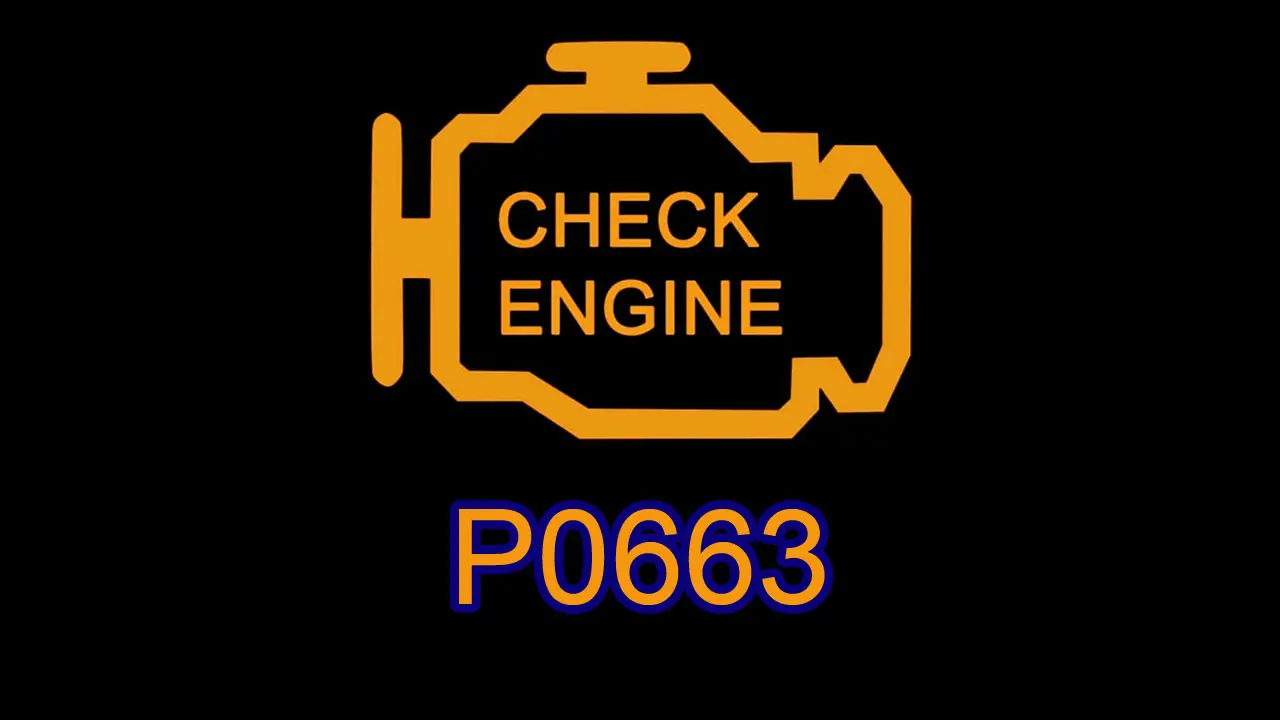
P0663 Intake Manifold Tuning Valve Control Circuit/Open (Bank 2)
The P0663 – Intake Manifold Tuning Valve Control Circuit/Open (Bank 2) diagnostic trouble code (DTC) indicates that the Engine Control Module (ECM/PCM) has detected an open or interrupted electrical circuit in the control system for the Intake Manifold Tuning Valve on Bank 2.
The intake manifold tuning system controls the path of incoming air through the intake manifold. By changing the airflow path according to engine speed and load, the system can improve low-speed torque, high-RPM performance, throttle response, fuel economy, and emissions.
The key difference between P0663 and the related P0664/P0665 codes is that P0663 specifically indicates an open or interrupted control circuit, rather than simply a low or high electrical signal.
What Does P0663 Mean?
In simple terms:
The ECM cannot properly control or electrically communicate with the Intake Manifold Tuning Valve on Bank 2 because the control circuit appears to be open.
The basic system can be represented as:
ECM/PCM → Wiring → Intake Manifold Tuning Actuator → Runner Mechanism
Depending on the vehicle, the system may use:
-
An electric motor
-
An electronically controlled solenoid
-
A vacuum actuator controlled by a solenoid
-
An actuator with integrated position feedback
The exact configuration varies between manufacturers.
What Is an Intake Manifold Tuning Valve?
An Intake Manifold Tuning Valve (IMTV) is used to change the airflow characteristics of the intake manifold.
Engine airflow requirements change according to:
-
Engine RPM
-
Engine load
-
Throttle position
-
Vehicle speed
-
Engine temperature
The tuning system allows the engine computer to select different intake airflow paths.
At lower RPM, the system may use a longer intake path to improve torque.
At higher RPM, it may switch to a different or shorter path to improve airflow and power.
What Does "Bank 2" Mean?
Bank 2 is the cylinder bank that does not contain cylinder 1.
This terminology applies to engines with multiple cylinder banks, such as:
-
V6
-
V8
-
V10
-
V12
Inline engines generally have only one cylinder bank.
Always verify the correct Bank 2 location using vehicle-specific service information.
What Does "Circuit/Open" Mean?
The term "Open" means that the ECM detects an interruption in the electrical path.
An electrical circuit is normally expected to have a complete path between the control module and actuator.
An open circuit can occur when:
-
A wire is broken
-
A connector is disconnected
-
A terminal is loose
-
A terminal is corroded
-
An actuator coil is open
-
A fuse or power supply is interrupted
-
A wiring connection has failed
This prevents the actuator from receiving or responding to the required control signal.
What Causes P0663?
Common possible causes include:
-
Broken actuator wiring
-
Disconnected connector
-
Corroded connector
-
Loose electrical terminal
-
Failed intake manifold tuning actuator
-
Open actuator coil
-
Damaged wiring harness
-
Blown fuse
-
Missing actuator power supply
-
Poor ground
-
Broken terminal
-
Water intrusion
-
Damaged runner-control solenoid
-
ECM/PCM control circuit failure
Mechanical problems such as a stuck runner can also exist at the same time, although a purely mechanical problem does not by itself create an electrical open circuit.
Can a Bad Intake Manifold Tuning Valve Cause P0663?
Yes.
If the actuator's internal electrical winding or motor circuit is open, the ECM may detect an interrupted circuit.
For example, an electrically operated actuator can fail internally and produce an open-circuit condition even when the external wiring appears normal.
Can a Broken Wire Cause P0663?
Yes.
A broken wire is one of the most straightforward causes of an open-circuit DTC.
Pay particular attention to areas where the wiring:
-
Runs near the engine
-
Moves with engine vibration
-
Passes close to hot components
-
Is exposed to oil
-
Is exposed to water
-
Has been previously repaired
A wire can also break internally while its insulation still looks intact.
Can a Bad Connector Cause P0663?
Yes.
A disconnected or poorly connected actuator plug can immediately create an open circuit.
Inspect the connector for:
-
Disconnected plug
-
Corrosion
-
Bent pins
-
Loose terminals
-
Damaged locking tabs
-
Water intrusion
-
Poor terminal tension
Can a Blown Fuse Cause P0663?
Yes, depending on the vehicle's circuit design.
If the intake manifold tuning actuator receives power through a shared fuse and that fuse is blown, the actuator may become electrically inactive.
However, simply replacing the fuse without finding out why it failed is not a complete repair.
If the replacement fuse blows again, there may be a short circuit or failed actuator elsewhere in the circuit.
Can a Poor Ground Cause P0663?
Yes, depending on the system design.
Some actuators require a dedicated ground or controlled ground from the ECM.
A poor ground can interrupt actuator operation and cause the ECM to interpret the circuit as open.
Check:
-
Actuator ground
-
ECM ground
-
Engine ground straps
-
Chassis grounds
A voltage-drop test can be more informative than a simple continuity check.
Can Carbon Buildup Cause P0663?
Usually not directly.
Carbon buildup can make the intake runner mechanism difficult to move or cause it to become stuck.
However, carbon buildup does not normally create an electrical open circuit.
If P0663 is present, the electrical circuit should be checked first.
Mechanical runner problems can then be investigated if the electrical system passes its tests.
Can a Vacuum Leak Cause P0663?
Normally not directly.
Some intake manifold tuning systems use vacuum actuators controlled by electrical solenoids.
In those systems, a vacuum problem can prevent the runner from moving, but a simple vacuum leak generally does not create an electrical open-circuit DTC.
If the vehicle uses a vacuum-operated system, both systems should be checked:
Electrical circuit → Vacuum supply → Actuator → Mechanical runner
Symptoms of P0663
Possible symptoms include:
-
Check Engine Light
-
Reduced engine performance
-
Poor acceleration
-
Reduced low-RPM torque
-
Reduced high-RPM power
-
Hesitation
-
Poor throttle response
-
Increased fuel consumption
-
Increased emissions
Some vehicles may have no obvious drivability symptoms other than the Check Engine Light.
Can P0663 Cause Reduced Power?
Yes.
If the intake manifold tuning valve remains in an incorrect position, the engine may not receive the airflow characteristics expected for its current operating condition.
This can result in:
-
Reduced torque
-
Poor acceleration
-
Hesitation
-
Reduced high-RPM performance
Some vehicles may also activate a reduced-power strategy.
Can P0663 Cause Poor Fuel Economy?
It can.
The intake tuning system is designed to optimize airflow.
If the system cannot operate, the engine may not operate as efficiently across its entire RPM range.
The effect on fuel economy depends on the engine design and the position in which the valve remains stuck.
Can P0663 Cause Rough Idle?
Sometimes, but it is not a defining symptom.
If the intake tuning valve is stuck in an inappropriate position, airflow can potentially be affected.
However, rough idle can also be caused by:
-
Vacuum leaks
-
Throttle body problems
-
MAF sensor problems
-
MAP sensor problems
-
Fuel injector problems
-
Ignition problems
These should be diagnosed separately.
Can P0663 Cause a No-Start Condition?
Normally, no.
An intake manifold tuning valve circuit problem generally does not prevent an otherwise healthy engine from starting.
If a vehicle with P0663 has a no-start condition, other systems should be investigated.
Can P0663 Damage the Engine?
Usually, P0663 does not directly cause immediate mechanical engine damage.
The engine will generally continue to run with the tuning system disabled or stuck.
The most common consequences are:
-
Reduced performance
-
Poor fuel economy
-
Increased emissions
A more serious situation can occur if the mechanical runner assembly has broken and internal components can enter the intake or engine. This depends on the specific engine design.
How Is P0663 Diagnosed?
A systematic diagnostic process is important.
1. Scan for all DTCs
Look for additional codes involving:
-
Intake manifold tuning
-
Runner position
-
MAF
-
MAP
-
Throttle
-
Vacuum
-
Engine performance
Related codes may provide useful clues.
2. Confirm Bank 2
Identify the correct cylinder bank using the manufacturer's service information.
3. Locate the tuning actuator
Determine whether the vehicle uses:
-
Electric motor
-
Solenoid
-
Vacuum actuator
-
Integrated position sensor
4. Inspect the connector
Check for:
-
Disconnection
-
Corrosion
-
Bent pins
-
Loose terminals
-
Water intrusion
5. Inspect the wiring
Look for:
-
Broken wires
-
Open circuits
-
Chafing
-
Melted insulation
-
Poor previous repairs
6. Check fuses and power supply
Verify that the actuator receives the required supply voltage.
7. Check ground
Confirm that the actuator and control system have a proper ground path.
8. Test circuit continuity
With the circuit safely isolated according to the manufacturer's procedure, check continuity between the relevant terminals.
9. Test the actuator
Measure resistance where specified and test actuator operation according to manufacturer instructions.
10. Check mechanical movement
Make sure the intake runner mechanism can move freely.
11. Check position feedback
If the system uses a position sensor, compare commanded and actual positions.
Can a Multimeter Diagnose P0663?
Yes.
A multimeter can be useful for identifying an open circuit.
You can potentially check:
-
Power supply
-
Ground
-
Wiring continuity
-
Connector voltage
-
Actuator resistance
-
Short circuits
However, the correct test procedure depends on the vehicle.
A resistance value that looks reasonable does not necessarily prove that an electronically controlled actuator is functioning correctly.
Can a Scan Tool Diagnose P0663?
Yes.
An advanced scan tool can provide additional information.
Depending on the vehicle, it may allow you to:
-
Command the intake tuning actuator
-
Monitor actuator status
-
View commanded position
-
View actual position
-
Monitor position feedback
-
Read freeze-frame data
A basic OBD scanner may only display the P0663 code.
Can an Oscilloscope Help Diagnose P0663?
Yes.
An oscilloscope can be useful when the actuator is controlled using:
-
PWM signals
-
Variable electrical signals
-
Electronic motor control
-
Position feedback
It can reveal control-signal problems that may be difficult to identify using only a multimeter.
Can P0663 Be Caused by the ECM?
Yes, but it is usually not the first thing to suspect.
The ECM controls the intake manifold tuning system.
An internal ECM driver fault could potentially cause an open or abnormal control condition.
Before replacing the ECM, verify:
-
Actuator
-
Wiring
-
Connector
-
Power supply
-
Ground
-
Position feedback
-
Mechanical operation
What If P0663 Returns Immediately After Clearing?
If the code returns immediately after clearing, there is likely a persistent electrical problem.
Focus on:
-
Disconnected actuator
-
Broken wire
-
Open circuit
-
Failed actuator
-
Missing power supply
-
Poor ground
-
Corroded connector
-
ECM control circuit
If the code returns only during certain driving conditions, investigate intermittent wiring and mechanical operation.
What If P0663 Is Intermittent?
An intermittent open circuit can be difficult to find.
Possible causes include:
-
Loose connector
-
Broken wire inside insulation
-
Corroded terminal
-
Harness movement
-
Engine vibration
-
Heat-related wiring problems
-
Intermittent actuator failure
A careful wiggle test, performed safely and according to the manufacturer's procedure, can sometimes help identify an intermittent connection.
Is P0663 a Serious Code?
Usually, P0663 is a moderate-severity fault.
The vehicle will often remain operational.
However, the problem can cause:
-
Reduced engine performance
-
Poor acceleration
-
Increased fuel consumption
-
Increased emissions
-
Reduced drivability
Some vehicles may enter a reduced-power or fail-safe mode.
Can You Drive With P0663?
Usually, short-term driving is possible if the engine runs normally.
However, the problem should be diagnosed rather than ignored.
Avoid continued driving if there is:
-
Severe loss of power
-
Significant hesitation
-
Limp mode
-
Rough engine operation
-
A flashing Check Engine Light
How Is P0663 Repaired?
The repair depends on the confirmed cause.
Possible repairs include:
-
Repairing broken wiring
-
Repairing an open circuit
-
Replacing damaged terminals
-
Repairing a connector
-
Replacing a blown fuse after finding its cause
-
Repairing the power supply
-
Repairing the ground circuit
-
Replacing the intake manifold tuning actuator
-
Replacing the control solenoid
-
Repairing vacuum lines on applicable systems
-
Repairing the runner linkage
-
Cleaning carbon deposits where appropriate
-
Replacing the intake manifold assembly if mechanically damaged
-
Repairing or replacing the ECM in rare cases
Does P0663 Mean the Intake Manifold Must Be Replaced?
No.
P0663 does not automatically indicate that the entire intake manifold is defective.
The actual problem could be a simple:
-
Broken wire
-
Disconnected connector
-
Corroded terminal
-
Failed actuator
-
Blown fuse
-
Poor ground
The intake manifold itself should only be replaced when inspection confirms internal mechanical damage or when the tuning mechanism cannot be serviced separately.
P0663 vs. P0664 vs. P0665
These codes are closely related:
P0663 → Intake Manifold Tuning Valve Control Circuit/Open (Bank 2)
The control circuit appears to be open or interrupted.
P0664 → Intake Manifold Tuning Valve Control Circuit Low (Bank 2)
The control circuit signal is below the expected electrical range.
P0665 → Intake Manifold Tuning Valve Control Circuit High (Bank 2)
The control circuit signal is above the expected electrical range.
The distinction is important because the diagnostic approach differs.
For P0663, an open circuit, disconnected connector, failed actuator, or interrupted power/ground path should receive particular attention.
Common Diagnostic Mistakes
Assuming the intake manifold is automatically defective
The wiring or actuator may be the actual problem.
Cleaning the intake without checking the electrical circuit
Carbon buildup may cause mechanical problems, but P0663 specifically identifies a circuit/open condition.
Replacing the actuator without testing the wiring
A broken wire can produce the same DTC even with a perfectly good actuator.
Ignoring the fuse
A blown fuse can interrupt actuator power on some systems.
Ignoring Bank 2
The correct cylinder bank must be identified before testing components.
Replacing the ECM too quickly
ECM failure is possible but generally less common than wiring, connector, actuator, or power-supply problems.
How Do You Clear P0663?
The correct procedure is:
Scan all modules → Record all DTCs → Check freeze-frame data → Identify Bank 2 → Inspect actuator and connector → Check fuses → Check power and ground → Test circuit continuity → Test actuator → Inspect runner movement → Check position feedback → Repair the confirmed fault → Clear the DTC → Test-drive → Rescan
If P0663 returns, the underlying open-circuit problem has not been corrected.
Final Thoughts on P0663
P0663 – Intake Manifold Tuning Valve Control Circuit/Open (Bank 2) indicates that the ECM has detected an open or interrupted electrical circuit in the intake manifold tuning valve control system for Bank 2.
The most important areas to inspect are:
Actuator → Connector → Wiring → Fuse → Power → Ground → Control circuit → Runner mechanism → Position feedback → ECM
Possible causes include a broken wire, disconnected or corroded connector, failed actuator, blown fuse, poor ground, open control circuit, mechanical runner problem, or ECM failure.
The important point is that P0663 does not automatically mean the intake manifold needs to be replaced.
Because this is specifically an open-circuit code, electrical testing should normally be performed before replacing major intake components.