TR
TR EN
EN

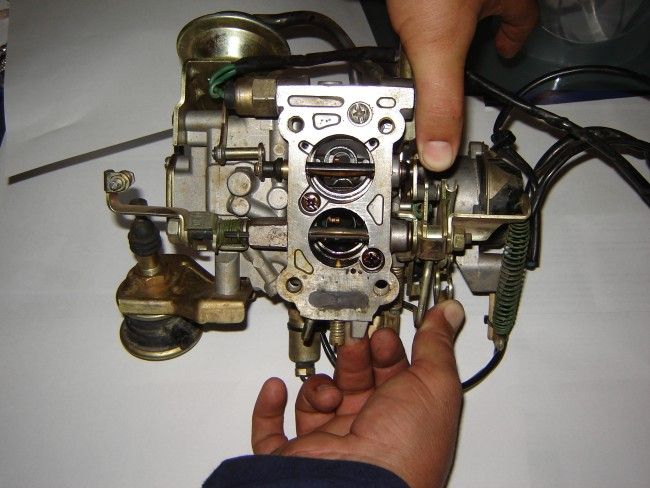
What is a carburetor? How does it work?
A carburetor is a mechanical fuel system used mainly in older gasoline engines to mix fuel and air in the appropriate proportion before sending the mixture into the engine cylinders.
Before electronic fuel injection became standard, carburetors were widely used in cars, motorcycles, generators, lawn equipment, and many other gasoline-powered engines.
Although the carburetor may look relatively simple from the outside, it contains several fuel and air circuits that work under different engine operating conditions. Cold starting, idling, normal driving, acceleration, and high engine load can all require different fuel-delivery strategies.
How Does a Carburetor Work?
The basic operating principle of a carburetor is based on airflow and pressure differences.
When the engine is running, the pistons create a pressure difference in the intake system, causing air to flow through the carburetor.
The incoming air passes through a narrowed section called the Venturi. As the air moves through this restriction, its velocity increases and its static pressure decreases.
The lower pressure around the Venturi allows fuel from the float bowl to be drawn through the fuel circuit and into the incoming air stream.
The resulting air-fuel mixture then travels through the intake manifold and into the cylinders.
In simplified form:
Air inlet → Venturi → fuel enters the airflow → air-fuel mixture → intake manifold → cylinders
The actual process is more complex because different carburetor circuits become active at different throttle positions and engine loads.
Why Is the Venturi Important?
The Venturi is one of the most important parts of a carburetor.
It creates the pressure difference needed to draw fuel into the airflow.
As air passes through the narrow section:
-
Air velocity increases.
-
Static pressure decreases.
-
A pressure difference develops between the float bowl and the Venturi.
-
Fuel is drawn through the appropriate jet.
-
Fuel mixes with the incoming air.
The size and shape of the Venturi affect the carburetor's behavior.
A smaller Venturi can maintain higher air velocity at lower engine speeds, which can improve low-speed response.
A larger Venturi can support greater airflow at high engine speeds, but if it is excessively large for the engine, low-speed response may suffer.
This is why simply installing a larger carburetor does not automatically produce more useful engine performance.
What Is the Float Bowl?
The float bowl is the part of the carburetor that stores a controlled amount of gasoline.
Its purpose is to maintain a relatively stable fuel supply for the carburetor's different circuits.
The fuel level inside the bowl is controlled by the float and needle valve.
As fuel enters the bowl, the float rises. Once the fuel reaches the specified level, the float pushes the needle valve toward its seat and restricts further fuel flow.
As the engine consumes fuel, the level drops. The float moves downward and the needle valve allows more fuel to enter.
This system keeps the fuel level within a specified range.
An incorrect float level can cause major changes in carburetor operation.
A fuel level that is too high can cause:
-
Rich running
-
Excessive fuel consumption
-
Fuel leakage
-
Gasoline odor
-
Black exhaust smoke
-
Engine flooding
A fuel level that is too low can cause fuel starvation, especially during high-load or high-speed operation.
How Do Carburetor Jets Work?
Carburetors use small calibrated passages called jets to control fuel flow.
Different circuits may use different jets depending on the carburetor design.
The main jet primarily affects fuel delivery through the main circuit.
The idle jet supplies fuel through the idle circuit.
Other jets or calibrated passages may control air correction, enrichment, transition behavior, or other operating conditions.
Because these passages are precisely sized, even small deposits or contamination can change fuel flow.
A jet should not be enlarged with a drill, wire, or other unsuitable tool during cleaning. Changing its calibrated diameter can alter the carburetor's fuel mixture.
How Does the Throttle Valve Work?
The throttle valve controls the amount of air entering the engine.
When the driver presses the accelerator pedal, the throttle opens.
As the throttle opens:
-
More air enters the engine.
-
Airflow through the carburetor increases.
-
The pressure conditions inside the carburetor change.
-
More fuel is drawn through the appropriate circuits.
-
Engine torque and speed increase.
When the driver releases the accelerator, the throttle closes toward its idle position and the idle circuit becomes more important.
The throttle linkage is therefore directly connected to the carburetor's fuel-metering behavior.
How Does a Carburetor Work at Idle?
At idle, the throttle is almost completely closed.
Under these conditions, airflow through the main Venturi is often insufficient to provide the fuel required for stable engine operation through the main circuit alone.
For this reason, carburetors have a separate idle circuit.
The idle circuit uses the pressure difference created near the closed throttle to draw a controlled amount of fuel into the engine.
The idle circuit may include:
-
Idle jet
-
Idle fuel passage
-
Air bleed
-
Mixture adjustment screw
-
Idle discharge port
-
Transition ports
If the idle circuit becomes blocked or incorrectly adjusted, the engine may:
-
Idle roughly
-
Surge or fluctuate
-
Stall
-
Become difficult to start
-
Hesitate when the throttle is first opened
What Happens During Sudden Acceleration?
When the throttle is opened rapidly, the amount of air entering the engine changes very quickly.
Fuel flow through the main circuit may not increase at exactly the same rate. Without compensation, the mixture could temporarily become too lean.
Many carburetors therefore use an accelerator pump.
The accelerator pump provides a short burst of additional fuel when the throttle is opened quickly.
This helps prevent:
-
Hesitation
-
Flat spots
-
Temporary lean misfire
-
Poor throttle response
If the accelerator pump is faulty or incorrectly adjusted, the engine may hesitate noticeably when the accelerator pedal is pressed suddenly.
What Is a Choke?
The choke is a cold-start enrichment system.
A cold gasoline engine generally requires a richer mixture because fuel does not vaporize as easily at low temperatures.
The choke restricts airflow or otherwise changes the fuel-air ratio to help the engine start and continue running during the initial warm-up period.
Once the engine reaches operating temperature, the choke should progressively open.
If the choke remains closed for too long, the engine may run excessively rich.
Possible symptoms include:
-
High fuel consumption
-
Black exhaust smoke
-
Rough running
-
Poor throttle response
-
Carbon deposits
-
Fouled spark plugs
Different carburetors use different choke mechanisms. Some are manually controlled, while others use thermostatic, vacuum-assisted, or other automatic mechanisms.
How Does the Carburetor Handle Different Engine Speeds?
A carburetor does not rely on one fuel circuit for every operating condition.
Different circuits become more important as engine speed and throttle opening change.
During cold starting
The choke or another enrichment system provides a richer mixture.
At idle
The idle circuit supplies most of the required fuel.
During initial throttle opening
The transition circuit helps bridge the change between idle and the main circuit.
During normal driving
The main fuel circuit becomes increasingly important.
During sudden acceleration
The accelerator pump provides additional fuel.
Under high engine load
A power enrichment system may provide additional fuel depending on the carburetor design.
At high engine speed
The main fuel and air circuits must provide enough fuel and airflow for the engine's increased demand.
This multi-circuit design is what allows a carburetor to operate across a wide range of engine conditions despite being primarily mechanical.
Air-Fuel Ratio in a Carbureted Engine
Gasoline engines require an appropriate balance between air and fuel for combustion.
A commonly referenced theoretical stoichiometric ratio for gasoline is approximately 14.7 parts air to 1 part fuel by mass.
However, a gasoline engine does not necessarily operate at exactly this ratio under every condition.
For example:
-
Cold starting generally requires a richer mixture.
-
Full-load operation may use a richer mixture.
-
Cruise operation may use a different mixture strategy.
-
Idle operation depends on engine and carburetor design.
-
Acceleration requires temporary enrichment.
One of the major challenges of carburetor design is achieving acceptable mixture control under these changing conditions using mechanical principles.
Why Does a Carburetor Need Adjustment?
Because a carburetor relies heavily on mechanical settings and calibrated components, its adjustment has a significant effect on engine operation.
Depending on the design, important settings may include:
-
Float level
-
Idle speed
-
Mixture adjustment
-
Main jet selection
-
Idle jet
-
Choke adjustment
-
Accelerator pump adjustment
-
Secondary throttle operation
A poorly adjusted carburetor can cause:
-
Excessive fuel consumption
-
Rough idle
-
Poor acceleration
-
Black smoke
-
Lean running
-
Hesitation
-
Difficult starting
However, adjustment should not be performed randomly. The manufacturer's specifications and the actual engine condition should be considered.
Common Carburetor Problems
Carburetor problems can produce many different symptoms.
Hard starting
Possible causes include incorrect fuel level, choke problems, fuel-delivery issues, incorrect mixture adjustment, or ignition faults.
Rough or unstable idle
The idle circuit, mixture adjustment, vacuum leaks, ignition system, and throttle position should be checked.
Hesitation during acceleration
The accelerator pump, fuel level, transition circuit, jets, and vacuum system may need inspection.
Excessive fuel consumption
A high float level, leaking needle valve, malfunctioning choke, incorrect jetting, or excessively rich adjustment may be responsible.
Black exhaust smoke
This generally indicates an excessively rich mixture, although the underlying cause must be diagnosed rather than assuming that the carburetor itself is defective.
Loss of power at high speed
The main jet, fuel supply, fuel pump, filter, secondary throttle system, and engine condition should all be considered.
Why Is Carburetor Cleaning Important?
Gasoline can leave deposits and varnish-like residue inside a carburetor, particularly when fuel remains in the system for long periods.
Small passages and jets can become restricted.
A carburetor that looks clean externally may still have contamination inside its fuel passages.
Proper cleaning may require inspection of:
-
Main jets
-
Idle jets
-
Fuel passages
-
Float
-
Needle valve
-
Gaskets
-
Diaphragms
-
Choke mechanism
-
Accelerator pump
The calibrated holes in jets should not be modified during cleaning. Their dimensions are part of the carburetor's fuel calibration.
Carburetor and Vacuum Leaks
Vacuum leaks can have a major effect on carbureted engines.
If unmetered air enters the intake system, the engine may receive more air than the carburetor was calibrated to accommodate.
This can produce a lean condition and may cause:
-
High idle speed
-
Rough idle
-
Hesitation
-
Stalling
-
Poor throttle response
Common areas to inspect include:
-
Carburetor mounting gasket
-
Intake manifold gasket
-
Vacuum hoses
-
Vacuum-operated diaphragms
-
Throttle shaft areas, depending on design
A vacuum leak should not automatically be blamed on the carburetor itself. The entire intake system should be checked.
Carburetor vs. Electronic Fuel Injection
The main difference between a carburetor and electronic fuel injection is how fuel delivery is controlled.
A carburetor uses airflow, pressure differences, jets, mechanical linkages, vacuum, and other physical mechanisms to meter fuel.
Electronic fuel injection uses an ECU and electronically controlled injectors.
Modern electronic injection can continuously evaluate information from sensors such as:
-
Engine speed
-
Crankshaft position
-
Camshaft position
-
Coolant temperature
-
Intake airflow or pressure
-
Throttle position
-
Oxygen sensor feedback
-
Accelerator pedal position
-
Fuel pressure
The ECU can then adjust injector operation accordingly.
This gives electronic injection a major advantage in terms of precision, emissions control, fuel economy, cold starting, and adaptation to changing operating conditions.
Why Did Carburetors Disappear From Modern Cars?
Carburetors were highly effective for the technology of their era, but modern engines require much tighter control of fuel delivery.
Increasingly strict emissions regulations made accurate air-fuel control more important.
Modern engines also need:
-
Reliable cold starting
-
Stable idle
-
Low emissions
-
Good fuel economy
-
Precise throttle response
-
Altitude compensation
-
Integration with catalytic converters
-
Electronic diagnostics
Electronic fuel injection can achieve these goals much more effectively.
As a result, carburetors gradually disappeared from mainstream passenger cars and were replaced by throttle-body injection, multi-point injection, sequential injection, and eventually direct gasoline injection.
The Importance of the Carburetor in Automotive History
The carburetor is an important part of the development of gasoline-engine technology.
It allowed engineers to control fuel delivery using relatively simple principles such as airflow, Venturi pressure, fuel level, vacuum, mechanical movement, and calibrated passages.
Its different circuits also demonstrate how a mechanical system can adapt to cold starting, idling, acceleration, cruising, and high-load operation without an ECU.
Although carburetors are now largely associated with classic vehicles and older engine designs, understanding their working principle remains valuable for anyone working on vintage cars, motorcycles, small engines, or historical fuel systems.