TR
TR EN
EN

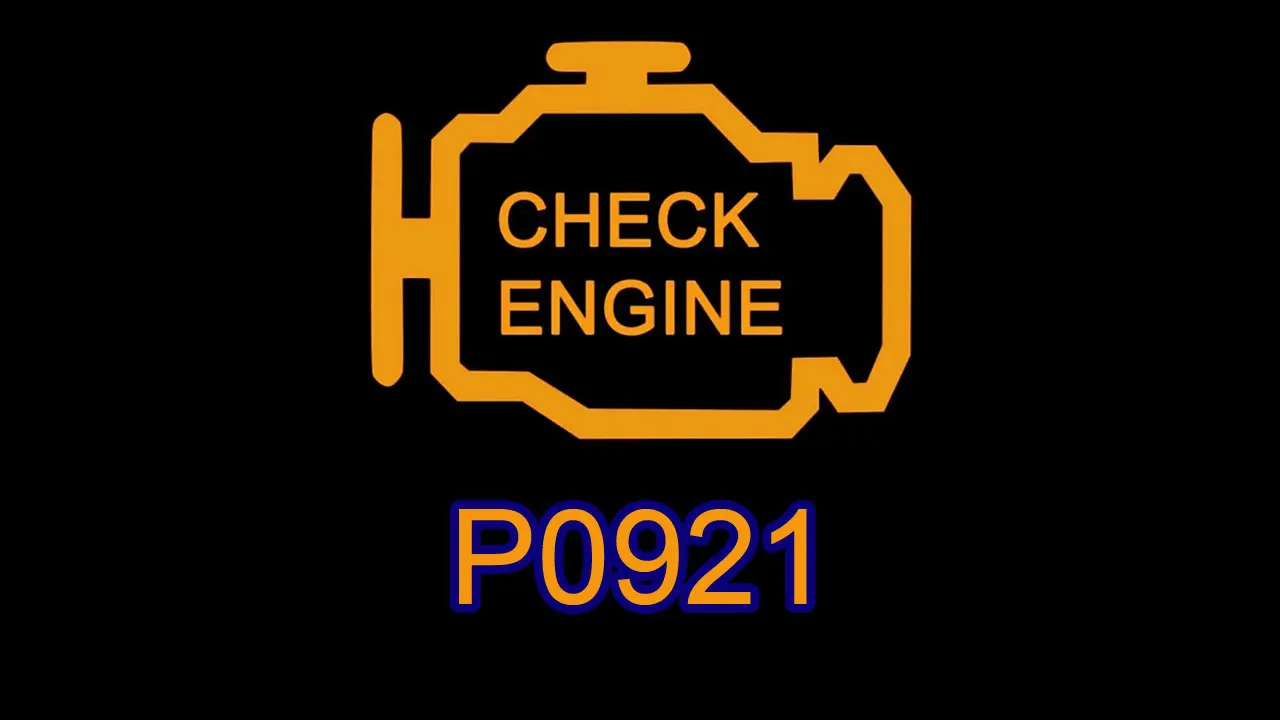
P0921 Gear Shift Forward Actuator Circuit Range / Performance
The P0921 – Gear Shift Forward Actuator Circuit Range / Performance diagnostic trouble code (DTC) indicates that the transmission control system has detected that the forward gear shift actuator or its control circuit is not operating within the expected range or performance parameters.
The forward gear actuator is responsible for controlling the mechanism that allows the transmission to select forward gears. Depending on the vehicle, this may be an electric motor, solenoid, electromechanical actuator, or part of a transmission mechatronic assembly.
Unlike a circuit-low or circuit-high fault, P0921 does not necessarily mean that the circuit has completely lost power or has excessive voltage. The circuit may be electrically connected and receiving the expected command, but the actuator may move incorrectly, respond too slowly, fail to reach the commanded position, or provide an incorrect position signal.
For this reason, diagnosing P0921 usually requires checking both the electrical circuit and the mechanical operation of the forward gear-selection system.
What Does P0921 Mean?
The code can be broken down as follows:
-
P – Powertrain-related fault
-
09 – Transmission-related system
-
21 – Specific fault identification
-
Gear Shift Forward Actuator – The actuator responsible for controlling forward gear selection
-
Range / Performance – The actuator or circuit is not behaving within the expected operating parameters
In simple terms:
P0921 means that the transmission control module has commanded the forward gear actuator, but the resulting operation is not what the system expects.
The actuator may be functioning partially, intermittently, too slowly, or outside its expected position.
What Is the Forward Gear Shift Actuator?
In many modern transmissions, gear selection is controlled electronically rather than entirely through a conventional mechanical linkage.
The driver selects a gear using the selector, and the vehicle's electronic control system determines how the transmission should respond.
A simplified sequence is:
Driver selects D → Control module receives the request → Forward actuator is commanded → Actuator moves the gear-selection mechanism → Forward gear is selected → Position feedback confirms the operation
The control module monitors this process.
If the actuator does not reach the expected position or the feedback does not correspond to the commanded position, P0921 may be stored.
What Does "Range / Performance" Mean?
The Range / Performance description is important because it is different from a simple electrical open, low, or high condition.
P0921 can occur when:
-
The actuator moves too slowly.
-
The actuator does not travel far enough.
-
The actuator travels beyond the expected position.
-
The actuator becomes mechanically stuck.
-
The actuator position sensor reports an incorrect value.
-
The actuator draws abnormal current.
-
The control module commands movement but the expected movement does not occur.
-
The actuator works intermittently.
-
Mechanical resistance prevents normal operation.
Therefore, P0921 does not necessarily mean that there is no voltage at the actuator.
The system can have power and continuity while still having a performance problem.
Symptoms of P0921
Symptoms depend on the transmission design and severity of the problem.
Common symptoms include:
Forward gears may not engage
The vehicle may be unable to move forward even though the gear selector indicates Drive.
Delayed engagement
There may be a noticeable delay between selecting Drive and the vehicle beginning to move.
Intermittent loss of forward drive
Forward gears may work normally at some times and fail at others.
Harsh gear engagement
The transmission may engage a forward gear with an abnormal jerk or impact.
Transmission enters limp mode
The control system may restrict gear selection to protect the transmission.
Check Engine Light
The malfunction indicator lamp may illuminate.
Transmission warning message
Some vehicles may display a transmission or drivetrain warning.
Gear display does not match actual operation
The dashboard may show D or another gear position even though the transmission has not successfully completed the requested selection.
Unusual actuator noise
Clicking, buzzing, repeated motor operation, or other abnormal sounds may indicate actuator problems.
Is P0921 a Serious Problem?
P0921 can be a serious transmission-control fault.
The severity depends on whether the vehicle can still select and maintain forward gears.
If the vehicle shifts normally and the code is intermittent, the problem may initially be caused by wiring, a connector, calibration, or an actuator beginning to fail.
If the vehicle cannot engage forward gears, however, it may become completely undriveable.
The fault should therefore be diagnosed promptly, particularly when accompanied by:
-
Loss of forward drive
-
Severe shifting problems
-
Limp mode
-
Repeated gear-selection failures
-
Harsh engagement
-
Multiple transmission fault codes
Most Common Causes of P0921
There are several possible causes.
Faulty forward gear actuator
The actuator may have internal electrical or mechanical damage.
Possible failures include:
-
Worn motor
-
Damaged gears
-
Internal electronics failure
-
Position sensor failure
-
Excessive mechanical wear
-
Internal binding
Damaged wiring
The wiring between the actuator and transmission control system can become damaged by:
-
Heat
-
Vibration
-
Chafing
-
Water
-
Corrosion
-
Previous repairs
-
Physical impact
Poor electrical connector
A loose connector can cause intermittent actuator operation.
Corroded terminals
Corrosion can increase resistance and interfere with actuator signals.
Faulty actuator position sensor
Many electronically controlled actuators provide position feedback.
If the control module commands one position but receives a different position signal, it may set P0921.
Mechanical binding
The actuator may be capable of operating electrically but unable to move the gear-selection mechanism because of mechanical resistance.
Damaged shift mechanism
The linkage, selector fork, gear-selection mechanism, or related components may be worn or damaged.
Low system voltage
A weak battery, charging problem, or poor electrical connection can prevent the actuator from operating correctly.
Transmission fluid problems
On certain transmission designs, incorrect fluid level or degraded fluid can contribute to gear-selection problems.
However, fluid condition should not automatically be blamed for P0921.
Software or calibration problem
Some electronically controlled transmissions require actuator adaptation or calibration.
Incorrect learned values or software problems can sometimes result in performance-related actuator faults.
Faulty TCM
A transmission control module may have an internal control or driver problem.
This should generally be considered only after the actuator and wiring have been properly tested.
Where Is the Forward Gear Actuator Located?
The location depends on the transmission.
The actuator may be:
-
Mounted externally on the transmission
-
Integrated into the transmission housing
-
Part of the shift mechanism
-
Located inside a mechatronic unit
-
Integrated into a valve-body assembly
-
Combined with other gear-selection actuators
Dual-clutch and automated manual transmissions may use multiple actuators to control different gear-selection functions.
Because of these differences, the vehicle-specific service information should be used to identify the correct actuator.
How Is P0921 Diagnosed?
A proper diagnosis should determine whether the problem is electrical, mechanical, actuator-related, or software-related.
Simply replacing the actuator is not always the correct repair.
1. Scan the vehicle
A professional diagnostic scanner should be used to retrieve all stored and pending codes.
The technician should record:
-
P0921
-
Other transmission codes
-
Gear-selection codes
-
Actuator codes
-
Voltage-related codes
-
Freeze-frame data
Additional codes can provide valuable clues.
2. Check forward gear operation
The technician should determine exactly what happens when Drive is selected.
Does the vehicle:
-
Move normally?
-
Engage Drive after a delay?
-
Fail to move?
-
Enter limp mode?
-
Select only certain gears?
-
Make abnormal noises?
This helps determine the direction of the diagnosis.
3. Check battery and charging voltage
The vehicle's electrical system should be tested.
Low or unstable voltage can affect electronic transmission actuators.
If several unrelated electrical codes are present, charging-system problems should receive particular attention.
4. Inspect the actuator
The actuator should be inspected for physical damage, contamination, overheating, or signs of mechanical binding.
5. Inspect the wiring
The complete harness should be checked for:
-
Damaged insulation
-
Broken wires
-
Chafing
-
Corrosion
-
Poor repairs
-
Loose connections
Transmission wiring is exposed to heat and vibration, making harness problems relatively important.
6. Inspect the connectors
Check for:
-
Bent pins
-
Corroded terminals
-
Loose terminals
-
Water intrusion
-
Fluid contamination
-
Broken connector locks
A connector can look normal externally but still have poor terminal contact.
7. Check power and ground
The actuator must receive the specified voltage and have a reliable ground.
A voltage-drop test can help identify high-resistance connections.
8. Test actuator operation
A suitable diagnostic scanner may allow the technician to command the actuator.
During activation, the technician can monitor:
-
Actuator movement
-
Current draw
-
Commanded position
-
Actual position
-
Transmission response
This is especially useful for range/performance faults.
9. Check position feedback
If the actuator has a position sensor, compare the commanded position with the actual position.
For example:
Commanded: Forward gear position
Actual: Position not reached
This could indicate actuator failure, mechanical binding, or an inaccurate position sensor.
10. Check mechanical operation
If the electrical signals and actuator appear normal, the mechanical gear-selection mechanism should be examined.
How to Test P0921 With a Multimeter
A multimeter can help diagnose the electrical portion of the problem.
The exact procedure should follow the manufacturer's wiring diagram.
A general approach includes:
Check the actuator power supply.
Verify that the actuator receives the specified voltage under the correct operating conditions.
Check the ground.
A poor ground can cause incorrect actuator operation even when power is available.
Check wiring continuity.
The wiring between the actuator and control module should have the specified continuity.
Check for shorts to power or ground.
The actuator circuit should not have an unintended connection to another circuit.
Check actuator resistance when applicable.
If the actuator uses a simple motor or solenoid circuit with a specified resistance value, compare the measurement with manufacturer specifications.
Check the circuit while operating.
Because P0921 is a performance code, static resistance testing may not reveal the problem.
The circuit should be evaluated while the actuator is being commanded.
Why a Multimeter Alone May Not Be Enough
P0921 is different from an obvious open-circuit fault.
An actuator can have correct resistance and still fail mechanically.
For example, an actuator may:
-
Work when cold but fail when hot
-
Move too slowly
-
Become stuck under load
-
Draw excessive current
-
Stop before reaching its target position
-
Produce incorrect position feedback
A scan tool capable of actuator testing and live-data monitoring can therefore be extremely useful.
An oscilloscope may also be useful in difficult electrical cases where the actuator control signal needs to be evaluated in detail.
Can a Weak Battery Cause P0921?
Yes, potentially.
Electronic transmission actuators require adequate voltage to operate correctly.
A weak battery or unstable charging system can cause actuator performance problems, particularly during starting or periods of high electrical demand.
If the vehicle has recently experienced:
-
Battery discharge
-
Jump starting
-
Alternator problems
-
Low-voltage warnings
-
Multiple electronic DTCs
the electrical system should be checked.
However, if system voltage is normal and P0921 repeatedly returns, attention should shift toward the actuator, wiring, position feedback, and mechanical mechanism.
Can Low Transmission Fluid Cause P0921?
It can contribute to transmission operation problems on some vehicles.
Low or incorrect transmission fluid can result in:
-
Delayed engagement
-
Slipping
-
Harsh shifting
-
Overheating
-
Abnormal transmission behavior
However, P0921 specifically relates to forward gear actuator range/performance, so fluid level alone should not be assumed to be the cause.
If there are signs of a transmission-fluid problem, it should be investigated alongside the actuator circuit.
Can P0921 Cause Loss of Forward Gears?
Yes.
If the forward gear actuator cannot reach or maintain the required position, the transmission may be unable to engage one or more forward gears.
The vehicle may:
-
Remain in Neutral
-
Enter limp mode
-
Move only in a limited gear
-
Engage Drive intermittently
-
Refuse to move forward
This is one of the most important reasons to diagnose P0921 promptly.
Can P0921 Damage the Transmission?
P0921 does not automatically mean that internal transmission damage has occurred.
However, if the transmission repeatedly attempts to engage a gear but cannot complete the selection correctly, continued operation may create abnormal conditions.
If the transmission is shifting violently, slipping, or repeatedly failing to engage gears, it is better to stop driving and have the vehicle inspected.
Common Diagnostic Mistakes
One of the most common mistakes is immediately replacing the forward actuator.
The actual problem may be:
-
Wiring
-
Connector
-
Position sensor
-
Mechanical binding
-
Calibration
-
Low voltage
-
TCM control
Another common mistake is assuming that a range/performance code means the transmission must be rebuilt.
P0921 does not provide enough evidence to make that conclusion.
Other mistakes include:
Checking only resistance
A static resistance measurement cannot confirm correct actuator movement.
Ignoring position feedback
The actuator may move but provide an incorrect position signal.
Ignoring calibration
Some transmissions require adaptation after actuator replacement.
Replacing the TCM too early
The external circuit should be thoroughly tested before condemning the control module.
Ignoring mechanical problems
A perfectly functioning electrical actuator cannot overcome a mechanically stuck gear-selection mechanism.
How Is P0921 Repaired?
The correct repair depends on the confirmed cause.
Possible repairs include:
-
Repairing damaged wiring
-
Replacing damaged wiring
-
Repairing connector terminals
-
Replacing damaged connectors
-
Repairing poor electrical grounds
-
Replacing the forward gear actuator
-
Replacing an actuator position sensor when separately serviceable
-
Repairing the mechanical gear-selection mechanism
-
Repairing or replacing a mechatronic assembly
-
Correcting transmission-fluid problems when confirmed
-
Updating transmission software
-
Performing actuator adaptation or calibration
-
Replacing the TCM when a failure is conclusively diagnosed
The code should be repaired according to the actual diagnostic findings rather than simply replacing components until the warning disappears.
Actuator Calibration After Repair
Some modern transmissions require an initialization, relearn, adaptation, or calibration procedure after an actuator or mechatronic component is replaced.
The control module may need to learn the actuator's actual operating positions.
Depending on the transmission, calibration may involve:
-
Gear-selection position
-
Actuator travel
-
Clutch position
-
Selector mechanism position
-
Transmission adaptation values
If the required procedure is skipped, the vehicle may continue to have shifting problems or set another actuator-related code.
Can You Drive With P0921?
It depends on how the vehicle behaves.
If forward gears work normally and the code is intermittent, the vehicle may remain operational temporarily.
However, the fault should still be diagnosed.
Driving is not recommended if:
-
Forward drive is unavailable
-
Gear engagement is severely delayed
-
The transmission enters limp mode
-
The transmission shifts violently
-
Multiple transmission warnings appear
-
The vehicle repeatedly loses forward drive
If the vehicle cannot reliably engage forward gears, it may need to be transported rather than driven to a repair facility.
How to Reset P0921
After the underlying problem has been repaired, P0921 can be cleared with a suitable diagnostic scan tool.
The recommended sequence is:
Diagnose → Repair → Calibrate/adapt if required → Clear DTC → Test drive → Rescan
If the code returns after the repair, further diagnosis is necessary.
Simply disconnecting the battery is not a proper solution. On some vehicles, doing so can also erase learned transmission values and other useful diagnostic information.
Does P0921 Mean the Transmission Needs Replacement?
No.
P0921 does not automatically indicate that the transmission needs to be replaced.
The code is associated with the range and performance of the forward gear actuator system.
Before considering major transmission repair, the following should be checked:
-
Battery voltage
-
Charging system
-
Wiring
-
Connectors
-
Grounds
-
Actuator power supply
-
Actuator control circuit
-
Forward actuator
-
Position feedback
-
Mechanical gear-selection mechanism
-
Transmission fluid where relevant
-
Software and calibration
-
TCM operation
Only if testing confirms a genuine internal transmission or mechatronic failure should major transmission repair be considered.
P0921 vs. P0922 and P0923
These three codes are closely related but describe different conditions.
P0921 – Gear Shift Forward Actuator Circuit Range / Performance
The forward actuator or its circuit is not operating within the expected performance parameters.
P0922 – Gear Shift Forward Actuator Circuit Low
The control module detects an electrical signal or voltage that is lower than expected.
P0923 – Gear Shift Forward Actuator Circuit High
The control module detects an electrical signal or voltage that is higher than expected.
This distinction matters because P0921 generally requires a broader examination of actuator operation, position, timing, and mechanical performance, while P0922 and P0923 more directly indicate an abnormal electrical level.
Final Thoughts on P0921
P0921 – Gear Shift Forward Actuator Circuit Range / Performance indicates that the transmission control system has detected that the forward gear actuator is not operating as expected.
The electrical circuit may still have power and continuity. The actual problem can involve actuator movement, position feedback, mechanical resistance, wiring, connectors, low system voltage, calibration, or the transmission control system.
The most common mistake is to assume that P0921 automatically means the forward actuator must be replaced. A proper diagnosis should first determine whether the problem is electrical, mechanical, or related to actuator control.
Most importantly, P0921 does not automatically mean that the transmission needs to be rebuilt or replaced. A systematic diagnosis of the actuator, wiring, connectors, power supply, position feedback, mechanical mechanism, and control module can identify the actual cause and prevent unnecessary transmission repairs.