TR
TR EN
EN

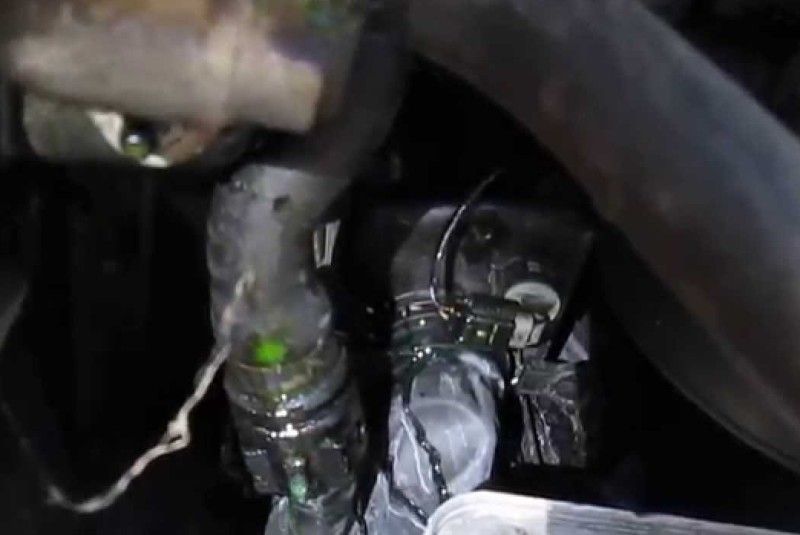
Causes of Coolant Leaks and Coolant Loss in Cars
Coolant loss is a problem that should not be ignored, especially when the coolant level continues to drop after being topped up. Under normal conditions, a vehicle's cooling system is a closed system, so the coolant level should not continuously decrease.
A loss of coolant can be caused by something relatively simple, such as a leaking hose or loose clamp, but it can also indicate a more serious problem involving the water pump, radiator, thermostat housing, heater core, head gasket, cylinder head, or engine block.
Coolant leaks can generally be divided into two main categories:
-
External cooling-system leaks
-
Internal or hidden coolant leaks
External leaks allow coolant to escape somewhere in the cooling system and may leave wet areas or dried coolant residue. Internal leaks are more difficult because the coolant can enter the engine oil, combustion chambers, or other internal passages without leaving an obvious puddle underneath the vehicle.
How Can You Tell If a Car Is Losing Coolant?
The most obvious sign is a coolant level that repeatedly drops in the expansion tank.
Other possible symptoms include:
-
Engine temperature rising higher than normal
-
Coolant warning light
-
Overheating
-
A sweet coolant smell around the engine
-
Wet areas around hoses or cooling-system components
-
Dried coolant residue
-
Steam or vapor from the engine compartment
-
Poor heater performance
-
Coolant smell inside the cabin
-
Excessive windshield fogging
-
Persistent white exhaust smoke after the engine is fully warm
-
Unusual engine oil appearance
None of these symptoms alone proves that a particular component has failed. Proper testing is necessary to identify the actual source of the coolant loss.
Water Pump Leaks
The water pump circulates coolant through the engine and radiator.
A worn shaft seal, bearing, gasket, or mechanical seal can cause coolant to leak from the pump.
Many water pumps have a small drain or weep hole designed to allow coolant to escape when the internal seal fails. Coolant residue around this area can be an important diagnostic clue.
A water pump can also develop a leak around its gasket or housing.
The consequences can be serious if the pump stops circulating coolant properly. Reduced coolant circulation can cause overheating and potentially lead to major engine damage.
On some engines, the water pump is driven by the timing belt. In those applications, the pump may be replaced as part of a timing-belt service, depending on the manufacturer's maintenance procedure.
Radiator Leaks
Radiators are exposed to vibration, temperature changes, pressure, corrosion, and road debris throughout their service life.
Leaks can develop around:
-
Upper hose connections
-
Lower hose connections
-
Plastic radiator tanks
-
Tank-to-core joints
-
Drain areas
-
Damaged radiator tubes or fins
A stone or other road debris can also damage the radiator and create a small hole.
A small crack may not leak much when the engine is cold. Once the engine reaches operating temperature and cooling-system pressure rises, the leak can become much more obvious.
Radiator Cap and Expansion Tank Cap Problems
The radiator cap or expansion tank cap is an important part of the cooling system.
Its job is to help maintain the correct system pressure. If the pressure-control mechanism fails, coolant may escape or the system may not operate at its intended pressure.
A faulty cap can contribute to:
-
Coolant loss
-
Premature boiling
-
Coolant being pushed out of the expansion tank
-
Abnormal cooling-system pressure
-
Overheating
Some modern vehicles use a pressurized expansion tank instead of a traditional radiator cap.
For this reason, the cap should not be overlooked when diagnosing unexplained coolant loss.
Coolant Hose Leaks
Radiator hoses, heater hoses, and other coolant hoses are exposed to heat, pressure, vibration, and repeated temperature cycles.
Over time, they can develop:
-
Cracks
-
Splits
-
Soft spots
-
Hardening
-
Bulging
-
Pinholes
-
Damaged connection areas
Some leaks are only visible when the engine is hot and the cooling system is pressurized.
Hoses should be inspected carefully for wetness, cracks, swelling, deterioration, and dried coolant residue.
Hose Clamp and Connection Leaks
The hose itself is not always the problem.
A loose, corroded, damaged, or improperly positioned clamp can allow coolant to escape from the connection.
Leaks can also develop around plastic fittings, O-rings, flanges, and quick-connect fittings.
A small leak at one of these locations can gradually cause significant coolant loss.
Thermostat Housing Leaks
The thermostat controls coolant flow and helps the engine reach and maintain its intended operating temperature.
Depending on the engine design, the thermostat may be installed inside a metal or plastic housing.
Plastic thermostat housings can eventually become brittle and crack. The housing gasket or O-ring can also deteriorate and leak.
A thermostat housing leak may become more noticeable when the engine is hot and the cooling system is under pressure.
Coolant Pipes and Flanges
Modern engines often have several coolant pipes, flanges, connectors, and seals.
These components may be made from plastic, aluminum, rubber, or composite materials.
Leaks can occur because of:
-
Cracked plastic fittings
-
Damaged O-rings
-
Hardened seals
-
Corrosion
-
Loose connections
-
Physical damage
These leaks can be difficult to see because some components are located underneath the intake system or other engine parts.
Freeze Plugs and Expansion Plugs
Engine blocks contain plugs used to close passages created during the casting process. They are commonly called freeze plugs or core plugs.
Over time, corrosion can cause these plugs to deteriorate and leak.
Some plugs are relatively easy to inspect, while others are located in difficult-to-access areas of the engine.
A leak from a hidden core plug may result in coolant loss without an obvious source from above the engine.
Heater Core Leaks
The heater core is located inside the vehicle's HVAC system and uses hot engine coolant to heat the cabin.
Because the heater core is hidden inside the dashboard area, leaks can be difficult to identify.
Common symptoms include:
-
Sweet coolant smell inside the cabin
-
Persistent windshield fogging
-
Wet carpet around the front footwell
-
Coolant loss
-
Reduced or inconsistent heater performance
A heater core leak should be addressed promptly because coolant can damage interior components and electrical connections in addition to causing coolant loss.
Intake Manifold Gasket Leaks
On some engine designs, coolant passages run through or near the intake manifold.
In these engines, a damaged intake manifold gasket can allow coolant to leak externally or internally.
However, this does not apply to every engine. Many modern engines have intake manifolds that do not carry engine coolant.
Therefore, an intake manifold gasket should not automatically be blamed for coolant loss without confirming the engine's design and performing the appropriate tests.
Head Gasket Leaks
The head gasket separates the engine block and cylinder head while sealing the combustion chambers, oil passages, and coolant passages.
When the gasket fails, coolant can potentially:
-
Enter the combustion chamber
-
Mix with engine oil
-
Enter the cooling system as combustion gas
-
Leak externally
A head-gasket failure does not always produce every classic symptom. A vehicle may lose coolant without producing obvious white smoke or milky engine oil.
This is why proper testing is important.
How Is a Head Gasket Leak Tested?
Several diagnostic methods can be used.
Cooling-system pressure test
The cooling system is pressurized with suitable equipment and monitored for pressure loss and external leakage.
Combustion-gas test
A chemical test can be used to detect combustion gases entering the cooling system.
Compression test
Cylinder compression values are compared to identify possible mechanical problems.
Leak-down test
Compressed air is introduced into individual cylinders to determine where pressure is escaping.
These tests provide much more reliable information than simply looking at the coolant reservoir or engine oil cap.
Coolant in the Engine Oil
If coolant enters the lubrication system, the engine oil may become contaminated.
Possible signs include:
-
Milky or creamy oil
-
Unusual foaming
-
An abnormally high oil level
-
Changes in oil consistency
However, a small amount of light-colored residue underneath the oil filler cap does not automatically mean that the head gasket has failed.
Short trips and condensation can also produce moisture and deposits in this area.
The oil should therefore be evaluated together with other symptoms and diagnostic test results.
Coolant Entering the Combustion Chamber
A coolant leak into a cylinder can cause coolant to burn along with the air-fuel mixture.
Possible symptoms include:
-
Persistent white exhaust smoke or steam after warm-up
-
Repeated coolant loss without an external leak
-
Rough running after startup
-
Misfire
-
Unusual spark-plug deposits
-
Compression abnormalities
A small amount of white vapor from the exhaust during a cold start is not necessarily a sign of engine damage. Water vapor is a normal combustion byproduct and is especially visible in cold weather.
The important factor is whether the white exhaust continues after the engine reaches normal operating temperature.
Cracked Engine Block
A cracked engine block can cause a serious coolant leak.
Depending on the location of the crack, coolant may enter:
-
The outside of the engine
-
The lubrication system
-
The combustion chamber
-
Internal coolant passages
Severe overheating, freezing, physical damage, or serious mechanical failure can contribute to block cracking.
Some cracks are visible externally, while others require pressure testing or engine disassembly to identify.
Cracked Cylinder Head
A cracked cylinder head can also cause coolant loss.
Severe overheating can distort or damage a cylinder head, particularly on engines with aluminum heads.
A crack may allow coolant to enter the combustion chamber or oil passages, or it may create an external leak.
Cylinder-head problems can be difficult to diagnose without proper testing.
Turbocharger Coolant Leaks
Some modern turbocharged engines use engine coolant to help control turbocharger temperature.
In these engines, coolant can leak from:
-
Turbo coolant lines
-
Seals
-
O-rings
-
Flanges
-
Connections
Therefore, turbocharged vehicles may require additional inspection when the coolant level continues to fall without an obvious radiator or hose leak.
What If the Car Loses Coolant but There Is No Visible Leak?
This is one of the more important situations to investigate.
If no obvious external leak can be found, possible causes include:
-
Water pump leakage
-
Thermostat housing leakage
-
Heater core leakage
-
Radiator cap problems
-
Coolant loss under pressure
-
Head gasket failure
-
Cracked cylinder head
-
Cracked engine block
-
Turbocharger coolant-system leakage
-
Coolant entering the combustion chamber
A cooling-system pressure test is often an important first step.
Cooling-System Pressure Testing
Pressure testing is one of the most useful methods for finding coolant leaks.
A suitable pressure tester is connected to the cooling system and pressure is applied according to the vehicle manufacturer's specified limits.
The system is then monitored for pressure loss and external leakage.
If the pressure drops and coolant becomes visible, the leak location can usually be investigated.
However, a normal pressure test does not completely rule out every internal engine leak. Some failures may only occur under combustion pressure or at normal engine operating temperature.
For this reason, additional testing may be necessary.
Is Water Under the Car Always a Coolant Leak?
No.
Water dripping underneath a vehicle after using the air conditioning system is often simply condensation from the A/C evaporator.
This water is normally clear and does not have the characteristic smell of coolant.
Coolant, on the other hand, may have a distinctive odor and may leave colored or dried residue depending on the formulation.
Therefore, the location, appearance, smell, and circumstances of the liquid should all be considered.
Can You Keep Driving a Car That Is Losing Coolant?
Driving a vehicle with an active coolant leak can be risky.
As the coolant level drops, the cooling system may eventually lose its ability to control engine temperature.
Overheating can lead to:
-
Head-gasket failure
-
Cylinder-head distortion
-
Cylinder-head cracking
-
Severe engine-oil degradation
-
Piston and ring damage
-
Major engine failure
If the temperature gauge rises abnormally or a coolant warning appears, continuing to drive can turn a relatively simple coolant leak into a major engine repair.
How to Prevent Coolant Loss
Regular inspection can help identify small leaks before they become serious problems.
During routine maintenance, it is worth checking:
-
Expansion-tank coolant level
-
Radiator hoses
-
Heater hoses
-
Hose clamps
-
Radiator
-
Thermostat housing
-
Water pump
-
Coolant pipes and fittings
-
Expansion-tank cap
-
Heater system
-
Engine oil
-
Coolant condition
If the coolant level repeatedly drops, simply topping it up is not a permanent solution.
The important question is why the coolant is disappearing.
A loose clamp, damaged hose, radiator leak, or faulty cap may be relatively simple to repair when caught early. If the problem is ignored, however, coolant loss can eventually cause overheating and potentially lead to expensive damage to the cylinder head, head gasket, or entire engine.