TR
TR EN
EN

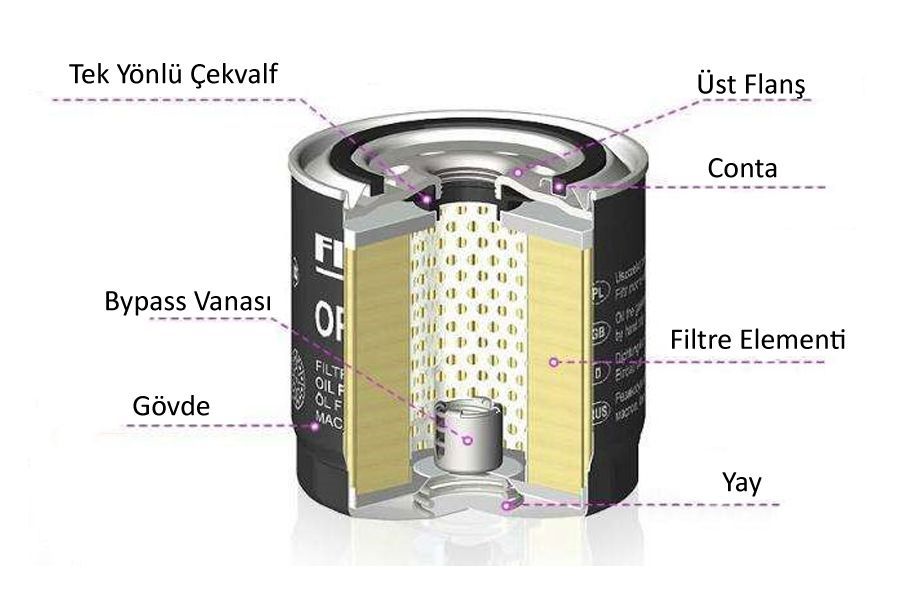
The Function and Importance of the Oil Filter
The oil filter is one of the most important components of an engine's lubrication system. Its primary function is to remove contaminants from the engine oil before the oil reaches critical internal components.
As the engine operates, the oil comes into contact with components that are exposed to high temperatures, friction, combustion by-products, and mechanical wear. Dirt, carbon particles, microscopic metal particles, and other contaminants can enter the lubrication system over time.
The oil filter traps these contaminants and helps keep the engine oil clean enough to provide effective lubrication.
What Does an Oil Filter Do?
Engine oil circulates continuously through the lubrication system. It passes through the oil filter before reaching many of the engine's important moving components.
The filter is designed to capture particles such as:
-
Dust and dirt
-
Carbon deposits
-
Soot
-
Metal wear particles
-
Sludge particles
-
Other contaminants suspended in the oil
Without effective filtration, these particles can circulate through the engine and contribute to accelerated wear.
The oil filter therefore acts as a barrier between contaminated oil and the engine's sensitive internal components.
Why Is the Oil Filter Important?
Engine oil is responsible for reducing friction between moving parts, but clean oil is essential for it to perform this function properly.
Contaminated oil can carry abrasive particles through the engine. Over time, these particles may contribute to wear on components such as:
-
Crankshaft bearings
-
Camshaft bearings
-
Piston rings
-
Valve train components
-
Timing components
-
Turbocharger bearings
A properly functioning oil filter helps reduce the amount of harmful debris circulating through the lubrication system.
How Does an Oil Filter Work?
A conventional oil filter contains a filtration element made from specially designed filter material. As pressurized engine oil passes through this material, contaminants are trapped while the filtered oil continues through the lubrication system.
The filter must perform two tasks at the same time:
Effective Filtration
It must remove harmful particles from the oil.
Adequate Oil Flow
It must allow sufficient oil to pass through the lubrication system.
This balance is extremely important. A filter that removes contaminants effectively but restricts oil flow excessively can create lubrication problems.
What Happens When an Oil Filter Becomes Clogged?
As the filter collects contaminants, its filtration element gradually becomes restricted.
A severely clogged filter can make it difficult for oil to flow through the normal filtration path. For this reason, many oil filters incorporate a bypass valve.
When the pressure difference across the filter becomes excessive, the bypass valve can allow oil to circulate without passing through the filter element.
This feature can help maintain oil flow and prevent an immediate loss of lubrication, but it does not mean a clogged filter is safe to use indefinitely.
Once the bypass valve is operating regularly, contaminated oil may circulate without being properly filtered.
What Is the Oil Filter Bypass Valve?
The bypass valve is a safety mechanism built into many oil filters or oil filter housings.
Its purpose is to maintain oil circulation when the filter becomes highly restricted or when the oil is extremely thick during a cold start.
This is important because maintaining oil flow is generally more critical than completely stopping oil circulation because of a restricted filter.
However, the bypass valve should not be considered a substitute for regular filter replacement.
What Is the Anti-Drainback Valve?
Some oil filters also contain an anti-drainback valve.
Its purpose is to prevent oil from draining out of the filter when the engine is switched off.
Keeping the filter and relevant oil passages filled can help reduce the time required to build oil pressure after the engine is started.
A faulty anti-drainback valve can sometimes contribute to a brief rattling or ticking noise immediately after starting, although other engine problems can produce similar symptoms.
What Happens If the Oil Filter Is Not Replaced?
Using the same oil filter for too long allows contaminants to accumulate inside the filtration element.
Over time, the filter can become increasingly restricted and may become less effective at maintaining proper filtration.
Potential consequences include:
-
Reduced oil filtration
-
Restricted oil flow
-
Increased oil contamination
-
Increased engine wear
-
Possible activation of the filter bypass valve
-
Increased risk of lubrication-related problems
The exact consequences depend on the engine, filter design, oil condition, and severity of contamination.
Can a Bad Oil Filter Damage the Engine?
Yes, under certain circumstances.
A poor-quality, damaged, incorrectly installed, or severely restricted oil filter can contribute to lubrication problems.
For example, a defective filter may have problems with:
-
Filter media
-
Seals
-
Bypass valve
-
Anti-drainback valve
-
Filter housing
-
Pressure resistance
If oil flow becomes inadequate, critical engine components may not receive sufficient lubrication.
Low oil pressure can become particularly dangerous because components such as crankshaft bearings and camshaft components depend on a continuous supply of pressurized oil.
Does the Oil Filter Affect Oil Pressure?
The oil filter is part of the lubrication circuit, so its condition can influence oil pressure.
A severely restricted filter can create a pressure difference across the filter. However, an oil pressure problem should not automatically be blamed on the filter.
Low oil pressure can also be caused by:
-
Low engine oil level
-
Incorrect engine oil viscosity
-
Worn engine bearings
-
Failing oil pump
-
Blocked oil passages
-
Oil pickup problems
-
Excessive internal engine wear
-
Faulty oil pressure sensor
Proper diagnosis is therefore important before replacing parts unnecessarily.
When Should the Oil Filter Be Changed?
In most cases, the oil filter should be replaced whenever the engine oil is changed.
The exact service interval depends on the vehicle manufacturer's maintenance schedule.
Even if the filter still appears physically intact, it can contain a significant amount of accumulated contamination that cannot be determined simply by looking at the outside of the filter.
Replacing the filter together with the oil ensures that fresh engine oil is circulating through a fresh filtration element.
Why Should You Not Only Change the Oil?
Changing the engine oil while leaving an old filter in place is generally not the ideal maintenance practice.
The old filter still contains:
-
Trapped contaminants
-
Old engine oil
-
Wear particles
-
Deposits
The new oil will immediately begin circulating through a filter that has already accumulated contamination.
Replacing both components during the same service provides a cleaner starting point for the engine's lubrication system.
Is an Expensive Oil Filter Always Better?
Price alone does not determine filter quality.
A good oil filter should meet the manufacturer's requirements for the specific engine. Important factors include filtration efficiency, flow capacity, pressure resistance, sealing quality, bypass valve specifications, and overall construction.
A cheap filter from an unknown manufacturer may not provide the same level of performance as a quality filter from a reputable manufacturer.
The most important consideration is compatibility and compliance with the vehicle manufacturer's specifications, rather than simply choosing the most expensive product.
What Are the Signs of an Oil Filter Problem?
An oil filter itself does not always produce obvious symptoms when it becomes contaminated. However, possible warning signs associated with lubrication problems can include:
-
Oil pressure warning light
-
Unusual engine ticking or rattling
-
Reduced engine performance
-
Increasing oil pressure fluctuations
-
Oil leakage around the filter
-
Oil leakage from the filter seal
-
Excessive engine noise
These symptoms do not prove that the oil filter is the cause. A complete lubrication system diagnosis may be necessary.
Why Is Correct Installation Important?
Even a high-quality oil filter can cause problems if it is installed incorrectly.
The filter should be installed according to the manufacturer's instructions, with the correct sealing ring or gasket.
An incorrectly installed filter can cause:
-
Oil leakage
-
Loss of oil pressure
-
Seal failure
-
Damage to the filter housing
-
Serious engine lubrication problems
On some cartridge-type systems, the filter element and O-ring must also be installed in the correct positions.
The Oil Filter Is Small but Extremely Important
The oil filter is relatively inexpensive compared with the engine itself, but its role is critical.
By continuously removing contaminants from the engine oil, it helps protect the components that operate under high temperatures, high loads, and constant friction.
For this reason, the oil filter should not be treated as an optional part of routine maintenance. Replacing the oil filter at the recommended service interval, using the correct specification, and installing it correctly are simple steps that can contribute significantly to long-term engine reliability.