TR
TR EN
EN

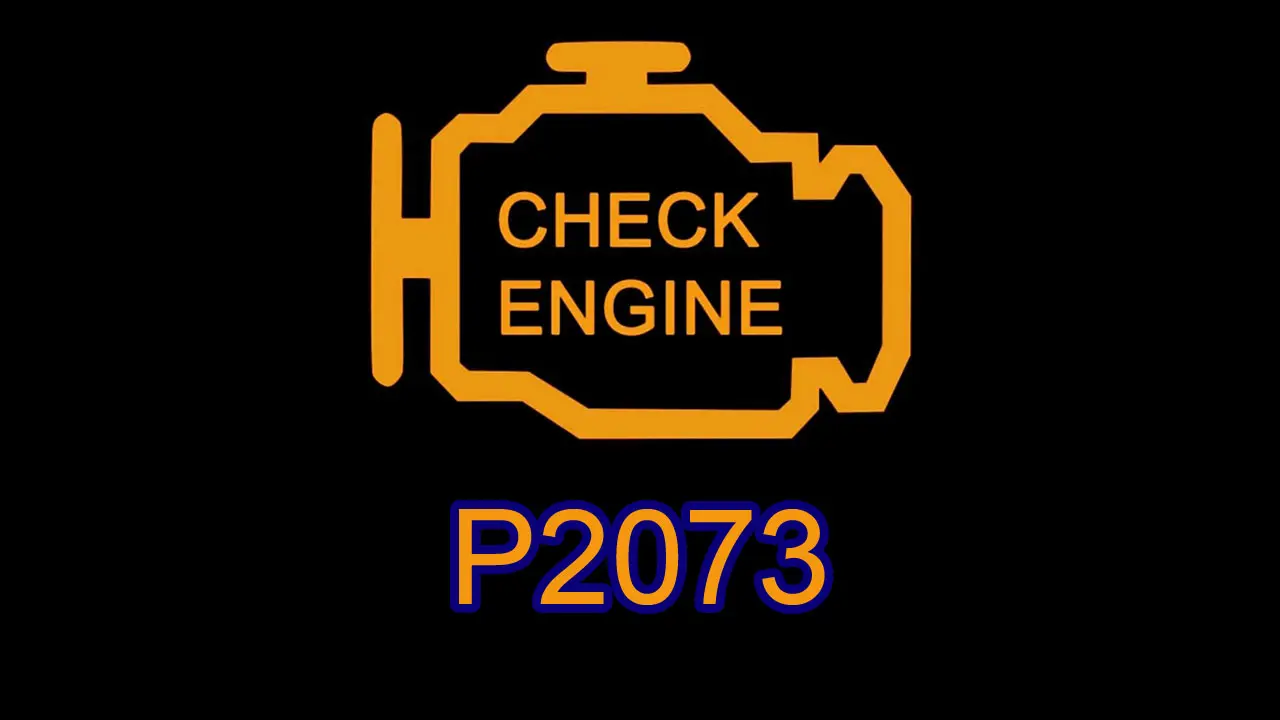
P2073 Manifold Absolute Pressure / Mass Air Flow – Throttle Position Correlation at Idle
P2073 Manifold Absolute Pressure / Mass Air Flow – Throttle Position Correlation at Idle is a generic OBD-II diagnostic trouble code indicating that the Engine Control Module (ECM/PCM) has detected an unexpected relationship between the Manifold Absolute Pressure (MAP) sensor, Mass Air Flow (MAF) sensor, and throttle position while the engine is idling.
In simple terms, the engine computer is checking whether the amount of air entering the engine and the pressure inside the intake manifold make sense for the reported throttle position at idle. When these values do not agree with the ECM's expected model, it can store P2073 and illuminate the Check Engine Light.
The important point is that P2073 is a correlation code. It does not automatically mean that the MAP sensor, MAF sensor, or throttle body is defective.
The underlying problem may be caused by:
-
Vacuum leaks
-
Dirty or inaccurate MAF sensor
-
Faulty MAP sensor
-
Throttle-position sensor problems
-
Dirty or sticking throttle body
-
Incorrect throttle position at idle
-
PCV system leaks
-
Intake manifold leaks
-
Wiring or connector problems
-
Reference-voltage or ground faults
-
Fuel or engine mechanical problems
-
ECM/PCM software or calibration issues
Because P2073 is specifically associated with idle operation, the fault may be most noticeable when the vehicle is stopped and the engine is running at low RPM.
What Does P2073 Mean?
The P2073 code description contains several important terms.
Manifold Absolute Pressure (MAP)
The MAP sensor measures the absolute pressure inside the intake manifold.
At idle, a normally operating gasoline engine generally has substantial intake vacuum because the throttle is mostly closed.
The ECM uses MAP information to determine engine load and assist with controlling:
-
Fuel injection
-
Ignition timing
-
EGR operation on applicable engines
-
Variable engine-management functions
-
Turbocharger or boost control on applicable engines
If the MAP signal is implausible for the current engine operating conditions, it can contribute to a correlation fault.
Mass Air Flow (MAF)
The MAF sensor measures the amount of air entering the engine.
At idle, the engine consumes relatively little air compared with higher-load operation.
The ECM uses the MAF signal to calculate or estimate the amount of fuel required and to monitor engine operation.
If the MAF sensor under-reports or over-reports airflow, the ECM may detect an inconsistency between:
Measured airflow → throttle position → manifold pressure
Throttle Position
The throttle-position system tells the ECM how far the throttle plate is open.
Modern electronic throttle bodies typically use redundant position signals.
At idle, the throttle is normally near its closed or idle-control position, although the exact position depends on the engine and control strategy.
If the actual throttle position does not correspond with the expected idle airflow and manifold pressure, P2073 may be triggered.
Correlation at Idle
The word "correlation" is the key to understanding P2073.
The ECM is not necessarily saying:
"The MAP sensor is bad."
Instead, it is effectively saying:
"The MAP, MAF, and throttle-position information do not agree with one another under the conditions expected at idle."
For example, if the ECM sees a throttle position that should produce a particular amount of airflow, but the MAF and MAP values indicate substantially different airflow conditions, the ECM may determine that the signals do not correlate correctly.
Why Is Idle Important?
Idle is a particularly useful operating condition for detecting airflow inconsistencies.
At idle:
-
Throttle opening is very small.
-
Engine airflow is relatively low.
-
Intake manifold vacuum is relatively high on many naturally aspirated gasoline engines.
-
Engine RPM should remain relatively stable.
-
The ECM has a relatively predictable operating model.
A small vacuum leak can therefore have a much larger effect at idle than at higher engine load.
This is why a vehicle can sometimes experience P2073 at idle while appearing relatively normal during highway driving.
How the MAP, MAF and Throttle Work Together at Idle
A simplified idle-control sequence is:
-
The engine is running at idle.
-
The ECM monitors engine RPM.
-
The throttle position is monitored.
-
The MAF sensor measures incoming airflow.
-
The MAP sensor measures intake-manifold pressure.
-
The ECM compares these values with its expected idle model.
-
Fuel trims and other engine parameters may also be evaluated.
-
If the signals do not correlate within the permitted range, P2073 may be stored.
A problem anywhere in the airflow system can therefore create a correlation fault.
Symptoms of P2073
Symptoms depend on the underlying cause.
Check Engine Light
The most common symptom is an illuminated Check Engine Light.
The code may initially be stored as pending before the ECM confirms the fault.
Rough Idle
A vacuum leak, incorrect MAF signal, MAP problem, or throttle issue can cause:
-
Uneven idle
-
Engine vibration
-
Fluctuating RPM
-
Unstable idle speed
High Idle Speed
An intake-air leak or throttle problem may allow more air into the engine than expected.
The engine may therefore idle at an abnormally high RPM.
Low or Unstable Idle
The opposite can also occur.
If airflow is insufficient or incorrectly controlled, the engine may:
-
Idle too slowly
-
Almost stall
-
Stall intermittently
-
Surge up and down
Engine Hesitation
The vehicle may hesitate during the transition from idle to acceleration.
Poor Throttle Response
Incorrect airflow or throttle-position information can affect accelerator response.
Poor Fuel Economy
Incorrect MAF/MAP information can cause the ECM to make inappropriate fuel corrections.
Engine Stalling
A severe vacuum leak, throttle-body problem, or airflow measurement problem can cause stalling.
Increased Emissions
Incorrect airflow measurement or an unmetered-air condition can cause fuel-mixture problems and increased emissions.
Reduced Engine Performance
Depending on the underlying fault, the ECM may limit engine performance.
No Noticeable Symptoms
Some vehicles may store P2073 with very few symptoms.
The ECM may compensate using fuel-trim corrections or a default control strategy.
Common Causes of P2073
Vacuum Leak
A vacuum leak is one of the important possibilities when a MAP/MAF/throttle correlation fault occurs at idle.
Unmetered air entering the engine can alter the relationship between:
-
MAF airflow
-
MAP pressure
-
Throttle position
Common leak locations include:
-
Vacuum hoses
-
PCV hoses
-
Intake manifold gasket
-
Throttle-body gasket
-
Brake-booster hose
-
EVAP purge plumbing
-
Intake boot
A small leak can have a particularly noticeable effect at idle.
Faulty or Dirty MAF Sensor
A contaminated MAF sensor may incorrectly measure the small amount of airflow entering the engine at idle.
Possible contamination includes:
-
Dust
-
Oil
-
Dirt
-
Moisture
-
Debris
A faulty MAF sensor can also produce an incorrect signal even when it is clean.
Faulty MAP Sensor
A MAP sensor may incorrectly report intake pressure.
Possible causes include:
-
Internal sensor failure
-
Contaminated pressure port
-
Damaged sensor
-
Wiring problems
-
Incorrect reference voltage
-
Poor sensor ground
Dirty or Sticking Throttle Body
Carbon deposits can interfere with throttle-plate movement.
The throttle may not settle into the expected idle position, causing the ECM to see an inconsistency between throttle position and airflow.
Throttle Position Sensor Problem
The throttle-position sensor may report an incorrect position.
Possible problems include:
-
Incorrect voltage
-
Internal wear
-
Signal dropout
-
Intermittent operation
-
Wiring problems
-
Connector problems
Electronic Throttle Actuator Problem
The throttle actuator may not position the throttle correctly.
Possible causes include:
-
Actuator motor failure
-
Damaged gears
-
Carbon buildup
-
Mechanical binding
-
Internal position-sensor failure
PCV System Problem
The Positive Crankcase Ventilation system is connected to the engine's intake system.
A cracked PCV hose, failed valve, or excessive PCV airflow can act like an intake leak and affect idle airflow.
EVAP Purge Valve Stuck Open
A purge valve that remains open when it should be closed can introduce additional vapor or air into the intake system.
This can disturb idle operation and fuel trims.
Intake Manifold Leak
A leaking intake manifold gasket or damaged manifold can introduce unmetered air.
Brake Booster Vacuum Leak
A leaking brake-booster hose or check valve can introduce a substantial vacuum leak.
In some cases, the engine may run noticeably worse when the brake pedal is operated.
Intake Air Restriction
A severely restricted air filter or damaged intake duct can affect airflow.
This is generally less common as an idle-specific cause than an intake leak, but it should still be considered.
Exhaust Restriction
A restricted exhaust can affect manifold pressure and engine breathing.
The problem may become more noticeable under certain operating conditions.
Wiring Problems
Electrical problems affecting the MAF, MAP, or throttle-position systems can create inconsistent readings.
Possible faults include:
-
Broken wires
-
Chafed insulation
-
Short to ground
-
Short to voltage
-
High resistance
-
Heat damage
-
Intermittent connections
Connector Problems
Inspect connectors for:
-
Corrosion
-
Bent pins
-
Loose terminals
-
Poor terminal tension
-
Water intrusion
-
Oil contamination
Reference Voltage Problem
A shared sensor reference circuit problem can affect more than one sensor.
If several sensors use the same reference supply, a fault in one circuit may influence multiple readings.
Sensor Ground Problem
A poor sensor ground can cause incorrect or unstable sensor readings.
Fuel System Problems
Fuel-system problems can affect idle operation and fuel trims and may contribute to abnormal correlation data.
Possible causes include:
-
Low fuel pressure
-
Faulty injector
-
Excessive fuel pressure
-
Incorrect fuel mixture
Ignition or Misfire Problems
A misfiring engine does not consume air and fuel normally.
Possible causes include:
-
Worn spark plugs
-
Faulty ignition coil
-
Injector problem
-
Vacuum leak
-
Compression problem
Misfires can therefore complicate MAP/MAF correlation diagnosis.
Engine Mechanical Problems
Mechanical problems can alter engine vacuum and airflow.
Possible causes include:
-
Low compression
-
Valve leakage
-
Incorrect valve timing
-
Camshaft timing problems
-
Internal engine damage
Turbocharger or Boost-System Problems
On turbocharged engines, inspect:
-
Charge-air leaks
-
Intercooler hoses
-
MAP sensor
-
MAF sensor
-
Boost-control system
-
Turbocharger operation
The exact diagnostic approach depends on the engine.
ECM/PCM Software or Calibration Problem
In rare cases, incorrect software or calibration can cause a false correlation fault.
A manufacturer software update may be available.
Vehicles Commonly Affected by P2073
P2073 can occur on many vehicles equipped with MAP/MAF and electronic throttle systems.
Examples may include:
-
Ford F-150
-
Ford Mustang
-
Ford Explorer
-
Ford Expedition
-
Chevrolet Silverado
-
Chevrolet Tahoe
-
Chevrolet Suburban
-
GMC Sierra
-
GMC Yukon
-
Dodge Charger
-
Dodge Challenger
-
Jeep Grand Cherokee
-
Toyota Tundra
-
Toyota Sequoia
-
Nissan Titan
-
Nissan Pathfinder
-
Infiniti QX56
-
BMW 3 Series
-
BMW 5 Series
-
BMW X5
-
Mercedes-Benz E-Class
-
Audi Q7
-
Volkswagen Touareg
-
Porsche Cayenne
This list is not exhaustive.
P2073 is a generic OBD-II code, and the exact sensor configuration and diagnostic strategy can vary significantly between manufacturers.
How Is P2073 Diagnosed?
P2073 should be approached as a system-level correlation problem rather than immediately replacing one sensor.
The goal is to determine why the MAP, MAF, and throttle-position information does not agree at idle.
Step 1: Scan for Additional Trouble Codes
Use a suitable diagnostic scan tool to retrieve:
-
Stored codes
-
Pending codes
-
History codes
Pay particular attention to codes involving:
-
MAF
-
MAP
-
Throttle position
-
Electronic throttle control
-
Fuel mixture
-
Misfires
-
EVAP
-
EGR
-
Reference voltage
Additional codes can significantly narrow the diagnostic path.
Step 2: Review Freeze-Frame Data
Record the operating conditions when P2073 was stored.
Important information includes:
-
Engine RPM
-
Engine load
-
Throttle position
-
MAF
-
MAP
-
Short-term fuel trim
-
Long-term fuel trim
-
Coolant temperature
-
Intake air temperature
-
Barometric pressure
-
Battery voltage
Because P2073 occurs at idle, determine whether the fault appears only after the engine reaches normal operating temperature.
Step 3: Check the Engine RPM
Verify whether the engine is actually idling normally.
Look for:
-
Excessively high idle
-
Low idle
-
Fluctuating RPM
-
Idle surge
-
Intermittent stalling
An abnormal idle itself may provide an important clue.
Step 4: Inspect the Intake System
Visually inspect the entire intake tract.
Check for:
-
Cracked hoses
-
Loose clamps
-
Disconnected hoses
-
Damaged intake boots
-
Incorrectly installed components
-
PCV hose damage
-
Vacuum hose damage
Pay particular attention to the area after the MAF sensor, because air entering downstream of the MAF is not measured by the sensor.
Step 5: Check for Vacuum Leaks
A smoke test can be very useful for locating small intake leaks.
Inspect:
-
Intake manifold
-
PCV system
-
Brake-booster hose
-
EVAP purge plumbing
-
Vacuum hoses
-
Throttle-body gasket
A leak that is difficult to see may become obvious during a smoke test.
Step 6: Check MAF Live Data
Monitor MAF airflow at idle and during a gradual increase in engine speed.
Look for:
-
Stable idle airflow
-
Smooth increase with RPM
-
Signal dropouts
-
Sudden jumps
-
Implausible readings
-
Excessively high or low airflow
The reading should be evaluated against vehicle-specific specifications and engine size rather than relying on one universal number.
Step 7: Check MAP Live Data
Monitor MAP at:
-
Key-on, engine-off
-
Idle
-
Light acceleration
-
Higher engine speed
With the engine off, MAP should generally correspond reasonably closely to atmospheric/barometric pressure.
Once the engine starts, manifold pressure should change appropriately according to engine vacuum and load.
An implausible MAP reading can indicate a sensor, wiring, or pressure-source problem.
Step 8: Compare MAF and MAP With Throttle Position
This is the central diagnostic step.
Observe:
Throttle position → MAF → MAP → RPM → calculated load
at idle and during small changes in engine speed.
If the throttle position appears normal but MAF airflow is implausible, investigate the MAF system.
If MAF is reasonable but MAP is implausible, investigate the MAP system.
If MAP and MAF appear reasonable but throttle position does not correspond to the expected idle state, inspect the throttle body and position sensors.
Step 9: Check Throttle Command vs. Actual Position
If supported by the scan tool, compare:
-
Desired throttle position
-
Actual throttle position
The throttle should reach and maintain the expected idle position.
A mismatch may indicate:
-
Throttle actuator fault
-
Dirty throttle plate
-
Position-sensor fault
-
Wiring problem
-
Electronic throttle-body failure
Step 10: Inspect the Throttle Body
Check for:
-
Carbon deposits
-
Sticking throttle plate
-
Mechanical damage
-
Actuator problems
-
Connector damage
-
Wiring problems
If cleaning is appropriate, follow the manufacturer's procedure.
Step 11: Check Fuel Trims
Fuel trims can provide valuable information.
For example, significant positive fuel-trim corrections at idle that improve as engine speed increases can support suspicion of an intake/vacuum leak.
However, fuel trims must always be interpreted with the specific engine and operating conditions in mind.
Step 12: Check PCV Operation
Inspect the PCV system for:
-
Cracked hoses
-
Disconnected hoses
-
Failed PCV valve
-
Excessive airflow
-
Improper installation
A PCV problem can behave like an intake leak.
Step 13: Check EVAP Purge Operation
Verify that the EVAP purge valve is not allowing unwanted airflow into the intake at idle.
If the purge valve is stuck open, it can alter:
-
Fuel trims
-
MAP
-
MAF-related calculations
-
Idle quality
Step 14: Check MAF Sensor Wiring
Inspect the MAF circuit for:
-
Damaged wiring
-
Corrosion
-
Loose terminals
-
Heat damage
-
Chafing
-
Poor electrical connections
Step 15: Check MAP Sensor Wiring
Inspect:
-
Reference voltage
-
Ground
-
Signal wire
-
Connector
-
Pressure port
Step 16: Check Throttle-Position Wiring
Inspect the electronic throttle circuit for:
-
Signal problems
-
Reference-voltage problems
-
Ground problems
-
Damaged wiring
-
Loose terminals
-
Corrosion
Step 17: Check Sensor Reference Voltage and Ground
Where applicable, verify the reference voltage and ground circuits according to the manufacturer's specifications.
Do not assume that every vehicle uses the same voltage or wiring arrangement.
Step 18: Perform a Wiggle Test
Monitor MAF, MAP, and throttle-position signals while carefully moving the related wiring harnesses and connectors.
If a signal suddenly changes, investigate the affected wiring or terminal.
Step 19: Check for Misfires
Review:
-
Misfire codes
-
Misfire counters
-
Spark plugs
-
Ignition coils
-
Injectors
-
Compression
A misfire can create abnormal intake-pressure behavior and complicate correlation calculations.
Step 20: Check Exhaust Restriction if Necessary
If the intake system and sensors appear normal but the engine has poor airflow behavior, investigate possible exhaust restrictions.
Step 21: Check Engine Mechanical Condition
If sensor data is credible but the correlation fault remains, inspect:
-
Compression
-
Valve timing
-
Camshaft timing
-
Valve operation
-
Engine vacuum behavior
Step 22: Check Turbocharger and Boost System
On turbocharged engines, inspect:
-
Intercooler pipes
-
Charge-air hoses
-
Boost leaks
-
MAP sensor
-
MAF sensor
-
Wastegate
-
Boost-control components
Step 23: Check Manufacturer Service Information
Look for:
-
Technical Service Bulletins
-
Known MAF problems
-
MAP sensor issues
-
Throttle-body faults
-
Intake leaks
-
PCV problems
-
EVAP purge problems
-
Wiring harness defects
-
ECM software updates
Step 24: Perform Required Throttle Relearn
Some vehicles require throttle-body initialization or relearning after:
-
Throttle-body replacement
-
Throttle-position sensor replacement
-
Battery disconnection
-
ECM replacement
-
Certain throttle-body cleaning procedures
Always follow the vehicle-specific procedure.
How to Fix P2073
The correct repair depends on what testing reveals.
Repair Vacuum or Intake Leaks
Repair or replace:
-
Cracked hoses
-
Loose clamps
-
Intake manifold gaskets
-
Throttle-body gaskets
-
PCV hoses
-
Brake-booster hoses
-
EVAP purge plumbing
Clean or Replace the MAF Sensor
If the MAF sensor is contaminated and the manufacturer permits cleaning, use an appropriate MAF-safe cleaning procedure.
If testing confirms sensor failure, replace it.
Do not replace the MAF simply because P2073 is present.
Replace the MAP Sensor
If testing confirms an inaccurate MAP signal, replace the MAP sensor.
Repair the Throttle Body
If the throttle body is sticking, damaged, or unable to reach the commanded idle position, repair or replace the affected component.
Clean the Throttle Plate
If carbon buildup is causing the throttle plate to stick and manufacturer procedures permit cleaning, clean the throttle body appropriately.
A throttle relearn may be required afterward.
Repair or Replace Throttle-Position Components
If the throttle-position feedback is incorrect, repair the wiring or replace the affected sensor/assembly as specified by the manufacturer.
Repair Wiring and Connectors
Repair faults involving:
-
MAF circuit
-
MAP circuit
-
Throttle-position circuit
-
Reference-voltage circuit
-
Ground circuit
Repair the PCV System
Replace damaged PCV hoses, valves, or related components causing an unwanted air leak.
Replace a Faulty EVAP Purge Valve
If the purge valve is stuck open and causing an intake-air or vapor-flow problem at idle, replace it as necessary.
Repair Fuel-System Problems
If fuel pressure, injectors, or another fuel-system component is causing the abnormal idle condition, correct that underlying problem.
Repair Engine Mechanical Problems
If low compression, valve timing, or another mechanical problem is affecting manifold pressure and airflow, the mechanical fault must be repaired.
Repair Turbocharger or Boost-System Problems
For turbocharged engines, repair confirmed:
-
Charge-air leaks
-
Damaged hoses
-
Boost-control faults
-
Wastegate problems
-
Related sensor problems
Update or Reprogram the ECM
If manufacturer service information identifies a calibration problem, an ECM software update may correct the fault.
Replace the ECM/PCM
ECM/PCM replacement should be considered only after the MAF, MAP, throttle system, intake system, wiring, engine condition, and software have been properly tested.
What Happens If P2073 Is Ignored?
Ignoring P2073 can result in:
-
Rough idle
-
High or low idle speed
-
Engine hesitation
-
Engine stalling
-
Poor fuel economy
-
Increased emissions
-
Poor throttle response
-
Reduced engine performance
-
Limp mode on some vehicles
-
Continued Check Engine Light
The actual consequences depend on the underlying cause.
A simple vacuum leak may be relatively easy to repair, while an electronic throttle-body or engine mechanical problem may require more extensive diagnosis and repair.
Can You Drive With P2073?
Short-term driving may be possible if the engine is running normally and the Check Engine Light is steady, but P2073 should be diagnosed promptly.
Because the fault is associated with the relationship between airflow, manifold pressure, and throttle position at idle, drivability may become unpredictable if the underlying problem worsens.
Avoid continued driving if the vehicle develops:
-
Severe rough running
-
Frequent stalling
-
Severe power loss
-
Major throttle problems
-
Heavy misfires
-
Flashing Check Engine Light
-
Other serious warning lights
Is P2073 a Serious Code?
P2073 is generally considered a moderate-severity diagnostic trouble code.
The code itself does not identify a single failed component.
A relatively simple problem such as:
-
Vacuum leak
-
Loose intake hose
-
Dirty MAF sensor
-
Connector problem
may be straightforward to repair.
However, the problem can be more serious if caused by:
-
Electronic throttle-body failure
-
Significant intake leak
-
Exhaust restriction
-
Fuel-system fault
-
Engine mechanical problem
The severity should therefore be judged from the vehicle's symptoms and diagnostic results.
P2073 vs. P2074
P2073 and P2074 are closely related but occur under different operating conditions.
| Code | General Description |
|---|---|
| P2073 | MAP/MAF – Throttle Position Correlation at Idle |
| P2074 | MAP/MAF – Throttle Position Correlation at Higher Load |
The distinction is important during diagnosis.
P2073 points toward a correlation problem that becomes apparent when the engine is idling.
P2074 points toward a correlation problem that becomes apparent under higher engine load.
This difference can provide a valuable clue.
For example, an intake or vacuum leak may have a particularly strong effect at idle, while an airflow restriction or boost-system problem may become more apparent as engine load increases.
How to Prevent P2073
Regular maintenance can reduce the likelihood of MAP/MAF/throttle correlation problems.
Recommended practices include:
-
Replace the air filter according to the manufacturer's schedule.
-
Keep the intake system properly sealed.
-
Repair vacuum leaks promptly.
-
Inspect PCV hoses regularly.
-
Maintain the EVAP system.
-
Keep MAF and MAP sensor connectors clean and dry.
-
Protect sensor wiring from excessive heat and abrasion.
-
Maintain the throttle body according to manufacturer recommendations.
-
Avoid improperly installed aftermarket intake components.
-
Address engine misfires promptly.
-
Repair fuel-system problems early.
-
Inspect turbocharger charge-air hoses where applicable.
-
Perform required throttle relearns after applicable repairs.
-
Do not ignore recurring Check Engine Light warnings.
Final Thoughts
P2073 Manifold Absolute Pressure / Mass Air Flow – Throttle Position Correlation at Idle indicates that the ECM/PCM has detected an unexpected relationship between MAP, MAF, and throttle-position information while the engine is operating at idle.
This is a correlation fault, not an automatic sensor-replacement code.
The most common areas to investigate include:
-
Vacuum leaks
-
Intake-air leaks
-
Dirty or faulty MAF sensor
-
Faulty MAP sensor
-
Dirty or sticking throttle body
-
Throttle-position sensor problems
-
PCV system leaks
-
EVAP purge problems
-
Wiring and connector faults
-
Reference-voltage or ground problems
-
Fuel-system problems
-
Misfires
-
Engine mechanical problems
-
Turbocharger or boost-system problems
-
ECM software or calibration issues
The best diagnostic approach is to first determine whether the engine is actually idling normally and then compare throttle position, MAF airflow, MAP pressure, RPM, calculated load, and fuel trims.
A particularly useful clue is the behavior of the fuel trims and manifold pressure at idle. If fuel-trim corrections are strongly positive at idle and improve as engine speed increases, an intake or vacuum leak becomes an important suspect. If MAF or MAP data is implausible independently of the other signals, the corresponding sensor and circuit should be tested.
Do not replace the MAF, MAP sensor, or throttle body solely because P2073 is stored. The code identifies an inconsistency between multiple engine-management signals, and the correct repair requires determining which component or condition is creating that inconsistency.