TR
TR EN
EN

Clutch: What Is a Clutch, How Does It Work, and What Are the Signs of Clutch Failure?
The clutch is one of the most important components in a vehicle equipped with a manual transmission. It connects the engine to the transmission, allows the driver to change gears smoothly, and makes it possible to stop the vehicle without stopping the engine.
Although the clutch is designed to withstand significant mechanical stress, it is a wear component. Its service life depends heavily on driving style, traffic conditions, vehicle type, engine torque, and maintenance.
Understanding how the clutch works and recognizing early signs of clutch failure can help prevent more expensive transmission and drivetrain problems.
What Is a Clutch?
The clutch is a mechanical system located between the engine and the transmission. Its primary function is to connect and disconnect the engine's power from the transmission.
When the clutch pedal is released, the clutch connects the engine's crankshaft to the transmission input shaft. Engine power can then be transmitted through the gearbox to the wheels.
When the clutch pedal is pressed, the connection between the engine and transmission is temporarily interrupted. This allows the driver to change gears or bring the vehicle to a stop while the engine continues running.
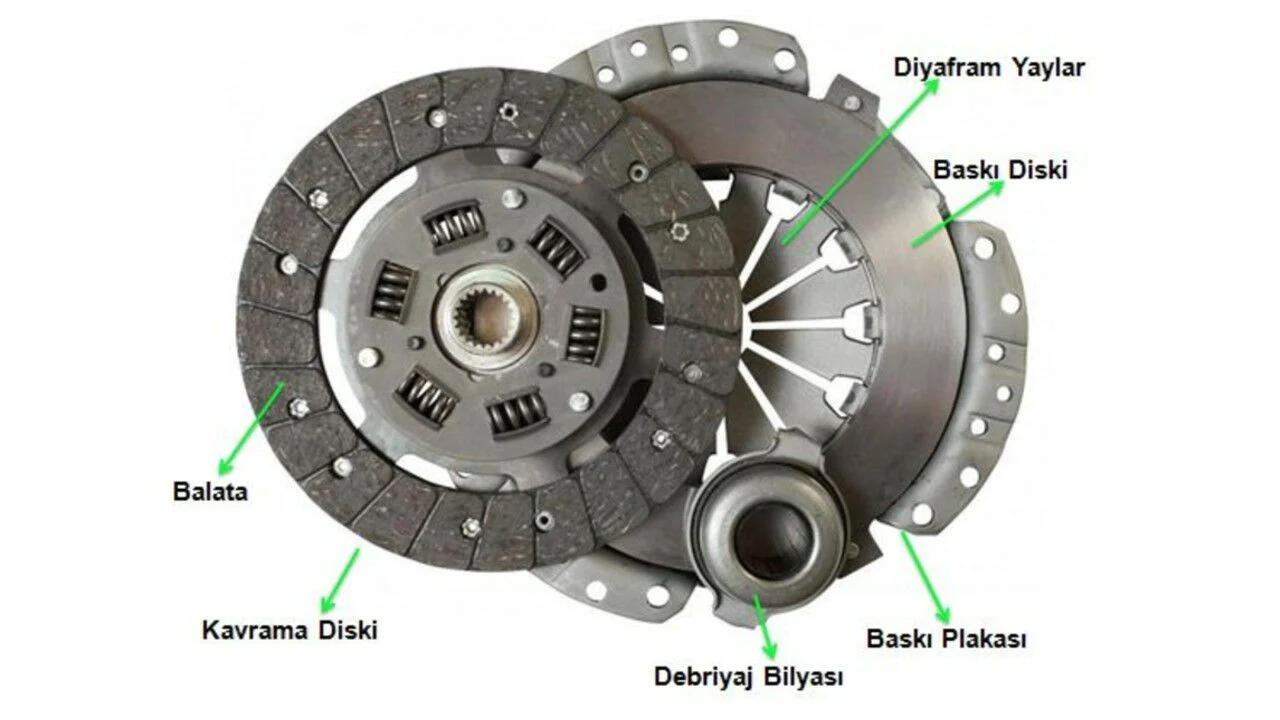
In a typical manual-transmission vehicle, the clutch system consists of several components:
-
Clutch disc
-
Pressure plate
-
Flywheel
-
Release bearing
-
Clutch fork
-
Clutch pedal
-
Hydraulic or mechanical clutch linkage
-
Pilot bearing or bushing, depending on the vehicle
The exact design can vary between vehicles.
How Does a Clutch Work?
The basic operating principle of a clutch is relatively simple.
The engine continuously produces rotational power. However, the wheels do not always need to receive that power.
For example, when the vehicle is stopped at a traffic light, the engine may be running at idle while the wheels are stationary. The clutch allows the engine and transmission to temporarily operate independently.
When the driver presses the clutch pedal, the pressure plate releases the clutch disc from the flywheel. This interrupts power transmission from the engine to the gearbox.
When the driver gradually releases the clutch pedal, the clutch disc begins to contact the flywheel. This creates friction and progressively transfers engine torque to the transmission.
This gradual engagement is what allows the vehicle to move smoothly from a standstill.
The Main Parts of a Clutch System
Clutch Disc
The clutch disc is a friction component positioned between the flywheel and pressure plate.
It has friction material on both sides and is connected to the transmission input shaft through its splined hub.
Because it repeatedly engages and disengages under friction, the clutch disc gradually wears.
A worn clutch disc is one of the most common causes of clutch-related problems.
Flywheel
The flywheel is attached to the engine crankshaft.
It provides the friction surface against which the clutch disc is pressed and also helps smooth engine rotation.
Depending on the vehicle, the engine may use a conventional solid flywheel or a dual-mass flywheel.
A damaged or overheated flywheel can cause clutch vibration, judder and uneven engagement.
Pressure Plate
The pressure plate presses the clutch disc against the flywheel.
When the clutch pedal is released, the pressure plate applies force to the clutch disc, allowing engine torque to pass to the transmission.
If the pressure plate becomes weak, damaged or uneven, the clutch may slip, judder or fail to disengage properly.
Release Bearing
The release bearing, also known as the throw-out bearing, helps transfer the movement of the clutch mechanism to the pressure plate.
A worn release bearing can produce a whining, grinding or rattling noise when the clutch pedal is pressed.
Clutch Fork
The clutch fork transfers movement from the hydraulic or mechanical clutch system to the release bearing.
Problems with the fork or its pivot points can make the clutch pedal difficult to operate or prevent proper clutch disengagement.
Clutch Master and Slave Cylinders
Many modern vehicles use a hydraulic clutch system.
The clutch master cylinder converts pedal movement into hydraulic pressure. This pressure travels through the hydraulic line to the slave cylinder.
The slave cylinder then operates the clutch release mechanism.
A hydraulic leak or internal cylinder failure can cause the clutch pedal to become soft, sink toward the floor, or make gear engagement difficult.
What Happens When You Press the Clutch Pedal?
When you press the clutch pedal, a sequence of mechanical or hydraulic movements occurs.
The pedal activates the clutch mechanism. In a hydraulic system, the master cylinder generates hydraulic pressure.
This pressure moves the slave cylinder, which operates the clutch fork.
The clutch fork pushes the release bearing against the pressure plate.
The pressure plate then releases its clamping force on the clutch disc.
The clutch disc is no longer firmly pressed against the flywheel, so engine torque is temporarily disconnected from the transmission.
The driver can now select another gear.
When the pedal is released, the process happens in reverse. The clutch disc is progressively pressed against the flywheel and engine power is gradually transferred back to the transmission.
What Is Clutch Slipping?
Clutch slipping occurs when the clutch disc cannot transfer the engine's full torque to the transmission.
Instead of locking firmly against the flywheel and pressure plate, the clutch disc slips between the surfaces.
One of the most obvious symptoms is an increase in engine RPM without a corresponding increase in vehicle speed.
For example, the driver may accelerate uphill, the engine speed may suddenly rise, but the vehicle does not accelerate proportionally.
This is a classic sign of clutch slip.
Common Symptoms of a Failing Clutch
Clutch problems can develop gradually or appear suddenly.
The most common warning signs include:
-
Engine RPM increases without proportional acceleration
-
Difficulty changing gears
-
Clutch pedal feels unusually soft
-
Clutch pedal becomes very hard
-
Clutch pedal remains close to the floor
-
Clutch engagement point changes
-
Vehicle judders when moving away
-
Burning smell
-
Grinding or rattling noises
-
Clutch pedal vibration
-
Vehicle creeps forward with the clutch fully pressed
-
Difficulty selecting first or reverse gear
-
Reduced acceleration under load
The presence of one symptom does not automatically mean the clutch disc itself is worn. Several other components can produce similar symptoms.
Clutch Slipping: Symptoms and Causes
Clutch slipping is one of the most important clutch failure symptoms.
A slipping clutch may show the following signs:
Engine RPM rises quickly during acceleration
The engine speed increases, but the vehicle does not accelerate at the same rate.
Slipping becomes worse uphill
The problem may be more noticeable when driving uphill, carrying heavy loads or accelerating strongly.
Burning smell
Excessive clutch slip generates heat. This can produce a distinctive burning friction-material smell.
Poor acceleration
The vehicle may feel noticeably weaker even though the engine itself appears to be operating normally.
Possible causes include:
-
Worn clutch disc
-
Weak pressure plate
-
Oil contamination
-
Incorrect clutch installation
-
Overheated clutch components
-
Excessive clutch pedal riding
-
Damaged flywheel
-
Incorrect adjustment in some mechanical systems
Difficulty Changing Gears
A clutch that does not fully disengage can make gear changes difficult.
The driver may notice that first gear or reverse gear is particularly difficult to select.
There may also be grinding when selecting a gear.
Possible causes include:
-
Clutch not fully disengaging
-
Air in the hydraulic system
-
Low hydraulic fluid
-
Hydraulic leak
-
Faulty master cylinder
-
Faulty slave cylinder
-
Damaged clutch fork
-
Worn release mechanism
-
Warped clutch disc
-
Incorrect clutch adjustment
-
Internal transmission problems
It is therefore important not to assume that every gear-selection problem means the gearbox itself is defective.
Clutch Judder
Clutch judder is a shaking or vibrating sensation when the clutch is being engaged.
It is usually most noticeable when moving away from a standstill.
The vehicle may shake or pulse as the clutch pedal is released.
Possible causes include:
-
Contaminated clutch disc
-
Uneven clutch disc surface
-
Overheated clutch
-
Warped flywheel
-
Damaged pressure plate
-
Worn engine mounts
-
Worn transmission mounts
-
Dual-mass flywheel problems
A clutch judder problem should be diagnosed carefully because replacing the clutch alone may not solve the problem if the underlying cause is a damaged flywheel or engine mount.
Burning Smell From the Clutch
A strong burning smell can indicate excessive clutch friction.
This can happen when the clutch is repeatedly slipped, particularly during:
-
Heavy traffic
-
Hill starts
-
Towing
-
Aggressive acceleration
-
Parking manoeuvres
-
Driving with excessive clutch pedal use
Occasional clutch smell does not necessarily mean the clutch has failed completely.
However, a repeated or strong burning smell should not be ignored.
Continued clutch slip can generate enough heat to damage the clutch disc, pressure plate and flywheel.
Noises From the Clutch
Different noises can point toward different components.
Noise when pressing the clutch pedal
A noise that appears when the pedal is pressed may indicate a worn release bearing.
Noise when releasing the clutch
This may be related to the clutch disc, pressure plate, flywheel or release mechanism.
Rattling at idle
Rattling can sometimes be associated with a worn dual-mass flywheel, although other engine and transmission components can produce similar noises.
Grinding
Grinding during gear selection may indicate that the clutch is not fully disengaging or that there is a transmission-related problem.
Noise diagnosis should therefore be performed by identifying exactly when the noise occurs.
Clutch Pedal Problems
The clutch pedal itself provides useful diagnostic information.
Soft clutch pedal
A soft or spongy pedal can be caused by:
-
Air in the hydraulic system
-
Hydraulic fluid leakage
-
Master cylinder problems
-
Slave cylinder problems
-
Hydraulic line problems
Clutch pedal becomes very hard
A hard pedal may be related to:
-
Pressure plate problems
-
Release bearing problems
-
Clutch fork problems
-
Mechanical linkage problems
-
Hydraulic system faults
-
Binding components
Clutch pedal stays on the floor
If the pedal suddenly remains on the floor, the problem may be hydraulic or mechanical.
Possible causes include a failed master cylinder, slave cylinder, broken linkage or damaged clutch mechanism.
Clutch Engagement Point Changes
The engagement point is the position of the clutch pedal where the clutch begins transferring engine power.
If the engagement point suddenly changes, the clutch system should be inspected.
A very high engagement point can sometimes be associated with clutch wear, while a suddenly low engagement point may indicate a hydraulic or mechanical problem.
However, engagement-point characteristics vary between vehicle models, so diagnosis should be based on the manufacturer's specifications and the vehicle's previous behaviour.
Why Does a Clutch Wear Out?
The clutch is a friction-based component.
Every time the clutch engages, a certain amount of friction occurs.
Over thousands of gear changes and vehicle starts, the friction material gradually wears.
Clutch life can vary significantly depending on driving conditions.
A vehicle used mostly on highways may experience much less clutch wear than the same vehicle used continuously in heavy city traffic.
Driving Habits That Reduce Clutch Life
Certain driving habits can accelerate clutch wear.
Resting your foot on the clutch pedal
Even light pressure can partially operate the clutch mechanism and increase wear.
Holding the vehicle on a hill with the clutch
Using clutch slip instead of the brake to hold the vehicle stationary generates considerable heat.
Use the brake or parking brake instead.
Aggressive launches
High-RPM starts create significant heat and friction.
Repeated hard launches can dramatically shorten clutch life.
Excessive clutch slipping
The clutch should be engaged smoothly but decisively. Keeping it in a partially engaged position for extended periods creates unnecessary heat.
Carrying heavy loads
Heavy loads and towing increase the torque required to move the vehicle and can increase clutch stress.
Common Causes of Clutch Failure
Clutch failure can have many causes.
The most common include:
-
Normal friction-material wear
-
Aggressive driving
-
Excessive clutch slipping
-
Frequent stop-and-go traffic
-
Incorrect clutch adjustment
-
Oil contamination
-
Hydraulic system failure
-
Damaged pressure plate
-
Damaged flywheel
-
Worn release bearing
-
Faulty clutch fork
-
Engine or transmission mount failure
-
Incorrect installation
-
Excessive engine torque
-
Towing heavy loads beyond the vehicle's intended capacity
Oil Contamination of the Clutch
Oil contamination is a particularly important problem.
Engine oil or transmission fluid can reach the clutch assembly through leaking seals.
When oil gets onto the friction surface of the clutch disc, the disc may lose its ability to grip the flywheel and pressure plate properly.
This can cause:
-
Clutch slipping
-
Judder
-
Burning smell
-
Poor acceleration
Simply replacing the clutch without repairing the source of the leak can result in another clutch failure.
Dual-Mass Flywheel and Clutch Problems
Many modern diesel and petrol vehicles use a dual-mass flywheel, commonly known as a DMF.
The dual-mass flywheel is designed to reduce torsional vibrations between the engine and transmission.
A worn DMF can cause:
-
Rattling
-
Vibrations
-
Judder
-
Knocking noises
-
Difficult clutch engagement
-
Abnormal noises during engine start or shutdown
When replacing a clutch, the condition of the dual-mass flywheel should be checked.
In some cases, replacing only the clutch while leaving a severely damaged DMF in place can lead to continued vibration or premature clutch problems.
Can a Bad Clutch Damage the Transmission?
Yes, continued operation with a severely defective clutch can contribute to additional drivetrain problems.
A clutch that does not disengage properly can make gear selection difficult and increase stress on synchronizers and other transmission components.
A severely slipping clutch can also generate excessive heat.
Ignoring the problem can therefore turn a relatively straightforward clutch repair into a more expensive drivetrain repair.
How Is a Bad Clutch Diagnosed?
A proper clutch diagnosis normally begins with a road test.
The technician may evaluate:
-
Clutch engagement point
-
Acceleration under load
-
Engine RPM versus vehicle speed
-
Gear-selection behaviour
-
Clutch pedal feel
-
Noise during pedal operation
-
Judder during take-off
-
Vehicle behaviour on inclines
The hydraulic system should also be inspected if the vehicle uses hydraulic clutch operation.
The clutch assembly may eventually need to be removed for a complete inspection.
Can You Test for Clutch Slip?
A simple road test can sometimes reveal clutch slipping.
During controlled acceleration, particularly under higher load, observe whether engine RPM increases disproportionately compared with vehicle speed.
If RPM rises sharply without equivalent acceleration, clutch slip is likely.
However, this type of test should be performed responsibly and in a safe location.
A professional diagnosis is preferable because incorrect testing can place unnecessary stress on an already damaged clutch.
Clutch Repair or Clutch Replacement?
A clutch disc is normally not repaired when its friction material is worn.
Instead, the worn components are replaced.
A typical clutch replacement may involve:
-
Clutch disc
-
Pressure plate
-
Release bearing
Depending on the vehicle and condition, the technician may also recommend inspection or replacement of:
-
Flywheel
-
Dual-mass flywheel
-
Pilot bearing
-
Rear main engine seal
-
Transmission input seal
-
Clutch fork
-
Slave cylinder
The correct repair depends on the actual cause of the problem.
Should the Flywheel Be Replaced With the Clutch?
Not always.
The flywheel should be inspected for:
-
Heat spots
-
Cracks
-
Warping
-
Excessive wear
-
Surface damage
-
Excessive dual-mass flywheel movement
A conventional flywheel may sometimes be resurfaced if permitted by the manufacturer's specifications and if its condition allows it.
A dual-mass flywheel generally requires condition-based assessment and may need replacement if it exceeds specified wear limits.
How Long Does a Clutch Last?
There is no universal clutch replacement interval.
A clutch can last for a relatively high mileage under favourable conditions, while aggressive driving or heavy urban use can significantly shorten its life.
Factors affecting clutch lifespan include:
-
Driving style
-
Traffic conditions
-
Vehicle weight
-
Engine torque
-
Towing
-
Terrain
-
Driver experience
-
Clutch design
-
Maintenance
-
Quality of replacement parts
For this reason, clutch replacement should generally be based on condition and symptoms rather than mileage alone.
How to Make a Clutch Last Longer
Several simple habits can reduce clutch wear.
-
Do not rest your foot on the clutch pedal.
-
Avoid unnecessary clutch slipping.
-
Use the brake or parking brake when stopped on a hill.
-
Avoid unnecessary high-RPM launches.
-
Release the clutch smoothly.
-
Do not hold the vehicle stationary using the clutch.
-
Avoid overloading the vehicle.
-
Address hydraulic leaks promptly.
-
Investigate unusual noises early.
-
Have oil leaks repaired before they contaminate the clutch.
-
Use the correct replacement clutch components.
Good driving habits can make a significant difference to clutch lifespan.
Can You Drive With a Failing Clutch?
It depends on the type and severity of the problem.
A mildly worn clutch may continue operating for some time, but there is no reliable way to predict exactly when it will fail.
A clutch that is slipping severely, producing a strong burning smell, making unusual noises, or preventing proper gear selection should be inspected as soon as possible.
If the clutch suddenly stops disengaging, the vehicle may become difficult or impossible to drive normally.
Continuing to drive with a serious clutch problem can also increase the risk of damaging other drivetrain components.
Clutch Problems That Should Not Be Ignored
Some symptoms deserve immediate attention.
These include:
-
Severe clutch slipping
-
Strong burning smell
-
Sudden loss of clutch operation
-
Clutch pedal falling to the floor
-
Difficulty selecting any gear
-
Loud grinding noises
-
Severe vibration
-
Fluid leaking near the clutch or transmission
-
Vehicle moving despite the clutch pedal being fully depressed
These symptoms can indicate a problem that may leave the vehicle unable to move safely.
Clutch vs Transmission: What Is the Difference?
The clutch and transmission perform different jobs.
The clutch controls the connection between the engine and transmission.
The transmission changes the gear ratio used to transfer power to the wheels.
Because these systems work together, symptoms can sometimes overlap.
For example, difficult gear changes may be caused by a clutch that does not fully disengage, but they may also be caused by an internal transmission problem.
This is why proper diagnosis is important before replacing expensive components.
Final Thoughts
The clutch is a critical link between the engine and manual transmission. It allows the driver to start smoothly, change gears and stop the vehicle without shutting down the engine.
Because the clutch operates through friction, its components eventually wear.
Symptoms such as clutch slipping, difficulty changing gears, judder, burning smells, unusual noises and changes in pedal behaviour should not be ignored.
Early diagnosis can help identify whether the problem is caused by the clutch disc, pressure plate, release bearing, hydraulic system, flywheel or another drivetrain component.
The best way to extend clutch life is to use smooth driving techniques, avoid unnecessary clutch slipping, maintain the hydraulic system and repair oil leaks promptly.
Most importantly, a clutch symptom does not automatically mean the clutch disc itself is defective. A proper inspection should identify the actual source of the problem before parts are replaced.