TR
TR EN
EN

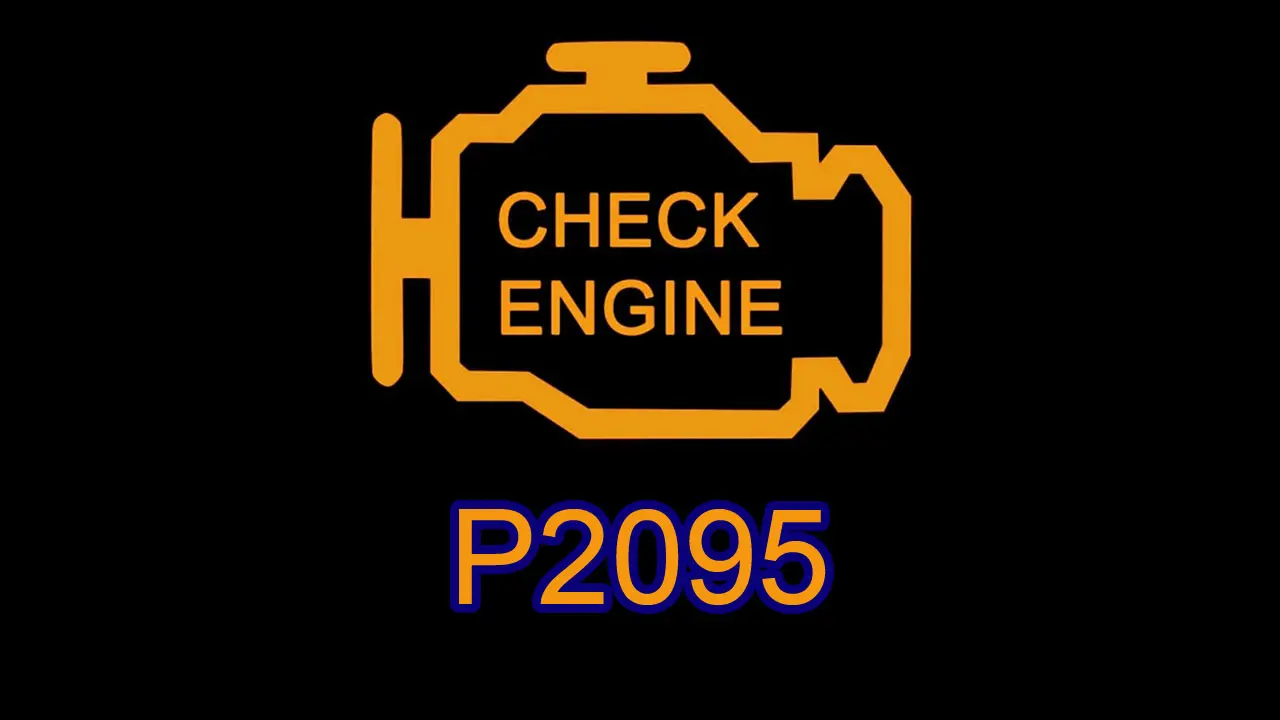
P2095 "B" Camshaft Position Actuator Control Circuit High Bank 2
P2095 "B" Camshaft Position Actuator Control Circuit High Bank 2 is a generic OBD-II diagnostic trouble code indicating that the Engine Control Module (ECM/PCM) has detected an abnormally high electrical condition in the control circuit for the "B" camshaft position actuator on Bank 2.
In simple terms, the engine computer is trying to control the variable camshaft timing system on Bank 2, but the electrical signal in the actuator control circuit is higher than the expected range.
The system is commonly part of Variable Valve Timing (VVT), also known as Variable Camshaft Timing (VCT) on some vehicles.
The camshaft actuator allows the ECM to change camshaft timing according to engine operating conditions. This helps optimize:
-
Engine power
-
Fuel economy
-
Emissions
-
Idle quality
-
Torque
When the ECM detects an excessively high control-circuit condition, it can store P2095 and illuminate the Check Engine Light.
Depending on the vehicle and severity of the fault, symptoms may include:
-
Check Engine Light
-
Reduced engine performance
-
Poor acceleration
-
Rough idle
-
Engine hesitation
-
Increased fuel consumption
-
Difficult starting
-
Engine stalling
-
Increased emissions
-
Reduced power
What Does P2095 Mean?
The code description can be divided into four parts.
"B" Camshaft Position Actuator
The "B" camshaft designation generally identifies a specific camshaft or camshaft actuator within the engine.
On many V-type engines, the "B" camshaft is associated with the exhaust camshaft, but this is not universal.
The exact meaning of "B" depends on the manufacturer and engine design.
Actuator Control Circuit
The actuator control circuit is the electrical circuit used by the ECM to control the camshaft actuator or VVT oil-control solenoid.
Depending on the engine design, the system may contain:
-
ECM/PCM
-
VVT solenoid
-
Oil-control valve
-
Camshaft actuator
-
Wiring
-
Electrical connectors
-
Power supply
-
Ground/control circuit
High
"High" means the ECM has detected a voltage or electrical condition above the expected threshold in the actuator control circuit.
Possible causes include:
-
Short to voltage
-
Damaged wiring
-
Open control circuit
-
High resistance
-
Faulty VVT solenoid
-
Poor connector connection
-
Incorrect power supply
-
ECM driver problem
A high circuit code does not automatically mean the actuator itself is receiving too much voltage. The exact diagnostic interpretation depends on the circuit design.
Bank 2
Bank 2 identifies the engine bank that does not contain cylinder number one.
On a V6 or V8 engine:
-
Bank 1 = side containing cylinder #1
-
Bank 2 = opposite side
Inline engines normally have only one cylinder bank, so a Bank 2 code generally applies to engines with multiple banks.
How Does the Camshaft Actuator System Work?
Modern engines use variable valve timing to adjust when the intake and/or exhaust valves open and close.
A typical system works as follows:
-
The ECM monitors engine speed and load.
-
The ECM monitors accelerator position and other engine parameters.
-
The ECM determines the desired camshaft position.
-
The ECM controls the VVT actuator or oil-control solenoid.
-
Engine oil is directed through the VVT system.
-
Oil pressure moves the camshaft phaser.
-
The camshaft changes position relative to the crankshaft.
-
Camshaft and crankshaft position sensors report engine position.
-
The ECM compares commanded and actual camshaft position.
-
The ECM continuously monitors the actuator control circuit.
-
If the circuit voltage becomes higher than expected, P2095 may be stored.
The system therefore depends on both electrical control and mechanical/hydraulic operation.
Symptoms of P2095
Check Engine Light
The Check Engine Light is the most common symptom.
Reduced Engine Performance
Incorrect camshaft timing can reduce engine efficiency and performance.
The vehicle may feel:
-
Sluggish
-
Weak during acceleration
-
Less responsive at higher RPM
Poor Acceleration
If the camshaft cannot reach the commanded position, engine torque may decrease.
Rough Idle
Incorrect valve timing can disturb combustion at idle.
The engine may:
-
Shake
-
Vibrate
-
Surge
-
Idle unevenly
Engine Hesitation
The engine may hesitate during acceleration if camshaft timing does not respond correctly.
Increased Fuel Consumption
Incorrect valve timing can reduce combustion efficiency and increase fuel consumption.
Difficult Starting
A VVT system that is stuck in an incorrect position can make engine starting more difficult.
Engine Stalling
Severe camshaft timing problems can cause the engine to stall, especially at idle.
Increased Emissions
Incorrect valve timing can affect combustion and exhaust emissions.
Engine Noise
In some cases, VVT or camshaft actuator problems may produce:
-
Rattling
-
Ticking
-
Clicking
-
Abnormal timing-system noise
However, engine noise is not present on every P2095 vehicle.
Common Causes of P2095
Short to Voltage
A control wire may accidentally contact a power source.
This can cause the ECM to detect excessive voltage.
Possible causes include:
-
Damaged insulation
-
Chafed wiring
-
Pinched harness
-
Incorrect previous repair
-
Harness contact with another power wire
Damaged VVT Wiring
The wiring around the engine is exposed to:
-
High temperatures
-
Oil
-
Vibration
-
Moisture
-
Mechanical movement
This can cause:
-
Melted insulation
-
Broken wires
-
Chafing
-
Corrosion
-
Intermittent connections
Faulty VVT Solenoid
The camshaft actuator control solenoid may have an internal electrical problem.
Possible failures include:
-
Internal short
-
Open winding
-
Abnormal resistance
-
Internal mechanical sticking
A defective solenoid can cause abnormal circuit voltage and incorrect camshaft timing.
Poor Electrical Connector
A damaged or contaminated connector can alter circuit behavior.
Inspect for:
-
Corrosion
-
Bent pins
-
Loose terminals
-
Backed-out terminals
-
Oil contamination
-
Water intrusion
-
Damaged connector housing
High Resistance in the Control Circuit
High resistance can alter the voltage measured by the ECM.
Possible causes include:
-
Corroded terminals
-
Damaged wire strands
-
Poor crimp
-
Loose terminal
-
Partially broken wire
Open Control Circuit
Depending on the system design, an open control circuit can produce a high-voltage condition at the ECM.
Possible causes include:
-
Broken control wire
-
Disconnected solenoid
-
Failed connector terminal
-
Internal solenoid open circuit
Incorrect Power Supply
An incorrect power supply can cause the VVT actuator circuit to operate outside its expected range.
Check:
-
Battery voltage
-
Charging voltage
-
Fuse
-
Relay
-
Power wiring
Dirty or Restricted VVT Solenoid
Engine oil contamination can interfere with the operation of the VVT solenoid.
Possible causes include:
-
Sludge
-
Dirty engine oil
-
Incorrect oil viscosity
-
Extended oil-change intervals
-
Restricted oil passages
A restricted solenoid may cause both electrical and mechanical diagnostic symptoms.
Low or Incorrect Engine Oil
Variable camshaft timing systems rely on engine oil pressure.
Problems can occur because of:
-
Low oil level
-
Incorrect oil viscosity
-
Old oil
-
Oil sludge
-
Restricted oil passages
-
Low oil pressure
Although low oil pressure does not directly explain every P2095 circuit-high condition, it can contribute to VVT system malfunction and should be checked.
Faulty Camshaft Actuator or Phaser
The camshaft phaser may become:
-
Stuck
-
Worn
-
Internally damaged
-
Contaminated
-
Unable to hold the commanded position
This can cause incorrect camshaft timing even when the electrical circuit is functioning correctly.
Mechanical Timing Problems
A mechanical engine problem can affect camshaft position.
Possible causes include:
-
Stretched timing chain
-
Damaged timing belt
-
Incorrect timing installation
-
Worn timing-chain components
-
Damaged camshaft timing components
Camshaft Position Sensor Problems
Although P2095 is primarily an actuator control-circuit code, inaccurate camshaft position feedback can complicate diagnosis.
Possible causes include:
-
Faulty camshaft sensor
-
Damaged sensor wiring
-
Connector problems
-
Contamination
Related camshaft sensor codes may also be stored.
Crankshaft Position Sensor Problems
The ECM uses crankshaft position as a reference for calculating camshaft position.
A crankshaft sensor problem can therefore affect VVT diagnostics.
Engine Oil Contamination
Oil contaminated with:
-
Sludge
-
Fuel
-
Coolant
-
Metal particles
can interfere with VVT components.
ECM/PCM Driver Failure
The ECM controls the actuator circuit electronically.
A failed internal driver may cause an incorrect output or an abnormal circuit condition.
However, the ECM should not be replaced simply because P2095 is present.
Software or Calibration Problem
In some vehicles, a software or calibration issue may cause incorrect actuator monitoring.
A manufacturer-approved software update may resolve the problem when applicable.
Vehicles Commonly Affected by P2095
P2095 can occur on many vehicles equipped with variable camshaft timing systems, particularly vehicles with multiple cylinder banks.
Examples include:
-
Ford F-150
-
Ford Mustang
-
Ford Explorer
-
Ford Expedition
-
Ford Edge
-
Chevrolet Silverado
-
Chevrolet Tahoe
-
Chevrolet Suburban
-
Chevrolet Camaro
-
GMC Sierra
-
GMC Yukon
-
Cadillac Escalade
-
Dodge Charger
-
Dodge Challenger
-
Ram 1500
-
Jeep Grand Cherokee
-
Jeep Wrangler
-
Toyota Tundra
-
Toyota Sequoia
-
Nissan Pathfinder
-
Nissan Armada
-
Infiniti QX80
-
BMW 3 Series
-
BMW 5 Series
-
Mercedes-Benz E-Class
-
Audi Q7
-
Volkswagen Touareg
-
Porsche Cayenne
This list is not exhaustive.
P2095 is particularly relevant to engines using Bank 2 variable camshaft timing, but the exact "B" actuator and circuit configuration varies by manufacturer.
How Is P2095 Diagnosed?
P2095 should be diagnosed as an electrical high-condition in the Bank 2 "B" camshaft actuator control circuit, while also checking the mechanical and hydraulic VVT system.
The key question is:
Why is the ECM detecting an excessively high electrical condition in the Bank 2 "B" camshaft actuator circuit?
Step 1: Scan for All Trouble Codes
Use a suitable diagnostic scan tool to retrieve:
-
Stored codes
-
Pending codes
-
Manufacturer-specific codes
-
Freeze-frame data
Pay particular attention to codes involving:
-
Camshaft position
-
Crankshaft position
-
VVT
-
VCT
-
Oil pressure
-
Engine timing
-
Circuit voltage
Additional codes can significantly narrow the diagnosis.
Step 2: Check Freeze-Frame Data
Record the operating conditions when P2095 was stored.
Important parameters include:
-
Engine RPM
-
Engine load
-
Vehicle speed
-
Coolant temperature
-
Engine oil temperature
-
Battery voltage
-
Commanded camshaft position
-
Actual camshaft position
Determine whether the fault occurred during:
-
Cold start
-
Warm idle
-
Acceleration
-
Deceleration
-
High RPM
-
High engine load
Step 3: Confirm the Code
Clear the code only after recording the diagnostic information.
Operate the vehicle or use the manufacturer's test procedure to determine whether P2095 returns.
Determine whether the fault is:
-
Active
-
Pending
-
Intermittent
-
Historical
Step 4: Verify the Meaning of "B" and Bank 2
Do not assume that "B" always means the exhaust camshaft.
Check the manufacturer's service information to identify:
-
Bank 2
-
"B" camshaft
-
VVT actuator
-
Control solenoid
-
Correct connector
-
Correct control circuit
This step is particularly important because camshaft naming conventions differ between manufacturers.
Step 5: Check Engine Oil Level
Verify that the engine has the correct oil level.
Check for:
-
Low oil
-
Excessive oil
-
Incorrect viscosity
-
Dirty oil
-
Sludge
Step 6: Inspect the VVT Solenoid
Inspect the Bank 2 "B" actuator-control solenoid.
Look for:
-
Physical damage
-
Oil contamination
-
Connector damage
-
Broken terminals
-
Signs of overheating
Step 7: Inspect the Connector
Check the electrical connector for:
-
Corrosion
-
Bent pins
-
Loose terminals
-
Backed-out terminals
-
Oil
-
Water
-
Damaged seals
Step 8: Inspect the Wiring Harness
Follow the wiring from the VVT solenoid toward the ECM.
Look for:
-
Short to voltage
-
Chafing
-
Melted insulation
-
Broken wires
-
Pinched harness
-
Heat damage
-
Previous repairs
Pay particular attention to areas close to:
-
Exhaust components
-
Cylinder heads
-
Timing components
-
Engine brackets
Step 9: Check for Short to Voltage
Because P2095 is a circuit-high code, test the control circuit for unintended voltage.
A short to battery voltage or another power circuit may cause the ECM to detect an excessive signal.
Use the manufacturer's wiring diagram and test procedure.
Step 10: Check Circuit Continuity and Resistance
Test the actuator control circuit for:
-
Open circuits
-
High resistance
-
Short circuits
-
Intermittent connections
Compare the readings with manufacturer specifications.
Step 11: Test the VVT Solenoid
Where specified, check the solenoid for:
-
Resistance
-
Electrical continuity
-
Internal short
-
Mechanical operation
A solenoid with abnormal resistance may need replacement.
Do not rely on a generic resistance specification because VVT solenoids vary between engines.
Step 12: Check Solenoid Power Supply
Verify the correct power supply to the VVT actuator circuit.
Check:
-
Fuse
-
Relay
-
Supply voltage
-
Wiring
-
Connector
Step 13: Check the ECM Control Signal
Use the manufacturer's wiring diagram and diagnostic procedure to determine whether the ECM is producing the correct control signal.
Depending on the system, the actuator may be controlled using a variable-duty-cycle signal.
A scope may be useful for analyzing the control waveform on systems where this is appropriate.
Step 14: Monitor Commanded and Actual Camshaft Position
Use a scan tool to compare:
-
Desired camshaft position
-
Actual camshaft position
If the commanded position changes but the actual position does not follow, investigate:
-
VVT solenoid
-
Oil pressure
-
Oil passages
-
Camshaft phaser
-
Mechanical timing
Step 15: Test Engine Oil Pressure
If VVT operation is incorrect, verify engine oil pressure according to manufacturer specifications.
Low oil pressure may prevent the camshaft actuator from operating correctly.
Step 16: Inspect the VVT Oil Passages
Check for:
-
Sludge
-
Debris
-
Restricted passages
-
Contaminated oil
Restricted oil passages can prevent proper phaser operation.
Step 17: Check Camshaft Phaser Operation
If electrical tests are normal but actual camshaft position does not follow the command, inspect the camshaft phaser.
Possible problems include:
-
Sticking
-
Internal wear
-
Mechanical damage
-
Incorrect oil pressure
-
Internal leakage
Step 18: Check Mechanical Engine Timing
Inspect:
-
Timing chain
-
Timing belt
-
Chain guides
-
Tensioner
-
Camshaft timing
-
Crankshaft timing
A mechanically incorrect timing system can cause VVT performance problems.
Step 19: Check Camshaft and Crankshaft Sensors
If related codes are present, test the:
-
Camshaft position sensor
-
Crankshaft position sensor
-
Sensor wiring
-
Sensor connectors
Step 20: Perform a Wiggle Test
Monitor the VVT circuit and live data while carefully moving the relevant wiring harness.
If the voltage or camshaft position changes unexpectedly, investigate the wiring or connector.
Step 21: Check Manufacturer Service Information
Look for:
-
Technical Service Bulletins
-
Known VVT solenoid failures
-
Wiring problems
-
Connector issues
-
Software updates
-
Calibration updates
-
Engine-specific diagnostic procedures
Step 22: Perform Required Relearn Procedures
After applicable repairs, perform any required:
-
VVT relearn
-
Camshaft position relearn
-
Variable valve timing adaptation
-
ECM initialization
The exact procedure depends on the vehicle.
How to Fix P2095
There is no universal repair for P2095.
The correct repair depends on the cause identified during diagnosis.
Repair a Short to Voltage
If the actuator control wire is shorted to power, repair the damaged wiring and restore the correct circuit.
Repair Damaged Wiring
Replace or repair wiring damaged by:
-
Heat
-
Chafing
-
Vibration
-
Corrosion
-
Pinching
-
Incorrect previous repairs
Repair or Replace the Connector
Replace damaged terminals or connector components if necessary.
Replace the Faulty VVT Solenoid
If testing confirms that the Bank 2 "B" actuator-control solenoid is defective, replace it according to the manufacturer's procedure.
Clean a Contaminated VVT Solenoid
If the solenoid is restricted by sludge or debris and the manufacturer permits cleaning, clean or service it appropriately.
Correct Engine Oil Problems
Correct:
-
Low oil level
-
Incorrect oil viscosity
-
Dirty oil
-
Sludge
-
Restricted oil passages
Use the oil specification recommended for the engine.
Repair Oil Pressure Problems
If the engine does not produce the required oil pressure, diagnose the underlying cause.
Possible causes include:
-
Oil pump problems
-
Excessive bearing clearance
-
Restricted pickup
-
Oil-pressure control problems
Repair or Replace the Camshaft Phaser
If the camshaft actuator/phaser is mechanically defective, repair or replace it.
Repair Mechanical Timing Problems
Correct problems involving:
-
Timing chain
-
Timing belt
-
Chain tensioner
-
Guides
-
Camshaft timing
-
Crankshaft timing
Repair Camshaft or Crankshaft Sensor Problems
If sensor testing identifies a fault, repair the wiring or replace the defective sensor.
Update or Reprogram the ECM
If manufacturer service information identifies a software problem, perform the applicable update.
Repair or Replace the ECM/PCM
ECM replacement should generally be the last step.
Before replacing it, verify:
-
VVT solenoid
-
Camshaft actuator
-
Wiring
-
Connectors
-
Power supply
-
Grounds
-
Circuit continuity
-
Short-to-voltage condition
-
Engine oil
-
Oil pressure
-
Camshaft position feedback
-
Mechanical timing
-
Software/calibration
What Happens If P2095 Is Ignored?
Ignoring P2095 can cause:
-
Reduced engine performance
-
Poor acceleration
-
Rough idle
-
Increased fuel consumption
-
Increased emissions
-
Difficult starting
-
Engine hesitation
-
Engine stalling
-
Additional VVT or timing-related faults
Long-term operation with incorrect valve timing may also increase the risk of drivability problems and, depending on the engine, other mechanical or emissions-related issues.
Can You Drive With P2095?
Driving with P2095 may be possible if the engine is running normally, but the fault should be diagnosed promptly.
Short-term driving may be possible when:
-
The Check Engine Light is steady
-
Engine performance is normal
-
There is no abnormal engine noise
-
There is no severe hesitation or stalling
Driving should be avoided if the vehicle has:
-
Severe power loss
-
Repeated stalling
-
Difficult starting
-
Strong engine rattling
-
Rough running
-
Additional serious warning lights
A flashing Check Engine Light should be treated as an urgent warning, particularly when accompanied by severe engine misfire or drivability problems.
Is P2095 a Serious Code?
P2095 is generally considered a moderate-severity diagnostic trouble code, but its seriousness depends on the symptoms and underlying cause.
A simple electrical problem in the VVT control circuit may be relatively straightforward to repair.
However, if P2095 is associated with:
-
Mechanical timing problems
-
Low oil pressure
-
A failed camshaft phaser
-
Severe valve-timing errors
the repair can be significantly more serious.
P2095 vs. Related Camshaft Actuator Codes
| Code | General Description |
|---|---|
| P2088 | "A" Camshaft Position Actuator Control Circuit Low Bank 1 |
| P2089 | "A" Camshaft Position Actuator Control Circuit High Bank 1 |
| P2090 | "A" Camshaft Position Actuator Control Circuit Low Bank 2 |
| P2091 | "A" Camshaft Position Actuator Control Circuit High Bank 2 |
| P2092 | "A" Camshaft Position Actuator Control Circuit Low Bank 2 |
| P2093 | "A" Camshaft Position Actuator Control Circuit High Bank 2 |
| P2094 | "B" Camshaft Position Actuator Control Circuit Low Bank 2 |
| P2095 | "B" Camshaft Position Actuator Control Circuit High Bank 2 |
| P2096 | Post Catalyst Fuel System Too Lean Bank 1 |
| P2097 | Post Catalyst Fuel System Too Rich Bank 1 |
| P2098 | Post Catalyst Fuel System Too Lean Bank 2 |
| P2099 | Post Catalyst Fuel System Too Rich Bank 2 |
The important distinction is that P2095 specifically identifies a high electrical condition in the "B" camshaft actuator control circuit on Bank 2.
Related actuator codes may identify:
-
A different camshaft
-
A different engine bank
-
A low rather than high circuit condition
-
A different VVT actuator
Always verify the exact code definition and wiring configuration for the specific vehicle.
How to Prevent P2095
Regular maintenance can reduce the likelihood of VVT and camshaft actuator problems.
Recommended practices include:
-
Use the correct engine oil viscosity and specification.
-
Maintain the correct engine oil level.
-
Change engine oil at the manufacturer's recommended intervals.
-
Replace the correct oil filter.
-
Address oil leaks promptly.
-
Keep VVT electrical connectors clean and protected.
-
Repair damaged engine wiring quickly.
-
Protect wiring from exhaust heat.
-
Address Check Engine Light warnings promptly.
-
Repair engine timing problems before they become severe.
-
Avoid poorly installed electrical modifications.
-
Keep ECM software updated when applicable.
Final Thoughts
The P2095 "B" Camshaft Position Actuator Control Circuit High Bank 2 diagnostic trouble code indicates that the ECM/PCM has detected an abnormally high electrical condition in the control circuit for the Bank 2 "B" camshaft actuator.
Possible causes include:
-
Short to voltage
-
Damaged wiring
-
Open control circuit
-
High circuit resistance
-
Faulty VVT solenoid
-
Damaged connector
-
Incorrect power supply
-
Low or contaminated engine oil
-
Restricted VVT oil passages
-
Faulty camshaft phaser
-
Mechanical timing problems
-
Camshaft or crankshaft sensor problems
-
ECM driver failure
-
Software or calibration problems
The correct diagnostic approach is to identify the exact Bank 2 "B" actuator and its circuit using the manufacturer's wiring diagram, then test the circuit rather than immediately replacing the VVT solenoid or ECM.
A thorough diagnosis should include electrical testing, connector and wiring inspection, engine-oil checks, commanded-versus-actual camshaft position analysis, and—when necessary—oil-pressure and mechanical timing checks.
Because variable camshaft timing affects engine performance, emissions, and combustion, P2095 should be diagnosed promptly, especially if it is accompanied by rough running, stalling, significant power loss, or abnormal engine noise.