TR
TR EN
EN

What Is the Difference Between an Oil Pressure Switch and an Oil Pressure Sensor?
Engine oil is vital for the healthy operation of an engine. Not only the oil level but also the oil pressure must be continuously monitored to ensure safe engine operation. The components responsible for this control are the oil pressure switch and the oil pressure sensor.
Although many people think these two components are the same, their operating principles and functions are different. In this article, we will explain the differences between an oil pressure switch and an oil pressure sensor, how they work, their failure symptoms, and which vehicles use them in detail.
What Is an Oil Pressure Switch?
An oil pressure switch is a simple electrical switch that checks whether the engine oil pressure has dropped below a certain level. It is called an "Oil Pressure Switch" in English.
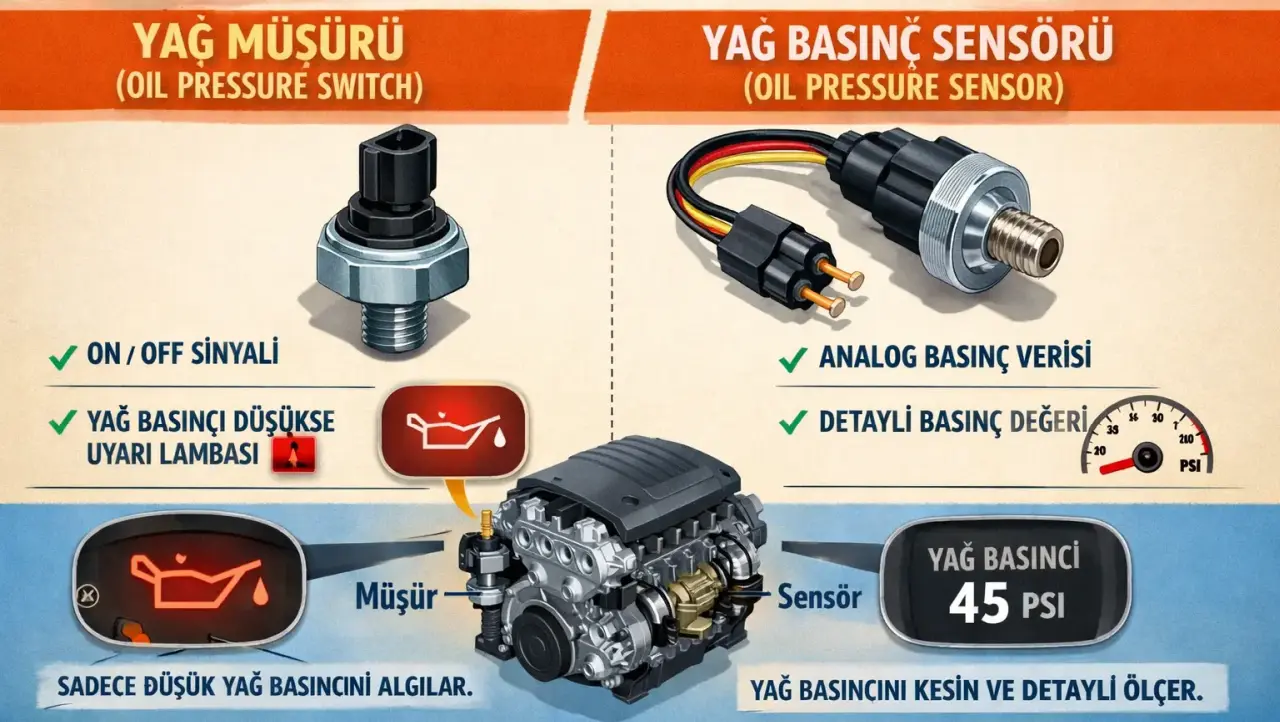
Its only function is to determine whether the oil pressure is above or below the safe level. When the oil pressure drops below the specified limit, it completes the electrical circuit and turns on the oil warning light on the instrument panel.
In other words, the oil pressure switch only recognizes two conditions:
-
Oil pressure is sufficient.
-
Oil pressure is insufficient.
It does not measure the exact pressure value in bar.
How Does an Oil Pressure Switch Work?
Inside the oil pressure switch, there is a spring-loaded thin diaphragm. When the engine oil reaches sufficient pressure, the diaphragm remains in the open position and the warning light does not illuminate. When the pressure drops below the critical level, the diaphragm moves, closes the electrical circuit, and turns on the oil warning light.
Therefore, an oil pressure switch does not produce digital data; it only operates with an open or closed (On/Off) logic.
What Is an Oil Pressure Sensor?
An oil pressure sensor is an electronic sensor that continuously measures the actual pressure of the engine oil.
Unlike an oil pressure switch, it does not only provide a warning. It sends the measured data to the engine control unit (ECU). In some vehicles, this information can also be displayed on an oil pressure gauge or digital screen on the instrument panel.
Thanks to the sensor, the system can detect not only "low oil pressure" but also detailed information such as:
-
How many bars the pressure is
-
Whether the pressure is increasing
-
Whether the pressure is decreasing
-
Whether the pressure is within the normal range
This information is evaluated by the ECU, which can create fault codes or warn the driver when necessary.
Differences Between an Oil Pressure Switch and an Oil Pressure Sensor
Operating principle
An oil pressure switch activates only when the pressure falls below a predetermined threshold.
An oil pressure sensor continuously measures the pressure and sends the actual values to the electronic control unit.
Information sent
An oil pressure switch:
-
On
-
Off
sends only a simple signal.
An oil pressure sensor produces an electrical signal that changes according to the oil pressure value.
Information displayed on the instrument panel
Vehicles with an oil pressure switch usually only have a red oil warning light.
Vehicles with an oil pressure sensor may display:
-
Digital oil pressure readings
-
Analog oil pressure gauges
-
Warning messages
-
Fault codes
Usage areas in vehicles
Oil pressure switches are mostly used in:
-
Older model vehicles
-
Entry-level equipment packages
-
Engines with simple warning systems
Oil pressure sensors are more commonly used in:
-
Modern automobiles
-
ECU-controlled engines
-
Vehicles with digital instrument panels
-
New-generation engines with oil monitoring systems
Which One Is Better?
From a technological perspective, the oil pressure sensor is a more advanced system.
Because it:
-
Provides real-time data
-
Sends information to the engine control unit
-
Can provide early warnings
-
Makes fault diagnosis easier
-
Detects even small changes in oil pressure
The oil pressure switch, on the other hand, is a simpler and more economical solution.
Symptoms of Oil Pressure Switch Failure
When an oil pressure switch fails, the following symptoms may occur:
-
Oil warning light staying on continuously
-
Oil warning light flashing while driving
-
Oil warning light not turning on when the ignition is switched on
-
Warning light appearing even though actual oil pressure is normal
-
False low oil pressure warnings
These symptoms do not always indicate a real oil pressure problem. Sometimes the issue may only be a faulty switch.
Symptoms of Oil Pressure Sensor Failure
When an oil pressure sensor fails, the following problems may occur:
-
Oil pressure gauge constantly showing zero
-
Unstable or constantly changing readings
-
Sudden increases or decreases in displayed oil pressure
-
Oil pressure warnings on the digital display
-
Engine warning light turning on
-
Oil pressure-related fault codes stored in the ECU
If the engine operates normally and there are no knocking or ticking noises, the problem may be caused by the sensor. However, this is not a definite diagnosis.
What Should Be Done If the Oil Warning Light Comes On?
Continuing to drive when the oil warning light is on can cause serious engine damage.
First:
-
Pull the vehicle over to a safe location.
-
Turn off the engine.
-
Check the oil level.
-
Inspect for oil leaks.
-
Listen for knocking or metal friction noises from the engine.
If everything appears normal, the actual oil pressure should be measured with a mechanical oil pressure test. If the pressure is normal, the problem may be caused by the switch or sensor.
When Should the Oil Pressure Switch or Sensor Be Replaced?
These components should not be replaced simply because the oil warning light comes on once.
First:
-
The oil level should be checked.
-
The electrical wiring should be inspected.
-
The connectors should be checked for oxidation.
-
Mechanical oil pressure should be measured.
If tests confirm that the switch or sensor is faulty, replacement is necessary.
In most vehicles, these components are affordable and relatively easy to access. However, their location may vary depending on the engine type.
Frequently Asked Questions
Are an oil pressure switch and an oil pressure sensor the same part?
No. An oil pressure switch is only a switch that detects low oil pressure, while an oil pressure sensor continuously measures the actual oil pressure.
Does every vehicle have an oil pressure sensor?
No. Many older and entry-level vehicles only have an oil pressure switch. New-generation vehicles mostly use oil pressure sensors.
Does a faulty oil pressure switch affect the engine?
A faulty switch does not directly affect engine operation. However, because it can provide incorrect warnings, it may make it harder to detect real oil pressure problems.
Can a vehicle be driven with a faulty oil pressure sensor?
Even if the sensor is faulty, the actual oil pressure may still be normal. However, continuing to drive without confirming this is risky. The oil level and actual oil pressure should be checked first.
Does an illuminated oil warning light always mean engine failure?
No. The cause could be low oil level, a faulty oil pressure switch, a faulty oil pressure sensor, or an electrical wiring problem. However, the oil warning light should never be ignored and should be checked as soon as possible.
Conclusion
Although oil pressure switches and oil pressure sensors serve similar purposes, their operating principles are completely different. An oil pressure switch works as a simple warning device that alerts the driver only when oil pressure drops below a critical level, while an oil pressure sensor continuously measures engine oil pressure and provides detailed information to both the driver and the engine control unit.
Vehicles with only an oil warning light on the instrument panel generally use an oil pressure switch, while vehicles with an oil pressure gauge or digital oil pressure information system use an oil pressure sensor.
When you receive an oil pressure-related warning, it is very important to have your vehicle checked without delay in order to correctly identify the cause and prevent possible engine damage.