TR
TR EN
EN

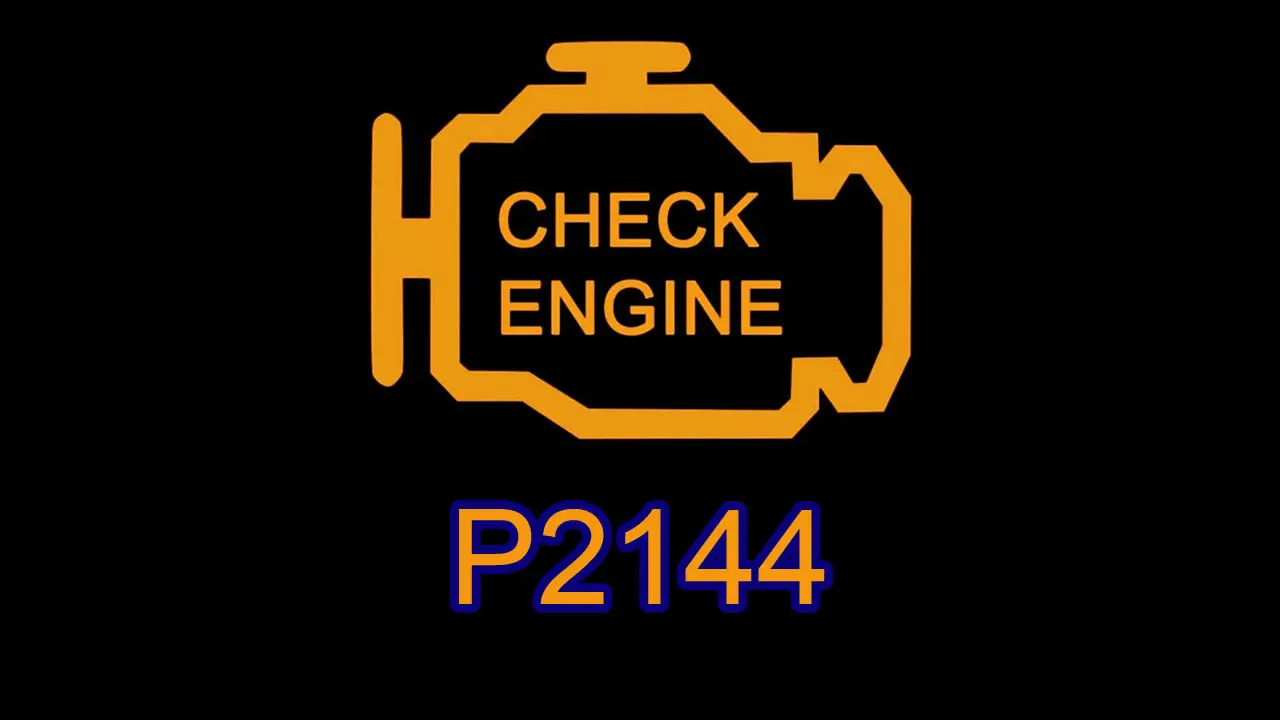
P2144 Exhaust Gas Recirculation (EGR) Vent Control Circuit Low
The P2144 Exhaust Gas Recirculation (EGR) Vent Control Circuit Low diagnostic trouble code indicates that the Engine Control Module (ECM/PCM) has detected an electrical signal or voltage that is lower than the expected range in the EGR vent control circuit.
In simple terms, the vehicle's computer has detected that the electrical circuit used to control the EGR vent is not receiving or producing the expected voltage level.
The EGR system is responsible for recirculating a controlled amount of exhaust gas back into the engine. This helps reduce combustion temperatures and control nitrogen oxide (NOx) emissions. If the EGR vent control circuit has a low electrical signal, the ECM may be unable to control the system correctly and will store P2144.
Depending on the vehicle, P2144 can cause Check Engine Light illumination, rough idle, hesitation, poor acceleration, reduced engine performance, engine stalling, increased emissions, poor fuel economy, or other EGR-related symptoms.
The exact EGR vent design varies between manufacturers, so the circuit should always be diagnosed using the vehicle-specific wiring diagram and service information.
What Does P2144 Mean?
P2144 means that the ECM/PCM has detected a low electrical condition in the EGR vent control circuit.
The word "low" generally refers to an electrical signal or voltage that is below the value expected by the ECM.
Possible causes include:
-
Short to ground
-
Open or damaged wiring
-
High resistance in the circuit
-
Faulty EGR vent control solenoid
-
Corroded electrical connectors
-
Loose terminals
-
Poor ground connection
-
Power-supply problems
-
Faulty fuse or relay
-
Incorrect wiring repair
-
Damaged EGR actuator
-
EGR position sensor problems
-
Aftermarket electrical modifications
-
ECM/PCM problems
A P2144 code does not automatically mean that the EGR valve is mechanically defective.
Because this is a circuit-low code, electrical testing should be performed before replacing major EGR components.
What Is the EGR System?
EGR stands for Exhaust Gas Recirculation.
The EGR system sends a controlled amount of exhaust gas back into the engine's intake system.
Because recirculated exhaust gas contains relatively little oxygen, it can reduce peak combustion temperatures.
This helps reduce the formation of NOx emissions.
Depending on the vehicle, an EGR system can contain:
-
EGR valve
-
EGR vent control
-
EGR control solenoid
-
EGR position sensor
-
Differential pressure sensor
-
EGR temperature sensor
-
Vacuum lines
-
Electrical wiring
-
ECM/PCM control circuits
Modern engines can use electronically controlled EGR systems with multiple valves, sensors, and control circuits.
What Is the EGR Vent Control Circuit?
The EGR vent control circuit is part of the system that regulates EGR operation.
Depending on the vehicle's design, the vent-control component may:
-
Control exhaust-gas flow
-
Control vacuum
-
Open or close a vent passage
-
Regulate EGR pressure
-
Control EGR valve operation
-
Manage electronically controlled EGR flow
The exact function is manufacturer-specific.
For this reason, a technician should identify the actual EGR vent component and its circuit before attempting repairs.
What Does "Circuit Low" Mean?
The "low" designation in P2144 generally means that the ECM has detected a voltage or electrical signal below the expected threshold.
This can happen because of:
-
Short to ground
-
Open power circuit
-
Excessive resistance
-
Poor connector contact
-
Failed solenoid
-
Low system voltage
-
Faulty control circuit
It does not necessarily mean that the engine has low EGR flow.
For example, if the EGR control wire is shorted to ground, the ECM may see a very low voltage and store P2144.
Symptoms of P2144
Symptoms depend on the vehicle, EGR system design, and severity of the electrical problem.
Check Engine Light
The Check Engine Light is one of the most common symptoms.
Rough Idle
Incorrect EGR operation can affect engine combustion stability.
Engine Hesitation
The engine may hesitate when accelerating.
Poor Acceleration
The vehicle may feel slower or less responsive.
Reduced Engine Power
Some vehicles may activate a reduced-power mode when an important EGR control fault is detected.
Engine Stalling
If EGR operation becomes incorrect, particularly at idle, the engine may stall.
Poor Fuel Economy
Incorrect engine-control operation can affect fuel consumption.
Increased Emissions
A malfunctioning EGR system can increase emissions and may cause an emissions inspection failure.
Engine Surging
Some vehicles may experience inconsistent engine operation.
Hard Starting
An EGR system operating incorrectly can sometimes make starting more difficult.
Engine Vibration
Combustion instability may result in noticeable engine vibration.
Additional Warning Lights
Depending on the vehicle, other warning indicators may appear if the EGR problem affects broader engine management.
Common Causes of P2144
Short to Ground
A short to ground is one of the most important possibilities for a circuit-low code.
A damaged control or power wire can contact:
-
Engine metal
-
Chassis ground
-
Another grounded component
-
A damaged harness section
Possible causes include:
-
Chafed wiring
-
Melted insulation
-
Incorrect wiring repairs
-
Harness damage
-
Aftermarket modifications
Open or Broken Wiring
An interrupted circuit can prevent the EGR vent control component from receiving the required electrical supply or control signal.
Possible causes include:
-
Broken conductor
-
Pulled wire
-
Harness damage
-
Vibration
-
Heat
-
Corrosion
A wire can sometimes break internally while the outside insulation remains intact.
High Resistance in the Circuit
Excessive resistance can reduce the voltage available to an EGR component.
Potential sources include:
-
Corroded terminals
-
Loose connectors
-
Damaged splices
-
Partially broken wires
-
Poor-quality previous repairs
Voltage-drop testing is useful for identifying these problems.
Faulty EGR Vent Control Solenoid
If the vehicle uses an electrically controlled EGR vent solenoid, an internal failure can create a low circuit signal.
Possible problems include:
-
Internal short
-
Incorrect coil resistance
-
Open coil
-
Internal mechanical failure
The component should be tested according to manufacturer specifications.
Corroded EGR Connector
Corrosion can interfere with electrical current and signal transmission.
Inspect for:
-
Green or white corrosion
-
Oxidized terminals
-
Moisture
-
Loose pins
-
Poor terminal tension
-
Damaged connector housing
Loose Electrical Connection
A loose connection can create an intermittent or low-voltage condition.
Potential locations include:
-
EGR connector
-
Engine harness
-
Fuse box
-
Relay socket
-
ECM/PCM connector
-
Ground connection
Faulty Fuse or Relay
Some EGR systems receive power through a fuse or relay.
A blown fuse or defective relay can prevent the EGR vent control component from receiving power.
If a fuse is blown, the underlying reason should be identified before replacing it.
Poor Ground Connection
A poor ground can affect EGR actuator operation and create abnormal circuit readings.
Inspect:
-
Battery negative connections
-
Engine ground straps
-
Chassis grounds
-
EGR component grounds
-
ECM/PCM grounds
Low Vehicle System Voltage
A weak battery or charging-system problem can cause electrical circuits to operate below their intended voltage.
Possible causes include:
-
Weak battery
-
Faulty alternator
-
Poor battery connections
-
Charging-system wiring problems
-
Voltage-regulator faults
If several systems show low-voltage codes, the vehicle's main electrical system should be checked first.
Damaged EGR Wiring From Heat
EGR components can be located close to exhaust components.
Excessive heat can cause:
-
Melted insulation
-
Brittle wires
-
Exposed conductors
-
Short circuits
-
Open circuits
Heat damage is particularly important to inspect around exhaust manifolds and EGR piping.
Carbon Deposits in the EGR System
Carbon buildup can cause the EGR valve or passages to stick or become restricted.
Possible symptoms include:
-
Rough idle
-
Hesitation
-
Reduced performance
-
Increased emissions
However, carbon buildup alone does not normally explain a circuit-low electrical code. It should be considered as a possible secondary problem rather than automatically identified as the cause of P2144.
Faulty EGR Position Sensor
Some EGR systems use a position sensor to report valve position to the ECM.
A faulty sensor may produce:
-
Low feedback voltage
-
Incorrect position information
-
Intermittent signals
Possible causes include:
-
Internal sensor failure
-
Wiring problems
-
Connector problems
-
Reference-voltage problems
Incorrect Wiring Repair
A previous repair may have connected the EGR control circuit incorrectly.
For example, a control wire may have been connected to ground or another circuit, producing an unexpectedly low signal.
Aftermarket Electrical Modifications
Electrical modifications can interfere with EGR operation.
Potential sources include:
-
ECU modifications
-
Performance wiring
-
Engine swaps
-
Modified engine harnesses
-
Emissions-system modifications
-
Additional electrical equipment
ECM/PCM Problem
A control-module fault is possible, but it is generally less common than wiring, connector, solenoid, fuse, relay, or ground problems.
The ECM/PCM should only be suspected after the external circuit has been properly tested.
Vehicles Commonly Affected by P2144
P2144 can occur on many OBD-II vehicles equipped with electronically controlled EGR systems.
Examples can include:
-
Ford F-150
-
Ford Explorer
-
Ford Escape
-
Ford Focus
-
Ford Transit
-
Chevrolet Silverado
-
Chevrolet Tahoe
-
Chevrolet Suburban
-
Chevrolet Equinox
-
GMC Sierra
-
GMC Yukon
-
Cadillac Escalade
-
Dodge Ram
-
Dodge Charger
-
Dodge Challenger
-
Jeep Grand Cherokee
-
Jeep Wrangler
-
Chrysler Pacifica
-
Toyota Tundra
-
Toyota Tacoma
-
Nissan Titan
-
Nissan Armada
-
Nissan Pathfinder
-
Nissan Frontier
-
Honda Pilot
-
Honda Accord
-
BMW 3 Series
-
BMW 5 Series
-
Mercedes-Benz E-Class
-
Volkswagen Passat
-
Audi A4
-
Audi A6
This list is not exhaustive.
P2144 may occur on both gasoline and diesel vehicles, depending on the engine and EGR system configuration.
Important: The exact EGR vent control component, wiring configuration, and control strategy can vary by manufacturer, engine, and model year.
How Is P2144 Diagnosed?
The goal of diagnosis is to determine why the EGR vent control circuit voltage is lower than expected.
Scan for Additional Trouble Codes
Start with a complete diagnostic scan.
Look for:
-
P2144
-
Other EGR codes
-
EGR flow codes
-
EGR position sensor codes
-
Intake-system codes
-
Engine-performance codes
-
Battery-voltage codes
-
Charging-system codes
-
Communication codes
Additional codes can help determine whether the problem is isolated to the EGR system or part of a larger electrical problem.
Check Freeze-Frame Data
Review the conditions under which P2144 was stored.
Useful information includes:
-
Engine RPM
-
Vehicle speed
-
Engine load
-
Coolant temperature
-
Battery voltage
-
Throttle position
-
EGR command
-
EGR position
This may help identify when the low circuit condition occurs.
Identify the EGR Vent Control Circuit
Use the vehicle-specific wiring diagram to identify:
-
EGR vent control component
-
Power supply
-
Ground
-
Control wire
-
Feedback circuit
-
Fuse
-
Relay
-
ECM/PCM terminals
This step is essential because EGR system designs differ between vehicles.
Check Battery and Charging Voltage
Verify that the vehicle's electrical system is providing appropriate voltage.
Check:
-
Battery condition
-
Battery terminals
-
Alternator operation
-
Charging voltage
-
Main grounds
If system voltage is low throughout the vehicle, correct that problem before continuing with EGR circuit diagnosis.
Check the EGR Fuse
Inspect the EGR-related fuse.
If it is blown:
-
Do not repeatedly replace it.
-
Inspect the EGR wiring.
-
Test the EGR control component.
-
Check for a short to ground.
-
Inspect the relay.
-
Check the power-distribution system.
Test the EGR Relay
If an EGR relay is used, test:
-
Relay input
-
Relay output
-
Relay control signal
-
Contact resistance
-
Voltage drop
A relay can fail internally even when it looks normal.
Measure EGR Circuit Voltage
Measure the appropriate circuit voltage under the manufacturer's specified conditions.
Compare the result with the manufacturer's specification.
If voltage is lower than expected, trace the circuit toward:
-
Power supply
-
Fuse
-
Relay
-
Wiring
-
EGR vent control component
-
ECM/PCM
Check for a Short to Ground
With the circuit safely isolated according to manufacturer procedures, check for an unintended connection between the EGR control circuit and ground.
This is especially important when diagnosing a circuit-low code.
Perform Voltage-Drop Testing
Voltage-drop testing can locate high-resistance connections.
Test:
-
Fuse connections
-
Relay contacts
-
Power wires
-
Ground circuits
-
Connectors
-
Splices
This can reveal faults that may not be obvious during a visual inspection.
Inspect EGR Wiring
Inspect the harness for:
-
Broken wires
-
Chafing
-
Melted insulation
-
Exposed conductors
-
Corrosion
-
Poor splices
-
Previous repairs
-
Incorrect routing
Pay special attention to areas near hot exhaust components.
Inspect EGR Connectors
Check connectors for:
-
Corrosion
-
Bent pins
-
Loose terminals
-
Water intrusion
-
Damaged locking mechanisms
-
Poor terminal tension
Test the EGR Vent Control Component
Depending on the vehicle, test:
-
Coil resistance
-
Power supply
-
Ground
-
Control signal
-
Actuator operation
Compare measurements with manufacturer specifications.
Do not apply battery voltage directly to an electronically controlled EGR component unless the manufacturer specifically provides that test procedure.
Check EGR Position Feedback
If a position sensor is present, verify that its feedback signal changes correctly as the EGR actuator operates.
An abnormal signal may indicate:
-
Faulty position sensor
-
Wiring problem
-
Connector fault
-
Actuator problem
-
Reference-voltage problem
Inspect EGR Passages
If electrical tests do not identify the fault, inspect the EGR passages and valve for:
-
Carbon buildup
-
Restricted passages
-
Sticking valve
-
Mechanical damage
This is particularly important if EGR-related performance symptoms are present.
Check ECM/PCM Power and Grounds
Verify:
-
Battery power
-
Ignition power
-
ECM/PCM grounds
-
Relevant reference-voltage circuits
A poor control-module ground can cause abnormal circuit readings.
Check for Aftermarket Modifications
Inspect modifications involving:
-
ECU
-
EGR system
-
Engine wiring
-
Engine swaps
-
Performance electronics
-
Emissions-system components
Incorrect modifications can create EGR circuit faults.
How to Fix P2144
The correct repair depends on the cause confirmed during diagnosis.
Repair a Short to Ground
If the EGR control circuit is shorted to ground, repair the damaged wiring and restore the correct harness routing.
Repair Broken or Damaged Wiring
Repair or replace wiring damaged by:
-
Heat
-
Chafing
-
Corrosion
-
Vibration
-
Oil contamination
-
Previous repairs
Protect the harness from future damage.
Repair or Replace EGR Connectors
Replace damaged terminals or connector housings when necessary.
Ensure proper terminal tension and secure connections.
Replace a Faulty EGR Vent Control Solenoid
If testing confirms an internal electrical failure, replace the component with the correct specification.
Replace a Faulty Fuse or Relay After Finding the Cause
If a fuse has failed, identify the underlying short or excessive-current condition before replacing it.
If the relay is defective, replace it with the correct component.
Repair High-Resistance Connections
Repair corroded or loose connections that cause excessive voltage drop.
Repair Power-Distribution Problems
Repair damaged fuse-box terminals, relay sockets, or power-distribution wiring.
Repair Poor Ground Connections
Restore proper battery, engine, chassis, EGR, and ECM/PCM grounding.
Replace a Faulty EGR Position Sensor
If the position sensor is confirmed defective, replace it and verify the feedback signal.
Clean or Repair the EGR System
If carbon buildup or mechanical sticking is found in addition to the electrical fault, clean or repair the affected EGR components according to manufacturer procedures.
Correct Aftermarket Wiring
Restore incorrectly modified EGR wiring to the correct manufacturer configuration.
Repair or Replace the ECM/PCM
The ECM/PCM should only be considered after the EGR control circuit, power supply, wiring, connectors, actuator, sensors, and grounds have been thoroughly tested.
What Happens If P2144 Is Ignored?
Ignoring P2144 can result in continued engine and emissions problems.
Possible consequences include:
-
Increased emissions
-
Failed emissions inspection
-
Rough idle
-
Engine hesitation
-
Poor acceleration
-
Reduced engine performance
-
Engine stalling
-
Poor fuel economy
-
Additional EGR-related trouble codes
If the EGR system is unable to operate correctly for an extended period, engine performance and emissions control may deteriorate further.
Can You Drive With P2144?
Driving with P2144 may be possible if the engine is operating normally, but the problem should be diagnosed promptly.
A short drive may be reasonable if:
-
The engine starts normally.
-
The engine runs smoothly.
-
There is no severe hesitation.
-
There is no major loss of power.
-
The Check Engine Light is not flashing.
-
No other serious warning lights are present.
Avoid driving if you experience:
-
Severe engine shaking
-
Repeated stalling
-
Major loss of power
-
Severe hesitation
-
Flashing Check Engine Light
-
Multiple warning lights
A flashing Check Engine Light can indicate a serious engine misfire or another condition requiring immediate attention.
Is P2144 a Serious Code?
P2144 is generally considered a moderate-severity diagnostic trouble code, although the actual severity depends on the vehicle and the underlying electrical problem.
The code does not necessarily mean that the EGR valve itself has failed.
However, an EGR control circuit that remains at an abnormally low voltage can prevent proper EGR operation.
Potential consequences include:
-
Increased emissions
-
Poor engine performance
-
Rough idle
-
Hesitation
-
Engine stalling
-
Reduced fuel economy
-
Additional EGR faults
If the low voltage is caused by a short circuit, the electrical problem should be repaired promptly to prevent additional wiring or component damage.
How to Prevent P2144
Regular maintenance can help reduce the risk of EGR electrical and mechanical problems.
Recommended practices include:
-
Inspect EGR wiring during routine maintenance.
-
Keep wiring away from hot exhaust components.
-
Repair damaged wiring promptly.
-
Keep EGR connectors clean and dry.
-
Maintain battery terminals.
-
Maintain engine and chassis grounds.
-
Address charging-system problems promptly.
-
Inspect EGR components for carbon buildup when appropriate.
-
Use the correct EGR components.
-
Avoid poorly designed electrical modifications.
-
Secure wiring harnesses away from moving and hot components.
-
Inspect wiring after engine replacement or major repairs.
-
Do not ignore Check Engine Light warnings.
P2144 vs. Related EGR and Circuit Codes
| Code | General Description |
|---|---|
| P2144 | EGR Vent Control Circuit Low |
| P2145 | EGR Vent Control Circuit High |
| P2146 | Fuel Injector Group "A" Supply Voltage Circuit/Open |
| P2147 | Fuel Injector Group "A" Supply Voltage Circuit Low |
| P2148 | Fuel Injector Group "A" Supply Voltage Circuit High |
| P2149 | Fuel Injector Group "B" Supply Voltage Circuit/Open |
| P2150 | Fuel Injector Group "B" Supply Voltage Circuit Low |
| P2151 | Fuel Injector Group "B" Supply Voltage Circuit High |
The key difference is straightforward:
-
P2144 = EGR vent control circuit low
-
P2145 = EGR vent control circuit high
-
P2146 and later related codes = fuel-injector supply circuit faults
P2144 should therefore be diagnosed as an EGR electrical control problem, rather than automatically assuming that the EGR valve is dirty or mechanically stuck.
Final Thoughts
The P2144 Exhaust Gas Recirculation (EGR) Vent Control Circuit Low diagnostic trouble code indicates that the ECM/PCM has detected a lower-than-expected electrical signal in the EGR vent control circuit.
Common causes include:
-
Short to ground
-
Broken or damaged wiring
-
High resistance
-
Corroded connectors
-
Loose terminals
-
Faulty EGR vent control solenoid
-
Blown fuse
-
Faulty relay
-
Poor grounding
-
Low vehicle system voltage
-
EGR position sensor problems
-
Incorrect wiring repairs
-
Aftermarket electrical modifications
-
ECM/PCM faults
The correct diagnostic approach begins with checking additional trouble codes and freeze-frame data, identifying the exact EGR vent control circuit, checking battery and charging voltage, inspecting the fuse and relay, measuring circuit voltage, testing for shorts to ground, performing voltage-drop tests, and inspecting the wiring and connectors.
If the electrical circuit tests correctly, the EGR actuator, position sensor, and mechanical EGR passages should then be inspected.
P2144 does not automatically mean that the EGR valve needs to be replaced. A damaged wire, short to ground, corroded connector, faulty solenoid, blown fuse, defective relay, poor ground, or low system voltage can all produce an EGR circuit-low condition.
Finding the actual source of the low electrical signal is essential for repairing P2144 correctly and restoring proper EGR operation and emissions control.