TR
TR EN
EN

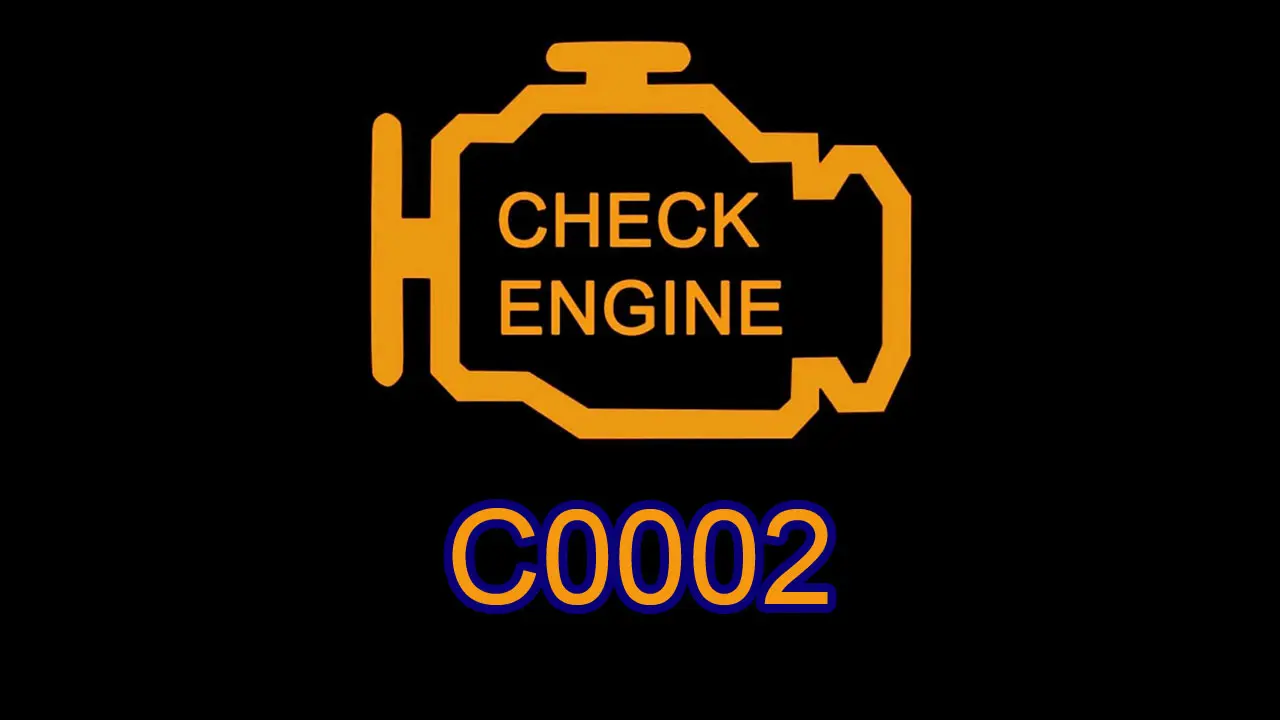
C0002 TCS Control Channel "A" Valve 2 Fault
The C0002 TCS Control Channel "A" Valve 2 Fault diagnostic trouble code indicates that the vehicle's Traction Control System (TCS) has detected a problem involving Valve 2 in control channel "A."
The TCS works closely with the Anti-lock Braking System (ABS) to prevent excessive wheel spin during acceleration. When the system detects that a driven wheel is losing traction, the ABS/TCS control module can use electronically controlled hydraulic valves to modify brake pressure at individual wheels. Depending on the vehicle, the system may also request a reduction in engine torque.
If the control module detects that TCS Control Channel "A" Valve 2 is not responding correctly, has an abnormal electrical circuit, or does not produce the expected hydraulic response, it can store C0002.
The exact physical valve represented by "Control Channel A, Valve 2" is manufacturer- and system-dependent. Therefore, C0002 should not automatically be identified as a specific wheel's inlet or outlet valve without consulting the vehicle-specific service information.
What Does C0002 Mean?
C0002 is a chassis diagnostic trouble code associated with the TCS hydraulic control system.
The traction-control system uses wheel-speed information to detect excessive wheel slip.
A simplified TCS operation is:
-
Wheel-speed sensors monitor wheel rotation.
-
The ABS/TCS module compares wheel speeds.
-
The module detects excessive slip at a driven wheel.
-
It determines the appropriate corrective action.
-
A hydraulic control valve is activated.
-
Brake pressure may be applied to the slipping wheel.
-
Engine torque may also be reduced.
-
The system stops intervening when traction is restored.
C0002 means that the control module has detected a fault involving TCS Control Channel "A," Valve 2.
Possible fault types include:
-
Solenoid electrical failure
-
Open circuit
-
Short circuit
-
Excessive circuit resistance
-
Sticking hydraulic valve
-
Hydraulic restriction
-
Damaged wiring
-
Corroded connector
-
ABS/TCS hydraulic modulator failure
-
ABS/TCS control module failure
What Is the TCS?
TCS stands for Traction Control System.
Its purpose is to limit excessive wheel spin during acceleration.
For example, when a vehicle accelerates on a wet road, one driven wheel may lose traction and rotate faster than the other driven wheel.
The TCS can respond by:
-
Applying brake pressure to the slipping wheel
-
Reducing engine torque
-
Working with ABS
-
Helping restore traction
TCS can be particularly useful on:
-
Wet roads
-
Snow
-
Ice
-
Gravel
-
Mud
-
Loose surfaces
What Is TCS Control Channel "A" Valve 2?
The ABS/TCS hydraulic modulator contains electronically controlled solenoid valves.
These valves allow the control module to regulate hydraulic brake pressure without requiring the driver to manually change pedal pressure.
Depending on the hydraulic architecture, a valve may perform functions such as:
-
Pressure application
-
Pressure isolation
-
Pressure holding
-
Pressure release
Control Channel "A" Valve 2 is a system-specific designation.
Unlike codes such as C0010 Left Front Inlet Control or C0011 Left Front Outlet Control, C0002 does not necessarily identify a particular wheel in its description.
The manufacturer’s ABS/TCS hydraulic diagram and diagnostic procedure should be used to determine which physical valve corresponds to Channel A, Valve 2.
Symptoms of C0002
Symptoms can vary depending on the vehicle and the nature of the valve fault.
TCS Warning Light
The traction-control warning light may illuminate.
ABS Warning Light
The ABS warning light may also turn on because TCS and ABS frequently share the same hydraulic and electronic components.
Electronic Stability Control Warning
The ESC or stability-control warning indicator may appear.
Traction Control Disabled
The TCS system may be disabled until the fault is repaired.
ABS Function May Be Limited
Some vehicles may deactivate ABS or related functions when a hydraulic valve fault is detected.
Reduced Stability Control
Electronic stability-control intervention may become unavailable.
Wheel Spin During Acceleration
With TCS disabled, the driven wheels may spin more easily on slippery surfaces.
Unexpected Brake Intervention
A hydraulic control problem can potentially cause abnormal brake intervention.
No Noticeable Symptoms
The vehicle may continue to drive normally during everyday conditions. The problem may only become apparent when traction-control intervention is required.
Common Causes of C0002
Several electrical, hydraulic, and mechanical problems can trigger C0002.
Faulty TCS Valve 2
The valve solenoid may have:
-
Failed coil
-
Internal electrical fault
-
Internal short circuit
-
Mechanical sticking
-
Contamination
Damaged Wiring
The valve-control circuit can develop:
-
Broken wires
-
Open circuits
-
Short circuits
-
Chafed insulation
-
Heat damage
-
High resistance
Corroded Connectors
ABS/TCS connectors are exposed to water, road salt, dirt, and temperature changes.
Possible problems include:
-
Corroded terminals
-
Water intrusion
-
Loose pins
-
Bent terminals
-
Poor electrical contact
Internal ABS/TCS Hydraulic Modulator Failure
On many vehicles, the TCS valves are integrated into the ABS hydraulic control unit.
An internal fault may involve:
-
Solenoid valves
-
Hydraulic passages
-
Valve mechanisms
-
Internal electrical circuits
-
Valve drivers
Contaminated Brake Fluid
Dirty or degraded brake fluid can contribute to hydraulic-control problems.
Possible effects include:
-
Valve sticking
-
Internal corrosion
-
Restricted hydraulic passages
-
Abnormal pressure control
ABS/TCS Control Module Failure
The control module may have:
-
Internal driver failure
-
Electrical problems
-
Software issues
-
Communication problems
Low System Voltage
Low battery or charging voltage can cause false or genuine ABS/TCS valve-control faults.
Potential causes include:
-
Weak battery
-
Alternator problem
-
Poor ground
-
Loose battery connection
-
Charging-system fault
If multiple ABS/TCS codes are stored together, the electrical power supply should be checked early in the diagnostic process.
Vehicles Commonly Affected by C0002
C0002 can occur on vehicles equipped with electronically controlled ABS and traction-control systems.
Examples may include vehicles from:
-
Ford
-
Chevrolet
-
GMC
-
Buick
-
Cadillac
-
Dodge
-
Chrysler
-
Jeep
-
Ram
-
Toyota
-
Lexus
-
Honda
-
Acura
-
Nissan
-
Infiniti
-
Hyundai
-
Kia
-
Volkswagen
-
Audi
-
BMW
-
Mercedes-Benz
This is not an exhaustive application list.
The exact meaning of TCS Control Channel "A" Valve 2 can differ according to the vehicle manufacturer, model year, ABS/TCS hydraulic modulator, and electronic control strategy.
For accurate diagnosis, the vehicle-specific service information should be consulted.
How C0002 Is Diagnosed
C0002 should be diagnosed with an ABS/TCS-capable diagnostic scanner rather than a basic engine-code reader.
Scan the ABS/TCS Module
Retrieve:
-
Stored diagnostic trouble codes
-
Pending codes
-
Manufacturer-specific subfaults
-
Freeze-frame data
-
Related ABS/TCS codes
Additional codes can help determine whether C0002 is an isolated valve problem.
Check Battery and Charging Voltage
Before condemning a valve or hydraulic unit, verify:
-
Battery voltage
-
Alternator output
-
ABS module power supply
-
Ground connections
-
Voltage drop
A low-voltage condition can create multiple electronic chassis faults.
Perform an ABS/TCS Active Test
Professional diagnostic equipment may allow the technician to command Channel A, Valve 2.
During the test, the technician may evaluate:
-
Solenoid activation
-
Electrical current
-
Valve response
-
Hydraulic pressure response
If the valve does not respond while its electrical circuit is correct, an internal hydraulic modulator problem becomes more likely.
Check Valve Resistance
The solenoid's resistance should be tested according to the manufacturer's procedure.
The circuit should be checked for:
-
Open circuit
-
Short circuit
-
Excessive resistance
The result should be compared with the manufacturer's specified range.
Inspect Wiring
The wiring harness should be inspected for:
-
Broken conductors
-
Chafing
-
Melted insulation
-
Corrosion
-
Incorrect previous repairs
-
Physical damage
Inspect Connectors
Check for:
-
Corrosion
-
Water intrusion
-
Loose terminals
-
Bent pins
-
Poor terminal tension
Check Wheel-Speed Sensor Data
Although C0002 specifically identifies a TCS valve-control fault, wheel-speed information is essential for TCS operation.
The technician should compare live readings from:
-
Left front wheel
-
Right front wheel
-
Left rear wheel
-
Right rear wheel
If another wheel-speed fault is present, it should also be diagnosed.
Inspect the ABS/TCS Hydraulic Modulator
If the power supply, wiring, connectors, and valve circuit are correct, the hydraulic control unit should be evaluated for internal problems.
Inspect Brake Fluid
Brake fluid should be checked for:
-
Contamination
-
Incorrect fluid specification
-
Severe deterioration
-
Visible debris
How to Fix C0002
The correct repair depends on the confirmed cause.
Repair Damaged Wiring
Possible repairs include:
-
Repair broken wires
-
Replace damaged harness sections
-
Repair insulation
-
Restore electrical connections
Repair or Replace Connectors
Damaged connectors may require:
-
Terminal replacement
-
Connector replacement
-
Appropriate terminal cleaning
-
Restoration of correct terminal tension
Repair or Replace the ABS/TCS Hydraulic Modulator
If testing confirms an internal Valve 2 fault, the ABS/TCS hydraulic control unit may require service or replacement.
On many vehicles, individual solenoids are integrated into the hydraulic unit and are not separately serviceable.
Service or Replace the ABS/TCS Control Module
If the module's valve driver is defective, possible repairs include:
-
Software update
-
Reprogramming
-
Professional module repair
-
Module replacement
Flush Contaminated Brake Fluid
If contaminated brake fluid is contributing to valve problems, the braking system may require a professional brake-fluid flush.
If hydraulic components are opened, the system should be properly bled according to the manufacturer's procedure.
Repair Low-Voltage Problems
If low system voltage caused the fault, possible repairs include:
-
Battery replacement
-
Alternator repair
-
Ground repair
-
Battery terminal repair
-
Charging-system repair
After repairs:
-
Clear the ABS/TCS trouble codes.
-
Perform the required valve active tests.
-
Verify wheel-speed data.
-
Bleed the brake system if necessary.
-
Perform a road test.
-
Confirm that C0002 does not return.
Can You Drive With C0002?
A vehicle with C0002 may still have conventional braking, but traction control and potentially ABS or electronic stability functions may be unavailable.
Without TCS, driven wheels can spin more easily during acceleration on slippery surfaces.
Extra caution is recommended on:
-
Wet roads
-
Snow
-
Ice
-
Gravel
-
Mud
-
Loose surfaces
If the vehicle has a red brake warning light, abnormal braking performance, a hard or soft brake pedal, or unexpected brake application, it should not be driven until it has been inspected.
Is C0002 a Serious Code?
C0002 should be considered a significant chassis and traction-control fault.
If the fault only disables TCS, conventional braking may remain available. However, if ABS or electronic stability-control functions are also disabled, the potential safety impact is greater.
The fault should therefore be diagnosed promptly rather than simply clearing the warning light.
How to Prevent C0002
Regular brake, electrical, and ABS maintenance can help reduce the likelihood of TCS hydraulic-control problems.
Recommended practices include:
-
Follow the manufacturer's brake maintenance schedule.
-
Replace brake fluid at the recommended intervals.
-
Use the correct brake fluid specification.
-
Inspect ABS/TCS wiring during brake and suspension work.
-
Keep ABS connectors protected from moisture and contamination.
-
Repair wheel-speed sensor problems promptly.
-
Maintain the battery and charging system.
-
Address ABS, TCS, and ESC warning lights promptly.
-
Avoid ignoring recurring chassis diagnostic codes.
C0002 vs. Related ABS/TCS Codes
C0002 belongs to a group of chassis codes associated with electronically controlled braking and traction systems.
| Code | Description |
|---|---|
| C0002 | TCS Control Channel "A" Valve 2 Fault |
| C0003 | TCS Control Channel "B" Valve 1 Fault |
| C0004 | TCS Control Channel "B" Valve 2 Fault |
| C0010 | Left Front Inlet Control |
| C0011 | Left Front Outlet Control |
| C0012 | Left Front Hydraulic Release Too Long |
| C0014 | Right Front Inlet Control |
| C0015 | Right Front Outlet Control |
| C0016 | Right Front Hydraulic Release Too Long |
| C0018 | Left Rear Inlet Control |
| C0019 | Left Rear Outlet Control |
| C0020 | ABS Pump Motor Control Circuit Malfunction |
These codes identify different hydraulic-control functions. They should not be treated as interchangeable because the affected valve, circuit, and diagnostic procedure may vary.
Final Thoughts
The C0002 TCS Control Channel "A" Valve 2 Fault diagnostic trouble code indicates that the vehicle's traction-control system has detected an abnormal condition involving Valve 2 in control channel A.
Potential causes include:
-
Faulty TCS valve
-
Damaged wiring
-
Corroded connectors
-
Open or short circuit
-
Excessive electrical resistance
-
Sticking hydraulic valve
-
Contaminated brake fluid
-
Internal ABS/TCS hydraulic modulator failure
-
ABS/TCS control module failure
-
Low system voltage
The most important point is that C0002 does not automatically mean the ABS/TCS hydraulic modulator needs to be replaced. The electrical circuit, wiring, connectors, power supply, grounds, valve resistance, wheel-speed data, and active-test results should be checked first.
Because TCS shares components with ABS and electronic stability-control systems on many vehicles, a valve-control fault can affect several vehicle safety functions. Proper diagnosis with an ABS/TCS-capable diagnostic scanner is recommended before replacing components.