TR
TR EN
EN

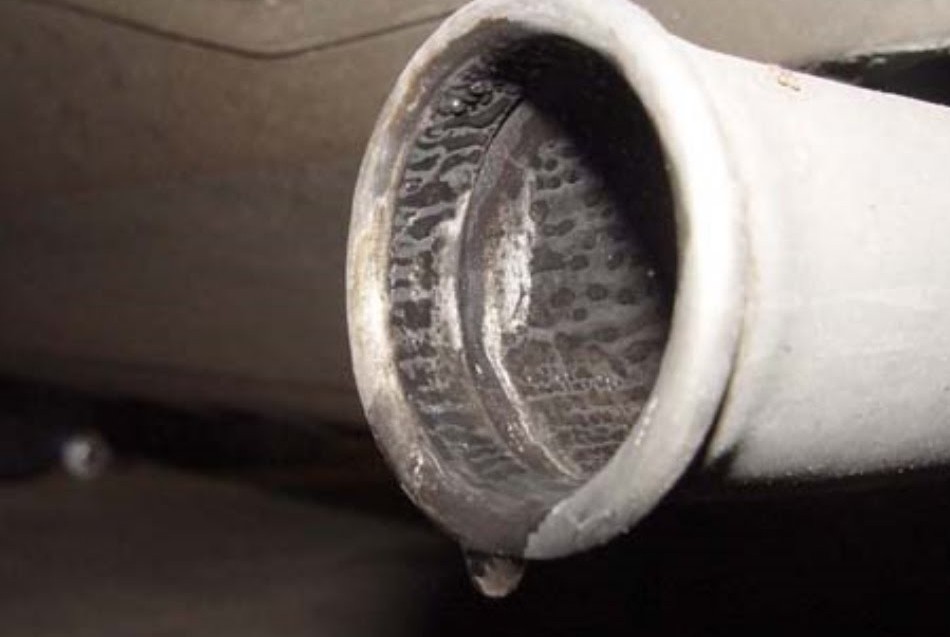
Why Does Water Come Out of the Exhaust? Why Is the Exhaust Dripping Water?
Seeing water dripping from a vehicle’s exhaust can make drivers think there is a serious engine problem. However, exhaust water is not necessarily a sign of a malfunction. In many situations, especially when the engine is first started, a small amount of water coming from the exhaust is completely normal.
The important factors are when the water appears, how much water is coming out, whether it continues after the engine warms up, and whether other symptoms are present.
The Most Common Reason: Condensation
Water vapor is naturally produced during the combustion of gasoline, diesel, and other fuels.
During combustion, the engine produces hot exhaust gases containing water vapor. When these gases enter a cold exhaust system, the water vapor can condense on the relatively cool metal surfaces and turn into liquid water.
That water eventually collects and leaves through the exhaust tip.
This is especially common:
-
During cold weather
-
During the first startup of the day
-
When the vehicle has been parked for a long time
-
After short trips
-
When the exhaust system has not reached operating temperature
In these situations, a few drops of water from the exhaust are usually nothing to worry about.
Is Water From the Exhaust Normal When the Engine Is Cold?
Yes, in most cases.
When the engine is first started, the exhaust system is cold. Hot and humid exhaust gases come into contact with the cold exhaust pipes and muffler, causing some of the water vapor to condense.
As a result, water may drip from the exhaust tip for a short period.
Once the engine and exhaust system reach normal operating temperature, the water usually decreases or disappears.
Does Cold Weather Cause More Water to Come From the Exhaust?
Yes.
Lower outside temperatures make condensation more likely. Cold exhaust components provide better conditions for water vapor in the exhaust gases to turn into liquid water.
This is why you may notice more water coming from the exhaust during winter, particularly when starting the vehicle in the morning.
In some cases, a noticeable amount of water can come out for a while. This does not automatically mean that the engine is consuming coolant or has a head gasket problem.
Can Short Trips Cause Water to Accumulate in the Exhaust?
Yes.
If a vehicle is repeatedly driven for only a few kilometers, the engine and exhaust system may not remain hot long enough to evaporate all of the condensed water.
Some moisture can therefore remain inside the exhaust system.
This is particularly noticeable on vehicles that are used mainly for short urban trips during cold weather.
Over time, condensation can accumulate inside parts of the exhaust system and eventually drain through the exhaust tip.
What If the Water Stops After the Exhaust Gets Hot?
This is generally a good sign.
For example, if a vehicle produces a few drops of water when started in the morning but the water disappears once the engine reaches operating temperature, condensation is the most likely explanation.
In this situation, there is normally no reason to assume that the cylinder head gasket, engine, or another major component has failed simply because water came from the exhaust.
Does Water From the Exhaust Mean the Engine Is Healthy?
Not necessarily.
Water vapor is a normal byproduct of combustion, so seeing some water at the exhaust tip can be completely normal. However, the presence of water alone cannot prove that the engine is in perfect condition.
Likewise, it would be incorrect to say that an engine is definitely faulty simply because a few drops of water come from the exhaust.
The amount of water, its duration, and any accompanying symptoms are much more important.
When Is Exhaust Water a Sign of a Problem?
The situation deserves more attention if a large amount of water continues to come out after the engine is fully warmed up, especially when other symptoms appear at the same time.
Potential warning signs include:
-
Continuous heavy white exhaust smoke
-
Unexplained coolant loss
-
Engine overheating
-
Rough engine operation
-
Misfires
-
Long or difficult starting
-
Milky or abnormal-looking engine oil
-
Unusual pressure in the cooling system
-
Sweet-smelling exhaust
-
Persistent water or steam from the exhaust after warm-up
These symptoms can indicate a cooling-system or engine problem and should not be dismissed as normal condensation.
Can a Blown Head Gasket Cause Water From the Exhaust?
Yes, but the water itself is not enough to diagnose a head gasket failure.
If the head gasket is damaged, coolant can enter the combustion chamber. The coolant may then be vaporized during combustion and leave through the exhaust as steam.
However, coolant entering the combustion chamber usually produces other symptoms as well.
Normal condensation typically involves:
-
A small amount of water
-
More noticeable when the engine is cold
-
Less water as the exhaust warms up
-
No persistent heavy white smoke
-
No unexplained coolant loss
A head gasket or cooling-system problem may instead cause persistent white exhaust, coolant loss, overheating, misfires, or other abnormal behavior.
Is Water From the Exhaust the Same as White Smoke?
No.
Liquid water and white exhaust vapor are often confused with each other.
When water vapor leaves a cold exhaust and mixes with cold outside air, it can become visible as a white cloud. This is particularly common immediately after startup in cold weather.
That temporary vapor should not automatically be confused with continuous white smoke caused by coolant entering the combustion chamber.
If the white exhaust remains heavy after the engine reaches normal temperature, further diagnosis may be necessary.
Is Exhaust Water Related to the Catalytic Converter?
It can be part of the overall exhaust process, but water dripping from the exhaust does not mean that the catalytic converter is defective.
The catalytic converter is responsible for reducing certain harmful emissions. Water vapor is one of the normal products of combustion and can pass through the exhaust system.
Therefore, seeing water at the exhaust tip by itself is not a reliable way to diagnose a catalytic converter problem.
A faulty catalytic converter usually produces other symptoms or diagnostic trouble codes rather than simply causing water to drip from the exhaust.
Does the Amount of Exhaust Water Depend on Fuel Type?
The amount of water produced during combustion is related to the chemical composition of the fuel.
Gasoline and diesel engines have different combustion characteristics, but both can produce water vapor as a normal combustion product.
LPG vehicles can also produce water vapor and may show condensation at the exhaust tip.
Therefore, seeing some water from the exhaust is not automatically abnormal simply because the vehicle runs on gasoline, diesel, or LPG.
What Should You Do If Your Exhaust Is Dripping Water?
First, observe when it happens.
If a small amount of water appears when the engine is cold and disappears as the engine and exhaust system warm up, it is usually normal condensation.
However, the vehicle should be inspected if the water remains excessive after warm-up or is accompanied by:
-
Coolant loss
-
Persistent white exhaust
-
Overheating
-
Engine misfires
-
Rough idle
-
Unusual engine oil
-
Loss of engine performance
-
Continuous heavy water or steam from the exhaust
Depending on the symptoms, a technician may perform a cooling-system pressure test, combustion-gas test, compression test, leak-down test, or other diagnostic checks.
When Is Water Dripping From the Exhaust Usually Normal?
In most cases, exhaust water is simply the result of water vapor produced during combustion condensing inside a cold exhaust system.
A few drops during startup, particularly in cold weather, are generally normal. If the water gradually disappears as the exhaust reaches operating temperature, there is usually no reason for concern.
The situation becomes more suspicious when water or heavy white exhaust continues after the engine is fully warm, especially if the coolant level is falling or the engine is overheating or running poorly.
In other words, a few drops of water from a cold exhaust are usually normal; persistent heavy water, white exhaust, or coolant loss deserves proper diagnosis.