TR
TR EN
EN

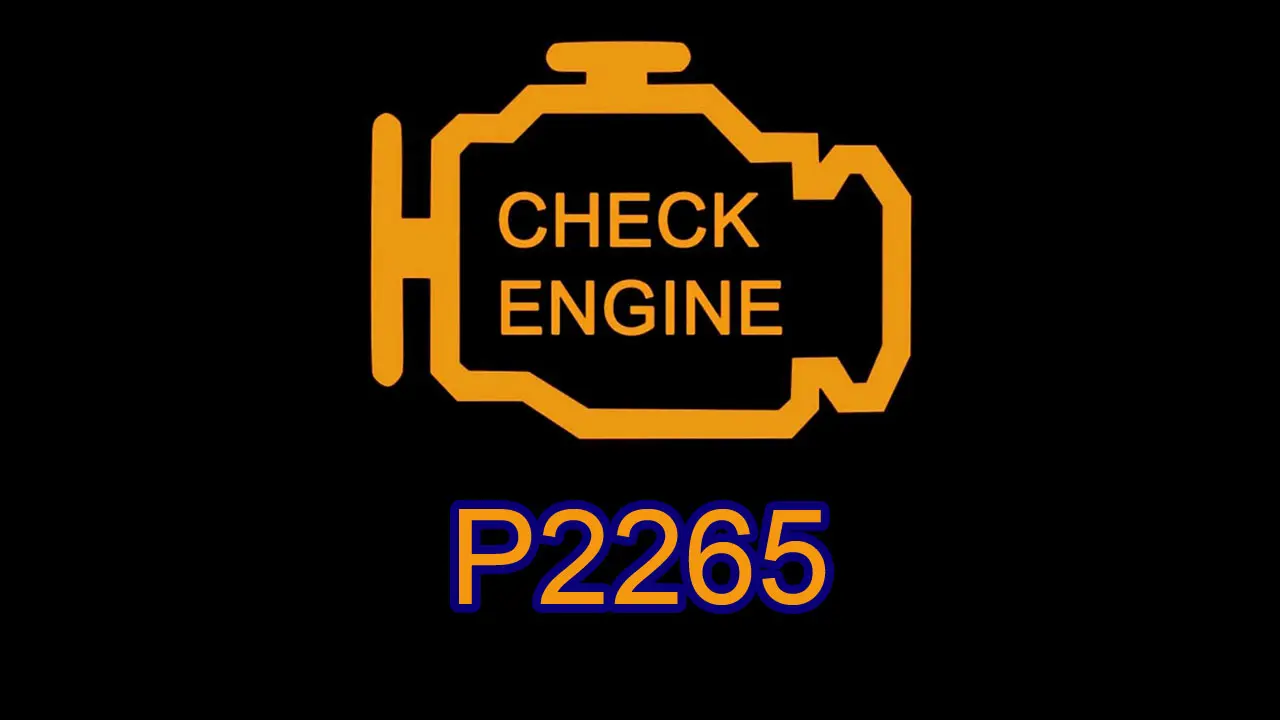
P2265 Water in Fuel Sensor Circuit Range/Performance
P2265 is an OBD-II diagnostic trouble code that indicates the engine control module (ECM) has detected that the Water in Fuel (WIF) Sensor circuit is operating outside its expected range or performance characteristics.
At first glance, P2265 may appear to mean that water has definitely entered the fuel system.
That is not necessarily the case.
The code specifically concerns the signal and operating behavior of the Water in Fuel Sensor circuit. The sensor may be detecting genuine water contamination, but an electrical problem can produce a similar result.
This distinction is particularly important on diesel vehicles, where the Water in Fuel sensor is commonly associated with the fuel filter or water-separator assembly.
What Does P2265 Mean?
The simplest way to understand P2265 is:
The ECM is receiving a Water in Fuel sensor signal, but that signal is outside the expected operating range or does not behave as expected.
This is different from a straightforward circuit malfunction.
With a circuit malfunction code, the ECM may detect an electrical problem such as an open or short circuit.
With a range/performance code, the circuit can be electrically connected while the information being received is still considered implausible.
For example, the sensor may report a water-detection condition when the fuel system is actually dry.
Alternatively, the sensor signal may fail to respond correctly when water reaches the sensor.
What Is a Water in Fuel Sensor?
A Water in Fuel sensor, commonly abbreviated as WIF sensor, is designed to detect water accumulating in the fuel system.
On many diesel vehicles, the sensor is installed in or near the bottom of the fuel filter or water separator.
This location makes sense because water is heavier than diesel fuel and tends to settle at the bottom.
The sensor monitors the fuel/filter area and provides information to the vehicle's control system.
Depending on the vehicle, the system may:
-
Illuminate a warning light
-
Display a water-in-fuel warning
-
Store a diagnostic trouble code
-
Request fuel-filter service
-
Modify engine operation in certain circumstances
The exact operating principle varies by manufacturer.
P2265 Does Not Automatically Mean “There Is Water”
This is the most important point when diagnosing the code.
P2265 can be caused by actual water contamination.
But it can also result from:
-
A faulty WIF sensor
-
Contaminated sensor terminals
-
Corroded connector
-
Damaged wiring
-
Poor electrical connection
-
Incorrect sensor signal
-
Incorrect filter installation
-
Faulty filter housing
-
Electrical reference or ground problem
-
ECM-related problem
Therefore, replacing the fuel filter or draining fuel without checking the electrical circuit may not solve the problem.
At the same time, ignoring the possibility of real water contamination would also be a mistake.
Both possibilities need to be considered.
Why Is Water in Diesel Fuel a Problem?
Water and diesel fuel have very different properties.
Diesel fuel provides lubrication to many components in the fuel system, while water does not provide the lubrication characteristics required by precision fuel-system components.
Water contamination can contribute to:
-
Corrosion
-
Fuel pump wear
-
Injector damage
-
Poor lubrication
-
Poor combustion
-
Hard starting
-
Stalling
-
Fuel-system contamination
Modern common-rail diesel systems are particularly sensitive because the high-pressure pump and injectors operate with extremely small clearances.
A relatively small contamination problem can become expensive if it is allowed to circulate through the system.
Where Is the WIF Sensor Located?
There is no universal location.
Common arrangements include a sensor:
-
At the bottom of the fuel filter
-
In a water-separator bowl
-
Integrated into the fuel filter housing
-
As part of the fuel filter assembly
Some vehicles use a replaceable sensor.
Others require replacement of the filter assembly or another component.
Before purchasing a replacement sensor, identify the exact fuel-system configuration for the vehicle.
Common Causes of P2265
Actual water contamination
Water may have accumulated in the fuel filter or separator.
Faulty WIF sensor
The sensor may no longer produce the correct signal.
Sensor contamination
Dirt, fuel deposits, corrosion, or other contamination can interfere with sensor operation.
Connector corrosion
Moisture around the filter housing can cause corrosion at the electrical terminals.
Loose connector
The connector may be attached but have poor terminal contact.
Damaged wiring
The harness may be:
-
Open
-
Chafed
-
Pinched
-
Corroded
-
Melted
-
Internally broken
Incorrect fuel filter
A filter that is not designed for the vehicle may not work correctly with the WIF sensor system.
Incorrect installation
If the sensor or filter assembly was recently serviced, installation should be checked.
Poor ground or electrical supply
Depending on the system, the sensor may depend on an appropriate power supply and ground.
Fuel filter housing problem
A damaged housing can allow water or contamination to collect in an unexpected location.
ECM fault
This is possible but should normally be considered after the sensor and external circuit have been tested.
Symptoms of P2265
The vehicle may display only a warning light, or it may develop noticeable drivability symptoms.
Possible symptoms include:
-
Check Engine Light
-
Water-in-fuel warning
-
Fuel-filter warning
-
Hard starting
-
Extended cranking
-
Rough idle
-
Hesitation
-
Poor acceleration
-
Loss of power
-
Engine stalling
-
Reduced engine performance
-
Limp mode
Some vehicles can continue to drive normally despite storing P2265.
That does not necessarily mean the problem can be ignored.
Start With the Fuel Filter
When P2265 appears on a diesel vehicle, the fuel filter is one of the first areas worth inspecting.
Check for:
-
Water accumulation
-
Fuel contamination
-
Incorrect filter
-
Damaged filter
-
Incorrectly installed sensor
-
Damaged filter housing
-
Contaminated electrical connector
If the vehicle has a drainable water separator, follow the manufacturer's procedure for checking and draining it.
Do not assume that every fuel filter can safely be opened or drained in the same way.
P2265 After a Fuel Filter Replacement
If P2265 appeared shortly after a fuel filter was replaced, the timing itself is a useful clue.
Inspect the work that was recently performed.
Possible problems include:
-
WIF sensor not fully connected
-
Connector damaged during removal
-
Sensor installed incorrectly
-
Damaged O-ring
-
Incorrect filter
-
Wiring pulled during service
-
Contamination around the sensor
-
Filter housing not assembled correctly
A fault that appears immediately after maintenance should always make the recently serviced area a priority.
Check the Sensor Signal
P2265 is a range/performance code, so the sensor's behavior matters.
If the vehicle provides appropriate scan-tool data, observe the Water in Fuel status or related sensor parameter.
Determine whether the signal:
-
Remains permanently active
-
Remains permanently inactive
-
Changes unexpectedly
-
Responds when water is detected
-
Conflicts with the actual condition of the fuel filter
The exact parameter available will vary between vehicles.
Don't Test the Sensor With Random Methods
Water-in-fuel sensors do not all use the same operating principle.
Depending on the design, detection may be based on:
-
Electrical conductivity
-
Resistance
-
Switching
-
Capacitance
-
Dedicated electronic circuitry
Therefore, applying a generic resistance test can produce misleading results.
The correct test procedure should come from the vehicle manufacturer's service information.
Inspect the Connector Carefully
Because WIF sensors are commonly positioned around the fuel filter, the connector can be exposed to harsh conditions.
Look for:
-
Water
-
Fuel
-
Dirt
-
Corrosion
-
Bent pins
-
Loose terminals
-
Damaged locking tabs
-
Broken wires
A connector that looks acceptable externally can still have poor electrical contact internally.
Inspect the Wiring Near the Filter
The harness should be inspected especially carefully around the fuel filter housing.
Look for:
-
Chafing
-
Pulled wires
-
Broken insulation
-
Previous repairs
-
Corrosion
-
Excessive tension
-
Contact with brackets
A partially damaged wire may produce a signal that is technically present but unstable or outside the expected range.
That is exactly the type of situation that can result in a range/performance code.
Check Power and Ground
The exact circuit depends on the vehicle.
If the WIF sensor requires power and ground, verify both according to the wiring diagram.
A proper diagnostic process may include:
-
Supply voltage test
-
Ground test
-
Voltage-drop test
-
Signal test
-
Continuity test
-
Short-to-ground test
-
Short-to-power test
The purpose is not simply to determine whether the wire has continuity.
It is to determine whether the entire circuit behaves correctly under the conditions in which the ECM expects it to operate.
Why a Continuity Test Can Miss the Problem
A wire can show continuity when tested with a multimeter and still fail during actual operation.
For example, a conductor may be partially broken.
With the vehicle stationary:
Continuity = OK
When the harness moves because of vibration:
Signal = unstable
That can produce an intermittent or implausible WIF signal.
This is why dynamic testing can be more informative than a simple static continuity check.
Use a Wiggle Test When Appropriate
If the fault is intermittent, monitor the WIF-related data while carefully moving the connector and harness.
If the sensor status changes without any physical change in the fuel condition, the electrical circuit deserves close attention.
For example:
Fuel is dry → WIF status inactive
Move the harness:
WIF status active
Move it again:
WIF status inactive
That behavior points toward an electrical problem rather than genuine water suddenly appearing and disappearing.
Can Bad Diesel Fuel Trigger P2265?
Yes.
If water is actually present in the fuel, the sensor can legitimately detect it.
This possibility becomes more important if the problem started shortly after refueling.
Consider:
-
Where the fuel was purchased
-
Whether the problem appeared immediately afterward
-
Whether other symptoms appeared
-
Whether water is visible in the fuel filter
A contaminated fuel event can produce both a WIF code and drivability problems.
Can Condensation Cause Water in Fuel?
Water can enter a fuel system through several mechanisms.
Potential sources include:
-
Contaminated fuel
-
Condensation
-
Improper fuel storage
-
Water entering the fuel filler system
-
Contaminated fuel containers
-
Problems with fuel-station storage
The actual source depends on the vehicle and circumstances.
If water is repeatedly found after the filter is serviced, the source of the contamination should be investigated rather than simply replacing the filter repeatedly.
Can P2265 Cause a No-Start Condition?
It can be associated with a no-start situation, but P2265 itself does not necessarily prevent the engine from starting.
If significant water contamination has affected the fuel system, starting problems may occur.
Possible symptoms include:
-
Extended cranking
-
Difficult starting
-
Rough operation after starting
-
Stalling
However, if the WIF sensor itself is faulty while the fuel is clean, the vehicle may start and drive normally.
This distinction is important.
Can a Bad Fuel Pump Cause P2265?
A failing fuel pump is not normally a direct cause of a WIF sensor range/performance code.
The fuel pump can certainly cause starting and fuel-pressure problems, but those are separate diagnostic issues.
There is one important exception:
If the WIF sensor is physically integrated into the fuel-filter or fuel-pump assembly, the assembly may need to be inspected as a unit.
Always identify where the sensor is actually located before diagnosing the pump.
Can a Clogged Fuel Filter Cause P2265?
A clogged filter by itself does not necessarily create a WIF sensor range/performance fault.
A restriction can cause:
-
Low fuel supply
-
Poor acceleration
-
Hard starting
-
Stalling
-
Low fuel pressure
P2265 becomes more directly relevant when the filter also contains:
-
Water
-
Contamination
-
A damaged sensor
-
A sensor installation problem
Therefore, distinguish fuel-flow restriction from WIF sensor performance.
Check Other DTCs
P2265 should not be diagnosed in isolation.
For example:
P2265 + fuel-pressure codes
Investigate both WIF detection and fuel pressure.
P2265 + hard starting
Check fuel contamination, filter condition, fuel pressure, and air entering the fuel system.
P2265 + electrical sensor codes
Look for shared wiring, power, ground, or ECM problems.
P2265 immediately after filter service
Focus first on the filter assembly and WIF sensor installation.
The additional codes can significantly narrow the diagnostic path.
A Realistic Diagnostic Example
A diesel vehicle arrives with P2265.
The engine starts normally.
The technician checks the fuel filter and finds no visible water.
The WIF sensor connector is inspected and found to be corroded.
After cleaning and repairing the connector, the WIF signal returns to normal and P2265 does not return.
In this situation, the fuel itself was not the primary problem.
The sensor circuit was unable to provide a reliable signal.
Another Example: Genuine Water Contamination
A vehicle develops P2265 shortly after being refueled.
The engine begins hesitating and loses power.
Inspection of the fuel filter reveals a visible layer of water.
Now the code has a physical explanation.
The fuel system should be serviced according to the manufacturer's contamination procedure, and the extent of contamination should be evaluated before returning the vehicle to normal operation.
Simply replacing the WIF sensor would not solve the problem.
Another Example: Sensor Performance Problem
A vehicle has clean fuel and an intact connector.
The sensor receives the correct electrical supply.
The wiring tests correctly.
However, the sensor output does not change according to specification when its detection conditions are simulated using the manufacturer's approved test procedure.
The sensor itself is faulty.
In this case, replacing the WIF sensor is appropriate.
A Practical P2265 Diagnostic Path
Instead of replacing components at random, work through the system in this order:
1. Scan for all DTCs
Record P2265 and any related codes.
2. Check the vehicle's warnings
Look for a Water in Fuel or fuel-filter message.
3. Inspect the fuel filter
Check for water and contamination.
4. Determine whether actual water is present
Use the manufacturer's approved inspection procedure.
5. Check for recent refueling
A sudden appearance after refueling can be significant.
6. Check recent maintenance
If the filter was recently replaced, inspect the installation.
7. Inspect the WIF sensor
Look for damage or contamination.
8. Inspect the connector
Check terminals, corrosion, moisture, and fit.
9. Inspect the wiring
Pay particular attention to the harness around the filter.
10. Test the sensor circuit
Verify power, ground, signal, and circuit integrity as specified.
11. Evaluate sensor performance
Determine whether the sensor responds correctly under the manufacturer's test conditions.
12. Check fuel pressure if symptoms are present
Especially important on modern diesel systems.
13. Clear the code and verify the repair
Confirm that the fault does not return after the vehicle is operated under the relevant conditions.
Is P2265 Serious?
P2265 can be anything from a relatively simple electrical fault to an indication of potentially serious fuel contamination.
If the problem is a corroded connector or faulty sensor, the mechanical risk may be relatively low.
If actual water is present in the fuel, continued driving can potentially expose the high-pressure fuel system to contamination.
Pay particular attention if P2265 is accompanied by:
-
Hard starting
-
Stalling
-
Loss of power
-
Fuel-pressure problems
-
Rough running
-
Water-in-fuel warning
-
Recent questionable refueling
Should You Keep Driving With P2265?
If the vehicle has a confirmed water-in-fuel warning or visible water contamination, continued driving should be avoided until the fuel system has been properly assessed.
If testing shows that the fuel is clean and the problem is an electrical WIF sensor circuit fault, the situation is different.
Nevertheless, the fault should still be repaired because the vehicle may no longer be able to reliably warn the driver about future water contamination.
Final Diagnosis
P2265 – Water in Fuel Sensor Circuit Range/Performance means that the ECM has determined that the Water in Fuel sensor signal is outside its expected operating range or is not behaving correctly.
The code does not automatically prove that water is present.
A correct diagnosis should establish two things separately:
Is there actually water or contamination in the fuel?
and
Is the WIF sensor circuit operating correctly?
Start by inspecting the fuel filter and checking for genuine water contamination. Then examine the WIF sensor, connector, wiring, power, ground, and signal according to the vehicle manufacturer's specifications.
The key difference between P2264 and P2265 is that P2264 generally points to a WIF sensor circuit malfunction, while P2265 focuses more specifically on the range or performance of the sensor signal.
For that reason, P2265 is best approached as a signal plausibility problem rather than simply a “water detected” message.
The most important diagnostic principle is:
Do not replace the WIF sensor until you have established whether the problem is real water contamination, an incorrect sensor signal, or an electrical problem in the sensor circuit.