TR
TR EN
EN

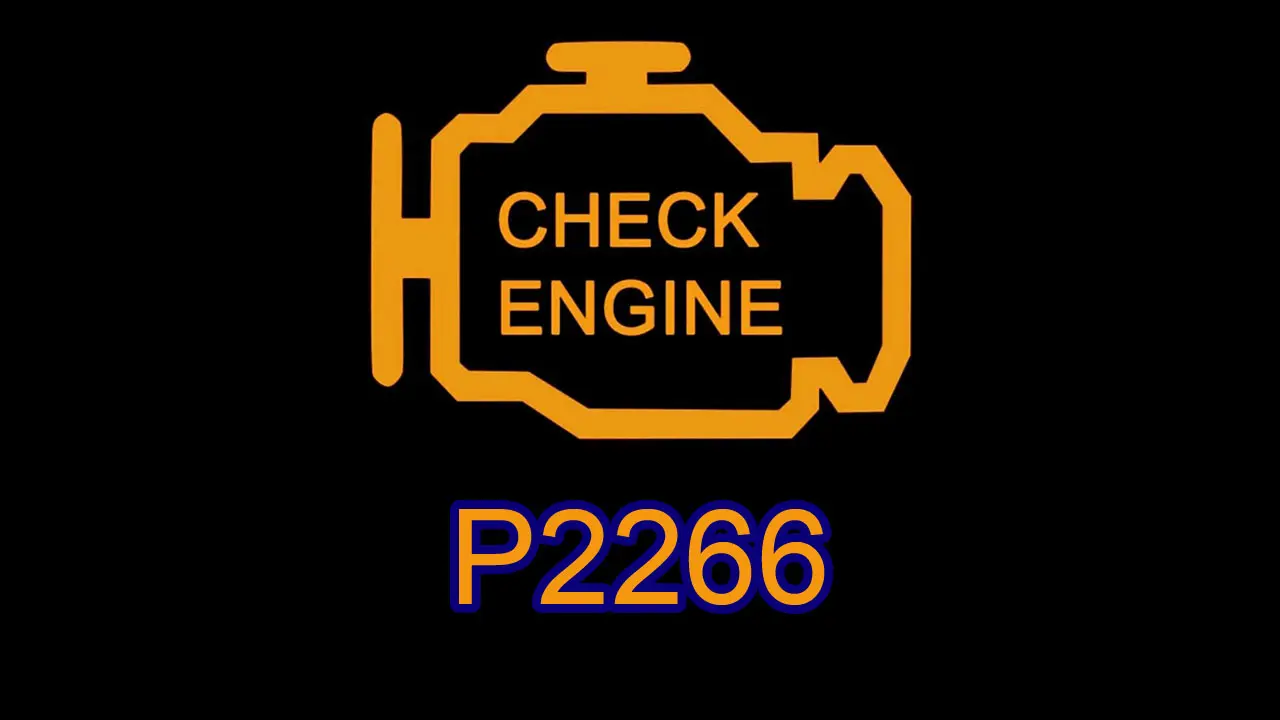
P2266 Water in Fuel Sensor Circuit Low
The P2266 trouble code indicates that the engine control module (ECM/PCM) has detected a low electrical signal in the water-in-fuel sensor circuit.
This sensor is primarily used on diesel vehicles to detect the presence of water in the fuel system. Because water can cause corrosion, poor combustion, injector damage, and fuel-system problems, the engine control system monitors the fuel for water contamination.
P2266 does not necessarily mean that there is definitely water in the fuel.
The code specifically points to a low signal condition in the electrical circuit of the water-in-fuel sensor. Actual water contamination is one possibility, but a sensor, wiring, connector, power supply, or ground problem can produce the same code.
What Is a Water-in-Fuel Sensor?
Diesel fuel can become contaminated with water for several reasons.
Water may enter the fuel system through:
-
Contaminated fuel
-
Condensation inside the fuel tank
-
Poor fuel storage
-
Water entering through a fuel filler
-
Incorrectly stored fuel
-
Problems with fuel-system components
Many diesel vehicles use a fuel filter/water separator assembly designed to separate water from diesel fuel.
A water-in-fuel sensor is commonly installed in or around this assembly.
Its job is to inform the ECM or another control module when water reaches a level that requires attention.
The exact sensor design varies by vehicle.
What Does “Circuit Low” Mean?
The word Low in P2266 refers primarily to the electrical signal, not necessarily the physical amount of water.
The ECM expects the water-in-fuel sensor circuit to operate within a particular voltage or electrical range.
If the monitored signal falls below the expected threshold, the ECM can store P2266.
Possible reasons include:
-
Sensor signal shorted to ground
-
Faulty sensor
-
Poor sensor ground
-
Damaged wiring
-
Corroded connector
-
Incorrect power supply
-
Water or fuel contamination inside the connector
-
Internal electrical failure
Therefore:
P2266 ≠ automatic proof of water contamination.
It means the ECM has detected an abnormally low signal from the water-in-fuel sensor circuit.
Why Water in Diesel Fuel Is a Serious Problem
Water does not provide the lubrication and combustion characteristics that diesel fuel requires.
If significant quantities of water reach sensitive fuel-system components, it can contribute to:
-
Fuel injector damage
-
High-pressure pump wear
-
Corrosion
-
Poor combustion
-
Engine hesitation
-
Difficult starting
-
Fuel-system contamination
-
Reduced engine performance
Modern diesel common-rail systems can be particularly sensitive because of their high operating pressures and closely engineered components.
This is why a genuine water-in-fuel warning should not be ignored.
Common Causes of P2266
Water contamination
Actual water in the fuel filter or water separator can cause the sensor to detect a problem.
This is one of the first things that should be checked.
Faulty water-in-fuel sensor
The sensor may internally fail and produce a signal lower than expected.
Short to ground
A damaged signal wire can contact ground.
This can pull the sensor signal down and cause the ECM to interpret the circuit as low.
Damaged wiring
The harness may be:
-
Broken
-
Chafed
-
Melted
-
Pinched
-
Corroded
-
Exposed to moisture
The wiring around the fuel filter area can be especially vulnerable because it is exposed to fuel, water, dirt and road debris.
Corroded connector
The water-in-fuel sensor connector can develop corrosion if moisture enters the connection.
Poor sensor ground
A damaged ground circuit can alter the sensor signal and cause an abnormal reading.
Incorrect sensor voltage
If the sensor receives an incorrect reference or supply voltage, its output may fall outside the expected range.
Fuel filter/water separator problem
A damaged or incorrectly assembled filter housing can allow water contamination or create an abnormal sensor condition.
Aftermarket or incorrect sensor
Installing the wrong sensor or an incompatible component can produce an incorrect electrical signal.
Symptoms of P2266
The symptoms depend on whether the problem is electrical, actual water contamination, or both.
Possible symptoms include:
-
Check Engine Light
-
Water-in-fuel warning
-
Reduced engine power
-
Hesitation
-
Rough running
-
Difficult starting
-
Long cranking
-
Engine stalling
-
Poor acceleration
-
Increased fuel consumption
-
Reduced fuel-system performance
-
Limp mode
Some vehicles may display a dedicated Water in Fuel warning rather than relying only on the Check Engine Light.
P2266 Does Not Always Cause Noticeable Symptoms
An electrical circuit fault may be detected before engine performance changes.
For example, the sensor signal could become abnormally low while the fuel itself remains clean.
The vehicle may continue to drive normally while P2266 remains stored.
This is one reason diagnostic codes should not be interpreted solely from how the vehicle feels.
The First Check: Inspect the Fuel Filter
Because the sensor is frequently associated with the fuel filter or water separator, the filter assembly is a logical starting point.
Depending on the vehicle, the technician may inspect or drain the water separator according to the manufacturer's procedure.
The drained material can sometimes reveal a separation between diesel fuel and water because water is denser than diesel and settles at the bottom.
However, the exact procedure differs between vehicles.
The manufacturer's instructions should be followed rather than opening or draining the fuel system indiscriminately.
Water Contamination vs Electrical Fault
This is where the diagnosis becomes important.
Suppose the filter contains significant water and the sensor is functioning correctly.
The problem is a fuel contamination issue.
Now imagine the fuel is clean but the sensor signal wire is shorted to ground.
The ECM can still see a low signal and set P2266.
The code is the same, but the repair is completely different.
One requires addressing the contaminated fuel system.
The other requires electrical repair.
How to Diagnose P2266
A good diagnostic process should separate these two possibilities.
Check for Additional Codes
Scan for all stored and pending DTCs.
Look for codes relating to:
-
Fuel pressure
-
Fuel temperature
-
Water-in-fuel detection
-
Injector operation
-
Fuel pump operation
-
Sensor reference voltage
-
Sensor ground
-
Low system voltage
If several sensor circuits show low voltage simultaneously, a shared electrical supply or ground problem becomes more likely.
Inspect the Water-in-Fuel Sensor
Locate the sensor according to the vehicle's service information.
It may be mounted:
-
In the fuel filter housing
-
In the water separator
-
At the bottom of a fuel filter assembly
-
On a fuel-line assembly
Check for:
-
Cracks
-
Fuel leakage
-
Moisture
-
Corrosion
-
Damaged terminals
-
Loose connections
-
Broken connector locks
Inspect the Connector Carefully
The connector deserves particular attention because it is located in an area where fuel and moisture may be present.
Look for:
-
Green or white corrosion
-
Bent pins
-
Loose terminals
-
Water intrusion
-
Damaged seals
-
Oil or fuel contamination
-
Terminals pushed backward
A connector can appear normal externally while having poor electrical contact internally.
Test the Sensor Circuit
The exact circuit depends on the sensor design.
The technician may need to verify:
-
Reference voltage
-
Supply voltage
-
Ground
-
Signal voltage
-
Continuity
-
Resistance
-
Short to ground
-
Short to voltage
The manufacturer's wiring diagram and specifications should be used.
There is no universal voltage or resistance value that applies to every water-in-fuel sensor.
Look for a Signal Short to Ground
Because P2266 describes a low signal, a short to ground is an important possibility.
If the signal wire is accidentally connected to ground, the ECM can see a voltage substantially lower than expected.
This can happen because insulation has worn away and the wire is touching the vehicle chassis, engine, or another grounded component.
Check the Harness Around the Fuel Filter
The wiring may be routed near:
-
The engine
-
Fuel lines
-
Filter brackets
-
Chassis components
-
Heat sources
-
Moving components
Vibration can cause the harness to rub against a bracket or another metal component.
Over time, the insulation can wear through and create an intermittent short.
What If the Sensor Is Actually Detecting Water?
If inspection confirms water contamination, the problem should be treated as a fuel-system issue rather than simply an electrical-code problem.
Depending on the amount of contamination and vehicle design, the appropriate repair may involve:
-
Draining the water separator
-
Replacing the fuel filter
-
Removing contaminated fuel
-
Cleaning the fuel system
-
Refilling with clean fuel
-
Inspecting the fuel system for further contamination
If a significant amount of water has entered a modern high-pressure diesel fuel system, professional inspection may be necessary.
Simply clearing P2266 without removing the contamination does not solve the underlying problem.
Why Fuel Filter Replacement May Be Necessary
A fuel filter that has collected water may no longer be suitable for continued use.
A filter can contain contaminated fuel even after some water has been drained.
Replacing the filter according to the manufacturer's maintenance procedure can be an important part of correcting the problem.
Again, the exact procedure depends on the vehicle.
P2266 and Fuel Injector Damage
If water reaches the injectors, it can interfere with normal fuel delivery and lubrication.
Possible symptoms may then include:
-
Rough running
-
Misfire
-
Poor acceleration
-
Injector noise
-
Hard starting
However, P2266 itself does not prove that the injectors are damaged.
Injector testing should be based on actual symptoms and diagnostic evidence.
P2266 and Common-Rail Diesel Systems
Modern common-rail diesel systems operate with very high fuel pressures.
The fuel pump and injectors depend on clean fuel with appropriate lubrication characteristics.
Water contamination can therefore be particularly harmful.
If P2266 occurs together with fuel-pressure problems, poor starting, or severe engine performance issues, the entire fuel system may need to be investigated rather than treating the sensor circuit in isolation.
Can a Bad Sensor Cause P2266 Without Water?
Yes.
This is one of the most important points about this code.
A failed water-in-fuel sensor can produce an abnormal low signal even when the fuel is perfectly clean.
Similarly, a shorted signal wire can cause the same electrical condition.
Therefore, replacing the fuel filter or draining fuel should not automatically be considered the complete repair.
The electrical circuit should be verified if the fuel itself is clean.
Can You Drive With P2266?
If P2266 is caused by an electrical sensor problem and the engine is operating normally, the vehicle may continue to run.
However, if there is a genuine water contamination problem, continuing to drive can allow contaminated fuel to reach expensive fuel-system components.
Driving should be avoided if you notice:
-
Severe hesitation
-
Engine stalling
-
Difficult starting
-
Significant power loss
-
Rough running
-
A strong fuel-system warning
A genuine water-in-fuel condition is more urgent than an isolated electrical sensor fault.
Possible Repairs
The appropriate repair depends on the diagnosis.
Possible solutions include:
-
Draining accumulated water
-
Replacing the fuel filter
-
Removing contaminated fuel
-
Cleaning contaminated fuel-system components
-
Replacing the water-in-fuel sensor
-
Repairing sensor wiring
-
Repairing connector terminals
-
Correcting a short to ground
-
Restoring sensor power or ground
-
Repairing a damaged fuel-filter housing
-
Repairing the ECM circuit if the control module is conclusively found to be faulty
The sensor should not be replaced simply because P2266 has been stored.
A Useful Diagnostic Example
Imagine a diesel vehicle arrives with P2266.
The technician checks the fuel filter and finds clean fuel.
The sensor connector is then inspected and found to have a damaged signal wire that is touching ground.
In this case:
Fuel = clean
Sensor = potentially good
Signal circuit = shorted to ground
The correct repair is the wiring, not the fuel.
Now consider a second vehicle:
Fuel = water contaminated
Sensor circuit = normal
Here the electrical system may be functioning correctly and the fuel contamination is the actual problem.
The same diagnostic code can therefore point toward two very different repair paths.
P2266 vs Water-in-Fuel Warning
A dashboard water-in-fuel warning and P2266 are related, but they should not always be interpreted as identical.
The dashboard warning may indicate that the system believes water has been detected.
P2266 specifically describes a low condition in the water-in-fuel sensor circuit.
The technician therefore needs to establish whether the sensor is reporting a genuine condition or whether the electrical circuit itself is producing the abnormal signal.
Final Thoughts on P2266
P2266 Water in Fuel Sensor Circuit Low is a code that deserves attention because it sits at the intersection of fuel quality and electrical diagnosis.
The first instinct may be to assume that there is water in the diesel fuel. Sometimes that is exactly what has happened.
But the word “Circuit Low” is equally important.
A defective sensor, damaged wiring, corroded connector, poor ground, or signal wire shorted to ground can produce P2266 even when the fuel contains no significant amount of water.
The best diagnostic approach is therefore:
Check the fuel and water separator → inspect the sensor → inspect the connector → test power, ground and signal → check for shorts → verify sensor operation.
Only after the actual cause has been established should parts be replaced.
For a diesel vehicle, ignoring a genuine water-contamination problem can become expensive very quickly, so P2266 should not simply be cleared and forgotten.