TR
TR EN
EN

What Is a Radiator Expansion Tank? Why Does the Coolant Reservoir Overflow?
The engine cooling system is much more than a radiator filled with coolant. The radiator, thermostat, water pump, cooling fan, hoses, temperature sensors, pressure cap, and expansion tank all work together to keep the engine within its correct operating temperature range.
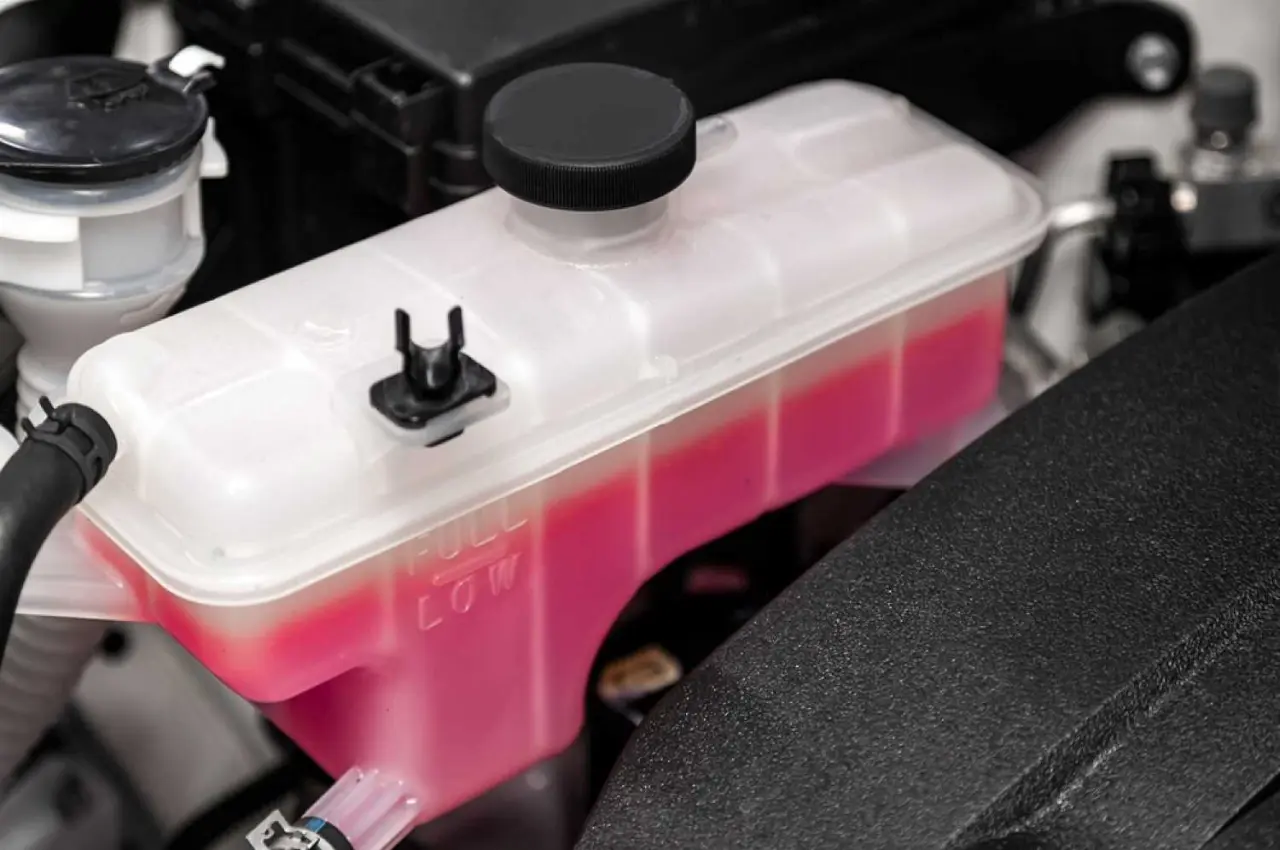
One of the less understood but very important components in this system is the radiator expansion tank, also commonly called the coolant expansion tank, coolant reservoir, or coolant overflow tank, depending on the vehicle design.
As the engine heats up, the coolant expands. Because many modern cooling systems operate as sealed, pressurized systems, this expansion needs to be controlled.
The expansion tank provides the necessary space for the coolant to expand and helps manage changes in coolant volume and system pressure.
However, coolant should not normally spill out of the expansion tank.
If coolant is repeatedly pushed out of the reservoir, bubbles continuously appear in the tank, or the coolant boils and overflows, the cooling system should be inspected.
Importantly, an overflowing coolant reservoir does not automatically mean that the head gasket has failed. Several other problems can produce similar symptoms.
What Does a Radiator Expansion Tank Do?
The primary purpose of the expansion tank is to accommodate the increase in coolant volume that occurs as the engine warms up.
When the engine is cold, the coolant occupies a certain volume. As its temperature increases, the coolant expands.
The cooling system needs somewhere to accommodate this additional volume.
That is where the expansion tank becomes important.
Depending on the cooling system design, coolant may move into the expansion tank as the engine warms up and return to the main cooling circuit as the engine cools down.
The expansion tank can therefore perform several functions:
-
Accommodating coolant expansion
-
Helping control coolant volume
-
Supporting cooling-system pressure management
-
Providing a visible coolant level
-
Allowing air and vapor to be separated from the coolant in some systems
-
Providing a controlled reservoir for coolant movement
The exact function depends on the vehicle's cooling-system design.
Is the Expansion Tank the Same as the Radiator?
No.
The radiator and expansion tank perform different jobs.
The radiator is the main heat exchanger. It removes heat from the coolant before the coolant returns to the engine.
The expansion tank provides additional volume for coolant expansion and, depending on the design, participates in the pressurization and recovery process.
In some older cooling systems, the radiator itself contains the pressure cap and the expansion tank primarily acts as an overflow or recovery reservoir.
In many modern vehicles, however, the expansion tank is an integral part of the pressurized cooling system.
This distinction is important because the terms "coolant reservoir," "overflow tank," and "expansion tank" are sometimes used interchangeably even though the actual function can differ between vehicles.
Why Does the Coolant Level Rise When the Engine Gets Hot?
A rise in coolant level as the engine reaches operating temperature can be completely normal.
Coolant expands as its temperature increases.
For example, the coolant level may be near the MIN mark when the engine is completely cold and become noticeably higher when the engine is hot.
The important distinction is between normal expansion and coolant being forced out of the system.
The coolant level rising is not necessarily a problem.
Coolant overflowing from the reservoir is a different matter.
If coolant is being expelled from the tank, the system should be inspected to determine why excessive pressure or temperature is being generated.
Why Does the Coolant Reservoir Overflow?
There is no single cause of an overflowing coolant reservoir.
The problem can range from something relatively simple, such as overfilling the system, to a serious engine problem such as combustion gases entering the cooling system.
Common causes include:
-
Overfilling the coolant reservoir
-
A faulty expansion-tank or radiator cap
-
Engine overheating
-
A thermostat that is stuck closed
-
A cooling fan that does not operate correctly
-
A failing water pump
-
Air trapped in the cooling system
-
A restricted or clogged radiator
-
Poor coolant circulation
-
A damaged hose or cooling-system component
-
A head gasket failure
-
A cracked cylinder head
-
A cracked engine block
-
Incorrect coolant or an unsuitable coolant mixture
The surrounding symptoms are extremely important when determining the actual cause.
Can Overfilling the Expansion Tank Cause Coolant to Overflow?
Yes.
This is one of the simplest explanations.
Coolant expands as it gets hot. If the reservoir is already filled above the manufacturer's maximum level while the engine is cold, there may not be enough room for the coolant to expand.
The excess coolant may then be forced out of the reservoir.
For this reason, the coolant level should normally be checked when the engine is cold and the vehicle is parked on level ground.
The level should be kept within the manufacturer's specified range.
Filling the reservoir above the MAX mark does not provide additional cooling capacity.
Why Is the Expansion Tank Cap Important?
The cap on the expansion tank may look like a simple plastic cap, but in many cooling systems it is actually a pressure-control component.
The cap is designed to maintain a specified cooling-system pressure.
When pressure exceeds the cap's calibrated limit, its valve mechanism allows pressure to be controlled.
A defective cap can therefore cause coolant problems in two different ways.
If the cap opens too easily, coolant may escape before the system reaches its intended operating pressure.
If the cap fails to release pressure when necessary, excessive pressure can develop inside the cooling system.
A damaged seal, incorrect cap, weakened spring, or incorrect pressure rating can therefore contribute to coolant overflow.
This is one reason the cap should be tested before assuming that an expensive engine repair is required.
Can a Stuck Thermostat Cause the Coolant Reservoir to Overflow?
Yes.
The thermostat controls coolant circulation between the engine and radiator.
When the engine is cold, the thermostat generally restricts circulation through the radiator so the engine can warm up efficiently.
As the engine reaches operating temperature, the thermostat opens and allows coolant to flow through the radiator.
If the thermostat becomes stuck closed, hot coolant may not reach the radiator properly.
Engine temperature can then rise rapidly.
As the coolant becomes excessively hot, it expands and system pressure increases.
Eventually, coolant may be pushed out through the expansion tank or pressure-relief system.
Possible accompanying symptoms include:
-
Rising engine temperature
-
Overheating
-
Cooling fan operating frequently
-
Very hot or unusually pressurized hoses
-
Poor heater performance
-
Coolant overflow
-
Temperature fluctuations
Can a Cooling Fan Problem Cause Coolant to Overflow?
Absolutely.
The cooling fan becomes particularly important when the vehicle is stationary or moving slowly.
At highway speeds, air naturally flows through the radiator.
During traffic, idling, or slow driving, the cooling fan must provide sufficient airflow when required.
If the fan does not operate, radiator cooling capacity can drop significantly.
Possible causes include:
-
Failed fan motor
-
Blown fuse
-
Faulty relay
-
Damaged wiring
-
Poor electrical connection
-
Fan-control module failure
-
Temperature-sensor problems
-
Engine-control system faults
A vehicle with a cooling fan problem may appear relatively normal at higher speeds but overheat in traffic or while idling.
Can a Bad Water Pump Cause Coolant Overflow?
Yes.
The water pump circulates coolant through the engine and cooling system.
If the pump cannot provide adequate coolant flow, heat may not be transferred away from the engine efficiently.
A water pump can fail in several ways.
Mechanical pumps can suffer from:
-
Bearing failure
-
Damaged impeller blades
-
Shaft problems
-
Belt-related problems
-
Impeller slippage
Some pumps use plastic impellers that can crack, deteriorate, or slip on the shaft.
In such cases, the pump may appear to be turning while still providing inadequate coolant circulation.
Electric water pumps can have different failure modes involving the motor, wiring, control system, power supply, or electronic communication.
Can Air Trapped in the Cooling System Cause Overflow?
Yes.
Air trapped inside the cooling system can interfere with coolant circulation and create abnormal pressure or temperature behavior.
Air can enter the system after cooling-system repairs such as:
-
Coolant replacement
-
Radiator replacement
-
Thermostat replacement
-
Water pump replacement
-
Hose replacement
-
Engine cooling-system repairs
If the system is not properly bled afterward, air pockets can remain.
This can result in:
-
Fluctuating coolant temperature
-
Poor heater performance
-
Temperature spikes
-
Gurgling sounds
-
Unusual coolant movement
-
Bubbles in the expansion tank
-
Coolant overflow
The correct bleeding procedure varies by vehicle, so the manufacturer's procedure should be followed.
What Does Continuous Bubbling in the Expansion Tank Mean?
Some coolant movement can be normal depending on the cooling-system design.
However, continuous and strong bubbling, particularly after the engine has warmed up, deserves attention.
One possible cause is air trapped in the cooling system.
Another possibility is combustion gases entering the cooling system.
If a combustion chamber is leaking into a coolant passage, high-pressure combustion gases can enter the cooling system during engine operation.
This can produce continuous bubbles and rapidly increase system pressure.
However, bubbles alone do not prove that the head gasket has failed.
A proper diagnostic test is needed.
Can a Blown Head Gasket Cause the Coolant Reservoir to Overflow?
Yes.
A head gasket can fail in several different ways.
One particularly important failure occurs when combustion gases can pass from a cylinder into a coolant passage.
Cylinder pressure is far higher than normal cooling-system pressure.
If combustion gases continuously enter the cooling system, pressure can rise rapidly.
The result may be:
-
Continuous bubbling in the expansion tank
-
Coolant being forced out
-
Coolant loss
-
Overheating
-
Very hard cooling-system hoses
-
White exhaust smoke
-
Rough engine operation
-
Misfires
-
Difficult starting
Not every vehicle will show all of these symptoms.
The exact symptoms depend on where and how the head gasket has failed.
Does an Overflowing Coolant Reservoir Always Mean a Blown Head Gasket?
No.
This is one of the most important points when diagnosing coolant overflow.
An overflowing reservoir can be caused by a head gasket problem, but it can also be caused by:
-
Excess coolant
-
A faulty pressure cap
-
A stuck thermostat
-
A cooling fan problem
-
A failing water pump
-
A clogged radiator
-
Air trapped in the system
-
Poor coolant circulation
Replacing a head gasket without confirming the cause can result in an unnecessary and expensive repair.
The cooling system should therefore be tested before the engine is disassembled.
What Other Symptoms Suggest a Head Gasket Problem?
The symptoms depend on the type of gasket failure.
If combustion gases are entering the cooling system, the expansion tank may develop continuous bubbles and excessive pressure.
If coolant is entering a cylinder, the engine may experience:
-
Difficult starting
-
Rough running immediately after startup
-
Misfires
-
Persistent white exhaust smoke
-
Coolant loss
If coolant is entering the engine oil, the oil may become contaminated.
The oil can develop a milky, creamy, or abnormal appearance.
However, the absence of milky engine oil does not rule out a head gasket problem.
Likewise, a small amount of moisture or creamy residue under the oil filler cap can sometimes be caused by condensation, especially on vehicles used mainly for short trips.
Can a Clogged Radiator Cause Coolant to Overflow?
Yes.
A radiator can become restricted internally due to corrosion, deposits, contaminated coolant, or inappropriate coolant mixtures.
The external fins can also become blocked by dirt, mud, insects, leaves, or other debris.
When heat transfer is reduced, engine temperature can increase.
If coolant cannot flow through the radiator efficiently, cooling-system pressure and temperature may rise enough to cause coolant overflow.
A radiator with significant internal restriction may also show unusual temperature differences across its surface.
Proper testing is required to distinguish a radiator problem from a thermostat, water-pump, fan, or engine problem.
What Happens If the Expansion Tank Is Cracked?
The expansion tank itself can fail.
Most modern tanks are made from plastic and are exposed to repeated heating and cooling cycles.
Over time, the plastic can become brittle and develop cracks.
A small crack may not produce an obvious leak while the engine is cold.
As the cooling system heats up and pressure increases, the crack may allow coolant to escape.
Look for:
-
Dried coolant residue
-
Wet areas
-
Cracks
-
Discoloration
-
Coolant around the tank seams
-
Leakage around the cap or connections
A tank does not have to produce a large puddle on the ground to be defective.
Is It Safe to Drive When the Coolant Is Overflowing?
Continuing to drive a vehicle that is repeatedly losing coolant through the expansion tank can be dangerous.
As coolant is lost, the engine's ability to control temperature decreases.
Eventually, the engine can overheat.
Severe overheating can result in:
-
Head gasket damage
-
Cylinder-head distortion
-
Cylinder-head cracking
-
Engine-oil degradation
-
Bearing damage
-
Turbocharger damage
-
Severe internal engine damage
-
Engine seizure
Adding coolant repeatedly without identifying the cause is not a proper repair.
If the temperature gauge rises significantly, a coolant warning appears, steam is visible, or coolant is being rapidly lost, the vehicle should be stopped safely and allowed to cool.
Should You Open the Expansion Tank Cap When the Engine Is Hot?
No.
A hot cooling system can be under significant pressure.
Opening the expansion-tank or radiator cap while the engine is hot can release boiling coolant and steam under pressure.
This can cause severe burns.
Never use a hot expansion tank as a quick diagnostic method by removing the cap.
Allow the engine and cooling system to cool safely before opening the system, and follow the manufacturer's safety instructions.
Why Does the Coolant Level Keep Dropping?
If the coolant level repeatedly decreases, the system is losing coolant somewhere.
Possible external leak points include:
-
Radiator
-
Expansion tank
-
Pressure cap
-
Cooling-system hoses
-
Hose connections
-
Thermostat housing
-
Water pump
-
Heater circuit
-
Coolant flanges
-
Engine seals or gaskets
A leak may not always be visible.
Coolant can leak only when the system becomes hot and pressurized, then evaporate before reaching the ground.
If no external leak can be found, an internal coolant leak must also be considered.
How Is an Overflowing Coolant Reservoir Diagnosed?
Good diagnosis starts with the simplest possibilities and moves toward more serious causes.
First, the coolant level should be checked with the engine completely cold.
The system should then be inspected for visible leaks, damaged hoses, tank cracks, and coolant residue.
A cooling-system pressure test can help identify leaks that are difficult to see.
The expansion-tank or radiator cap can also be tested with the appropriate equipment to determine whether it maintains the correct pressure.
If a head gasket or internal engine leak is suspected, additional tests may include:
-
Combustion-gas testing
-
Cooling-system pressure testing
-
Compression testing
-
Cylinder leak-down testing
-
Spark plug inspection
-
Engine oil inspection
-
Cooling-system inspection
A combustion-gas test can be particularly useful when determining whether exhaust gases are entering the cooling system.
What Does Oil in the Expansion Tank Mean?
Oil inside the expansion tank can indicate that engine oil and coolant are mixing.
Possible causes include:
-
Failed oil cooler
-
Oil-cooler seal failure
-
Head gasket failure
-
Cracked cylinder head
-
Cracked engine block
The oil cooler should not be overlooked.
A failed oil cooler can allow oil and coolant to mix and can sometimes imitate the symptoms of a head gasket failure.
At the same time, dirty, rusty, or heavily contaminated coolant can also look oily.
Therefore, the source of the contamination should be confirmed before the engine is disassembled.
Is It Okay to Use Only Water Instead of Coolant?
Using plain water as a permanent replacement for the correct coolant mixture is generally not recommended.
Engine coolant does more than transfer heat.
A properly specified coolant mixture also provides:
-
Freeze protection
-
Increased boiling protection
-
Corrosion protection
-
Protection for cooling-system components
-
Proper chemical compatibility with seals and metals
Using the wrong coolant or mixing incompatible coolant types can contribute to corrosion, deposits, or cooling-system problems.
The coolant specification recommended by the vehicle manufacturer should always be followed.
When Should the Coolant Level Be Checked?
The safest and most consistent time to check the coolant level is when the engine is completely cold.
The vehicle should be parked on a level surface.
The coolant level should be compared with the MIN and MAX markings on the expansion tank.
If the level is repeatedly dropping, the cause should be investigated.
If the coolant repeatedly rises excessively and is expelled from the tank, that also requires diagnosis.
Do not judge the correct coolant level by looking at a hot tank and immediately adding more coolant.
Which Parts Should Be Checked When the Coolant Reservoir Overflows?
An overflowing coolant reservoir should be treated as a cooling-system problem rather than immediately blaming one component.
Important inspection points include:
Coolant level:
Is the system overfilled or losing coolant?
Expansion tank:
Is it cracked, damaged, or leaking?
Pressure cap:
Does it maintain and release pressure at the correct specification?
Thermostat:
Does it open at the correct temperature?
Cooling fan:
Does it operate when required?
Water pump:
Is coolant circulating properly?
Radiator:
Is it blocked internally or externally?
Hoses:
Are they damaged, restricted, collapsed, or abnormally pressurized?
Cooling system:
Is air trapped inside?
Engine:
Are combustion gases entering the cooling system?
Normal Coolant Expansion vs. Coolant Overflow
This distinction is essential.
It is normal for the coolant level to change as the engine temperature changes.
The coolant expands when hot and contracts as it cools.
However, it is not normal for coolant to repeatedly escape from the expansion tank.
Warning signs include:
-
Coolant being pushed out of the reservoir
-
Continuous bubbling
-
Boiling coolant
-
Repeated coolant loss
-
Excessively pressurized hoses
-
Engine overheating
-
Persistent white exhaust smoke
-
Oil contamination
-
Repeated temperature fluctuations
When several of these symptoms occur together, the cooling system should be inspected without delay.
Final Thoughts
A radiator expansion tank is an important part of the engine cooling system. It provides space for coolant expansion and, depending on the vehicle design, plays a role in pressure management and coolant recovery.
An increase in coolant level as the engine warms up can be completely normal.
However, coolant repeatedly overflowing from the expansion tank is not normal.
The cause may be relatively simple, such as overfilling, a defective pressure cap, trapped air, a thermostat problem, a cooling-fan failure, or poor coolant circulation.
More serious causes include a failed water pump, a restricted radiator, a head gasket failure, a cracked cylinder head, or a cracked engine block.
Most importantly, an overflowing expansion tank should not automatically be diagnosed as a blown head gasket.
The correct approach is to inspect the coolant level and external leaks first, then check the pressure cap, thermostat, fan, water pump, radiator, and cooling-system bleeding. If the symptoms indicate an internal engine problem, pressure testing and combustion-gas testing can help confirm the diagnosis.
In short: A coolant level that rises as the engine gets hot can be normal, but coolant being forced out of the expansion tank is not. The cause should be identified before continuing to drive the vehicle, especially if overheating or significant coolant loss is present.