TR
TR EN
EN

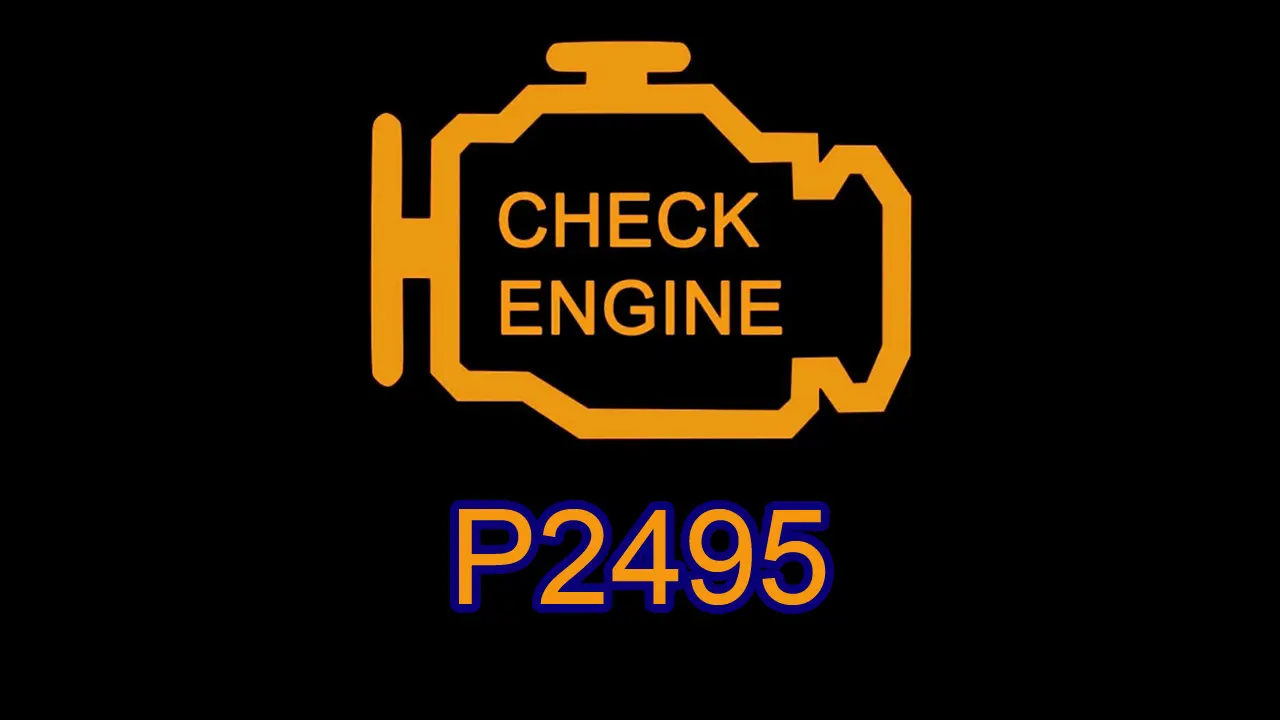
P2495 EGR Cooler Bypass Position Sensor Circuit High Voltage (Bank 1)
P2495 is a generic OBD-II diagnostic trouble code that indicates the Engine Control Module (ECM) has detected an abnormally high voltage signal from the EGR (Exhaust Gas Recirculation) Cooler Bypass Position Sensor on Bank 1. This means the electrical signal from the position sensor is higher than the manufacturer-specified operating range, preventing the ECM from accurately determining the actual position of the EGR cooler bypass valve.
The EGR cooler bypass system regulates whether recirculated exhaust gases flow through the EGR cooler or bypass it before entering the intake manifold. This system helps optimize combustion temperatures, reduce nitrogen oxide (NOx) emissions, improve fuel efficiency, and shorten engine warm-up time. When the sensor signal becomes excessively high, the ECM stores code P2495, turns on the Check Engine Light, and may limit EGR system operation to protect the engine and emission control components.
What Does P2495 Mean?
Many modern diesel engines and some gasoline engines equipped with cooled EGR systems use an electronically controlled bypass valve.
The bypass valve operates under different engine conditions:
-
During cold starts, the valve may bypass the EGR cooler to help the engine warm up faster.
-
During normal operating temperatures, exhaust gases are routed through the EGR cooler to lower combustion temperatures and reduce NOx emissions.
A position sensor attached to the bypass valve continuously sends a voltage signal to the ECM that corresponds to the valve's position.
If the ECM detects that this signal remains above the expected range or indicates an implausible valve position, it stores diagnostic code P2495.
Bank 1 refers to the side of the engine that contains Cylinder 1.
Common Symptoms of P2495
The symptoms depend on how the EGR system reacts to the incorrect sensor signal.
Common symptoms include:
-
Check Engine Light illuminated
-
Malfunction Indicator Lamp (MIL) on
-
Reduced engine performance
-
Hesitation during acceleration
-
Rough idle
-
Reduced fuel economy
-
Increased NOx emissions
-
Longer engine warm-up time
-
Failed emissions inspection
-
Limp mode on certain vehicles
-
Additional EGR-related diagnostic trouble codes
Some vehicles may continue to operate normally while only displaying the Check Engine Light.
Common Causes of P2495
A high-voltage signal is typically caused by an electrical problem, although mechanical faults may also contribute.
Faulty EGR cooler bypass position sensor
An internally damaged sensor may continuously output an excessively high voltage.
Short to voltage
A signal wire contacting a voltage source can raise the sensor signal above the normal operating range.
Damaged wiring
The wiring harness may develop:
-
Melted insulation
-
Heat damage
-
Broken wires
-
Chafing
-
Vibration-related wear
Loose or corroded electrical connector
Damaged terminals may create unstable or excessively high voltage readings.
Sticking bypass valve
A valve restricted by carbon deposits may not move correctly, causing the sensor to report an implausible position.
Carbon buildup
Heavy soot accumulation inside the bypass assembly can interfere with valve movement and sensor accuracy.
Faulty vacuum actuator
On vacuum-operated systems, a malfunctioning actuator may prevent the valve from reaching the commanded position.
Faulty EGR control solenoid
A defective control solenoid may affect bypass valve operation and trigger abnormal sensor readings.
ECM malfunction
Although uncommon, an internal ECM fault may incorrectly interpret or process the sensor signal.
Vehicles Commonly Affected by P2495
P2495 is most commonly found on diesel vehicles equipped with electronically controlled cooled EGR systems.
Frequently affected vehicles include:
-
Ford F-Series Power Stroke
-
Ford Transit Diesel
-
Chevrolet Silverado Duramax
-
GMC Sierra Duramax
-
Ram 2500 Cummins
-
Ram 3500 Cummins
-
Mercedes-Benz Sprinter
-
Mercedes-Benz GLE Diesel
-
BMW X5 Diesel
-
BMW 5 Series Diesel
-
Audi Q7 TDI
-
Volkswagen Touareg TDI
-
Volkswagen Amarok
-
Land Rover Discovery
-
Range Rover Sport Diesel
-
Jeep Grand Cherokee EcoDiesel
-
Nissan Navara
-
Toyota Hilux Diesel
-
Isuzu D-Max
-
Mitsubishi L200
Some turbocharged gasoline engines equipped with cooled EGR systems may also experience this diagnostic code.
How Is P2495 Diagnosed?
Proper diagnosis requires evaluating both the electrical circuit and the mechanical operation of the bypass valve.
Check for additional diagnostic trouble codes
Related codes involving:
-
EGR valve
-
EGR cooler
-
Position sensors
-
NOx sensors
-
Intake airflow
-
Boost pressure
can provide valuable clues during diagnosis.
Inspect the wiring and connectors
Technicians should inspect for:
-
Burned or melted insulation
-
Broken wires
-
Heat damage
-
Corrosion
-
Loose electrical connectors
Measure sensor voltage
A digital multimeter is used to verify:
-
Reference voltage
-
Ground integrity
-
Signal voltage
A voltage reading that remains above specification usually confirms the fault.
Review live scan data
Using a professional scan tool, technicians compare:
-
Commanded bypass valve position
-
Actual bypass valve position
-
Position sensor voltage
Large differences between commanded and actual values often indicate the root cause.
Inspect the bypass valve
The valve should move smoothly through its full operating range without sticking or binding.
Inspect for carbon buildup
Heavy carbon deposits inside the EGR cooler bypass assembly may prevent normal valve movement.
Check vacuum operation
On vacuum-controlled systems, technicians inspect:
-
Vacuum hoses
-
Vacuum actuator
-
Vacuum control solenoid
-
Vacuum supply
How to Fix P2495
The appropriate repair depends on the source of the high-voltage condition.
Common repairs include:
-
Replacing the EGR cooler bypass position sensor
-
Repairing wiring shorted to voltage
-
Replacing damaged wiring harnesses
-
Cleaning corroded electrical connectors
-
Repairing loose electrical connections
-
Cleaning carbon deposits from the bypass valve
-
Replacing the EGR cooler bypass valve
-
Repairing vacuum leaks
-
Replacing a faulty vacuum actuator
-
Replacing the EGR control solenoid
-
Updating ECM software if recommended by the manufacturer
-
Replacing the ECM if internal failure is confirmed
After repairs are completed, the diagnostic code should be cleared and the system should be tested to confirm proper operation.
Can You Drive With P2495?
The vehicle will usually remain drivable, but continued operation without repairs is not recommended.
An incorrect bypass valve position signal can result in:
-
Reduced EGR system efficiency
-
Increased NOx emissions
-
Poor combustion control
-
Reduced fuel economy
-
Additional emission system faults
-
Limp mode activation in some vehicles
Repairing the fault promptly helps maintain engine efficiency and emissions compliance.
Is P2495 a Serious Code?
P2495 is considered a moderately serious diagnostic trouble code.
Although it rarely causes immediate engine damage, prolonged operation with this fault may lead to:
-
Increased exhaust emissions
-
Carbon buildup within the EGR system
-
Reduced engine efficiency
-
Poor combustion performance
-
Failed emissions inspections
-
Additional EGR and emission system faults
Addressing the issue early helps prevent more extensive repairs.
How to Prevent P2495
Routine maintenance of the EGR system and its electrical components helps reduce the likelihood of this code.
Recommended preventive maintenance includes:
-
Inspect EGR wiring during routine servicing.
-
Repair damaged wiring as soon as it is found.
-
Keep electrical connectors clean and protected from moisture.
-
Replace worn vacuum hoses.
-
Clean carbon deposits from the EGR system when recommended by the manufacturer.
-
Inspect the bypass valve for smooth operation.
-
Investigate Check Engine Lights promptly.
-
Repair exhaust leaks that could affect EGR system performance.
Regular inspection of the EGR cooler bypass system helps ensure reliable operation, lower emissions, and consistent engine performance.
Final Thoughts
P2495 EGR Cooler Bypass Position Sensor Circuit High Voltage (Bank 1) indicates that the ECM has detected an excessively high electrical signal from the EGR cooler bypass position sensor on Bank 1. The problem is most commonly caused by a faulty position sensor, wiring shorted to voltage, damaged wiring, corroded connectors, carbon buildup, a sticking bypass valve, or vacuum control issues. Because the EGR cooler bypass system is essential for regulating exhaust gas temperatures and reducing NOx emissions, this diagnostic code should be diagnosed and repaired as soon as possible.
Correcting the underlying fault restores accurate bypass valve position feedback, improves EGR system performance, reduces emissions, enhances fuel efficiency, and helps prevent long-term damage to emission control components.