TR
TR EN
EN

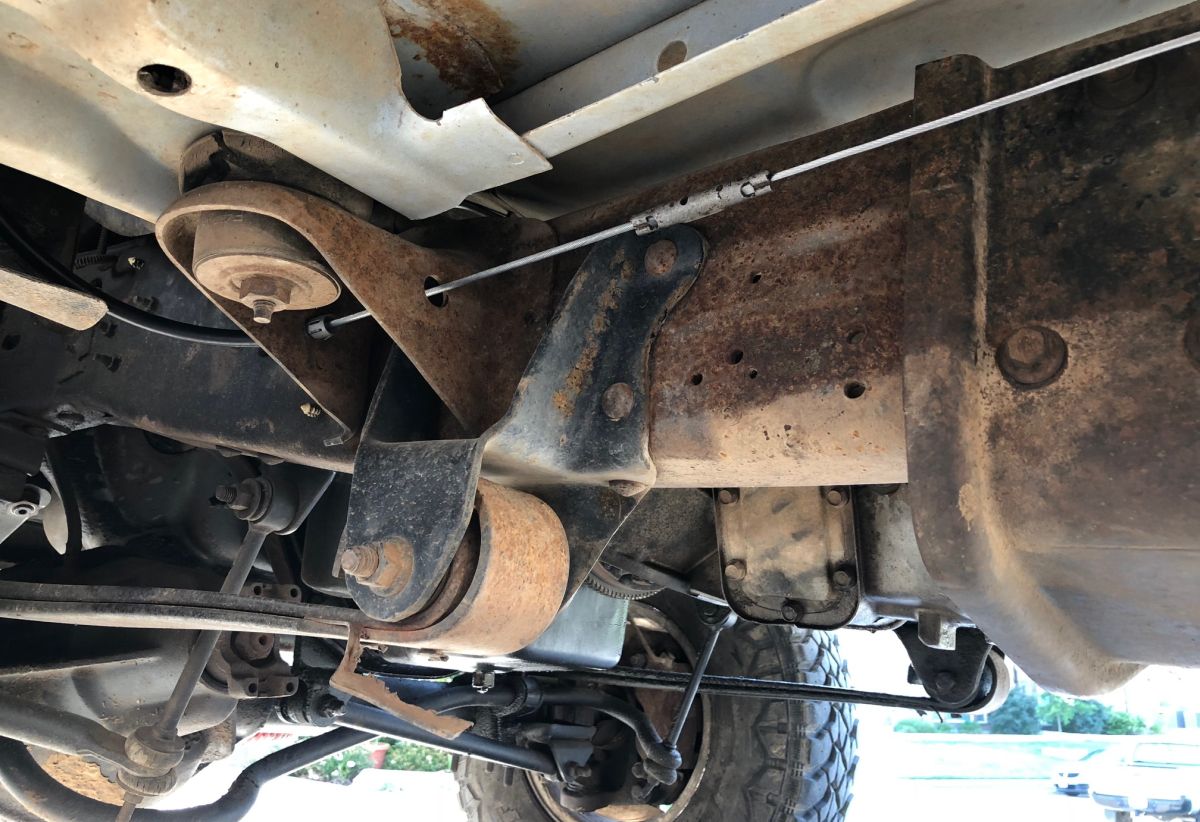
What Is a Parking Brake Cable? What Are the Symptoms of Failure?
The parking brake cable, commonly called the handbrake cable, is a mechanical component that transfers the force applied to the parking brake lever or pedal to the rear brake mechanism.
Its primary purpose is to keep the vehicle stationary when it is parked. Depending on the vehicle design, the cable can operate rear drum brakes, rear disc brake calipers with a mechanical parking brake mechanism, or a separate parking brake mechanism integrated into the rear brake assembly.
Although the system is mechanically simple, a worn, stretched, seized, or damaged parking brake cable can cause serious problems. It may prevent the parking brake from holding the vehicle securely or, in some cases, prevent the rear brakes from releasing completely.
How Does a Parking Brake Cable Work?
The basic operating principle is straightforward.
When the parking brake is applied:
-
The driver pulls the parking brake lever or activates the mechanical parking brake pedal.
-
The lever or pedal pulls the parking brake cable.
-
The cable transfers this force toward the rear brakes.
-
The rear brake mechanism moves.
-
The brake shoes or parking brake mechanism applies the rear brakes.
-
The vehicle is held stationary.
When the parking brake is released, the cable should return to its normal position and allow the rear brake mechanism to release.
Some vehicles use two separate rear cables, while others use a central cable arrangement with an equalizer that distributes force between the left and right sides.
Where Is the Parking Brake Cable Located?
The parking brake cable normally runs from the parking brake lever or pedal toward the rear axle or rear brakes.
Depending on the vehicle, it can pass underneath the vehicle body through several retaining points and protective sleeves.
A typical mechanical parking brake system may include:
-
Parking brake lever or pedal
-
Front parking brake cable
-
Cable equalizer
-
Left rear cable
-
Right rear cable
-
Cable guides and retaining clips
-
Rear brake mechanism
The exact arrangement varies significantly between vehicles.
Some vehicles use one main cable that splits into two rear cables, while others use separate cables for each rear wheel.
What Are the Symptoms of a Bad Parking Brake Cable?
A damaged or worn parking brake cable can produce several symptoms.
Common signs include:
-
Parking brake lever feels unusually loose
-
Parking brake lever pulls much higher than normal
-
Parking brake requires excessive travel
-
Parking brake does not hold the vehicle
-
Vehicle moves despite the parking brake being applied
-
Parking brake cannot be released completely
-
One rear wheel remains partially locked
-
Rear brake becomes hot after driving
-
Burning brake smell from a rear wheel
-
Vehicle feels as though it is being held back
-
Parking brake works better on one side than the other
-
Parking brake operation becomes intermittent
-
Cable makes unusual noises
-
Cable becomes stiff or difficult to operate
-
Parking brake warning light remains illuminated on some vehicles
Not every symptom necessarily means the cable itself has failed.
The rear brake mechanism, adjustment system, lever, caliper, drum components, or equalizer can produce similar symptoms.
Parking Brake Lever Pulls Too High
One of the most common complaints is a parking brake lever that travels much farther than normal.
For example, the lever may previously have engaged after a few clicks but now needs to be pulled much higher.
Possible causes include:
-
Cable stretching
-
Cable wear
-
Incorrect parking brake adjustment
-
Worn rear brake components
-
Drum brake shoe adjustment problems
-
Damaged cable mounting points
-
Cable or equalizer problems
A high lever position does not automatically mean that the cable needs to be replaced.
The rear brake adjustment should also be checked.
Parking Brake Feels Too Loose
If the parking brake lever suddenly feels loose, the cable may no longer be transmitting sufficient force.
Possible causes include:
-
Broken cable
-
Cable disconnected from the brake mechanism
-
Cable stretched excessively
-
Failed cable attachment
-
Damaged equalizer
-
Rear brake mechanism problem
If the lever moves almost without resistance and the parking brake does not hold the vehicle, the system should be inspected immediately.
Parking Brake Does Not Hold the Vehicle
The most important function of the parking brake is to keep the vehicle stationary.
If the vehicle moves easily after the parking brake is applied, possible causes include:
-
Loose or stretched cable
-
Broken cable
-
Incorrect adjustment
-
Worn brake shoes
-
Faulty rear caliper parking mechanism
-
Damaged drum brake components
-
Unequal cable tension
-
Seized or damaged parking brake mechanism
This should never be ignored, particularly when parking on an incline.
Parking Brake Will Not Release
A parking brake cable can also fail in the opposite direction.
Instead of preventing the brake from applying, the cable or mechanism may prevent the brake from releasing completely.
This can happen when:
-
The cable is seized
-
The cable housing is damaged
-
Water has entered the cable assembly
-
Rust has developed inside the cable
-
The cable has frozen in cold weather
-
The rear brake mechanism is seized
-
The return spring has failed
-
The caliper parking brake mechanism is sticking
A partially applied rear brake can generate considerable heat.
Rear Wheel Becomes Hot After Driving
A hot rear wheel can be an important warning sign.
If the parking brake cable is seized or does not return completely, the rear brake may remain partially applied.
This can cause:
-
Excessive brake temperature
-
Burning brake smell
-
Premature pad or shoe wear
-
Increased fuel consumption
-
Vehicle pulling or resistance
-
Brake component damage
-
Brake fade in severe cases
After driving, a noticeably hotter rear wheel should not be ignored.
However, avoid touching brake components directly because they can become extremely hot.
Burning Smell From the Rear Brakes
A burning smell after driving can occur when a parking brake remains partially engaged.
The cable itself may not be the source of the smell. The heat is usually generated by friction between the brake components.
Other possible causes include:
-
Seized parking brake cable
-
Seized caliper
-
Sticking brake pads
-
Incorrect adjustment
-
Damaged brake hose
-
Drum brake mechanism failure
The entire rear brake assembly should therefore be inspected.
One Rear Wheel Brakes More Than the Other
A parking brake should generally apply both rear brakes appropriately.
If one side is much weaker or remains applied while the other side releases normally, possible causes include:
-
One cable is stretched or damaged
-
One cable is seized
-
Unequal cable adjustment
-
One brake mechanism is sticking
-
Caliper parking mechanism problem
-
Drum brake adjustment problem
This is particularly common when individual rear cables are used.
Simply tightening the central parking brake adjustment may not correct an unequal left-to-right problem.
Can a Parking Brake Cable Stretch?
Yes.
Mechanical cables can develop increased free play over time.
However, the term "stretched cable" is sometimes used too broadly.
A high parking brake lever can also result from:
-
Worn brake shoes
-
Incorrect adjustment
-
Drum wear
-
Rear caliper mechanism problems
-
Cable housing movement
-
Damaged mounting points
Therefore, the cable should not automatically be tightened whenever the lever travels too far.
What Causes a Parking Brake Cable to Fail?
Several conditions can cause cable problems.
Rust and corrosion
Water and road salt can enter damaged cable housings and cause internal corrosion.
Seized cable
Corrosion can prevent the inner cable from moving freely inside its housing.
Broken inner cable
The cable can eventually break because of corrosion, fatigue, excessive force, or physical damage.
Damaged outer housing
A damaged housing can allow water and contaminants to enter the cable assembly.
Incorrect adjustment
Excessive tightening can keep the brake partially applied and accelerate wear.
Frozen cable
In cold climates, water inside a damaged cable can freeze and prevent normal operation.
Physical damage
The cable can be damaged by road debris, incorrect installation, or contact with other components.
Worn mounting points
If the cable housing moves instead of the inner cable, the parking brake may not operate correctly.
Can Rust Cause a Parking Brake Cable to Seize?
Yes.
Rust and corrosion are among the most common reasons for mechanical parking brake cables to become stiff or seize.
The problem often begins when the protective outer covering is damaged.
Water enters the cable assembly and eventually causes corrosion around the inner cable.
The cable may then move with increasing resistance.
Eventually, it may become partially or completely seized.
This can cause the parking brake to remain applied even after the lever has been released.
Can a Parking Brake Cable Break?
Yes.
A cable can break after years of repeated operation, corrosion, physical damage, or excessive force.
A broken cable may cause the parking brake lever to suddenly become very loose.
The vehicle may then have little or no mechanical parking brake function.
If the cable breaks on one side in a two-cable system, the remaining side may still operate, but the parking brake can become severely unbalanced.
The vehicle should not be considered safely secured simply because one side still works.
Is a Loose Parking Brake Always Caused by the Cable?
No.
A loose parking brake can have several causes.
The cable is only one part of the system.
Possible causes include:
-
Cable wear
-
Cable adjustment
-
Rear brake shoe wear
-
Automatic shoe adjustment failure
-
Rear caliper mechanism wear
-
Equalizer problems
-
Broken return springs
-
Damaged mounting points
A proper diagnosis should determine why the parking brake has excessive travel before any adjustment is made.
How Do You Test a Parking Brake Cable?
Diagnosis begins with checking the parking brake operation.
Observe:
-
Parking brake lever travel
-
Resistance during operation
-
Number of clicks
-
Whether the vehicle remains stationary
-
Whether both rear brakes operate
-
Whether the parking brake fully releases
The cable and its mounting points should then be visually inspected.
Look for:
-
Rust
-
Broken outer covering
-
Frayed cable
-
Bent cable
-
Loose mounting clips
-
Damaged cable housing
-
Corrosion
-
Abnormal movement
The rear brake mechanisms should also be checked.
How Can You Check if a Parking Brake Cable Is Seized?
A seized cable often feels unusually stiff or fails to return properly after the parking brake is released.
With the appropriate part of the system accessible, the cable can be disconnected from the rear brake mechanism and its movement checked.
A healthy cable should move smoothly within its normal range.
If the cable is extremely difficult to move, does not return properly, or remains stuck, internal corrosion or damage is possible.
However, the brake mechanism itself should also be checked before condemning the cable.
Should You Lubricate a Parking Brake Cable?
It depends on the cable design.
Some older mechanical cables can be lubricated according to the manufacturer's procedure.
Many modern cables are sealed and are not designed to be lubricated externally.
If a sealed cable has internal corrosion or damage, adding lubricant around the visible end generally will not restore reliable operation.
A seized or damaged cable is often better replaced than temporarily lubricated.
Can You Adjust a Parking Brake Cable?
Many mechanical parking brake systems have an adjustment mechanism.
The adjustment may be located:
-
Near the parking brake lever
-
At the cable equalizer
-
Under the vehicle
-
Near the rear brake assembly
However, adjustment should only be performed after checking the rear brakes.
If the brake shoes or pads are worn or the automatic adjustment mechanism is malfunctioning, simply tightening the cable can create another problem.
Over-tightening can cause the rear brakes to remain partially applied.
What Happens If the Parking Brake Cable Is Too Tight?
An excessively tight parking brake cable can prevent the rear brakes from fully releasing.
This can cause:
-
Rear brake overheating
-
Burning smell
-
Accelerated pad or shoe wear
-
Reduced fuel economy
-
Vehicle resistance
-
Brake component damage
The parking brake should have the correct amount of free play according to the vehicle manufacturer's specifications.
What Happens If the Parking Brake Cable Is Too Loose?
A loose cable may prevent the parking brake from generating enough force.
The vehicle may then move despite the parking brake being applied.
This is particularly dangerous when parking on a slope.
The solution is not always simply to tighten the cable. The underlying cause of excessive travel should be identified first.
Parking Brake Cable vs. Electronic Parking Brake
Not every modern vehicle uses a conventional parking brake cable.
Some vehicles use an Electronic Parking Brake (EPB).
An electronic parking brake can use electric motors mounted on the rear calipers or another electronically controlled mechanism.
In such vehicles, there may be no traditional handbrake cable at all.
If the vehicle has an electronic parking brake, faults may involve:
-
EPB motor
-
EPB control module
-
Wiring
-
Switch
-
Caliper mechanism
-
Battery voltage
-
Communication network
-
Software or calibration
Therefore, a conventional parking brake cable diagnosis does not apply to every modern vehicle.
Does a Parking Brake Cable Produce an OBD Fault Code?
A conventional mechanical parking brake cable normally does not generate an OBD-II diagnostic trouble code.
It is a mechanical component rather than an electronically monitored sensor.
However, vehicles equipped with an electronic parking brake may store diagnostic trouble codes related to the EPB system.
The presence of an EPB fault code does not necessarily mean that the electric motor itself is defective. Wiring, power supply, battery voltage, control modules, mechanical brake problems, and calibration can also be involved.
Can a Bad Parking Brake Cable Affect Normal Braking?
Yes, particularly if the cable or parking brake mechanism remains partially applied.
A sticking cable can cause a rear brake to drag while the vehicle is moving.
This can result in:
-
Increased brake temperature
-
Uneven brake wear
-
Reduced fuel economy
-
Vehicle pulling
-
Burning smell
-
Premature brake component failure
A conventional cable problem does not normally prevent the hydraulic service brake system from working, but a dragging parking brake can still create a significant safety problem.
Can You Drive With a Bad Parking Brake Cable?
It depends on the exact failure.
If the parking brake simply does not hold the vehicle, there is still a safety problem because the vehicle cannot be securely parked.
If the cable is seized and a rear brake remains partially applied, driving can be more dangerous because the brake can overheat.
You should not continue driving if you notice:
-
Burning brake smell
-
A very hot rear wheel
-
Significant brake drag
-
Smoke from a rear brake
-
One rear wheel locking
-
Severe resistance while driving
-
The parking brake cannot be released
The vehicle should be inspected and repaired before normal use.
How Often Should a Parking Brake Cable Be Replaced?
There is no universal replacement interval.
The service life depends on:
-
Vehicle design
-
Climate
-
Road salt exposure
-
Water and dirt exposure
-
Driving conditions
-
Cable quality
-
Frequency of parking brake use
-
Condition of the protective housing
A properly maintained cable can last for many years.
Replacement should generally be based on its condition and operation rather than an arbitrary mileage interval.
Conclusion
The parking brake cable is a mechanical component that transfers force from the parking brake lever or pedal to the rear braking mechanism.
A faulty cable can cause excessive parking brake lever travel, a loose lever, inability to hold the vehicle, difficulty releasing the parking brake, rear brake drag, uneven braking, and abnormal heat or burning smells from the rear brakes.
Rust, corrosion, damaged cable housings, internal contamination, physical damage, excessive wear, and incorrect adjustment are common causes of failure.
One important point is that a parking brake cable should not automatically be tightened just because the lever travels too far. Worn brake shoes, incorrect rear brake adjustment, damaged caliper mechanisms, equalizer problems, and other mechanical faults can produce the same symptom.
Likewise, if the parking brake does not release completely, the cable may be seized, but a sticking rear caliper or drum brake mechanism can produce the same result.
The correct approach is to inspect the parking brake lever, cable, equalizer, mounting points, rear brake mechanism, adjustment system, and return mechanism as a complete system.
For vehicles equipped with an electronic parking brake, the diagnosis is different because the system may not use a traditional cable at all.