TR
TR EN
EN


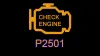
P2501 Generator Lamp/L Terminal Circuit High
P2501 is a generic OBD-II diagnostic trouble code that indicates the Engine Control Module (ECM) or Powertrain Control Module (PCM) has detected an abnormally high voltage in the Generator Lamp (L Terminal) circuit. The L terminal, also known as the Lamp Terminal, is the electrical circuit that communicates between the alternator (generator), the charging warning lamp on the instrument cluster, and the ECM.
This circuit is responsible for controlling and monitoring the vehicle's charging system. If the ECM detects that the voltage on the L terminal is higher than expected, it stores diagnostic code P2501 and may illuminate the Check Engine Light, battery warning light, or charging system warning message.
Ignoring this code can eventually lead to charging system problems, battery discharge, or overcharging conditions that may damage electrical components.
What Does P2501 Mean?
The alternator generates electricity to recharge the battery and supply power to the vehicle's electrical systems while the engine is running.
Most modern charging systems include several communication circuits between the alternator and the ECM, including:
-
Battery sense terminal
-
Field control terminal
-
Generator communication circuit
-
Generator Lamp (L Terminal)
The L terminal serves two primary functions:
-
Controls the battery warning lamp on the dashboard.
-
Allows the ECM to monitor charging system operation.
Under normal conditions, the ECM expects the voltage on the L terminal to remain within a specific operating range.
If the voltage remains higher than expected for a certain period, the ECM stores code P2501.
Common Symptoms of P2501
Some vehicles may continue operating normally, while others may experience charging system problems.
Common symptoms include:
-
Check Engine Light illuminated
-
Battery warning light on
-
Charging system warning message
-
Battery not charging properly
-
Overcharging battery
-
Electrical accessories operating erratically
-
Dim or flickering lights
-
Intermittent charging problems
-
Engine may stall if battery becomes discharged
-
Difficulty starting the engine
-
Low battery voltage after driving
The exact symptoms depend on whether the alternator continues charging despite the circuit fault.
Common Causes of P2501
A high-voltage condition in the L terminal circuit is usually caused by an electrical problem.
Faulty alternator
An internal voltage regulator failure may send incorrect voltage through the L terminal.
Failed voltage regulator
Some alternators use an external regulator, while others have an integrated regulator that can malfunction.
Short to battery voltage
The L terminal wiring may accidentally contact a battery power source.
Damaged wiring
The charging system wiring may develop:
-
Broken insulation
-
Melted wiring
-
Chafing
-
Pinched wires
-
Heat damage
Loose or corroded connectors
Poor electrical connections may interfere with normal charging system communication.
Instrument cluster fault
Because the L terminal also controls the battery warning lamp, a defective instrument cluster may contribute to the problem on some vehicles.
Blown fuse or incorrect fuse replacement
Charging system circuit problems may develop if incorrect fuses are installed.
Poor grounding
Weak engine or chassis grounds can create abnormal voltage readings.
Battery problems
A damaged battery with internal faults may affect charging system operation.
ECM malfunction
Although rare, the ECM may incorrectly detect or interpret the L terminal voltage.
Vehicles Commonly Affected by P2501
P2501 can occur on virtually any OBD-II vehicle equipped with electronically controlled charging systems.
Frequently affected vehicles include:
-
Ford F-150
-
Ford Explorer
-
Ford Escape
-
Chevrolet Silverado
-
GMC Sierra
-
Ram 1500
-
Jeep Grand Cherokee
-
Toyota Camry
-
Toyota Corolla
-
Honda Accord
-
Honda CR-V
-
Nissan Altima
-
Nissan Rogue
-
Hyundai Tucson
-
Kia Sportage
-
BMW 3 Series
-
Mercedes-Benz C-Class
-
Audi A4
-
Volkswagen Passat
-
Subaru Outback
The code is more common on vehicles with smart charging systems that rely on communication between the alternator and the ECM.
How Is P2501 Diagnosed?
A systematic diagnosis helps identify whether the problem lies in the alternator, wiring, battery, or control module.
Check for additional trouble codes
Related codes involving:
-
Charging system
-
Generator communication
-
Battery voltage
-
Voltage regulator
-
CAN communication
may provide valuable diagnostic information.
Measure battery voltage
With the engine off, battery voltage should typically be around 12.4–12.7 volts.
With the engine running, charging voltage is normally between 13.5 and 14.8 volts, depending on the vehicle and operating conditions.
Inspect the alternator wiring
Technicians inspect the harness for:
-
Broken wires
-
Heat damage
-
Loose connectors
-
Corrosion
-
Short circuits
Inspect the L terminal circuit
The L terminal wiring should be tested for:
-
Excessive voltage
-
Shorts to battery voltage
-
Continuity
-
Proper grounding
Test alternator output
A charging system analyzer verifies whether the alternator and voltage regulator are operating correctly.
Inspect the battery
Battery condition should be evaluated using a load tester to ensure it can properly accept and hold a charge.
Review live scan data
A professional scan tool can monitor:
-
Charging voltage
-
Alternator command
-
Generator status
-
Battery current
-
Charging system operation
How to Fix P2501
The appropriate repair depends on the underlying cause.
Common repairs include:
-
Replacing the faulty alternator
-
Replacing the voltage regulator
-
Repairing wiring shorted to battery voltage
-
Replacing damaged wiring harnesses
-
Cleaning corroded electrical connectors
-
Repairing poor ground connections
-
Replacing a damaged battery
-
Repairing instrument cluster faults if applicable
-
Replacing damaged charging system fuses
-
Updating ECM software if recommended by the manufacturer
-
Replacing the ECM in rare cases of internal failure
After repairs are completed, the diagnostic code should be cleared and the charging system tested under various operating conditions.
Can You Drive With P2501?
Driving with P2501 is possible in some cases, but it is not recommended.
If the charging system is malfunctioning, the battery may gradually lose charge or become overcharged.
Possible consequences include:
-
Battery discharge
-
Unexpected engine shutdown
-
Electrical accessory failures
-
Damage to electronic control modules
-
Vehicle unable to restart
If the battery warning light remains illuminated, the charging system should be inspected as soon as possible.
Is P2501 a Serious Code?
Yes. P2501 is considered a moderately serious to serious diagnostic trouble code because it affects the vehicle's charging system.
Ignoring the problem may eventually result in:
-
Complete battery discharge
-
Alternator failure
-
Electrical system instability
-
Damage to sensitive electronic components
-
Vehicle breakdown
Early diagnosis helps prevent more extensive electrical system damage.
How to Prevent P2501
Regular charging system maintenance significantly reduces the risk of this code.
Recommended preventive maintenance includes:
-
Inspect battery terminals for corrosion.
-
Test battery condition during routine service.
-
Inspect alternator wiring regularly.
-
Ensure engine and chassis ground connections are secure.
-
Replace damaged wiring immediately.
-
Repair charging system warning lights promptly.
-
Keep the battery fully charged.
-
Replace worn alternator drive belts when necessary.
-
Avoid jump-starting the vehicle incorrectly.
Routine charging system inspections help maintain reliable electrical performance and extend the life of the battery and alternator.
Final Thoughts
P2501 Generator Lamp/L Terminal Circuit High indicates that the ECM has detected an abnormally high voltage in the alternator's L terminal circuit. The most common causes include a faulty alternator, defective voltage regulator, wiring shorted to battery voltage, damaged connectors, poor grounding, battery problems, or, in rare cases, an ECM fault. Because the L terminal plays a critical role in monitoring and controlling the charging system, this code should be diagnosed and repaired promptly.
Resolving the underlying issue restores proper charging system communication, ensures stable battery charging, prevents electrical system failures, and helps protect sensitive electronic components from damage caused by abnormal charging conditions.