TR
TR EN
EN

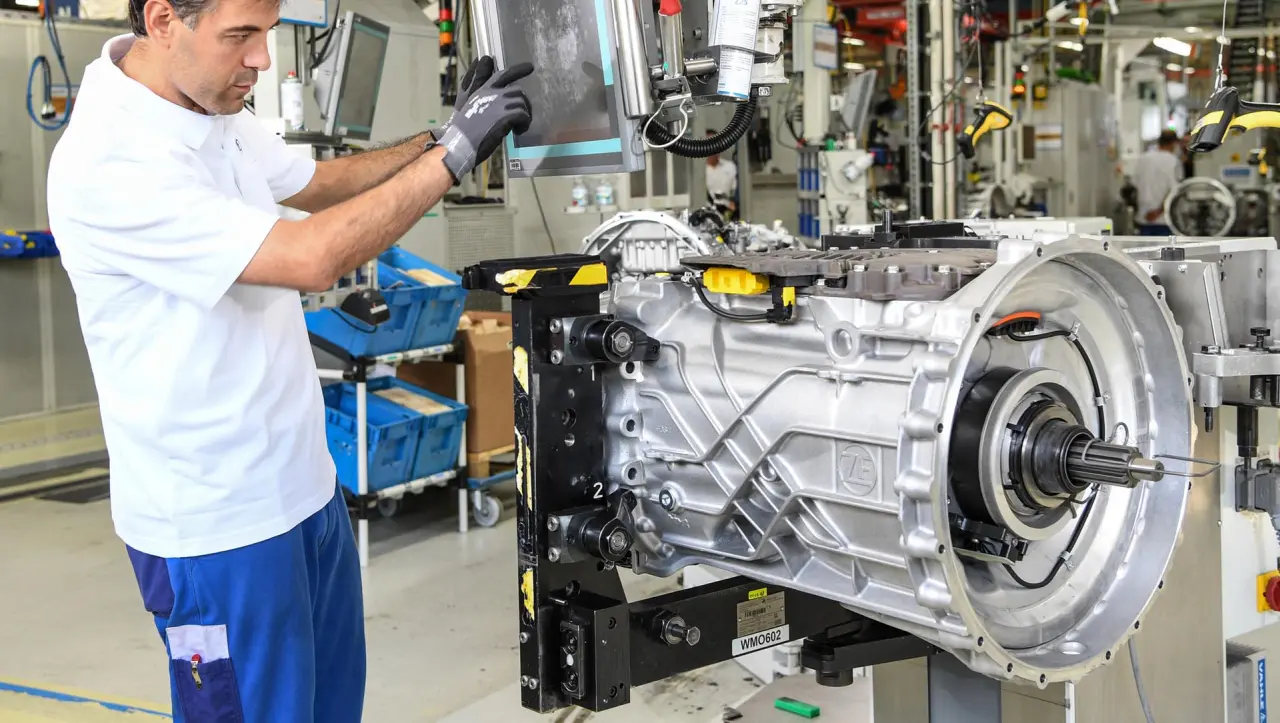
ZF Transmission Explained: How It Works, Pros and Cons
Automatic transmissions have evolved significantly over the past two decades, becoming faster, smoother, and more fuel-efficient than ever before. Among the most respected names in transmission technology is ZF, a German manufacturer whose gearboxes are used by many of the world's leading automotive brands.
ZF automatic transmissions are widely recognized for their smooth shifting, excellent performance, and long-term reliability. They can be found in everything from luxury sedans and sports cars to SUVs and pickup trucks.
In this guide, we'll explain what a ZF transmission is, how it works, its advantages and disadvantages, common applications, maintenance requirements, and whether it's a good choice for long-term ownership.
What Is a ZF Transmission?
A ZF transmission is an automatic gearbox manufactured by ZF Friedrichshafen AG, one of the world's largest automotive technology companies based in Germany.
ZF produces a wide range of transmissions for:
-
Passenger cars
-
Luxury vehicles
-
Sports cars
-
SUVs
-
Commercial vehicles
-
Hybrid and electric vehicles
The company's most famous passenger-car transmission is the ZF 8HP, an eight-speed automatic transmission that has become one of the industry's benchmarks.
How Does a ZF Automatic Transmission Work?
Most modern ZF passenger-car transmissions are torque converter automatic transmissions.
Unlike dual-clutch transmissions (DCT) or continuously variable transmissions (CVT), a ZF automatic uses:
-
A hydraulic torque converter
-
Multiple planetary gear sets
-
Wet multi-plate clutch packs
-
An electronically controlled valve body (mechatronics)
The transmission control unit continuously analyzes information such as:
-
Vehicle speed
-
Engine RPM
-
Throttle position
-
Driving mode
-
Brake input
-
Road conditions
Based on this data, it selects the optimal gear almost instantly.
Main Components of a ZF Transmission
Several advanced components work together to deliver smooth and efficient shifting.
Torque Converter
The torque converter transfers engine power to the transmission using hydraulic fluid.
Its functions include:
-
Smooth vehicle launches
-
Vibration reduction
-
Torque multiplication during acceleration
-
Improved driving comfort
Modern ZF transmissions also feature a lock-up clutch that minimizes energy loss at cruising speeds, improving fuel efficiency.
Planetary Gear Sets
Instead of using traditional manual gears, ZF automatics rely on compact planetary gear systems.
These gear sets allow:
-
Multiple gear ratios
-
Fast gear changes
-
Efficient power distribution
-
Compact transmission design
Mechatronic Control Unit
The mechatronic unit combines:
-
Electronic sensors
-
Hydraulic valves
-
Transmission software
This system precisely controls every gear change and continuously adapts to the driver's behavior.
Electronic Transmission Control
ZF transmissions constantly monitor:
-
Engine load
-
Acceleration
-
Road gradient
-
Wheel speed
-
Driving style
This allows the transmission to deliver smooth shifts during relaxed driving and quicker shifts during sporty driving.
Popular ZF Transmission Models
ZF has developed several highly successful automatic transmissions.
Some of the best-known include:
-
ZF 6HP – Six-speed automatic
-
ZF 8HP – Eight-speed automatic
-
ZF 9HP – Nine-speed automatic for front-wheel-drive vehicles
Among these, the ZF 8HP is considered one of the finest automatic transmissions ever produced.
Advantages of a ZF Transmission
ZF gearboxes are popular for several reasons.
Smooth Gear Changes
One of the biggest strengths of a ZF transmission is its exceptionally smooth shifting.
Drivers typically experience:
-
Minimal shift shock
-
Quick gear engagement
-
Comfortable acceleration
-
Refined driving characteristics
Excellent Performance
ZF transmissions are capable of extremely fast gear changes.
Compared with many traditional automatic transmissions, they offer:
-
Faster downshifts
-
Better throttle response
-
Improved acceleration
-
Sportier driving dynamics
Some shift times approach those of dual-clutch transmissions while maintaining the comfort of a torque converter automatic.
High Reliability
When properly maintained, ZF transmissions are known for excellent durability.
Many vehicles equipped with ZF gearboxes exceed:
-
250,000 km (155,000 miles)
-
300,000 km (186,000 miles)
-
Even higher mileages with regular servicing
Fuel Efficiency
Modern ZF transmissions use:
-
Lock-up torque converters
-
Closely spaced gear ratios
-
Intelligent shift strategies
These features help reduce engine RPM during highway driving, lowering fuel consumption.
Wide Compatibility
ZF transmissions are used in vehicles ranging from family sedans to high-performance sports cars.
This versatility demonstrates the transmission's engineering flexibility.
Disadvantages of a ZF Transmission
Despite their excellent reputation, ZF transmissions have some drawbacks.
Maintenance Can Be Expensive
Although reliable, servicing a ZF transmission is generally more expensive than maintaining simpler gearboxes.
Costs may include:
-
Specialized transmission fluid
-
Integrated transmission pan/filter replacements (on some models)
-
Professional servicing
Repairs Require Specialized Knowledge
ZF gearboxes are sophisticated systems.
If major repairs become necessary, they typically require:
-
Specialized diagnostic equipment
-
Experienced technicians
-
Genuine replacement parts
Improper repairs can lead to additional problems.
Fluid Changes Should Not Be Ignored
Some manufacturers once described certain ZF transmissions as "lifetime filled."
However, ZF itself recommends periodic transmission fluid and filter service under normal operating conditions.
Neglecting maintenance can shorten transmission life significantly.
Which Car Brands Use ZF Transmissions?
ZF transmissions are used by many major manufacturers around the world.
Examples include:
-
BMW
-
Audi
-
Porsche
-
Jaguar
-
Land Rover
-
Alfa Romeo
-
Maserati
-
Rolls-Royce
-
Bentley
-
Aston Martin
-
Jeep
-
Dodge
-
Ram
-
Chrysler
-
Volkswagen (selected models)
Different manufacturers may calibrate the transmission differently, but the underlying mechanical design remains similar.
Is the ZF 8HP Transmission Reliable?
The ZF 8HP is widely regarded as one of the most reliable modern automatic transmissions.
Its reputation comes from:
-
Strong mechanical design
-
Efficient cooling
-
Smooth hydraulic operation
-
Proven long-term durability
-
Continuous engineering improvements
It is commonly found in both luxury vehicles and high-performance models producing well over 500 horsepower.
Common ZF Transmission Problems
Although uncommon, some issues may appear as mileage increases.
Possible problems include:
-
Rough shifting
-
Delayed gear engagement
-
Transmission fluid leaks
-
Valve body wear
-
Mechatronic unit faults
-
Torque converter lock-up clutch wear
-
Transmission warning lights
Many of these problems can be minimized through regular maintenance.
How Long Does a ZF Transmission Last?
With proper servicing, a ZF automatic transmission can often last:
-
250,000 km (155,000 miles)
-
350,000 km (217,000 miles)
-
In some cases, over 400,000 km (248,000 miles)
Actual lifespan depends on:
-
Driving habits
-
Maintenance history
-
Towing frequency
-
Climate
-
Transmission fluid condition
Maintenance Tips for a Longer Transmission Life
To maximize the lifespan of a ZF transmission:
-
Change the transmission fluid and filter according to ZF or manufacturer recommendations.
-
Use only the specified transmission fluid.
-
Avoid aggressive acceleration when the transmission is cold.
-
Do not ignore fluid leaks.
-
Address warning lights promptly.
-
Avoid excessive towing beyond the vehicle's rated capacity.
-
Have software updates installed when available.
Preventive maintenance is significantly less expensive than major transmission repairs.
Is a ZF Transmission Worth Buying?
For most drivers, the answer is yes.
A ZF transmission is an excellent choice for those seeking:
-
Smooth everyday driving
-
Strong performance
-
Excellent reliability
-
Long service life
-
Efficient fuel economy
-
Premium driving refinement
While maintenance costs may be slightly higher than those of some conventional automatics, the overall ownership experience is often considered well worth the investment.
Final Thoughts
ZF automatic transmissions have earned a global reputation for combining comfort, performance, and durability. Their advanced engineering, intelligent electronic controls, and efficient torque converter design make them a favorite among premium automakers and driving enthusiasts alike.
Whether installed in a luxury sedan, a family SUV, or a high-performance sports car, a well-maintained ZF transmission can provide hundreds of thousands of kilometers of reliable service. For buyers looking for one of the best automatic transmission technologies available today, a ZF-equipped vehicle remains one of the strongest choices.