TR
TR EN
EN

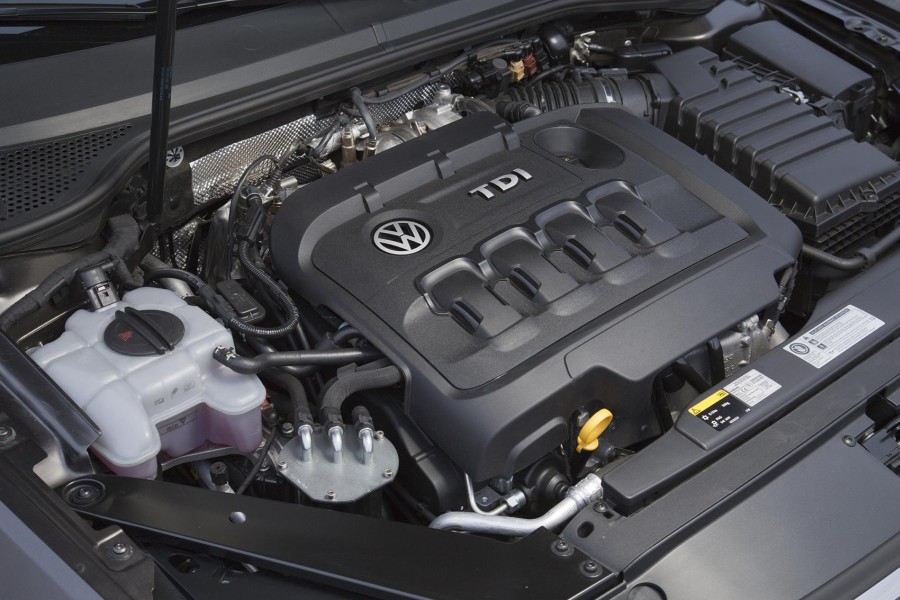
7 Important Facts About Diesel Cars
Diesel cars have been among the most popular choices for drivers who cover high mileage. Their low fuel consumption, strong torque, long-distance efficiency, and generally good fuel economy have made diesel engines an important part of the automotive industry for decades.
The popularity of diesel engines also increased significantly during the oil crises of the 1970s, when fuel efficiency became much more important to consumers. The foundations of the diesel engine, however, go back much further, to the compression-ignition engine developed by German engineer Rudolf Diesel.
Modern diesel engines are very different from the older diesel engines of the past. Common-rail injection, turbocharging, intercoolers, EGR systems, diesel particulate filters, and SCR/AdBlue systems have made modern diesels more efficient, quieter, and cleaner.
However, fuel economy is not the only thing to consider before buying a diesel car. Diesel engines have their own operating characteristics, maintenance requirements, and potential repair costs.
Here are 7 important facts you should know about diesel cars.
1. Diesel Engines Have Higher Compression Ratios
One of the most important characteristics of a diesel engine is its high compression ratio.
In a gasoline engine, the air-fuel mixture is ignited by a spark plug. In a diesel engine, fuel is injected into highly compressed air whose temperature has increased significantly due to compression. The fuel then ignites because of the high temperature.
The basic process is:
Air enters the cylinder → the air is highly compressed → its temperature rises → diesel fuel is injected → the fuel ignites in the hot compressed air.
Although the exact compression ratio varies according to engine design, diesel engines generally have higher compression ratios than gasoline engines.
It would be misleading, however, to treat figures such as 8:1 for gasoline engines and 20:1 for diesel engines as universal values. Modern gasoline engines can also have relatively high compression ratios depending on their design and technology.
Because diesel engines operate under high cylinder pressures, components such as the pistons, connecting rods, crankshaft, and other internal parts are designed to withstand significant loads.
Glow plugs have a different purpose.
Glow plugs do not normally provide the ignition event during normal diesel engine operation. Their primary purpose is to assist combustion during cold starts by helping increase the temperature inside the combustion chamber.
2. Diesel Cars Can Be More Expensive
Diesel cars can have a higher purchase price than comparable gasoline models, particularly when the diesel engine uses advanced fuel-injection and emissions-control technology.
One reason is the complexity of the modern diesel fuel system.
A modern diesel engine may include:
-
Common-rail fuel injection
-
A high-pressure fuel pump
-
High-precision diesel injectors
-
Turbocharging
-
EGR
-
A diesel particulate filter (DPF)
-
SCR and AdBlue on some vehicles
These systems allow modern diesel engines to achieve high efficiency and comply with emissions regulations, but they can also increase maintenance and repair costs.
However, a more expensive diesel car is not necessarily uneconomical.
A driver covering high annual mileage may recover the additional purchase cost through lower fuel consumption over time.
On the other hand, someone who drives only a few thousand miles per year and mainly makes short urban trips may not benefit enough from diesel fuel economy to justify the additional complexity and potential maintenance costs.
For this reason, the decision between diesel and gasoline should consider annual mileage, driving conditions, purchase price, fuel consumption, and maintenance costs together.
3. Diesel Engines Produce Strong Torque at Lower RPM
One of the most noticeable characteristics of a diesel engine is its strong torque output.
Gasoline engines can generally operate at higher RPMs and may produce their maximum power at significantly higher engine speeds.
Diesel engines, on the other hand, typically produce strong torque at relatively low RPM.
For example, a diesel engine may provide strong pulling power around 1,500-3,000 rpm, while a gasoline engine may have a power band that extends further toward higher engine speeds.
This characteristic is not caused by compression ratio alone. Engine displacement, turbocharging, fuel injection, airflow, combustion design, and electronic engine management all influence torque production.
In everyday driving, this can be particularly noticeable during:
-
Overtaking
-
Hill climbing
-
Carrying heavy loads
-
Highway driving
-
Accelerating from low speeds
A diesel vehicle can provide strong acceleration without requiring the driver to constantly rev the engine to high RPM.
This is why a diesel version of a vehicle can sometimes feel stronger in everyday driving even if its horsepower figure is lower than that of a gasoline version.
The reason is simple:
Horsepower describes the rate at which an engine can perform work, while torque represents the engine's rotational force.
However, it would also be incorrect to say that diesel engines are always more powerful. Modern high-performance gasoline engines can produce far more horsepower and torque than many diesel engines.
4. Regular Maintenance Is Extremely Important
Regular maintenance is essential for every internal-combustion engine, but it can be particularly important for modern diesel vehicles because of their sophisticated fuel and emissions systems.
Depending on the vehicle, important maintenance items may include:
-
Engine oil
-
Oil filter
-
Air filter
-
Fuel filter
-
Cabin filter
-
Turbocharger system
-
EGR system
-
DPF
-
Fuel injectors
-
Cooling system
-
Battery and charging system
Maintenance intervals are not identical for every diesel car.
Some vehicles may require maintenance around every 10,000-15,000 kilometers, while others have longer manufacturer-specified service intervals.
The correct approach is to follow the maintenance schedule specified by the vehicle manufacturer rather than applying one universal interval to every diesel engine.
The fuel filter is also particularly important on diesel vehicles.
Modern diesel injection systems operate at extremely high pressures and very tight tolerances. Water or contaminants in the fuel can cause serious damage to the high-pressure pump and injectors.
For this reason, using reputable fuel stations and replacing the fuel filter at the recommended interval are important parts of diesel vehicle maintenance.
At the same time, it would be inaccurate to say that using inexpensive diesel fuel once will automatically destroy an engine. The actual quality of the fuel, the presence of contaminants, and the condition of the fuel system all influence the risk.
5. Modern Diesel Cars Are Much Quieter and Cleaner
Older diesel engines were well known for their loud operation, vibration, and visible black smoke.
Modern diesel engines are very different.
Common-rail injection, electronic engine management, turbocharging, improved combustion technology, and sophisticated emissions systems have significantly improved diesel engine refinement.
Modern diesel vehicles also use emissions-control equipment.
A diesel particulate filter, for example, captures soot particles from the exhaust system.
Therefore, a modern diesel car that is operating correctly should not normally produce continuous black smoke.
If excessive black smoke appears, possible causes can include:
-
Air-fuel imbalance
-
Turbocharger or boost leaks
-
A clogged air filter
-
EGR problems
-
Fuel injector problems
-
DPF-related issues
-
Sensor or engine-management faults
Likewise, excessive vibration or unusually loud engine operation should not simply be considered a normal characteristic of a modern diesel engine.
Persistent abnormal noises or vibrations, particularly after the engine has reached operating temperature, should be investigated.
6. Cold Starting and Glow Plugs Matter
Diesel engines have different cold-start characteristics from gasoline engines.
When the engine is cold, achieving the temperature required for reliable combustion can be more difficult because the compressed air may not reach the necessary temperature quickly enough.
This is why diesel engines use glow plugs.
Glow plugs help increase the temperature in the combustion chamber, particularly during cold starting.
Modern vehicles generally do not require the driver to wait for a long period. When the ignition is switched on, the glow-plug indicator may illuminate briefly. Once the vehicle's control system has completed the required preheating process, the engine can normally be started.
The exact behavior varies between vehicles.
A faulty glow plug or glow-plug system can cause symptoms such as:
-
Difficult cold starting
-
Extended cranking
-
Rough running immediately after startup
-
White or gray exhaust smoke
-
Uneven engine operation during the first few minutes
If the engine does not start, forcing the vehicle to start by pushing or rolling it is not an appropriate general solution for modern vehicles.
Vehicles equipped with turbochargers, electronic engine management, automatic transmissions, DPF systems, or other sophisticated components should be properly diagnosed instead of relying on traditional starting methods.
7. The Correct Engine Oil Is Essential
There is a common misconception that diesel engines simply require thicker or higher-viscosity oil than gasoline engines.
This is not necessarily true.
Values such as 5W-30 and 5W-40 describe the viscosity characteristics of engine oil. However, modern diesel engines often require a specific oil specification or manufacturer approval in addition to the correct viscosity.
This becomes particularly important on vehicles equipped with a DPF.
Many modern diesel engines require low-ash or Low SAPS engine oils to reduce the amount of ash entering the exhaust after-treatment system.
Using the wrong oil can negatively affect the operation and service life of the DPF and other emissions-control components.
Therefore, choosing engine oil should be based on:
Viscosity + manufacturer specification + engine requirements
rather than simply choosing a “thicker” oil because the engine is diesel.
It is also possible for diesel engine oil to become darker more quickly than gasoline engine oil. This does not automatically mean that the oil has failed. Soot and combustion by-products can change the appearance of the oil during normal operation.
What matters is using the correct specification and replacing the oil according to the manufacturer's recommended interval.
Why Is the DPF Important on Diesel Cars?
The diesel particulate filter deserves special attention when discussing modern diesel vehicles.
The DPF captures soot particles produced by diesel combustion.
As soot accumulates inside the filter, the engine management system performs a process known as regeneration, during which the accumulated soot is burned under controlled conditions.
Driving style can have a major effect on this process.
If a diesel vehicle is used almost exclusively for:
-
Very short trips
-
Low-speed driving
-
Stop-and-go traffic
-
Trips where the engine rarely reaches full operating temperature
the vehicle may have difficulty completing DPF regeneration properly.
This is one reason modern diesel cars are not always the best choice for drivers who make only short urban journeys.
Regular longer drives that allow the engine to reach operating temperature are generally more compatible with the operating requirements of a diesel powertrain.
If a DPF warning appears, the correct procedure in the vehicle's owner's manual should be followed rather than simply ignoring the warning.
Why Does Diesel Fuel Quality Matter?
Modern diesel fuel systems operate under extremely high pressure and use highly precise components.
Water, dirt, or other contaminants in the fuel can damage:
-
High-pressure fuel pumps
-
Injectors
-
Common-rail components
This is why choosing a fuel station based solely on the lowest price is not necessarily a good strategy.
Regularly purchasing fuel from reputable sources, replacing the fuel filter on time, and investigating unusual fuel-system symptoms can help reduce the risk of expensive repairs.
Again, it would be an exaggeration to say that one tank of inexpensive fuel will automatically cause engine failure. The actual fuel quality and the condition of the vehicle's fuel system are much more important factors.
Who Should Consider a Diesel Car?
Diesel cars can still make a lot of sense for drivers who cover high mileage.
They can be particularly suitable for people who:
-
Drive long distances every day
-
Frequently travel between cities
-
Regularly use highways
-
Need strong low-RPM torque
-
Carry heavy loads
-
Plan to keep the vehicle for many years
On the other hand, a driver who covers relatively low annual mileage and uses the vehicle mainly for short urban trips may find a gasoline or suitable hybrid vehicle more practical.
This is particularly important with modern diesel vehicles because DPF, EGR, and other emissions systems may be more sensitive to repeated short-distance operation.
What Should You Check When Buying a Used Diesel Car?
When buying a used diesel vehicle, simply checking whether the engine starts and runs smoothly is not enough.
Several important systems should be inspected.
Turbocharger: Check for abnormal noises, boost problems, excessive oil consumption, or a noticeable loss of power.
Fuel injectors: Rough idle, difficult starting, excessive smoke, and abnormal fuel consumption can indicate injector-related problems.
DPF: Check for warning lights, excessive soot loading, regeneration problems, and stored diagnostic faults.
EGR system: Excessive carbon buildup or an EGR valve that does not operate correctly can affect engine performance and emissions.
Fuel system: Common-rail pressure, fuel-pressure readings, and stored fault codes should be evaluated.
Glow-plug system: Cold-start performance can provide useful information about the condition of the glow plugs and their control system.
Engine oil: Check the oil level, condition, and whether the correct oil specification has been used.
Battery: Diesel engines require sufficient cranking power, particularly in cold weather. Vehicles equipped with start-stop systems may also require the correct battery technology and battery management procedures.
Is Buying a Diesel Car Still Worth It?
Diesel engines are no longer as dominant as they once were, but they have not become irrelevant.
For drivers who cover high mileage and regularly travel long distances, their fuel efficiency and strong torque can still provide significant advantages.
However, modern diesel engines have also become more technologically complex.
Systems such as DPF, EGR, SCR, AdBlue, turbochargers, and high-pressure fuel injection improve efficiency and emissions performance, but they can also increase the potential cost of maintenance and repairs.
For this reason, buying a diesel car should not be based solely on the question:
“How much fuel does it consume per 100 kilometers?”
Instead, you should consider:
-
Annual mileage
-
Driving conditions
-
Purchase price
-
Fuel consumption
-
Maintenance costs
-
Expected repair costs
-
Long-term ownership plans
Advantages and Disadvantages of Diesel Cars
The main advantages of diesel cars include:
-
Low fuel consumption
-
Strong low-RPM torque
-
Excellent long-distance efficiency
-
Good fuel economy at higher annual mileage
-
Strong pulling power under load
Their disadvantages can include:
-
More complex fuel and emissions systems
-
Potentially higher maintenance costs
-
DPF and EGR-related issues
-
Greater sensitivity to repeated short-distance driving
-
Higher purchase prices for some models
-
Different cold-start characteristics
-
Potentially expensive fuel-system or emissions-system repairs
The Most Important Thing to Know About Diesel Cars
Diesel cars are not simply vehicles that consume less fuel. They use a different combustion principle, operate with high compression, produce strong low-RPM torque, and rely on sophisticated fuel-injection and emissions-control systems.
Before buying a diesel car, it is therefore important to consider where, how often, and how far you will drive it.
For a high-mileage driver who regularly travels long distances, a well-maintained diesel car can still be an extremely efficient and capable choice.
For someone who mainly makes short urban trips, however, the fuel-economy advantage should be weighed against the maintenance requirements of systems such as the DPF, EGR, turbocharger, and high-pressure fuel injection.
In other words, getting the most out of a diesel engine is not only about choosing the right car. It is also about using the car in a way that suits the characteristics of a diesel powertrain.