TR
TR EN
EN

What Should You Do If the Check Engine Light Comes On?
Seeing the check engine light suddenly illuminate while driving can be alarming. Whether it's a yellow or red engine symbol on the dashboard, many drivers immediately wonder if the vehicle has a serious problem. So, why does the check engine light come on, when is it dangerous, and what should you do?
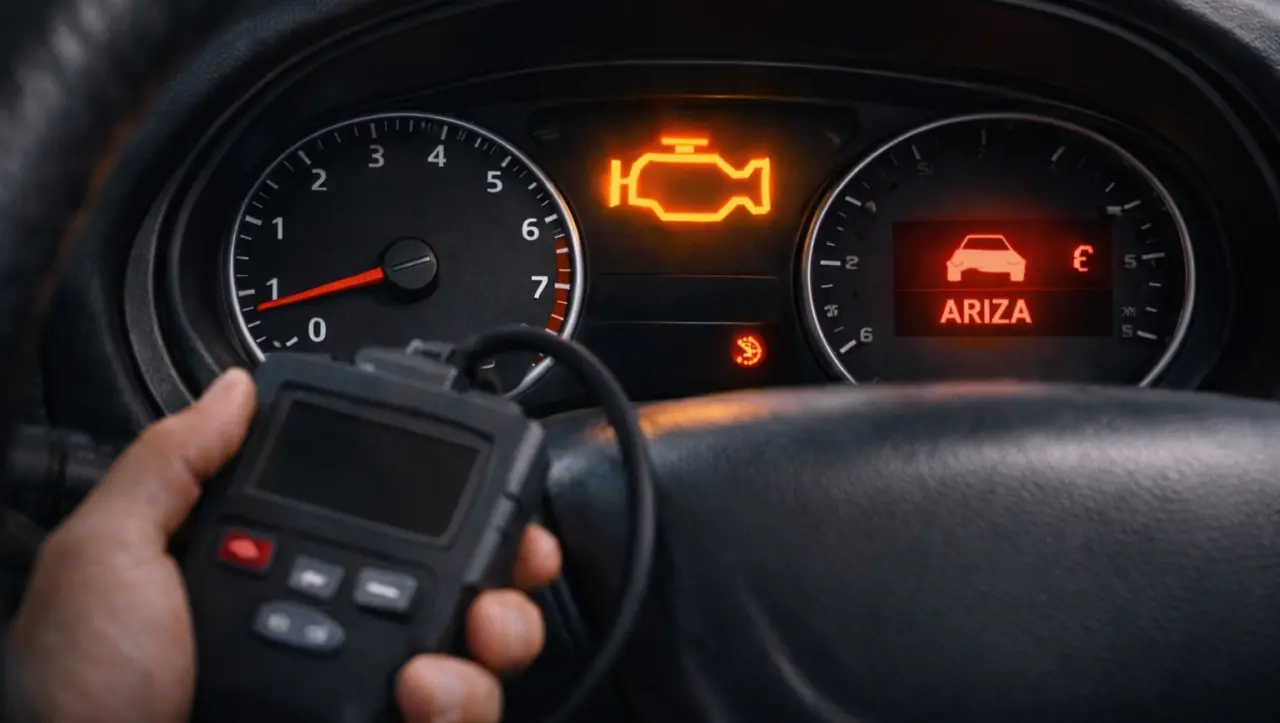
The check engine light indicates that the vehicle's Engine Control Unit (ECU) has detected an issue. Modern vehicles continuously monitor the engine, fuel system, emissions system, and numerous sensors. If the ECU detects abnormal data, it stores a diagnostic trouble code (DTC) and illuminates the warning light.
However, not every check engine light indicates a major engine failure. Sometimes, even a minor sensor malfunction can trigger the warning.
Common Reasons Why the Check Engine Light Comes On
The check engine light can be caused by many different issues, including:
-
Faulty oxygen (O2) sensor
-
Worn spark plugs or ignition coils
-
Fuel system problems
-
Fuel injector faults
-
Catalytic converter issues
-
Mass Air Flow (MAF) sensor failure
-
EGR valve malfunction
-
Poor-quality fuel
-
LPG/CNG system compatibility issues
-
Turbocharger problems
In some vehicles, even a temporary drop in battery voltage can trigger the warning light.
What If the Check Engine Light Is Yellow?
A yellow (amber) check engine light usually means the vehicle can still be driven, but the issue should not be ignored.
You may also notice symptoms such as:
-
Reduced engine power
-
Rough engine operation
-
Increased fuel consumption
-
Engine misfires
-
Unstable idle
Some drivers continue using the vehicle for months with the warning light on, but delaying repairs can allow a minor problem to develop into a much more expensive one.
A Red or Flashing Check Engine Light Is More Serious
A red or flashing engine warning light typically indicates a more severe problem.
If you experience any of the following:
-
Severe engine misfires
-
Engine overheating
-
Low oil pressure
-
Significant loss of power
-
Excessive exhaust smoke
you should stop driving as soon as it is safe to do so. Continuing to drive may cause serious engine damage.
What Should You Do When the Check Engine Light Comes On?
There's no need to panic, but you should assess the situation carefully.
Check How the Vehicle Is Running
If the engine feels normal and there are no unusual noises, drive cautiously to a safe location.
However, if you notice:
-
Strong vibrations
-
Misfiring
-
Heavy smoke
-
Major power loss
avoid driving any further until the problem has been diagnosed.
Check the Fuel Cap
A loose or improperly tightened fuel cap can sometimes trigger the check engine light.
An improperly sealed fuel system may be detected as an emissions leak.
Monitor Engine Temperature and Oil Level
Always check:
-
Engine coolant temperature
-
Engine oil level
If the engine is overheating, stop driving immediately.
Avoid Driving Aggressively
While the warning light is on, avoid:
-
High engine speeds (RPM)
-
Hard acceleration
-
Long-distance driving unless necessary
Extra caution is especially important in turbocharged vehicles.
Have the Vehicle Diagnosed
The exact cause of the warning can only be identified by reading the stored fault codes.
An OBD-II scanner can retrieve the diagnostic trouble codes from the ECU and help identify the source of the problem.
Simply clearing the fault codes without repairing the underlying issue is not a proper solution.
Can the Check Engine Light Turn Off by Itself?
Yes. In some cases, the warning light may disappear if the issue was temporary.
Examples include:
-
Poor-quality fuel
-
Temporary sensor malfunction
-
Battery voltage fluctuations
However, if the light returns, the vehicle should be inspected as soon as possible.
Will a Check Engine Light Affect the Vehicle Inspection?
This depends on the country and the specific inspection regulations.
In many inspection programs, the outcome depends on the cause of the warning light, not simply the fact that it is illuminated.
Generally:
-
A temporary warning caused by a minor sensor issue may not automatically result in a failed inspection.
-
Faults affecting emissions systems, such as the catalytic converter or emissions sensors, may cause the vehicle to fail emissions testing where applicable.
-
Safety-related faults involving systems such as ABS or electronic stability control are often evaluated separately under their own warning indicators.
Before any mandatory vehicle inspection, it is advisable to have the fault codes diagnosed and the underlying problem repaired rather than simply clearing the warning light.
Conclusion
A check engine light does not always mean your engine is about to fail, but it should never be ignored. Even a small sensor fault can eventually lead to more expensive repairs if left unresolved.
If the check engine light comes on:
-
Avoid putting unnecessary stress on the engine
-
Check the engine temperature and oil level
-
Have the vehicle scanned with an OBD-II diagnostic tool
-
Repair the underlying fault instead of simply clearing the warning light
Addressing engine problems early is usually far less expensive than waiting until a minor issue develops into a major repair.