TR
TR EN
EN

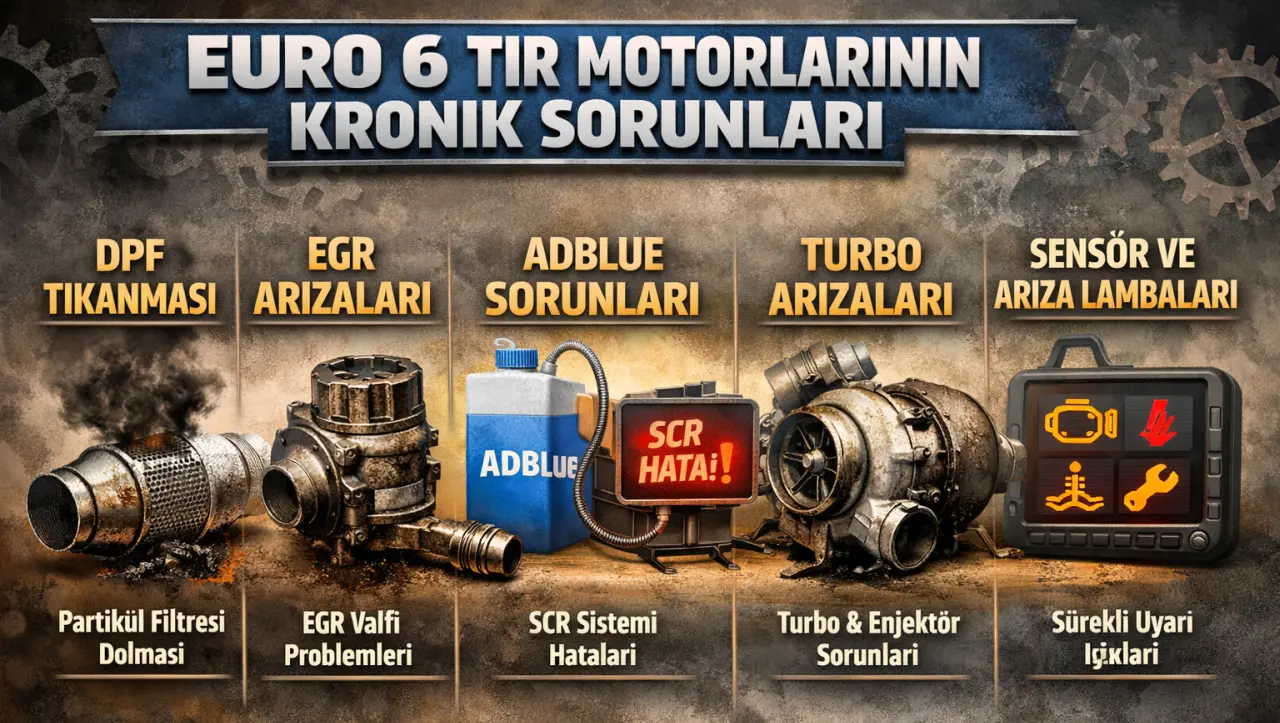
Chronic Problems of Euro 6 Truck Engines and the Most Common Failures
With the increasing emission standards in the heavy commercial vehicle industry, Euro 6 engines have become the new standard of the sector thanks to their environmentally friendly structure and low emission values. However, compared to older generation Euro 3, Euro 4, and Euro 5 engines, these engines have much more complex electronic and exhaust systems, which makes them frequently associated with chronic failures.
Especially in trucks operating under conditions such as long-distance driving, heavy loads, intensive uphill usage, variable fuel quality, and high mileage, like in Turkey; failures related to the AdBlue system, SCR unit, DPF filter, EGR system, and sensors can create serious costs.
In this article, we examine the most common chronic problems in Euro 6 truck engines, their causes, and solution methods in detail.
Why Do Euro 6 Engines Have More Failures?
The main purpose of Euro 6 engines is to significantly reduce exhaust emissions. For this reason, many additional systems have been added to the engine:
-
SCR system
-
AdBlue system
-
DPF filter
-
EGR system
-
NOx sensors
-
Exhaust temperature sensors
-
Pressure sensors
-
Electronic engine management systems
All of these systems work together in an interconnected way. Even a small sensor failure can cause the vehicle to lose power, enter engine protection mode, or be limited in speed.
While a small failure in older generation mechanical trucks would not prevent the vehicle from continuing its journey, electronic systems in Euro 6 vehicles are much more sensitive.
AdBlue and SCR System Failures
The AdBlue system is one of the most common problems encountered in Euro 6 trucks.
The SCR system works to reduce harmful NOx emissions in exhaust gases. The AdBlue fluid used in this system is sprayed into the exhaust through a pump, injector, and dosing module.
However, many chronic problems can occur in this system.
AdBlue Crystallization
When AdBlue fluid remains unused for a long time or when poor-quality AdBlue is used, crystallization may occur. This can:
-
Block the AdBlue pump
-
Damage the injectors
-
Block the SCR line
-
Make the dosing system inoperable
This problem is especially common during winter months and in vehicles that remain unused for long periods.
Loss of Power and Engine Restriction
If the SCR system does not operate properly, the vehicle cannot meet emission standards. In this case, the engine ECU:
-
Turns on the fault warning light
-
Activates engine protection mode
-
Reduces torque
-
Limits vehicle speed
In some vehicles, if the system becomes completely disabled, the vehicle may not start after a certain mileage.
AdBlue Sensor Problems
Euro 6 vehicles contain:
-
Level sensor
-
Quality sensor
-
Temperature sensor
These components are highly sensitive. Poor-quality AdBlue usage or electrical problems can trigger sensor failures.
In this case, even if the vehicle is mechanically in good condition, it may continuously activate the fault warning light.
DPF (Diesel Particulate Filter) Blockage
The DPF system captures soot particles in the exhaust and prevents them from being released into the environment. However, this system can create serious problems, especially in trucks used mainly for urban driving.
Failure to Perform Regeneration
For the DPF to clean itself:
-
The engine must reach a certain temperature
-
The vehicle must operate at high RPM for a long time
-
Long-distance driving is required
However, if the vehicle:
-
Is constantly operated on short distances
-
Is driven at low RPM
-
Remains idle for long periods
the DPF cannot perform regeneration and the filter starts to fill.
What Happens When the DPF Becomes Blocked?
-
Fuel consumption increases
-
The vehicle loses power
-
Turbo pressure becomes unstable
-
Engine temperature increases
-
The exhaust system overheats
-
Engine protection mode activates
In advanced blockage situations, DPF replacement may be required and the cost can be very high.
EGR Valve and EGR Cooler Problems
The EGR system reduces emissions by sending a portion of exhaust gases back into the engine.
However, this system is exposed to heavy carbon buildup over time.
EGR Valve Carbon Buildup
One of the common problems in Euro 6 engines is the EGR valve becoming stuck due to carbon deposits.
Symptoms:
-
Misfiring
-
Loss of power
-
Black smoke
-
Increased fuel consumption
-
Irregular operation
-
Idle problems
This problem is especially common in vehicles operating intensively in urban areas.
EGR Cooler Cracking
In some brands, EGR cooler cracking has also become a chronic problem.
In this case:
-
Coolant loss
-
White smoke
-
Overheating
-
Coolant entering the engine
can occur.
Oil Consumption Problems in Euro 6 Engines
Many users state that oil consumption in Euro 6 engines is higher compared to Euro 5 engines.
The main reasons are:
-
Higher operating temperatures
-
Thinner engine oils
-
Higher exhaust temperatures
-
Longer maintenance intervals
Piston Ring and Cylinder Wear
In high-mileage vehicles:
-
Piston ring wear
-
Cylinder surface deterioration
-
Turbo oil leaks
can significantly increase oil consumption.
In some vehicles, excessive oil consumption can eventually progress to the point where engine overhaul is required.
Turbo and Exhaust System Problems
The turbo system in Euro 6 engines operates at much higher temperatures.
The additional exhaust pressure created by the DPF and SCR systems:
-
Places stress on turbo bearings
-
Can cause cracks in the exhaust manifold
-
May damage pressure sensors
Turbo failures are especially common in poorly maintained vehicles.
Symptoms of Turbo Failure
-
Whistling noise
-
Oil leakage
-
Loss of power
-
Black smoke
-
Excessive fuel consumption
NOx Sensor and Electronic Failures
One of the most problematic aspects of Euro 6 systems is their sensitive sensor structure.
These vehicles contain many:
-
NOx sensors
-
Lambda sensors
-
Pressure sensors
-
Exhaust temperature sensors
Why Are Sensor Failures Increasing?
The main reasons are:
-
Poor-quality fuel
-
Overheating
-
Moisture
-
Wiring harness problems
-
Voltage fluctuations
Even a small sensor failure can cause:
-
Engine warning light
-
Power loss
-
AdBlue error
-
Protection mode
Software and Electronic Control Unit Problems
Modern Euro 6 trucks are completely managed by electronic control systems.
Sometimes, software-related errors can occur even without any mechanical problem.
Common Electronic Problems
-
ECU communication errors
-
Software conflicts
-
Incorrect sensor readings
-
CANBUS communication problems
-
Battery voltage fluctuations
These problems are especially common in harsh winter conditions and vehicles operating for long periods.
Therefore, software updates are very important.
Chronic Problems Seen According to Brands
Some Euro 6 engines also have brand-specific chronic problems.
MAN
In some Euro 6C engines:
-
Bearing wear
-
Early engine damage
-
Lubrication system problems
are among the frequently discussed issues in the industry.
Mercedes-Benz
In some models:
-
AdBlue module failures
-
NOx sensor problems
-
EGR blockages
can occur frequently.
Volvo Trucks
In some vehicles:
-
DPF filling problems
-
Software sensitivity
-
Electronic sensor failures
stand out.
Scania
According to user complaints:
-
SCR system sensitivity
-
AdBlue pump failures
-
Exhaust temperature sensors
are among the notable issues.
How to Reduce Failure Risks in Euro 6 Trucks?
Euro 6 vehicles require regular maintenance. A small neglected problem can turn into very expensive repairs.
Important points to consider:
-
Using quality fuel
-
Choosing original filters
-
Performing regular DPF regeneration
-
Paying attention to AdBlue quality
-
Periodic sensor checks
-
Performing software updates
-
Avoiding long-term low RPM operation
are especially important.
Is AdBlue Deactivation a Solution?
Some users have AdBlue systems deactivated due to cost concerns. However, this process:
-
Is illegal
-
Can create inspection problems
-
Can damage the engine management system
-
Can harm the turbo and exhaust system
-
Can reduce second-hand value
Therefore, professional maintenance and proper repair are much healthier solutions.
Conclusion
Although Euro 6 trucks offer significant advantages in terms of environmental standards, they are highly prone to chronic failures due to their complex exhaust systems and sensitive electronic structures.
Especially:
-
AdBlue system
-
SCR unit
-
DPF filter
-
EGR system
-
NOx sensors
-
Software and electronic problems
are among the most common issues faced by heavy commercial vehicle users.
Proper maintenance, quality fuel, timely service intervention, and the use of original parts are critically important for Euro 6 engines to operate efficiently and have a long service life.