TR
TR EN
EN

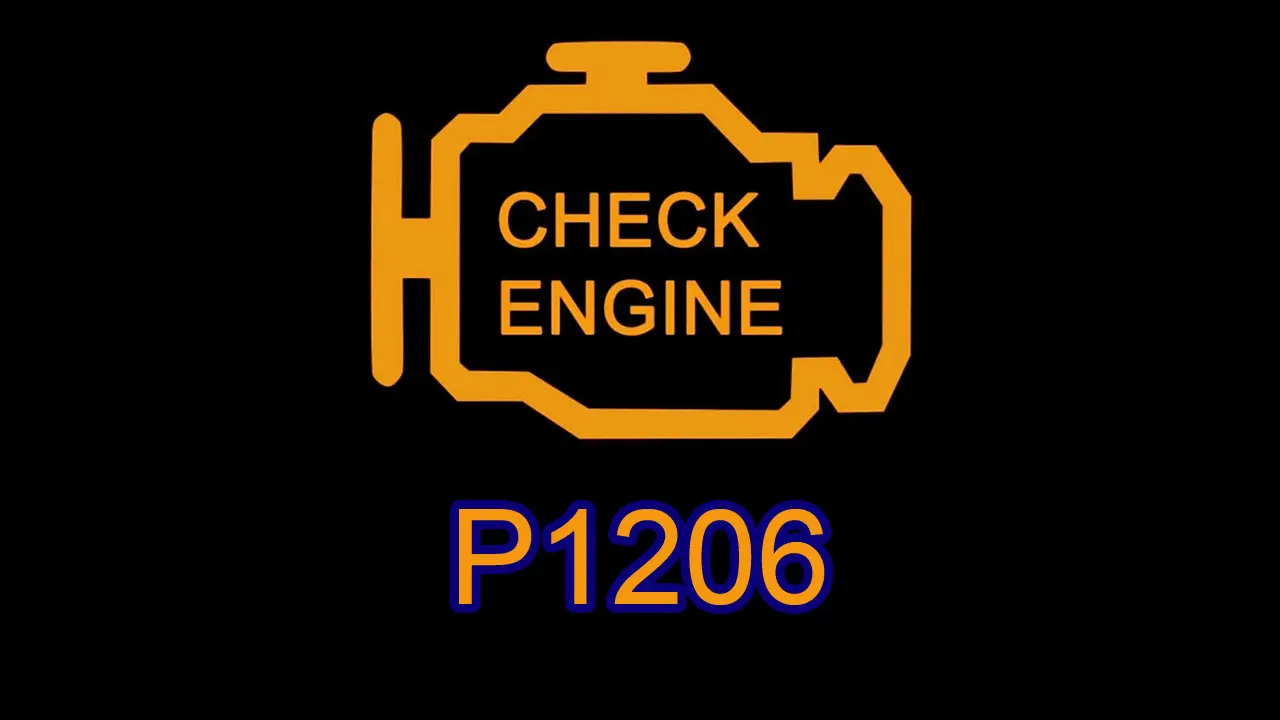
P1206 Injector Circuit Open / Short Cylinder #6
P1206 indicates that the engine control module has detected an electrical fault in the fuel injector circuit for cylinder #6, where the circuit may be interrupted, shorted, intermittently losing contact, or drawing an abnormal amount of current, with the actual cause potentially involving the injector, wiring, connector, power supply, or injector control circuit rather than the injector itself.
P1206 Is an Electrical Problem First
The wording of this code is important. P1206 does not directly say that cylinder #6 has a fuel-delivery problem or that its injector has failed mechanically.
The ECM is monitoring the electrical circuit used to control the injector on cylinder #6. When the electrical behavior of that circuit falls outside the expected range, the ECM can store this fault.
An open circuit means the intended electrical path has been interrupted. A broken wire, disconnected connector, damaged terminal, or internally open injector can create this condition.
A short circuit means current is flowing through an unintended path. Damaged insulation, wiring contacting another circuit, or an internally shorted injector can produce this type of fault.
The distinction matters because the diagnostic procedure for an open circuit is not necessarily the same as the procedure for a short.
Why the Engine May Run Rough
The injector's job is to deliver the required amount of fuel into cylinder #6 at the correct time.
If the injector cannot be electrically controlled, the cylinder may receive little or no fuel. The engine can then continue running on the other cylinders, but combustion becomes uneven.
On a six-cylinder engine, the driver may notice:
-
Rough or uneven idle
-
Engine vibration
-
Hesitation
-
Reduced acceleration
-
Poor engine performance
-
Misfire
-
Increased fuel consumption
-
Difficult starting
-
Engine stalling
-
Check Engine Light
The severity depends on whether the injector has completely stopped operating or whether the electrical fault occurs only intermittently.
Cylinder #6 Does Not Automatically Mean the Injector Is Bad
This is one of the most important points when diagnosing P1206.
The ECM does not necessarily know that the injector itself has failed. It knows that the electrical behavior of the injector circuit is incorrect.
For example, the injector may be perfectly functional while the wire between the injector and ECM has an internal break.
Similarly, a loose connector terminal can create enough resistance or intermittent contact to trigger the code without the injector itself being defective.
A technician should therefore diagnose the complete circuit before replacing expensive components.
Where the Problem Can Be
Depending on the engine and electrical architecture, the fault can be located at several points:
-
Cylinder #6 injector
-
Injector connector
-
Injector power supply
-
Injector control wire
-
Engine wiring harness
-
ECM connector
-
Engine ground
-
Injector driver inside the ECM
Heat and vibration are particularly relevant because injector wiring is normally routed through a hot and mechanically active area of the engine.
A harness that has rubbed against another component can eventually expose the conductor and create an intermittent short.
What Makes an Intermittent P1206 Difficult?
Some injector circuit faults do not occur continuously.
The engine may start normally in the morning and operate without any obvious problem. After the engine warms up, however, the fault may appear.
Another vehicle may develop the problem only during acceleration because engine movement changes the position of the wiring harness.
This is why a static continuity test can sometimes produce a misleadingly good result.
A wire may have continuity when the engine is stationary but lose electrical contact when it is bent, heated, or subjected to vibration.
Start With the Connector and Harness
Before replacing the injector, the cylinder #6 injector connector should be inspected carefully.
Look for:
-
Loose terminals
-
Bent pins
-
Corrosion
-
Oil contamination
-
Damaged locking mechanisms
-
Broken insulation
-
Stretched wires
-
Previous wiring repairs
-
Chafing against brackets or engine components
The terminals should also be checked for proper contact tension. A connector can appear correctly plugged in while a terminal inside it has lost the ability to maintain reliable electrical contact.
Electrical Testing Gives the Real Answer
The injector circuit should be tested according to the manufacturer's wiring diagram.
The technician may need to determine whether the injector has the expected power supply and whether the ECM is providing the correct control signal.
Depending on the engine design, injector control may involve a switched power supply and an ECM-controlled ground or another configuration. Therefore, universal voltage or resistance numbers should not be applied to every vehicle.
Manufacturer-specific specifications and test procedures are much more reliable.
Compare the Injector With Other Cylinders
When the engine uses similar injectors, comparing cylinder #6 with another cylinder can provide useful information.
If the other injectors have similar electrical characteristics but cylinder #6 behaves very differently, the cylinder #6 injector or its individual circuit becomes more suspicious.
However, resistance alone does not prove that an injector is mechanically healthy. An injector can have acceptable static resistance and still have an operational problem.
The electrical circuit and injector operation should therefore be evaluated together.
A Scan Tool Can Help Narrow It Down
A scan tool can provide additional clues when P1206 appears with other codes.
For example, if the ECM also reports a cylinder #6 misfire, the injector circuit should receive particular attention.
If multiple injector circuit codes appear simultaneously, however, it may be more useful to investigate a shared power supply, common ground, harness section, or ECM-related problem instead of treating every injector as a separate failure.
The pattern of the codes can sometimes be more informative than a single code by itself.
Could Low Fuel Pressure Cause P1206?
Low fuel pressure can cause poor engine operation and injector-related symptoms, but it does not by itself explain the open/short electrical circuit fault described by P1206.
A vehicle can have perfectly normal fuel pressure while having a broken injector control wire.
Likewise, an injector can be electrically controlled correctly but still have a mechanical flow problem.
This is why electrical injector codes and fuel-pressure diagnosis should not be treated as the same thing.
Could the ECM Be Responsible?
Yes, although it is usually not the first component that should be blamed.
The ECM contains the circuitry that controls the injector. A damaged injector driver can cause an abnormal electrical condition even when the injector and external wiring are good.
Before considering an ECM fault, the technician should verify:
-
Injector operation
-
Injector power supply
-
Control circuit continuity
-
Wiring condition
-
Connector condition
-
Grounds
-
Electrical load behavior
If all external components and circuits meet specification but the ECM fails to provide the required control signal, an internal driver fault becomes more plausible.
What If the Injector Has Already Been Replaced?
If a new cylinder #6 injector has been installed and P1206 returns, that is an important diagnostic clue.
Replacing the same component repeatedly without testing the circuit can waste time and money.
The next focus should be the wiring between the injector and ECM, the injector's power supply, connector terminals, and the ECM's control signal.
An intermittent wiring problem is especially worth investigating if the vehicle temporarily works normally after the injector replacement but the fault eventually returns.
Is P1206 Serious?
It can be.
If the injector is completely inoperative, cylinder #6 may continuously misfire. Continued severe misfire can increase exhaust temperatures and potentially damage the catalytic converter.
A flashing Check Engine Light, severe shaking, major power loss, or repeated stalling is a reason to avoid unnecessary driving until the fault is diagnosed.
If the engine runs normally and the fault is intermittent, the vehicle may remain driveable for a limited period, but the underlying problem should still be addressed rather than simply clearing the code.
How P1206 Is Actually Fixed
The repair depends on which part of the circuit has failed.
Possible repairs include:
-
Replacing a defective cylinder #6 injector
-
Repairing an open wire
-
Repairing a shorted wire
-
Replacing damaged connector terminals
-
Repairing a loose injector connector
-
Restoring the injector's power supply
-
Repairing an engine ground problem
-
Repairing the ECM injector driver
-
Replacing the ECM only after the control circuit has been properly verified
The correct repair is therefore determined by where the electrical fault is located, not simply by the presence of the word “injector” in the code.
A Practical Way to Think About P1206
When P1206 appears, the useful question is not simply, “Do I need a new injector?”
The better question is:
“Is cylinder #6's injector receiving the correct electrical supply and control signal, and does the injector respond correctly when commanded?”
That approach separates an injector failure from a wiring fault, connector problem, power-supply issue, and ECM driver problem.
Because P1206 specifically describes an open or short injector circuit, proving the electrical condition of the complete circuit should come before replacing major components.