TR
TR EN
EN

What Is an Electronic Parking Brake (EPB)? How Does It Work?
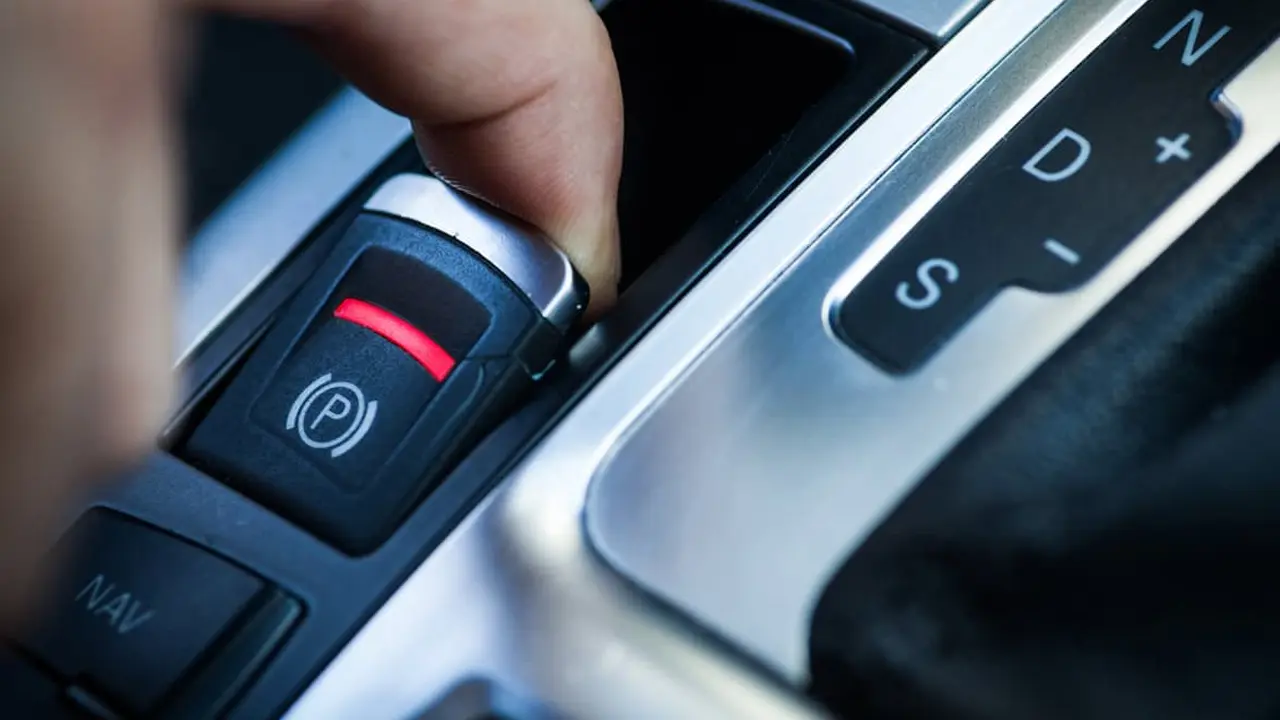
The parking brake system used in cars has changed significantly over the years. While traditional handbrakes require the driver to pull a mechanical lever or press a pedal, many modern vehicles use a button-operated system known as the Electronic Parking Brake (EPB).
An EPB replaces the traditional handbrake lever with electronic controls and electrically operated actuators. However, it is much more than simply a button. The system can work together with brake control modules, electric motors, sensors, ABS, and electronic stability control systems to apply and release the parking brake.
What Is an Electronic Parking Brake?
An Electronic Parking Brake (EPB) is a parking brake system that is electronically controlled by the driver and is designed to keep the vehicle stationary when it is parked.
With a traditional handbrake, pulling the lever mechanically operates cables connected to the rear brakes.
With an EPB, the driver generally operates a switch located on the center console or dashboard. The electronic control system processes the command and activates an electric actuator to apply the brakes.
In many modern vehicles, the electric motor is integrated directly into the rear brake caliper. Other designs may use a separate actuator and mechanical mechanism.
How Does an EPB Work?
The exact operating principle varies between vehicles, but the basic process is similar.
When the driver activates the EPB switch, the system determines that the parking brake should be applied. The electronic control unit checks the necessary conditions and then sends a command to the appropriate electric motor or actuator.
The actuator moves the braking mechanism and applies pressure to the brake pads or brake shoes.
Once the required braking force is achieved, the system holds the parking brake in position. Depending on the vehicle, the applied force can also be monitored electronically.
To release the parking brake, the driver usually presses the EPB switch while applying the brake pedal. When the necessary conditions are met, the actuator operates in the opposite direction and releases the braking mechanism.
What Are the Main Components of an EPB System?
An electronic parking brake consists of several components that work together.
The EPB switch allows the driver to send a parking-brake command.
Electric actuators convert the electronic command into mechanical movement. In many modern systems, these motors are integrated into the rear brake calipers.
The electronic control unit manages the operation of the system and processes information received from different sensors and control modules.
The ABS/ESC system communicates with the EPB in many vehicles. Information such as vehicle speed and brake status can help the system operate correctly.
Depending on the design, cables, gears, screws, and other mechanical components may also be used to transfer the movement generated by the electric motor to the braking mechanism.
What Is the Difference Between an EPB and a Traditional Handbrake?
With a traditional handbrake, the connection between the driver's hand and the braking mechanism is primarily mechanical. Pulling the handbrake lever moves cables that operate the rear brake mechanism.
With an EPB, the driver's command is transmitted electronically, and an electric actuator operates the braking mechanism.
This changes more than just the way the driver operates the parking brake. Because the EPB can communicate with other vehicle systems, it can also be integrated with functions such as automatic parking-brake application and hill-start assistance.
Does the EPB Apply Automatically?
Many modern vehicles can automatically apply the electronic parking brake, although this feature depends on the vehicle's model, equipment, and software.
For example, some vehicles automatically activate the EPB when the engine is switched off, while others require the driver to operate the EPB switch manually.
Similarly, some vehicles can automatically release the parking brake when the vehicle is started or begins to move.
In vehicles with automatic transmissions, information such as the gear position, seat-belt status, door status, engine condition, and accelerator-pedal input may be used when determining whether the parking brake should be released.
Can the EPB Be Used While the Vehicle Is Moving?
The behavior of an EPB while the vehicle is moving depends on the vehicle's design.
In many modern vehicles, pulling or holding the EPB switch while driving can be interpreted by the electronic control system as a request for controlled braking. The system may then work together with ABS and electronic stability control to help maintain vehicle control.
However, the EPB is primarily designed to keep a parked vehicle stationary. It should not be used as a normal handbrake during everyday driving.
The vehicle manufacturer's instructions should always be followed regarding emergency use of the electronic parking brake.
Can an EPB Hold a Vehicle on a Hill?
One of the main purposes of a parking brake is to prevent a parked vehicle from moving, including when it is parked on an incline.
When properly applied, an EPB can hold the vehicle stationary on a slope.
However, drivers should still follow the manufacturer's recommendations when parking on steep inclines. In vehicles with automatic transmissions, the correct use of the transmission's Park position is also important.
Is EPB the Same as Auto Hold?
No. The Electronic Parking Brake and Auto Hold are not the same system, although they can work together.
The primary purpose of the EPB is to keep the vehicle stationary when it is parked.
Auto Hold, on the other hand, temporarily maintains brake pressure when the vehicle comes to a stop. This allows the driver to remove their foot from the brake pedal while waiting at a traffic light or in traffic.
When the driver presses the accelerator, Auto Hold can release the brakes and allow the vehicle to move.
Some vehicles use related electronic brake components for both functions, but their purposes are different.
What Are the Advantages of an EPB?
There are several reasons why electronic parking brakes have become increasingly common in modern vehicles.
One of the main advantages is convenience. Instead of a large mechanical handbrake lever, the driver can operate the system using a small switch.
Removing the traditional handbrake lever can also provide more freedom when designing the center console and interior.
Another advantage is electronic integration. Because the EPB communicates with other vehicle systems, functions such as automatic activation and release can be implemented.
Depending on the system, the braking force can also be electronically controlled and monitored.
What Happens If the EPB Fails?
When an electronic parking brake develops a fault, the vehicle may display an EPB warning light or a message related to the braking system.
Depending on the nature of the problem, the parking brake may fail to apply, may not release, or may enter a limited operating mode.
The cause can be an electric actuator, wiring, electrical connections, brake caliper, sensors, or an electronic control module.
A low battery voltage can also cause various EPB warnings. In particular, problems may appear when the vehicle battery is weak or after battery replacement.
For this reason, replacing the brake caliper or electric motor immediately is not always the correct solution.
What Are the Symptoms of an EPB Fault?
Common symptoms of an electronic parking brake problem can include:
-
An EPB warning light
-
A "Parking Brake Fault" or similar warning message
-
The parking brake failing to apply
-
The parking brake failing to release
-
Unusual noises from an EPB actuator
-
Brake-system warning messages
-
EPB faults appearing after low battery voltage
-
One rear wheel failing to release properly
-
EPB, ABS, or brake-system fault codes stored in the vehicle
These symptoms do not necessarily identify the failed component by themselves.
How Is an EPB Fault Diagnosed?
The first step in diagnosing an EPB problem is usually checking the vehicle's battery voltage and basic electrical connections.
The vehicle can then be scanned using a suitable diagnostic tool. The EPB, ABS/ESC, and other relevant control modules may need to be checked.
In addition to reading fault codes, technicians can examine live data and the operating status of the system. Depending on the diagnostic equipment and vehicle, actuator tests may also be available.
The brake calipers, actuators, wiring, connectors, and mechanical components should also be physically inspected.
If the problem is limited to one wheel, the mechanical condition of the related brake caliper and actuator should be checked instead of focusing only on the electronic control unit.
What Is EPB Service Mode?
Vehicles equipped with an electronic parking brake may require a special service or maintenance mode when the rear brake pads are replaced.
The electric actuator may normally keep the brake mechanism in its operating position. During brake-pad replacement, the piston and actuator must therefore be placed in the appropriate service position.
Depending on the vehicle, this can be done using a diagnostic tool or through a specific procedure defined by the manufacturer.
Some vehicles have manual service procedures, but the correct manufacturer procedure should always be checked before servicing an electronic parking brake.
Why Is the Battery Important for an EPB?
Because an EPB relies on electric actuators and electronic control systems, the condition of the vehicle battery is important.
Low voltage can prevent the EPB from operating correctly or cause fault codes to be stored in the vehicle's control modules.
Stable voltage is particularly important during procedures such as brake-pad replacement, EPB service-mode activation, and other electronic brake-system operations.
Some programming or specialized service procedures may require an appropriate external power supply according to the manufacturer's service procedure.
Can an EPB Freeze in Cold Weather?
Having an electronic parking brake does not mean that the physical braking components cannot freeze.
Water, moisture, ice, or mechanical binding can affect the brake mechanism. If the rear brake caliper or related mechanical components are affected, the wheel may not fully release after the parking brake is disengaged.
For this reason, the mechanical condition of the brake system is just as important as the electronic part of the EPB, especially during winter.
Is It Safe to Drive With an EPB Fault?
The effect of an EPB fault on driving safety depends on the type of failure.
For example, if the parking brake simply cannot be applied, the main concern may arise when the vehicle is parked. However, if a rear brake remains mechanically stuck, the problem can affect the braking system while driving.
If the brake pedal feels abnormal, the vehicle pulls to one side, there is a burning smell, a wheel becomes excessively hot, or a serious brake-system warning appears, the vehicle should not continue to be driven until the braking system has been inspected.
Although an electronic parking brake may appear to be mainly a convenience feature, it is directly connected to the vehicle's braking system, so warning messages should not be ignored.
Will Electronic Parking Brakes Become More Common?
Electronic parking brakes have become increasingly common as electronic systems have taken a larger role in modern vehicles.
Their integration with automatic transmissions, Auto Hold, electronic stability control, advanced driver-assistance systems, and electric-vehicle technology has made electronic braking systems an increasingly important part of vehicle architecture.
An EPB should therefore not be viewed simply as a traditional handbrake operated by a button. In modern vehicles, it can be part of a larger electronic system that communicates with the braking system, vehicle control modules, and driving-assistance technologies.
For this reason, an EPB fault may require more than checking the switch or electric motor. The electrical supply, control modules, sensors, actuators, and mechanical brake components may all need to be evaluated together.