TR
TR EN
EN

How Is a Cracked Engine Block Repaired?
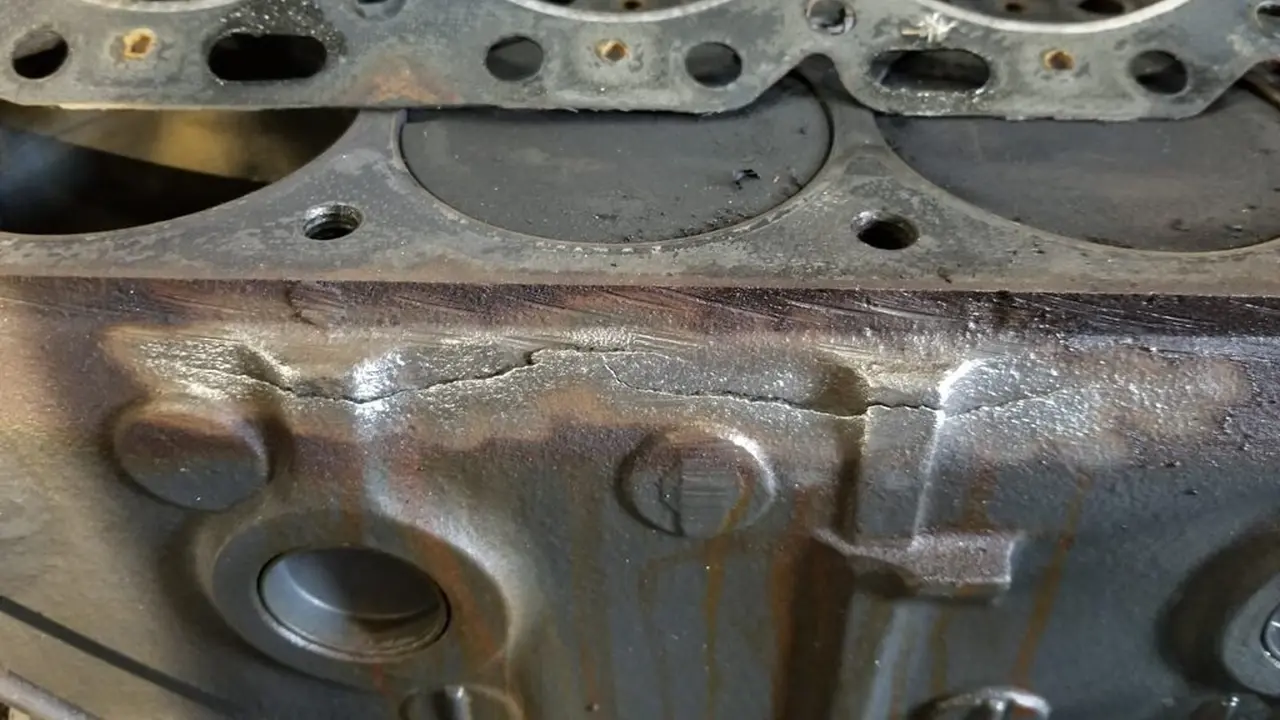
A cracked engine block is one of the more serious problems that can occur in an internal combustion engine. The engine block contains the cylinders, oil passages, coolant passages, crankshaft supports, and many of the main structural components of the engine. Therefore, a crack in the block does not always mean the engine must automatically be replaced, but the location and severity of the crack are extremely important.
Some cracks can be repaired successfully using welding, metal stitching, machining, or cylinder sleeves. However, cracks in critical structural areas may make the block uneconomical or unsafe to repair, in which case replacing the engine block may be the better solution.
Why Does an Engine Block Crack?
An engine block can crack for several different reasons. Excessive heat is one of the most common causes.
When an engine overheats severely, the metal expands beyond its normal operating range. If the temperature changes rapidly or the block is already under significant stress, cracks can develop.
Common causes include:
-
Severe engine overheating
-
Freezing coolant inside the engine
-
Incorrect or insufficient antifreeze protection
-
Cooling system failure
-
Manufacturing or material defects
-
Physical impact or accident damage
-
Incorrect engine assembly
-
Excessive tightening of certain components
-
Serious piston or connecting rod failure
-
Excessive cylinder pressure
-
Severe mechanical stress
Freezing coolant is particularly dangerous because water expands when it freezes. If coolant inside the block freezes, the resulting pressure can damage the block or cause it to crack.
What Are the Symptoms of a Cracked Engine Block?
A cracked engine block can produce different symptoms depending on where the crack is located.
Possible symptoms include:
-
Unexplained coolant loss
-
Engine overheating
-
External coolant leakage
-
Coolant entering the engine oil
-
Oil entering the cooling system
-
White smoke from the exhaust
-
Continuous bubbles in the coolant expansion tank
-
Excessive cooling-system pressure
-
Misfires
-
Difficult starting
-
Loss of engine power
-
Coolant entering a cylinder
-
Increasing engine oil level due to coolant contamination
A creamy or milky appearance in the engine oil can indicate coolant contamination, but it does not automatically prove that the engine block is cracked. A damaged cylinder head gasket or cracked cylinder head can produce similar symptoms.
For this reason, the engine block should not be condemned based only on one symptom.
How Is a Cracked Engine Block Diagnosed?
The first step is to determine whether the block is actually cracked and then identify the exact location of the crack.
The block should normally be thoroughly cleaned before inspection. Oil, coolant, dirt, and carbon deposits can hide small cracks.
A visual inspection can sometimes reveal obvious cracks, but many cracks are too small to see with the naked eye.
Cooling system or block pressure testing
Pressure testing can help identify cracks that allow coolant to escape. Depending on the location of the crack, pressure may cause coolant to appear externally or enter another part of the engine.
Magnetic particle inspection
Magnetic particle testing can be used on suitable ferrous engine blocks, particularly cast iron components. It can reveal surface and near-surface cracks that may not be visible during a normal inspection.
Dye penetrant testing
Dye penetrant inspection is useful for detecting surface cracks, particularly on non-magnetic materials such as aluminum.
Ultrasonic inspection
Ultrasonic testing can sometimes help identify defects below the surface. It can be particularly useful when a crack is suspected but cannot be clearly located through visual inspection.
The correct inspection method depends on the block material and the suspected location of the damage.
Can a Cracked Engine Block Be Welded?
Yes, some cracked engine blocks can be welded. However, engine-block welding is not as simple as filling a crack with metal.
The repair method depends heavily on the material, crack location, crack size, and stresses around the damaged area.
Aluminum engine blocks can sometimes be repaired by specialized welding techniques. The damaged area must be properly prepared, and the repair may require controlled heating and cooling to reduce the risk of distortion or additional cracking.
After welding, machining may also be necessary to restore the original dimensions and surfaces.
A repair shop should therefore determine the exact material and condition of the block before deciding to weld it.
How Are Cast Iron Engine Blocks Repaired?
Cast iron blocks require particular care because they can be difficult to weld successfully.
Improper welding can introduce additional stresses into the material and potentially create new cracks.
Depending on the location and severity of the damage, a specialist may use controlled preheating, a suitable welding process, and controlled cooling.
Another option is metal stitching.
What Is Metal Stitching?
Metal stitching is a mechanical method used to repair certain cracks, particularly in cast iron components.
Instead of applying a large amount of heat to the damaged area, specially designed metal pins or stitching elements are installed across the crack. The damaged area is then mechanically sealed and restored.
One advantage of this method is that it minimizes the thermal stress associated with conventional welding.
However, metal stitching is not suitable for every crack. The location, size, accessibility, and structural importance of the damage must first be evaluated.
Can Epoxy or Liquid Metal Repair a Cracked Engine Block?
There are products marketed as liquid metal, metal epoxy, or engine-block repair compounds. These products can sometimes be useful for small, accessible external leaks in low-stress areas.
However, they should not automatically be considered a permanent structural repair.
A crack in a cylinder wall, main bearing area, head-gasket surface, or an internal oil or coolant passage may be exposed to significant pressure and temperature changes.
Using an adhesive-type repair in such an area may only hide the problem temporarily.
For a structurally important crack, a proper mechanical repair or replacement should be considered instead.
What If the Crack Is Near a Cylinder?
A crack around a cylinder is generally more serious than a simple external coolant leak.
Depending on its location, it can allow coolant to enter the combustion chamber or cause combustion pressure to enter the cooling system.
Possible consequences include:
-
Misfires
-
Coolant consumption
-
White exhaust smoke
-
Loss of compression
-
Overheating
-
Oil contamination
-
Reduced engine performance
A cracked cylinder wall may sometimes be repaired using a cylinder sleeve, depending on the block design and the extent of the damage.
Can a Damaged Cylinder Be Sleeved?
Yes. Installing a cylinder sleeve is a common machining-based repair for certain types of cylinder damage.
The damaged cylinder is machined to accept the sleeve. The sleeve is then installed and machined to the required internal diameter.
Afterward, the cylinder may need boring and honing to restore the correct dimensions and surface finish.
This can provide a practical solution when the original cylinder wall is too damaged to remain in service.
However, the block must first be inspected to determine whether there is sufficient material and structural integrity for the repair.
What If the Crack Is Near the Main Bearings?
A crack around the main bearing area can be particularly serious because this region supports the crankshaft.
A repair in this area is not simply a matter of closing the visible crack. The alignment of the main bearing supports must also be checked.
If the repair changes the geometry of the block, machining such as line boring or line honing may be required to restore correct crankshaft alignment.
If the main bearing structure has suffered extensive damage, replacing the block may be more practical than attempting to restore it.
What If the Head-Gasket Surface Is Cracked?
The surface where the cylinder head meets the engine block must be flat and capable of maintaining a reliable seal.
If the block is cracked around the head-gasket surface, the repair may require welding or another appropriate method followed by machining.
The surface must then be checked for flatness and compared with the manufacturer's specifications.
Simply repairing the visible crack without restoring the required surface geometry can result in another head-gasket failure.
Does a Cracked Block Need Machining After Repair?
In many cases, yes.
Engine blocks are manufactured to precise dimensions. A repair can change the shape or dimensions of the surrounding material.
Depending on the location of the crack, machining may involve:
-
Cylinder boring
-
Cylinder honing
-
Deck surface machining
-
Main bearing line boring
-
Main bearing line honing
-
Sleeve installation
-
Surface finishing
-
Checking cylinder alignment
The objective is not merely to close the crack. The block must be restored to dimensions suitable for reliable engine operation.
What Happens When Oil and Coolant Mix?
If a cracked engine block allows coolant to enter the lubrication system, the engine should generally not continue to be operated.
Coolant contamination can reduce the lubricating ability of the engine oil and can damage bearings, crankshaft surfaces, camshaft components, and other lubricated parts.
If the oil level is unexpectedly increasing or the oil has become heavily contaminated with coolant, the engine should be inspected before further operation.
Running the engine with contaminated oil can turn a repairable block problem into a much more expensive complete engine rebuild.
Should You Drive a Car With a Cracked Engine Block?
Driving with a suspected serious engine-block crack is generally not advisable.
The risk becomes particularly high when there is:
-
Rapid coolant loss
-
Severe overheating
-
Coolant mixed with engine oil
-
White smoke from the exhaust
-
Significant misfire
-
Loss of compression
-
Major external coolant leakage
-
Increasing cooling-system pressure
Continuing to drive can cause secondary damage to the engine.
A vehicle with a suspected cracked block should therefore be inspected before the engine is subjected to additional load.
When Is Engine Block Replacement Better Than Repair?
Not every cracked block is worth repairing.
Replacement may be considered when:
-
The main bearing structure is severely damaged
-
There are multiple major cracks
-
The crack extends through a critical structural area
-
The cylinder area is extensively damaged
-
The block is badly distorted
-
Factory dimensions cannot be restored
-
Previous repairs have already weakened the block
-
The cost of repair and machining approaches or exceeds the cost of a suitable replacement block
The decision should be based on inspection and measurement rather than simply the presence of a crack.
Can a Used Engine Block Be Used?
A used engine block can sometimes be a practical alternative, but it should not be purchased based only on appearance.
Before installation, the block should ideally be checked for:
-
Cracks
-
Previous overheating
-
Cylinder wear
-
Cylinder dimensions
-
Main bearing condition
-
Deck flatness
-
Previous machining
-
Corrosion
-
Previous welding or stitching repairs
A seemingly good used block may already have hidden damage.
Why Finding the Cause of the Crack Matters
Repairing the crack without addressing the original cause can result in another failure.
For example, if overheating caused the block to crack, simply repairing the block is not enough. The cooling system must also be inspected.
The radiator, thermostat, water pump, cooling fans, hoses, coolant passages, expansion tank, radiator cap, and other related components may need to be checked.
Likewise, if excessive cylinder pressure or a serious internal engine failure caused the damage, the underlying mechanical problem must also be corrected.
A Cracked Engine Block Is Not Always the End of the Engine
A cracked engine block is certainly a major repair, but it does not automatically mean that the entire engine is beyond repair.
The correct solution depends on the exact location and nature of the damage.
Depending on the circumstances, a specialist may use:
-
Welding
-
Metal stitching
-
Cylinder sleeving
-
Machining
-
Surface restoration
-
Line boring or honing
-
A replacement engine block
The important point is that the repair must restore both the structural strength and the original mechanical dimensions of the block.
A professional inspection should therefore be performed before deciding whether to repair or replace the engine block. A crack that looks small from the outside can sometimes affect an important internal area, while another crack may be repairable with the correct machining and restoration process.