TR
TR EN
EN

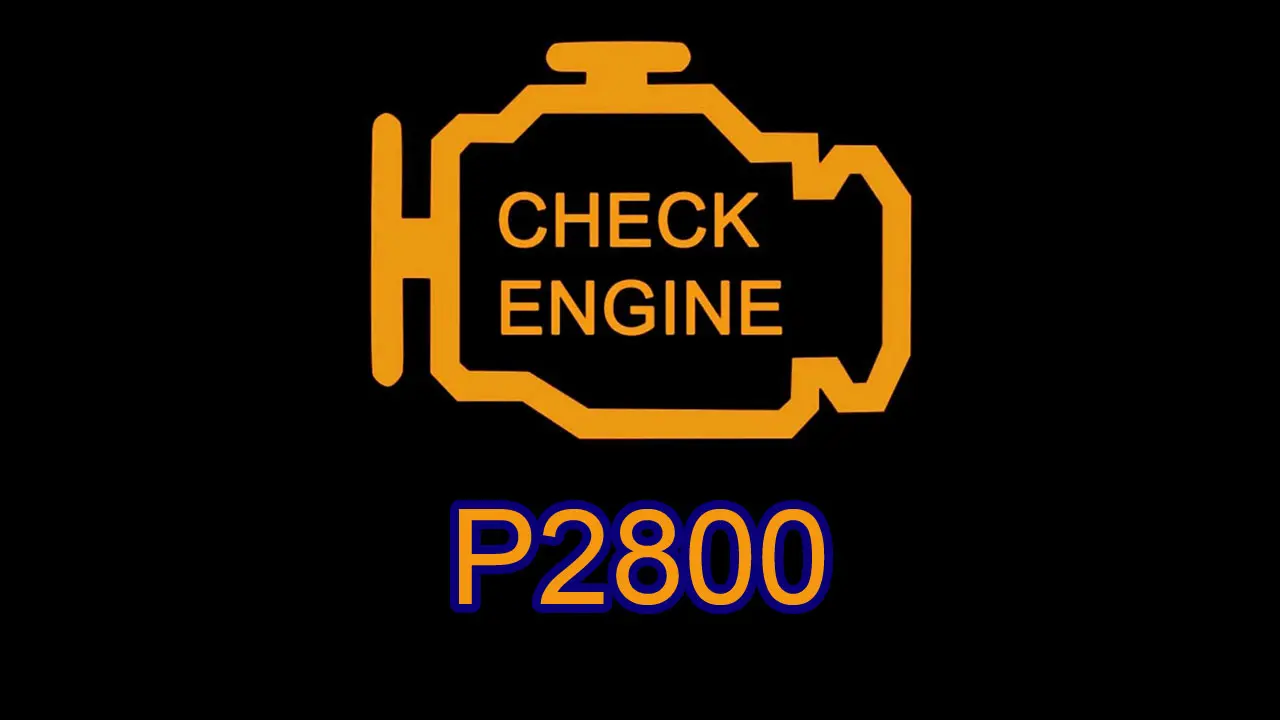
P2800: Transmission Range Sensor "B" Circuit (PRNDL Input)
The P2800 trouble code indicates a problem with the electrical circuit associated with the Transmission Range Sensor "B". This sensor is responsible for reporting the selected transmission position to the vehicle's electronic control system.
Depending on the vehicle, the signal may be monitored by the Transmission Control Module (TCM), Engine Control Module (ECM), or another related control unit. When the control system detects that the signal from the Transmission Range Sensor "B" circuit is missing, incorrect, unstable, or outside the expected parameters, it can store the P2800 diagnostic trouble code.
The transmission range sensor is particularly important because the vehicle needs to know whether the selector is in Park, Reverse, Neutral, Drive, or another available position. Incorrect range information can affect engine starting, gear selection, reverse light operation, transmission control, and other safety-related functions.
One important point is that P2800 does not automatically mean that the transmission range sensor itself is defective. The actual problem may be located in the wiring, connector, power supply, ground circuit, mechanical selector mechanism, sensor adjustment, or another part of the electrical circuit.
What Does P2800 Mean?
P2800 stands for:
Transmission Range Sensor "B" Circuit (PRNDL Input)
The PRNDL term refers to the transmission selector positions commonly represented by:
-
P — Park
-
R — Reverse
-
N — Neutral
-
D — Drive
-
L — Low
The exact design of the range-sensing system varies between manufacturers and transmission types.
Some vehicles use a dedicated transmission range sensor, while others may use several switches or multiple electrical signals to determine the selected gear position.
The "B" designation refers to a specific circuit or signal defined by the vehicle manufacturer. It does not necessarily mean that the vehicle has a completely separate physical sensor called "Sensor B."
How Does the Transmission Range Sensor Work?
The transmission range sensor monitors the position selected by the driver and sends this information to the vehicle's control system.
When the driver moves the selector from Park to Reverse, Neutral, or Drive, the corresponding electrical signal changes. The control module interprets these signals to determine the current transmission position.
This information can be used for several functions.
For example, the vehicle may require confirmation that the transmission is in Park or Neutral before allowing the engine to start. Reverse lights can also depend on the correct recognition of the Reverse position.
The transmission control system can also use this information when determining the appropriate gear-shifting strategy.
Because of this, an unreliable range sensor signal can produce symptoms that appear to be transmission-related even when the transmission's internal mechanical components are not actually damaged.
What Causes P2800?
There are several possible causes of P2800.
The transmission range sensor itself may have an internal electrical or mechanical problem. Internal contacts can become worn, contaminated, or damaged, causing the sensor to produce an incorrect or unstable signal.
However, wiring and connector problems are equally important to investigate.
Possible causes include:
-
Faulty Transmission Range Sensor "B"
-
Damaged sensor wiring
-
Broken or partially broken wire
-
Short circuit
-
Excessive resistance in the circuit
-
Poor electrical connection
-
Corroded connector terminals
-
Bent or damaged connector pins
-
Loose or pushed-back terminals
-
Water or oil contamination inside the connector
-
Poor power supply
-
Poor ground connection
-
Incorrect sensor adjustment
-
Incorrect gear selector adjustment
-
Damaged transmission wiring harness
-
Mechanical problems in the selector linkage
-
Incorrect sensor calibration
-
Rarely, a faulty transmission or engine control module
On some vehicles, problems inside the transmission can also affect the range-sensing mechanism. However, P2800 should not automatically be interpreted as an internal transmission failure.
What Are the Symptoms of P2800?
The symptoms of P2800 depend on how the system is designed and how serious the signal problem is.
Some vehicles may continue to operate almost normally while only turning on the Check Engine Light or transmission warning light.
Other vehicles may experience more noticeable problems.
Possible symptoms include:
-
Check Engine Light
-
Transmission warning light
-
Incorrect gear position displayed on the instrument cluster
-
Gear position disappearing from the display
-
Incorrect recognition of P, R, N, or D
-
Engine refusing to start
-
Reverse lights not working correctly
-
Harsh gear changes
-
Delayed gear engagement
-
Transmission entering limp mode
-
Certain gears becoming unavailable
-
Abnormal shifting behavior
-
Delayed response from the gear selector
The vehicle may sometimes recognize the selected position correctly and then lose the signal intermittently. In such cases, the problem may appear and disappear depending on temperature, vibration, selector movement, or wiring position.
Why Can P2800 Prevent the Engine From Starting?
One of the most important functions of the transmission range signal is confirming the selected transmission position before engine starting.
Many vehicles are designed to allow the engine to start only when the transmission is in Park or Neutral.
If the control system cannot reliably determine the actual transmission position, it may prevent the starter from operating or may fail to authorize the engine start.
For example, the gear selector may physically be in Park while the control module incorrectly sees another position.
In this situation, the vehicle may appear to have a starter or battery problem even though the real issue is related to the transmission range signal.
Can P2800 Cause Incorrect Gear Indication?
Yes.
If the range sensor or its circuit is producing an incorrect signal, the instrument cluster may display the wrong gear position.
For example, the driver may move the selector to Drive while the system continues to report Neutral, or the displayed position may disappear completely.
This can be an important diagnostic clue.
The actual position of the gear selector should always correspond with the position reported by the vehicle's control module.
How Is P2800 Diagnosed?
A proper diagnosis should begin by confirming that P2800 is currently stored.
A diagnostic scan tool should be used to read the complete fault-code memory, not just the P2800 code. Other codes stored in the transmission or engine control system may provide additional information.
Freeze-frame data should also be reviewed when available. This information can show the operating conditions present when the fault was detected.
The next step is to monitor the transmission range data while moving the gear selector through all available positions.
The technician should check whether the control module correctly recognizes each selected position.
For example, if the selector is physically in Drive but the scan tool reports Neutral, the range sensor circuit or the mechanical selector mechanism requires further investigation.
Inspect the Wiring and Connector
The transmission range sensor connector and wiring should be carefully inspected.
Look for:
-
Corrosion
-
Moisture
-
Oil contamination
-
Damaged insulation
-
Broken wires
-
Chafed wiring
-
Loose terminals
-
Bent terminals
-
Pushed-back terminals
-
Damaged connector locks
The wiring near the transmission deserves particular attention because it is exposed to heat, vibration, movement, and contamination.
A wire does not always have to be completely broken to cause P2800. A partially damaged conductor can develop excessive resistance and cause an intermittent signal problem.
Electrical Testing of the Sensor Circuit
Because P2800 is a circuit-related fault code, electrical testing is an important part of the diagnosis.
The technician may need to check the sensor's:
-
Power supply
-
Ground
-
Signal circuit
-
Circuit continuity
-
Resistance
-
Voltage response
-
Voltage drop under load
However, there are no universal voltage or resistance values that apply to every vehicle.
The correct measurements must be taken from the manufacturer's wiring diagrams and technical specifications for the specific vehicle and transmission.
A circuit that shows continuity with a multimeter may still have a high-resistance connection or a poor terminal that fails under actual operating conditions.
Check the Gear Selector Adjustment
P2800 can sometimes be related to a mechanical adjustment problem rather than an electronic failure.
The gear selector mechanism must be correctly aligned with the transmission.
If the linkage or selector cable has been incorrectly adjusted, the physical transmission position may not match the position being reported by the range sensor.
This possibility should be considered especially if transmission, shifter, selector cable, or related components have recently been removed or serviced.
Can Transmission Fluid Cause P2800?
Transmission fluid should not automatically be blamed for P2800.
The first diagnostic priority is the range sensor, wiring, connector, power supply, ground, and selector mechanism.
However, if there are additional symptoms such as abnormal shifting or other transmission faults, the transmission fluid level and condition should also be checked according to the manufacturer's specifications.
Simply changing the transmission fluid will not repair a broken electrical wire, damaged terminal, or faulty range sensor.
Can P2800 Be an Intermittent Problem?
Yes.
A range sensor circuit problem may not be present all the time.
For example, the vehicle may operate normally when cold but develop the fault after the transmission becomes hot. Vibration may also cause a weak electrical connection to temporarily open.
Other intermittent conditions may be related to:
-
Connector movement
-
Wiring vibration
-
Temperature changes
-
Moisture
-
Internal sensor wear
-
Mechanical selector movement
This is why a technician should not automatically assume that the vehicle is problem-free simply because the signal appears normal during one test.
How Is P2800 Repaired?
The repair depends on what the diagnosis reveals.
If the Transmission Range Sensor "B" is defective, the sensor may need to be replaced.
If the wiring is damaged, the affected section should be properly repaired or replaced.
If the connector terminals are corroded, loose, bent, or damaged, the connector or terminals may need to be repaired.
If the gear selector mechanism is incorrectly adjusted, it should be adjusted according to the manufacturer's procedure.
Some vehicles require a calibration, relearn, initialization, or adaptation procedure after the range sensor has been replaced or adjusted.
A control module should generally only be considered after the sensor, wiring, connectors, power, grounds, and mechanical components have been properly tested.
Is P2800 a Serious Fault?
The seriousness of P2800 depends on the symptoms and the vehicle's transmission control strategy.
If the vehicle continues to operate normally and accurately displays the selected gear, the problem may initially appear limited.
However, the situation becomes more important if the vehicle:
-
Does not recognize the selected gear
-
Refuses to start
-
Selects an unexpected gear
-
Enters limp mode
-
Does not operate the reverse lights correctly
-
Shows an incorrect transmission position
A vehicle whose control system cannot reliably determine the transmission position should not be treated as a normal vehicle until the fault has been diagnosed.
Can You Drive With P2800?
Whether the vehicle can be driven depends on the symptoms.
If the vehicle correctly recognizes all gear positions, shifts normally, starts normally, and only stores an intermittent P2800 code, it may still be possible to drive it to a repair facility.
However, if the displayed gear position is incorrect, the vehicle fails to recognize P, R, N, or D correctly, the engine will not start, or transmission operation becomes unpredictable, continued driving is not recommended.
The main concern is not simply the presence of the fault code but the possibility that the vehicle may not correctly identify the selected transmission position.
The Most Important Point About P2800
P2800 does not automatically mean that the transmission range sensor must be replaced.
A proper diagnosis should determine exactly where the signal problem occurs.
The sensor itself, wiring, connectors, power supply, ground circuit, selector mechanism, and sensor adjustment should all be considered.
Replacing the sensor without checking the rest of the circuit can result in unnecessary repair costs if the real problem is a damaged wire or poor electrical connection.
Final Takeaway
The P2800: Transmission Range Sensor "B" Circuit (PRNDL Input) trouble code indicates that the vehicle's control system has detected a problem with the electrical signal associated with the Transmission Range Sensor "B".
This signal is essential for correctly identifying the transmission's selected position. Because the information can affect starting authorization, gear selection, reverse lights, and transmission control, the fault should not be ignored.
The correct repair depends on the actual cause. A defective sensor, damaged wiring, poor connector contact, incorrect selector adjustment, or another electrical fault can all produce P2800.
For that reason, the code should be treated as a diagnostic starting point rather than a direct instruction to replace a specific part. Correct testing of the complete range-sensor circuit is the key to solving the problem properly.
:::
:::