TR
TR EN
EN

What Is an Intake Air Temperature (IAT) Sensor? What Are the Symptoms of Failure?
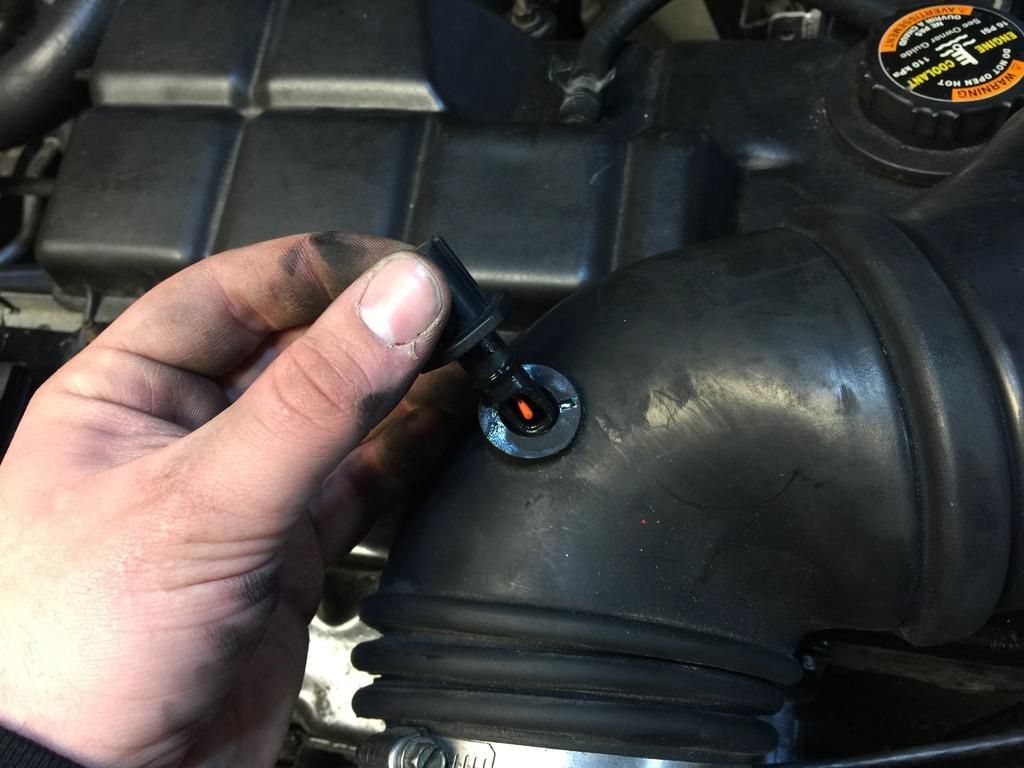
The Intake Air Temperature (IAT) sensor is a small but important engine management component that measures the temperature of the air entering the engine. The engine control unit (ECU) uses this information together with data from other sensors to determine how much fuel should be injected and how the engine should operate under different conditions.
Although the IAT sensor is relatively simple, an incorrect temperature reading can affect fuel mixture, ignition timing, engine performance, emissions, and in some vehicles turbocharger or boost control.
What Does the IAT Sensor Do?
The main job of the IAT sensor is to measure the temperature of the intake air and send this information to the ECU.
Air temperature affects air density. Cold air is denser than hot air, meaning the same volume of cold air contains more oxygen molecules. Hot air is less dense and contains less oxygen.
The ECU uses the IAT reading to compensate for these changes and maintain an appropriate air-fuel mixture.
For example, when intake air is cold, the ECU knows that the incoming air is denser and contains more oxygen. When the air is hot, the ECU adjusts its calculations accordingly.
The IAT signal can also be used for:
-
Fuel injection calculations
-
Ignition timing adjustments
-
Cold-start enrichment
-
Emissions control
-
Idle and engine-load calculations
-
Turbocharger and boost management on some engines
-
Protection against excessive intake-air temperatures
The exact strategy varies depending on the engine and ECU calibration.
How Does an IAT Sensor Work?
Most IAT sensors use an NTC thermistor.
NTC stands for Negative Temperature Coefficient. This means that the electrical resistance of the sensor decreases as temperature increases.
In simple terms:
Cold air → higher sensor resistance
Hot air → lower sensor resistance
The ECU supplies a reference voltage to the sensor circuit and monitors the resulting signal voltage. From this voltage, the ECU calculates the approximate intake-air temperature.
The sensor itself does not normally measure airflow. It only measures temperature.
This distinction is important because the IAT and MAF sensors are sometimes located together or integrated into the same housing.
Where Is the IAT Sensor Located?
The location depends on the engine design.
An IAT sensor may be installed:
-
In the air intake pipe
-
Near the air filter housing
-
In the intake manifold
-
In the throttle body area
-
In the intercooler pipe
-
Inside the MAF sensor assembly
-
As part of a combined MAP/IAT sensor
On turbocharged engines, the IAT sensor may be positioned after the intercooler so that the ECU can monitor the actual temperature of the air entering the engine.
Some vehicles therefore do not have a separate sensor labeled simply “IAT.” The intake temperature measurement may be integrated into another sensor.
What Are the Symptoms of a Bad IAT Sensor?
A faulty IAT sensor does not always cause dramatic symptoms. In some cases, the vehicle continues to run relatively normally while fuel consumption and emissions increase.
Common symptoms include:
Poor engine performance
The ECU may receive an incorrect air-temperature value and calculate the air-fuel mixture incorrectly. This can result in reduced engine response or weaker acceleration.
Increased fuel consumption
If the sensor reports an incorrect temperature, the ECU may enrich the mixture more than necessary. This can increase fuel consumption.
Rough or unstable idle
An incorrect intake-air temperature signal can affect fuel and ignition calculations, particularly at idle and during low-load operation.
Hard starting
Incorrect temperature information can cause the ECU to use an inappropriate fuel strategy during engine startup.
Hesitation during acceleration
The engine may hesitate or respond inconsistently when the accelerator is pressed, especially if the IAT signal changes incorrectly under different operating conditions.
Engine stalling
In more severe cases, incorrect sensor information can contribute to unstable engine operation and stalling.
Check Engine Light
The ECU can detect an implausible IAT signal and store a diagnostic trouble code. Depending on the vehicle, codes such as P0110, P0111, P0112, P0113, or P0114 may be associated with the IAT circuit.
Rich or lean running condition
A faulty IAT signal can influence fuel calculations and contribute to an excessively rich or lean mixture.
Poor fuel economy and increased emissions
Even when the driver does not notice a major performance problem, an inaccurate IAT signal can cause the engine to operate less efficiently.
What Causes IAT Sensor Failure?
Several problems can cause an IAT sensor to produce an incorrect reading.
Sensor contamination
Oil mist, dust, dirt, and other deposits can accumulate around the sensing element, particularly in engines with significant crankcase ventilation vapors.
Electrical problems
Damaged wiring, corroded connectors, poor grounds, loose terminals, or broken wires can interrupt or distort the IAT signal.
Internal sensor failure
The thermistor inside the sensor can deteriorate or fail, causing its resistance to no longer correspond correctly to the actual air temperature.
Intake system problems
An intake leak or incorrectly installed intake component can affect the temperature and airflow conditions around the sensor and create readings that appear abnormal.
Water or moisture
Water entering the intake system or connector can cause corrosion or electrical problems.
Physical damage
The sensor or its wiring can be damaged during air-filter replacement, intake-system repairs, engine work, or other maintenance.
IAT Sensor vs. Coolant Temperature Sensor
The IAT and ECT sensors are both temperature sensors, but they measure completely different things.
The IAT sensor measures the temperature of the incoming air.
The ECT sensor measures engine coolant temperature.
The ECU can use both readings to determine engine operating conditions.
For example, immediately after a cold engine has been sitting overnight, the IAT reading and ECT reading will often be relatively close to the surrounding ambient temperature. Once the engine starts warming up, the coolant temperature rises significantly while the intake-air temperature may remain much lower.
This comparison can be useful during diagnosis.
How Can You Test an IAT Sensor?
A scan tool is often one of the easiest ways to check the sensor.
With the engine completely cold and the vehicle having been parked long enough to reach ambient temperature, look at the IAT live data.
The displayed intake-air temperature should generally be reasonably close to the actual surrounding temperature.
If the scan tool shows an obviously unrealistic value, such as an extremely high or extremely low temperature when the engine and intake are cold, the sensor circuit deserves further investigation.
You can then monitor the IAT value while the engine runs.
The reading should change in a logical manner as intake conditions change. It should not suddenly jump between unrealistic values without a corresponding change in actual intake temperature.
Testing the Sensor With a Multimeter
The exact resistance specification must be obtained from the vehicle manufacturer's service information because different IAT sensors have different resistance-temperature curves.
As a general diagnostic principle, an NTC IAT sensor should show:
-
Higher resistance when cold
-
Lower resistance when hot
-
A smooth change in resistance as temperature changes
If the resistance remains completely open, remains extremely low, or changes erratically, the sensor may be defective.
However, testing only the sensor itself is not enough.
The wiring, connector, ECU reference voltage, ground circuit, and signal circuit should also be checked.
Why an IAT Fault Does Not Always Mean the Sensor Is Bad
This is an important point when diagnosing an IAT-related fault code.
A diagnostic code does not automatically mean that the sensor itself must be replaced.
For example, an IAT code can be caused by:
-
Broken wiring
-
Shorted wiring
-
Corroded connector
-
Poor electrical contact
-
Reference-voltage problems
-
Ground problems
-
An incorrectly installed connector
-
A damaged sensor
-
An ECU-related circuit problem
Therefore, replacing the IAT sensor without testing the circuit can result in an unnecessary repair.
IAT Sensor Problems on Turbocharged Engines
The IAT sensor can be particularly important on turbocharged engines.
Compressing air increases its temperature. The intercooler then reduces the temperature of the compressed air before it enters the engine.
The ECU can use IAT information to monitor these conditions and adjust engine operation accordingly.
An abnormally high intake-air temperature can also cause the ECU to reduce engine performance in some applications as a protective strategy.
For this reason, an IAT-related problem on a turbocharged engine may sometimes be accompanied by reduced boost or noticeable loss of power.
Can a Dirty Air Filter Cause an IAT Fault?
A dirty air filter does not normally mean that the IAT sensor itself has failed.
A severely restricted air filter can affect engine airflow and performance, but the IAT sensor is measuring temperature rather than directly measuring the amount of air entering the engine.
If an IAT fault code is present, the sensor circuit should be diagnosed rather than assuming that the air filter is responsible.
Should You Replace the IAT Sensor Immediately?
Not necessarily.
If the vehicle has an IAT-related fault, the best approach is to first check the live data and determine whether the reported temperature is plausible.
Then inspect the sensor and connector and test the electrical circuit.
If the sensor's resistance or signal does not match the manufacturer's specifications, replacement may be appropriate.
When replacing the sensor, make sure the connector is fully locked and any O-ring or sealing component is correctly installed. After the repair, the fault codes should be cleared and the vehicle should be retested.
A Simple Way to Understand an IAT Failure
Think of the IAT sensor as the ECU's thermometer for incoming engine air.
If the thermometer reports the correct temperature, the ECU can make its calculations normally.
If it reports air that is much colder or hotter than it really is, the ECU may compensate incorrectly. The result can be poor fuel economy, hesitation, rough running, difficult starting, increased emissions, or a check-engine warning.
Because the sensor itself is relatively inexpensive and its circuit is simple compared with many other engine-control components, a proper electrical and live-data test is usually the best starting point before replacing parts.