TR
TR EN
EN

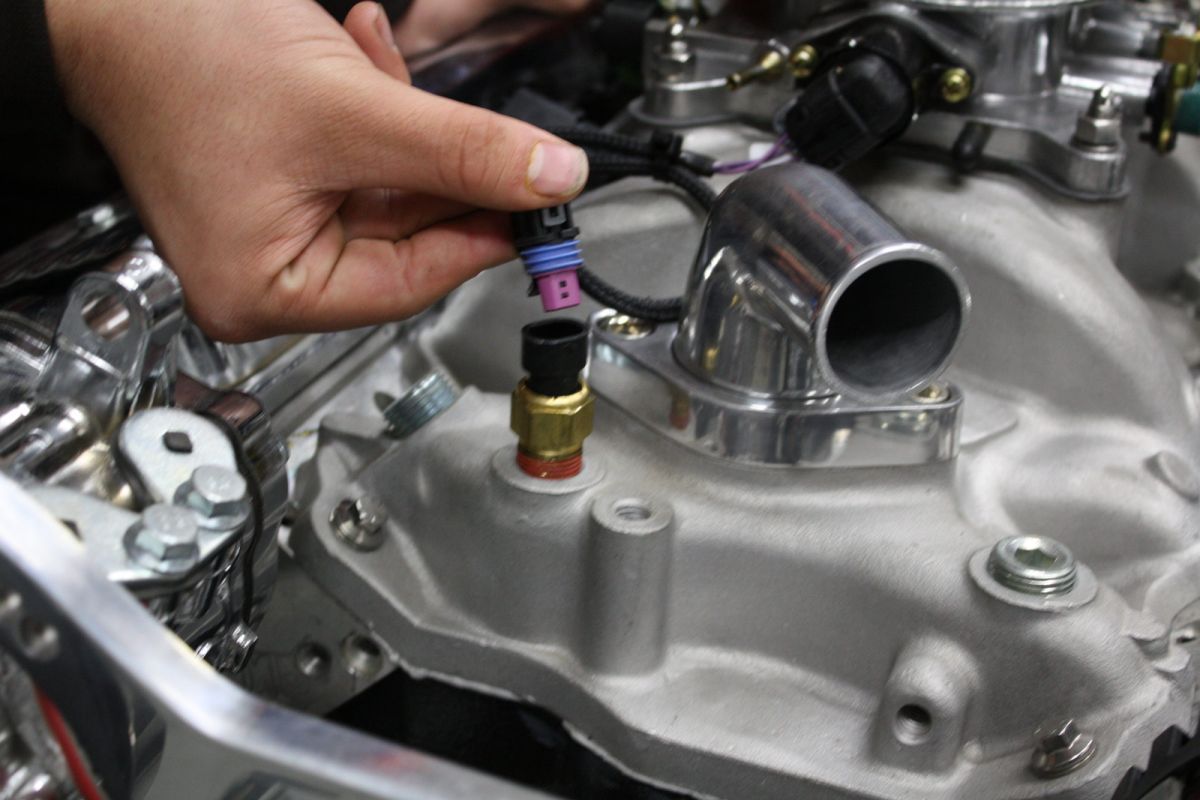
What Is an Engine Coolant Temperature (ECT) Sensor? What Are the Symptoms of Failure?
The Engine Coolant Temperature (ECT) sensor is an important part of the engine management system. It measures the temperature of the engine coolant and sends this information to the engine control unit (ECU).
The ECU uses the ECT signal to determine whether the engine is cold, warming up, or operating at normal temperature. This information affects fuel injection, ignition timing, cooling fan operation, idle speed, emissions control, and other engine functions.
Because the ECT sensor is involved in several different control strategies, a faulty sensor can cause symptoms ranging from difficult starting and increased fuel consumption to overheating warnings, unstable idle, and cooling fan problems.
How Does an ECT Sensor Work?
Most ECT sensors use a thermistor, usually an NTC (Negative Temperature Coefficient) type.
With an NTC sensor, electrical resistance decreases as coolant temperature increases.
In simple terms:
Coolant temperature rises → Sensor resistance decreases → Sensor signal changes → ECU determines engine temperature
The ECU supplies a reference voltage to the sensor circuit and monitors the resulting voltage.
The exact resistance and voltage values depend on the specific sensor and engine management system.
The sensor itself is normally installed in a location where it can accurately detect engine coolant temperature, such as the:
-
Cylinder head
-
Engine block
-
Thermostat housing
-
Coolant outlet
-
Coolant flange
Why Is the ECT Sensor Important?
The ECU needs to know the engine's temperature because a cold engine requires different operating conditions from a fully warmed-up engine.
When the engine is cold, the ECU may increase fuel delivery and adjust ignition timing to help the engine start and warm up smoothly.
As the engine reaches operating temperature, these strategies change.
The ECT signal can influence:
-
Fuel injection
-
Cold-start enrichment
-
Ignition timing
-
Idle speed
-
Cooling fan operation
-
Fuel economy
-
Emissions
-
Start-Stop operation on some vehicles
-
Automatic transmission control on some vehicles
-
Air conditioning strategies on some vehicles
This makes the ECT sensor much more important than simply being a temperature gauge sensor.
What Are the Symptoms of a Bad ECT Sensor?
A faulty ECT sensor can produce several different symptoms.
Common signs include:
-
Difficult starting
-
Rough idle
-
Increased fuel consumption
-
Poor fuel economy
-
Engine hesitation
-
Poor acceleration
-
Engine stalling
-
Cooling fan running continuously
-
Cooling fan not operating correctly
-
Incorrect temperature reading
-
Check engine light
-
Black exhaust smoke
-
Poor cold-start performance
-
Excessively high or low idle speed
The symptoms depend on whether the sensor is reporting a temperature that is too high, too low, or changing incorrectly.
Difficult Cold Starting
One of the most common symptoms of an ECT sensor problem is difficult starting, particularly when the engine is cold.
When the engine is cold, the ECU normally enriches the fuel mixture to help combustion.
If the ECT sensor incorrectly tells the ECU that the engine is already warm, the ECU may not provide enough fuel during cold starting.
This can result in:
-
Long cranking
-
Multiple starting attempts
-
Rough running immediately after starting
-
Engine stalling shortly after startup
Conversely, if the sensor incorrectly reports that the engine is extremely cold even when it is warm, the ECU may supply excessive fuel.
Increased Fuel Consumption
A faulty ECT sensor can cause the engine to run with an unnecessarily rich mixture.
For example, if the sensor continuously reports a very low coolant temperature, the ECU may behave as though the engine has not reached operating temperature.
This can result in excessive fuel enrichment.
The driver may notice:
-
Increased fuel consumption
-
Strong fuel smell
-
Dark exhaust smoke
-
Fouled spark plugs
-
Increased emissions
A faulty thermostat can produce similar symptoms because the engine may genuinely take too long to reach normal operating temperature.
Black Smoke From the Exhaust
If the ECU receives an ECT signal indicating that the engine is much colder than it actually is, it may inject more fuel than necessary.
An excessively rich mixture can produce black or dark exhaust smoke.
Other possible symptoms include:
-
Poor throttle response
-
Rough idle
-
Fuel smell
-
Carbon buildup
-
Increased fuel consumption
Black smoke should not automatically be blamed on the ECT sensor. Injector problems, fuel pressure issues, MAF problems, and other faults can also cause a rich mixture.
Cooling Fan Runs Continuously
A faulty ECT sensor can cause the cooling fan to run continuously on some vehicles.
This may happen because the ECU cannot trust the temperature signal.
As a safety strategy, some engine management systems activate the cooling fan when the temperature signal is missing or implausible.
The driver may notice that the fan starts immediately after the engine is started, even when the engine is completely cold.
This does not necessarily mean that the cooling fan motor itself is faulty.
Cooling Fan Does Not Turn On
The opposite problem can also occur.
If the ECU receives an incorrect temperature signal suggesting that the engine is cooler than it actually is, it may delay or prevent cooling fan activation.
This can contribute to overheating if the cooling system is otherwise unable to remove sufficient heat.
However, a cooling fan that does not operate can also be caused by:
-
Fan motor failure
-
Fuse failure
-
Relay failure
-
Wiring problems
-
Fan control module problems
-
ECU faults
-
Cooling system problems
The ECT sensor should therefore be tested rather than assumed to be the cause.
Incorrect Temperature Gauge Reading
On some vehicles, the ECT sensor signal is also used by the instrument cluster to display engine temperature.
A faulty sensor can therefore cause the gauge to:
-
Remain cold
-
Show unusually high temperature
-
Move erratically
-
Suddenly change position
-
Display an unrealistic temperature
However, some modern vehicles use separate sensors or separate signals for the ECU and instrument cluster.
Therefore, an incorrect dashboard temperature reading does not always mean that the ECU's ECT signal is faulty.
Engine Overheating
A faulty ECT sensor can contribute to overheating if it causes the ECU to mismanage cooling fan operation or other temperature-dependent strategies.
However, the sensor itself does not physically control the engine temperature.
Real overheating can be caused by:
-
Low coolant level
-
Coolant leaks
-
Faulty thermostat
-
Water pump failure
-
Blocked radiator
-
Cooling fan failure
-
Air trapped in the cooling system
-
Head gasket problems
-
Damaged radiator hoses
This distinction is important.
If the engine is actually overheating, replacing the ECT sensor without checking the cooling system can leave a serious problem unresolved.
Rough Idle
A faulty ECT sensor can cause an unstable idle because the ECU uses coolant temperature information when determining fuel quantity and idle control.
If the sensor reports an incorrect temperature, the engine may receive too much or too little fuel.
Possible symptoms include:
-
Fluctuating RPM
-
Engine vibration
-
Rough running
-
High idle speed
-
Low idle speed
-
Stalling
A vacuum leak, dirty throttle body, ignition fault, or fuel problem can create the same symptoms.
Engine Runs Too Rich or Too Lean
The ECT sensor has a direct influence on fuel calculation during different engine operating conditions.
If the ECU believes the engine is cold, it may enrich the mixture.
If the ECU believes the engine is warmer than it really is, it may reduce enrichment.
An incorrect temperature signal can therefore contribute to an inappropriate air-fuel mixture.
This can affect:
-
Fuel economy
-
Engine performance
-
Emissions
-
Starting
-
Idle quality
-
Catalytic converter operation
Check Engine Light
An ECT sensor problem can trigger the check engine light when the ECU detects an electrical fault or an implausible temperature reading.
Possible fault conditions include:
-
ECT circuit malfunction
-
Signal too high
-
Signal too low
-
Temperature reading outside the expected range
-
Sensor performance problems
-
Temperature changes that do not match engine operating conditions
The exact diagnostic trouble code depends on the vehicle manufacturer and engine management system.
What Causes an ECT Sensor to Fail?
ECT sensors can fail for several reasons.
Internal sensor failure
The thermistor can deteriorate over time, causing its resistance characteristics to change.
Electrical problems
Damaged wires, corroded terminals, poor grounds, or loose connectors can interfere with the sensor signal.
Coolant contamination
Old or contaminated coolant can contribute to corrosion around the sensor or its housing.
Physical damage
The sensor or its connector can be damaged during engine repairs or cooling-system work.
Poor sealing
A damaged O-ring or seal can allow coolant to leak around the sensor.
Age and thermal cycling
The sensor is repeatedly exposed to heating and cooling cycles, which can eventually affect its internal components.
Can a Thermostat Problem Look Like an ECT Sensor Failure?
Yes.
This is an important distinction when diagnosing temperature-related problems.
If the thermostat is stuck open, the engine may take too long to reach normal operating temperature.
The ECT sensor may be working perfectly, but the coolant temperature really is lower than expected.
The result can include:
-
Low engine temperature
-
Increased fuel consumption
-
Poor cabin heating
-
Longer warm-up time
-
Check engine light in some cases
If the thermostat is stuck closed, coolant circulation can be restricted and the engine may overheat.
Therefore, the actual coolant temperature should be compared with the ECT reading before replacing the sensor.
Can a Bad ECT Sensor Cause the Engine to Overheat?
It can contribute to an overheating situation, but it is not the most common cause of actual overheating.
The ECT sensor tells the ECU what temperature it believes the coolant has reached. If that information is incorrect, the ECU may fail to activate the cooling fan at the appropriate time on systems that use the ECT signal for fan control.
However, if the coolant level is low, the water pump has failed, or the thermostat is stuck closed, replacing the ECT sensor will not solve the mechanical cooling-system problem.
How Is an ECT Sensor Diagnosed?
A proper diagnosis should begin by checking the actual coolant temperature and comparing it with the temperature reported by the ECU.
A scan tool is particularly useful for this.
When the engine is completely cold, the ECT reading should generally be close to the ambient temperature.
For example, if the vehicle has been parked overnight and the outside temperature is around 20°C, an ECT reading of 80°C before starting would be suspicious.
As the engine warms up, the ECT value should increase progressively.
A technician can monitor:
-
ECT temperature
-
Engine RPM
-
Fuel trims
-
Intake air temperature
-
Cooling fan activation
-
Thermostat behavior
-
Engine operating temperature
If the ECT reading suddenly jumps from one temperature to another without a corresponding change in actual coolant temperature, the sensor or its circuit may have a problem.
Can You Test an ECT Sensor With a Multimeter?
Yes.
Because most ECT sensors use an NTC thermistor, their resistance changes according to temperature.
The sensor can be removed and tested at different temperatures, comparing the measured resistance with the manufacturer's specifications.
The electrical circuit should also be checked for:
-
Reference voltage
-
Ground
-
Wiring continuity
-
Connector condition
-
Short circuits
-
Open circuits
It is important to use the manufacturer's resistance-temperature specifications because there is no universal resistance value that applies to every ECT sensor.
Can a Scan Tool Detect a Bad ECT Sensor?
A scan tool can be very useful for identifying ECT sensor problems.
The technician can monitor the live coolant temperature while the engine warms up.
An obviously unrealistic reading can immediately provide a clue.
For example, if a cold engine shows an extremely high temperature before starting, the sensor signal may be incorrect.
Similarly, if the temperature remains fixed at one value while the engine warms up, the sensor or wiring should be investigated.
A scan tool can also help identify whether the ECU is receiving a signal that is inconsistent with other engine parameters.
Should the ECT Sensor Be Replaced Immediately After a Fault Code?
Not necessarily.
An ECT-related fault code does not automatically mean that the sensor itself has failed.
The actual cause could be:
-
Faulty ECT sensor
-
Damaged wiring
-
Corroded connector
-
Poor electrical connection
-
Coolant leak
-
Thermostat problem
-
Cooling fan problem
-
Incorrect reference voltage
-
ECU-related fault
The circuit should therefore be tested before replacing the component.
What Happens If the ECT Sensor Is Disconnected?
If the ECU detects that the ECT sensor signal is missing, many vehicles will switch to a substitute temperature value or a predefined backup strategy.
Depending on the vehicle, the ECU may assume that the engine is extremely cold or extremely hot.
The cooling fan may also run continuously as a protective strategy.
The check engine light will usually be activated.
The engine may continue running, but fuel consumption, idle quality, starting behavior, and emissions can be affected.
Disconnecting the sensor should not be considered a proper diagnostic method unless it is part of a manufacturer-approved test procedure.
ECT Sensor Replacement
If testing confirms that the ECT sensor is defective, replacement is usually a relatively simple repair.
However, because the sensor is part of the cooling system, some coolant may escape when it is removed.
The correct procedure generally involves:
-
Allowing the engine to cool completely
-
Removing the sensor carefully
-
Inspecting the connector and wiring
-
Installing the correct replacement sensor
-
Using a new seal or O-ring when required
-
Refilling coolant if necessary
-
Bleeding air from the cooling system when required
-
Checking for leaks
-
Confirming the temperature reading with a scan tool
The exact procedure varies between engines.
Can an ECT Sensor Affect Fuel Economy?
Yes.
The ECU uses coolant temperature to determine how much fuel enrichment is required during warm-up.
If the ECT sensor incorrectly reports a cold engine, the ECU may continue enriching the mixture even after the engine has reached normal operating temperature.
This can result in:
-
Increased fuel consumption
-
Poor emissions
-
Carbon deposits
-
Fouled spark plugs
-
Reduced engine performance
A thermostat that keeps the engine too cool can create similar symptoms even when the ECT sensor is working correctly.
How Can ECT Sensor Problems Be Prevented?
The ECT sensor itself generally requires little routine maintenance.
However, maintaining the cooling system can help prevent related problems.
It is important to:
-
Use the correct coolant specification.
-
Maintain the correct coolant level.
-
Replace coolant at the recommended interval.
-
Repair coolant leaks promptly.
-
Keep electrical connectors clean and secure.
-
Inspect wiring during cooling-system repairs.
-
Replace damaged seals and O-rings.
-
Do not ignore abnormal temperature readings.
If coolant contamination or corrosion is present, the underlying cooling-system problem should be corrected rather than simply replacing the sensor.
Why the ECT Sensor Is Important
The Engine Coolant Temperature sensor provides the ECU with essential information about engine temperature. This information affects fuel injection, ignition timing, cooling fan operation, emissions, idle control, and other engine-management functions.
Typical symptoms of a faulty ECT sensor include difficult starting, rough idle, increased fuel consumption, poor acceleration, stalling, incorrect temperature readings, cooling fan problems, black smoke, and a check engine light.
However, these symptoms can also be caused by a faulty thermostat, cooling-system problems, wiring faults, fuel-system issues, or other engine-management components.
For this reason, an ECT sensor should be diagnosed by comparing its electrical signal and scan-tool temperature reading with the actual engine temperature before replacing the sensor.