TR
TR EN
EN

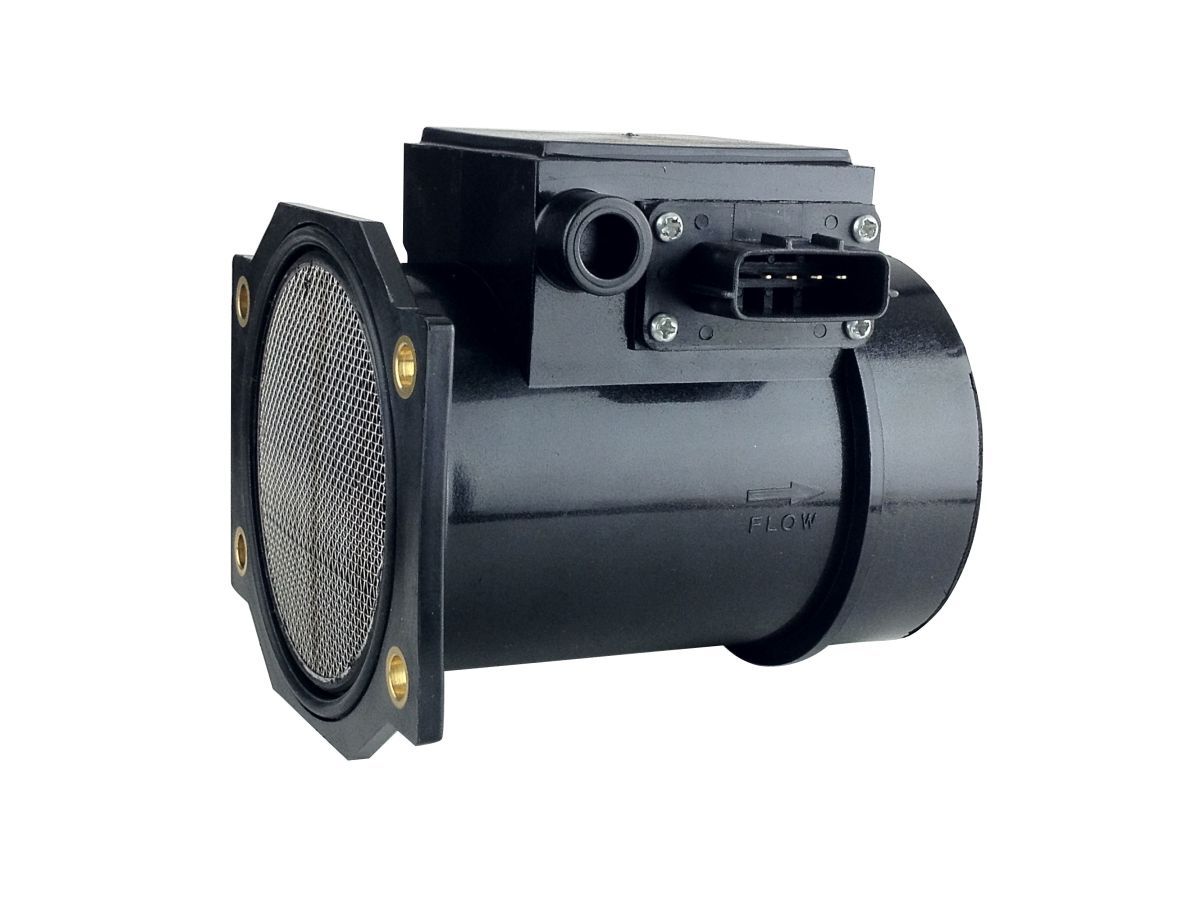
What Is a Mass Air Flow Sensor (MAF)? What Are the Symptoms of Failure?
The Mass Air Flow (MAF) sensor is an important part of a modern engine management system. It measures the amount of air entering the engine and sends this information to the engine control unit (ECU).
The ECU uses the MAF signal to determine how much fuel the engine needs. It can also use this information when controlling ignition timing, emissions systems, turbocharger operation, and other engine functions.
A faulty MAF sensor can cause problems such as poor acceleration, rough idle, increased fuel consumption, difficult starting, engine hesitation, misfires, and an illuminated check engine light.
What Does a MAF Sensor Measure?
A MAF sensor measures the mass of air entering the engine rather than simply measuring air pressure.
This distinction is important because the amount of oxygen entering the engine depends not only on the volume of air but also on its temperature and density.
The ECU needs to know how much air is actually entering the cylinders so it can calculate an appropriate amount of fuel.
The MAF sensor is normally installed in the intake system between the air filter and the throttle body.
The basic intake path is usually:
Air filter → MAF sensor → Intake hose → Throttle body → Intake manifold → Engine
Because the MAF is responsible for measuring incoming air, leaks or modifications in the intake system can affect the accuracy of the airflow calculation.
How Does a MAF Sensor Work?
Most modern MAF sensors use either a hot-wire or hot-film measuring element.
In a hot-wire system, an electrically heated wire is exposed to the incoming air. As air flows over the wire, it removes heat from it.
The sensor's electronic circuit monitors this change and determines how much air is flowing through the intake.
More airflow removes more heat, requiring more electrical current to maintain the sensing element at its target temperature.
The electronics convert this information into a signal that the ECU can use.
A typical MAF sensor may also incorporate an intake air temperature sensor, although the exact design depends on the vehicle.
Why Is the MAF Sensor Important?
The ECU needs accurate airflow information to maintain the correct air-fuel mixture.
If the engine receives more air than expected, additional fuel may be required.
If less air enters the engine, the ECU needs to reduce fuel delivery.
The MAF signal can therefore influence:
-
Fuel injection quantity
-
Fuel injection timing
-
Ignition timing
-
Throttle response
-
Turbocharger control
-
Emissions control
-
Idle quality
-
Fuel economy
A small error in the MAF signal may not immediately cause severe problems, but a significant error can noticeably affect engine operation.
What Are the Symptoms of a Bad MAF Sensor?
A failing MAF sensor can cause a wide range of symptoms.
Common signs include:
-
Rough or unstable idle
-
Poor acceleration
-
Loss of engine power
-
Hesitation
-
Increased fuel consumption
-
Difficult starting
-
Engine stalling
-
Misfires
-
Surging
-
Poor throttle response
-
Black exhaust smoke
-
Check engine light
-
Reduced turbocharger performance
The exact symptoms depend on whether the sensor is producing a signal that is too high, too low, unstable, or completely missing.
Poor Acceleration and Hesitation
One of the most noticeable symptoms of a MAF problem is poor acceleration.
When the driver presses the accelerator, the amount of air entering the engine changes rapidly. The ECU uses the MAF signal to determine how much fuel should be added.
If the MAF sensor underreports or overreports airflow, the calculated fuel quantity may not match the actual amount of air entering the engine.
The result can be:
-
Hesitation
-
Delayed throttle response
-
Weak acceleration
-
Surging
-
Loss of power, especially under load
The problem may be particularly noticeable during sudden acceleration.
Rough Idle
A faulty MAF sensor can cause an unstable idle because the ECU receives incorrect information about the amount of air entering the engine.
Possible symptoms include:
-
Fluctuating RPM
-
Engine vibration
-
Rough running
-
Idle speed that is too high or too low
-
Occasional stalling
However, rough idle is not specific to the MAF sensor.
Vacuum leaks, dirty throttle bodies, ignition problems, injector faults, PCV problems, and fuel-pressure issues can create similar symptoms.
Increased Fuel Consumption
If the MAF sensor reports more air than is actually entering the engine, the ECU may inject too much fuel.
This can produce a rich air-fuel mixture and increase fuel consumption.
Other signs of an excessively rich mixture may include:
-
Strong fuel smell
-
Black exhaust smoke
-
Carbon deposits
-
Fouled spark plugs
-
Increased emissions
On the other hand, an inaccurate low airflow reading can also cause drivability problems and abnormal fuel-trim values.
Difficult Starting
A faulty MAF sensor can make the engine harder to start because the ECU may receive incorrect information about incoming air during the starting process.
The engine may:
-
Crank for longer than normal
-
Start and immediately stall
-
Require several attempts to start
-
Run poorly immediately after starting
If starting problems occur, the MAF should be checked along with fuel pressure, ignition, engine temperature, and other relevant systems.
Engine Stalling
A severely inaccurate or intermittent MAF signal can contribute to engine stalling.
The problem may become noticeable when:
-
The accelerator is released
-
The vehicle comes to a stop
-
The engine transitions to idle
-
The air conditioning system increases engine load
-
The throttle is opened suddenly
However, stalling can have many causes, so the MAF should not automatically be blamed.
Check Engine Light
A faulty MAF sensor can trigger the check engine light when the ECU detects that the airflow signal is outside the expected range or does not correspond with other engine parameters.
Depending on the vehicle, fault codes may relate to:
-
MAF sensor circuit malfunction
-
MAF signal too high
-
MAF signal too low
-
MAF range or performance
-
Air-fuel mixture problems
-
Airflow correlation
A fault code should be evaluated together with live sensor data and the vehicle's symptoms.
What Causes a MAF Sensor to Fail?
MAF sensors can be affected by several different problems.
Dirt and contamination
The sensing element is very sensitive. Dust, oil vapor, and other contaminants can accumulate on the sensing element and change its response.
This is one reason why a poorly maintained air filter or an incorrectly installed filter can contribute to MAF problems.
Oil contamination
Some aftermarket reusable air filters use oil as part of their filtration system. If excessive filter oil enters the intake system, it can contaminate the MAF sensing element.
Electrical problems
Damaged wiring, poor grounds, corroded terminals, or loose connectors can interrupt the MAF signal.
Physical damage
The sensing element is delicate and can be damaged by improper cleaning or physical contact.
Water contamination
Water entering the intake system can potentially damage the sensor or its electrical components.
Can a Dirty MAF Sensor Cause Problems?
Yes.
A contaminated MAF sensor may no longer measure airflow accurately.
Even a relatively small amount of contamination on the sensing element can affect the sensor's response because the sensor relies on precise heat transfer.
Possible symptoms include:
-
Poor acceleration
-
Rough idle
-
Increased fuel consumption
-
Hesitation
-
Incorrect fuel trims
-
Check engine light
However, cleaning is not always the solution. If the sensing element or electronics have been damaged, the sensor may need to be replaced.
Can You Clean a MAF Sensor?
MAF sensors can sometimes be cleaned if contamination is the problem, but the process must be performed carefully.
A dedicated MAF sensor cleaner should generally be used rather than brake cleaner, carburetor cleaner, throttle-body cleaner, or other aggressive solvents.
The sensing element should never be touched with a finger, cloth, brush, or other object.
The sensor should be removed according to the manufacturer's procedure, sprayed with an appropriate MAF cleaner, and allowed to dry completely before installation.
Improper cleaning can permanently damage the sensing element.
Can an Air Filter Cause MAF Problems?
Yes.
The air filter protects the MAF sensor and engine from dust and debris.
If the filter is damaged, incorrectly installed, excessively dirty, or missing, contaminants can reach the MAF sensor.
An aftermarket oiled air filter can also cause problems if excessive oil contaminates the sensing element.
The air filter housing must also seal correctly. Air entering through an opening before or around the MAF sensor can change the conditions under which the sensor measures airflow.
Can an Air Leak After the MAF Cause Problems?
Yes, and this is an important point when diagnosing MAF-related symptoms.
Suppose the intake system is arranged like this:
Air filter → MAF → Intake hose → Air leak → Engine
The MAF measures the air passing through the sensor, but additional air enters through the leak afterward.
The ECU therefore receives an airflow measurement that does not represent all of the air actually entering the engine.
This can result in:
-
Lean fuel mixture
-
Rough idle
-
Hesitation
-
Stalling
-
Poor acceleration
-
Fuel-trim problems
A cracked intake hose or loose clamp can therefore produce symptoms that look like a faulty MAF sensor.
Can a MAF Sensor Cause Misfires?
A faulty MAF sensor can contribute to engine misfires if it causes the ECU to calculate an incorrect air-fuel mixture.
If the engine receives too much or too little fuel relative to the actual airflow, combustion may become unstable.
However, common causes of misfires also include:
-
Spark plugs
-
Ignition coils
-
Fuel injectors
-
Low fuel pressure
-
Vacuum leaks
-
Low compression
-
Valve problems
-
Incorrect ignition timing
A misfire code alone does not mean the MAF sensor needs to be replaced.
MAF Sensor Problems on Turbocharged Engines
The MAF sensor can be particularly important on turbocharged engines because airflow changes significantly as boost builds.
The ECU uses airflow information together with pressure and temperature data to determine how the engine is operating.
A faulty MAF can contribute to:
-
Poor boost response
-
Loss of power
-
Hesitation
-
Excessive or insufficient fueling
-
Limp mode
-
Increased fuel consumption
Turbocharged engines may also use MAP sensors in addition to a MAF sensor.
The two sensors measure different things and can be used together to provide the ECU with a more complete picture of intake conditions.
What Is the Difference Between MAF and MAP?
MAF and MAP sensors are often confused because both provide information about the intake system, but they measure different parameters.
MAF — Mass Air Flow
Measures the mass of air entering the engine.
MAP — Manifold Absolute Pressure
Measures the absolute pressure inside the intake manifold.
A vehicle may use a MAF sensor, a MAP sensor, or both depending on its engine-management strategy.
A MAF sensor directly measures incoming airflow, while the ECU can use MAP data together with other parameters to estimate engine load and airflow.
How Is a MAF Sensor Diagnosed?
A proper MAF diagnosis should begin with a visual inspection.
The technician should check:
-
Air filter condition
-
Air filter housing
-
Intake hoses
-
Hose clamps
-
MAF connector
-
Wiring
-
Ground connections
-
Intake leaks
-
Sensor contamination
A scan tool can then be used to examine live MAF data.
The airflow reading should respond logically as engine speed and load change.
At idle, the airflow should be relatively stable. When the throttle is opened, airflow should increase.
During acceleration, the MAF value should rise according to engine speed and load.
The exact values vary considerably depending on engine displacement, engine design, RPM, atmospheric conditions, and operating temperature.
For this reason, there is no single MAF reading that can be considered correct for every engine.
Can a MAF Sensor Be Tested With a Multimeter?
Some MAF sensors can be checked electrically with a multimeter, but a simple voltage test does not always provide enough information to determine whether the sensor is working correctly.
The technician may check:
-
Power supply
-
Ground
-
Signal circuit
-
Reference voltage where applicable
-
Wiring continuity
A scan tool is often more useful because it allows the MAF signal to be monitored while the engine is running.
The sensor should produce a smooth and logical response as engine load changes.
An erratic signal, an implausible reading, or a signal that does not respond correctly to changes in airflow can indicate a problem.
The manufacturer's wiring diagram and specifications should always be used for electrical testing.
What Happens If the MAF Sensor Is Unplugged?
On many vehicles, disconnecting the MAF sensor causes the ECU to recognize that the sensor signal is missing.
Depending on the engine-management system, the ECU may then use a backup or substitute airflow calculation based on other sensors and programmed values.
The engine may continue to run, and in some cases it may even appear to run better if the original MAF signal was severely inaccurate.
However, this does not prove that the MAF sensor is faulty.
Unplugging the sensor changes the ECU's operating strategy, so the resulting change in engine behavior should not be treated as a definitive diagnostic test.
Should a MAF Sensor Be Replaced Immediately?
Not necessarily.
A MAF-related fault code does not automatically mean that the sensor itself has failed.
The actual cause could be:
-
Dirty sensing element
-
Air filter problem
-
Intake leak
-
Wiring fault
-
Poor electrical connection
-
Incorrect sensor installation
-
Contamination
-
ECU-related problem
Replacing the MAF without checking these possibilities can result in unnecessary expense.
A proper diagnosis should confirm that the sensor's electrical supply, ground, signal, intake conditions, and live data are all correct.
Can a Bad MAF Damage the Engine?
A faulty MAF sensor does not normally cause immediate mechanical engine damage, but prolonged operation with an incorrect air-fuel mixture can create secondary problems.
An excessively rich mixture can increase carbon deposits and potentially damage the catalytic converter.
An excessively lean mixture can increase combustion temperatures and, under certain conditions, contribute to detonation or other engine problems.
For this reason, persistent MAF-related symptoms should not be ignored.
MAF Sensor Replacement
If testing confirms that the MAF sensor has failed, replacement is usually straightforward.
The correct sensor must be selected for the specific engine and ECU calibration.
After installation, the technician should verify:
-
Correct sensor installation
-
Proper connector engagement
-
No intake leaks
-
Normal airflow readings
-
Normal fuel trims
-
Proper engine operation
Some vehicles may require fuel-trim or airflow-related adaptations to be reset after replacement, depending on the engine management system.
How Can MAF Sensor Problems Be Prevented?
A few maintenance practices can help reduce the risk of MAF problems.
The air filter should be replaced at the recommended interval and installed correctly.
The intake system should remain properly sealed, and damaged hoses should be replaced promptly.
When servicing the MAF sensor, the sensing element should never be touched or cleaned with unsuitable chemicals.
If an aftermarket oiled air filter is used, excessive oiling should be avoided.
It is also important to investigate any repeated check engine light, unusual fuel consumption, hesitation, or loss of power instead of simply replacing parts.
Why the MAF Sensor Is Important
The MAF sensor provides the ECU with direct information about the amount of air entering the engine. This information is fundamental to calculating fuel delivery and maintaining proper engine operation.
Typical MAF failure symptoms include rough idle, hesitation, poor acceleration, increased fuel consumption, difficult starting, stalling, misfires, loss of power, and a check engine light.
However, these symptoms can also be caused by intake leaks, dirty air filters, wiring problems, ignition faults, fuel-system problems, and other engine-management components.
For this reason, a MAF sensor should be diagnosed using its electrical signals and live airflow data rather than being replaced solely because the engine exhibits symptoms associated with airflow measurement problems.