TR
TR EN
EN

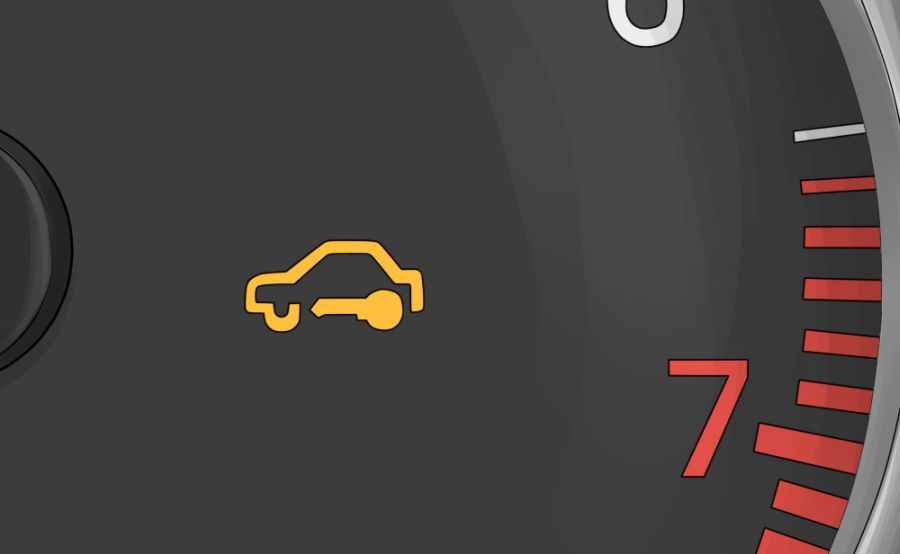
Why Does the Immobilizer Light Come On?
The immobilizer is one of the vehicle's most important security systems. It prevents the engine from starting unless the vehicle recognizes an authorized key or key card.
When the immobilizer system detects a problem, the immobilizer warning light may illuminate on the instrument cluster. Depending on the vehicle, the light may appear as a key symbol, padlock symbol, car-and-key symbol, or security indicator.
A brief illumination when the ignition is switched on can be completely normal. The important situation is when the light remains illuminated, flashes continuously, or appears together with a no-start condition.
What Does the Immobilizer Do?
The immobilizer prevents the engine from being started with an unauthorized key.
When you attempt to start the vehicle, the immobilizer system communicates with the key's transponder or electronic identification system. If the key is recognized, the system authorizes engine starting.
Depending on the vehicle, the immobilizer may communicate with:
-
The key or key card
-
Immobilizer antenna
-
Body control module
-
Engine ECU
-
Instrument cluster
-
Keyless entry system
-
Steering lock
-
Start button
If authorization fails, the engine may crank without starting, or the starter may not operate at all.
Is the Immobilizer Light Always a Sign of a Fault?
No.
On many vehicles, the immobilizer/security light comes on briefly when the ignition is switched on. The system performs a self-check and the light goes out after the key is successfully recognized.
This is generally normal.
A problem should be suspected when:
-
The light stays on continuously
-
The light flashes rapidly
-
The light remains on after the engine starts
-
The vehicle refuses to start
-
A "Key Not Detected" message appears
-
The immobilizer light appears together with other electronic warnings
The exact behavior depends on the vehicle manufacturer and immobilizer system.
Weak or Dead Key Battery
One of the simplest causes of a key-related warning is a weak key battery.
This is particularly relevant for vehicles with keyless entry and Start & Stop systems.
A weak battery can cause:
-
Key recognition problems
-
"Key Not Detected" warnings
-
Intermittent starting problems
-
Reduced remote locking range
-
Immobilizer-related warnings
However, the key battery does not always directly power the transponder used for immobilizer authorization. Some systems can still recognize the key even when the remote-control battery is completely discharged.
Many manufacturers provide an emergency key-recognition position where the key card or remote must be placed near a specific area of the vehicle.
Vehicle Battery Voltage Is Too Low
The vehicle's 12-volt battery can also cause immobilizer-related warnings.
Modern vehicles depend on several electronic control modules communicating with each other before the engine can start.
When battery voltage becomes very low, communication between modules may become unreliable.
Possible symptoms include:
-
Immobilizer light
-
Multiple warning lights
-
Key recognition problems
-
Start button not responding
-
Instrument cluster resetting
-
Clicking from relays
-
Engine failing to start
This is why battery voltage should be checked before assuming that the immobilizer itself has failed.
The Vehicle Does Not Recognize the Key
If the immobilizer cannot identify the key correctly, it may prevent engine starting.
Possible reasons include:
-
Damaged key
-
Faulty transponder
-
Key programming problem
-
Immobilizer antenna failure
-
Communication problem
-
Strong electromagnetic interference
-
Fault in the vehicle's keyless system
If a spare key is available, testing the vehicle with the spare key is a useful diagnostic step.
If one key works normally while another does not, the problem is more likely to be related to the key rather than the vehicle itself.
Immobilizer Antenna Failure
The vehicle uses an antenna or reader to detect the key's transponder.
Depending on the vehicle, this antenna may be located around:
-
Ignition switch
-
Start button
-
Steering column
-
Center console
-
Key card storage area
A damaged antenna or antenna wiring can prevent the vehicle from recognizing an otherwise valid key.
In this situation, replacing the key battery may not solve the problem.
Start & Stop Button Problems
Vehicles with an electronic Start & Stop button rely on several systems to authorize starting.
If the start button or its circuit does not work correctly, the vehicle may not complete the starting authorization process.
A faulty button, connector or wiring can therefore produce symptoms that appear to be related to the immobilizer.
The same applies to the brake or clutch pedal switch. If the vehicle does not receive the correct pedal signal, it may refuse to start even though the key has been recognized correctly.
Brake or Clutch Pedal Switch Fault
Some vehicles require the brake pedal to be pressed before starting, while manual-transmission vehicles may require the clutch pedal to be depressed.
If the corresponding switch fails, the vehicle may not authorize engine starting.
For example, the dashboard may display:
"Press Brake to Start"
even though the driver is already pressing the pedal.
This does not necessarily indicate an immobilizer failure. The starting authorization system may simply not be receiving the correct pedal signal.
Immobilizer and ECU Communication Problems
The immobilizer system must communicate with the engine ECU before the ECU allows the engine to start.
If communication between the relevant control modules is interrupted, the vehicle may behave as though an unauthorized key is being used.
Possible causes include:
-
Wiring problems
-
Poor electrical connections
-
Low battery voltage
-
Communication network faults
-
Body control module problems
-
ECU problems
-
Incorrect module configuration
A diagnostic scanner capable of communicating with the vehicle's body and security modules is often required to identify these problems.
ECU or Body Control Module Problems
The immobilizer system is often integrated with or communicates closely with the body control module and engine ECU.
A module problem can cause:
-
Immobilizer warning
-
No-start condition
-
Key recognition problems
-
Communication fault codes
-
Start button problems
-
Multiple unrelated warning lights
In some cases, the module may require programming, configuration or synchronization rather than replacement.
Replacing an ECU without identifying the actual cause can therefore create additional programming and immobilizer-matching problems.
Lost Key Programming
If a key has been replaced, added or improperly programmed, the vehicle may not recognize it as an authorized key.
This can happen after:
-
Key replacement
-
ECU replacement
-
Body control module replacement
-
Immobilizer module replacement
-
Incorrect programming
-
Module synchronization problems
A properly programmed key should be recognized by the vehicle's security system.
Water or Moisture Damage
Water entering the vehicle can cause immobilizer and body-control problems.
Electrical modules, connectors and wiring located in areas exposed to moisture can develop:
-
Corrosion
-
Poor electrical contact
-
Short circuits
-
Intermittent communication problems
If an immobilizer warning appears after heavy rain, flooding, windshield leakage or interior water exposure, the electrical system should be inspected carefully.
Damaged Wiring or Connectors
A damaged immobilizer circuit can produce intermittent problems that are difficult to reproduce.
Possible causes include:
-
Broken wires
-
Loose terminals
-
Corroded connectors
-
Previous electrical repairs
-
Damaged antenna wiring
-
Poor ground connections
An electrical inspection can sometimes reveal a simple wiring problem that would otherwise be mistaken for a failed ECU or immobilizer module.
Why Does the Immobilizer Light Flash?
A flashing immobilizer light can have different meanings depending on the manufacturer.
In some vehicles, a flashing security light when the vehicle is locked or switched off is normal and indicates that the anti-theft system is active.
In other situations, rapid or continuous flashing may indicate that the key has not been recognized.
Therefore, the behavior of the light should always be interpreted according to the specific vehicle's operating instructions.
The Immobilizer Light Is On but the Engine Starts
If the engine starts normally but the immobilizer/security light remains illuminated, the system may have detected a stored fault.
Possible causes include:
-
Intermittent key recognition
-
Communication fault
-
Low battery voltage
-
Faulty antenna
-
Control module fault
-
Previous failed starting attempt
The vehicle may continue to operate normally, but the fault should still be diagnosed rather than ignored.
The Immobilizer Light Is On and the Engine Does Not Start
This is the more serious situation.
If the immobilizer light remains on or flashes and the engine refuses to start, possible causes include:
-
Key not recognized
-
Faulty key
-
Weak vehicle battery
-
Immobilizer antenna failure
-
ECU communication problem
-
Body control module fault
-
Incorrect key programming
-
Wiring or connector problem
-
Start authorization failure
The first step should be determining whether the starter motor is actually turning the engine.
If the engine does not crank, the starting authorization system, battery, starter circuit and pedal switches should be checked.
If the engine cranks normally but does not start, the immobilizer is only one possible cause and the fuel, ignition and engine-management systems should also be investigated.
How Is an Immobilizer Fault Diagnosed?
The most reliable method is to use a diagnostic scanner that can access the vehicle's security and body-control modules.
The technician can check:
-
Immobilizer fault codes
-
Key recognition status
-
Key programming status
-
ECU authorization
-
Body control module communication
-
Antenna status
-
Start authorization
-
Battery voltage
-
Communication network faults
Live data can be particularly useful when the problem occurs intermittently.
Simply clearing the fault codes without finding the reason for the immobilizer warning is unlikely to provide a permanent solution.
Can an Immobilizer Fault Be Reset?
Sometimes a temporary immobilizer warning can disappear after the underlying problem is corrected and the vehicle is restarted.
For example, if the problem was caused by low battery voltage, restoring the correct battery voltage may allow the system to operate normally again.
However, a genuine key-programming, module synchronization or communication problem generally requires proper diagnostic equipment.
There is no universal immobilizer reset procedure that works for every vehicle.
Can You Drive With the Immobilizer Light On?
If the engine is running normally and the warning light has appeared unexpectedly, the vehicle may continue to operate, but the problem should be diagnosed as soon as practical.
The bigger concern is that an intermittent immobilizer problem may eventually prevent the vehicle from starting.
If the vehicle already has a no-start condition, repeatedly attempting to start it may not solve the underlying problem.
Do Not Replace the ECU Immediately
An immobilizer warning can tempt owners to replace expensive electronic components such as the ECU or body control module.
This should not be the first step.
Before replacing an ECU, the technician should verify:
-
Key operation
-
Key programming
-
Vehicle battery voltage
-
Immobilizer antenna
-
Start button
-
Brake or clutch switch
-
Fuses
-
Wiring
-
Grounds
-
Module communication
-
Stored diagnostic codes
A simple battery, connector or key-recognition problem can produce symptoms that look much more serious than they actually are.
Immobilizer Problems Are Often Part of a Larger Starting System
The immobilizer light does not necessarily mean that the immobilizer module itself is defective.
The warning can be triggered by a problem anywhere in the authorization chain, including the key, antenna, battery, wiring, body control module, engine ECU or communication network.
For this reason, the most effective diagnosis is to determine whether the key is recognized, whether the vehicle authorizes starting, whether the starter operates, and whether the engine actually cranks.
This approach prevents unnecessary replacement of expensive electronic components and makes it much easier to identify the real cause of an immobilizer warning.