TR
TR EN
EN

What Is an Engine Oil Leak? What Causes Engine Oil Leaks?
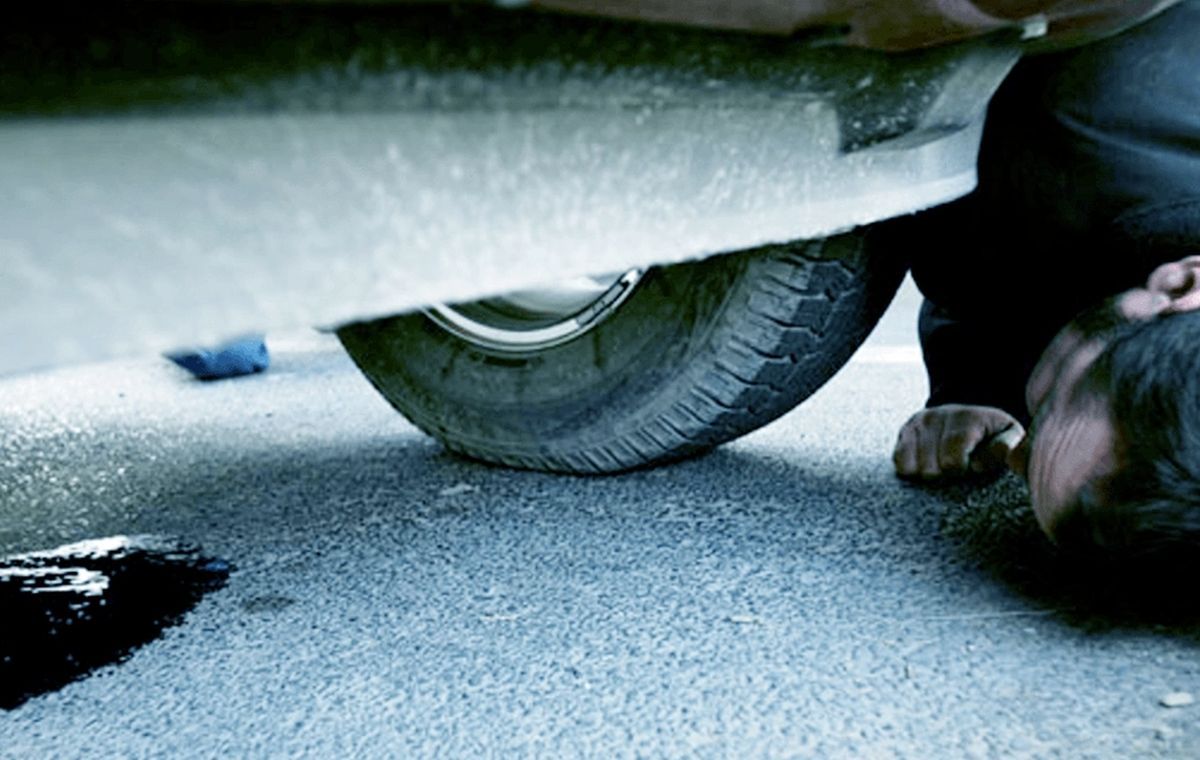
An engine oil leak is one of the most common problems that can occur in a vehicle. Sometimes it appears as only a few drops on the ground, while in other cases oil can spread across the engine, transmission housing, underbody, or suspension components.
A small oil leak may seem harmless, but ignoring it can eventually lead to low engine oil level, oil contamination of other components, or even serious engine damage.
The important point is that not every oily area around an engine means the same thing. The actual source of the leak needs to be identified before replacing any gasket or seal.
What Does Engine Oil Do?
Engine oil has several important functions inside an engine.
It:
-
Lubricates moving components
-
Reduces friction and wear
-
Helps remove heat
-
Carries contaminants toward the oil filter
-
Helps protect internal components from corrosion
-
Provides hydraulic pressure for some variable valve timing systems
-
Helps seal the gap between piston rings and cylinder walls
Because engine oil circulates through many parts of the engine under pressure, there are numerous potential places where a leak can develop.
What Does an Engine Oil Leak Look Like?
Engine oil is usually amber or golden when relatively fresh.
As it ages, it normally becomes darker and can eventually appear brown or almost black.
A typical engine oil leak may appear as:
-
Wet, oily areas around the engine
-
Drops underneath the vehicle
-
Dark stains on the driveway
-
Oil accumulated on the engine or subframe
-
Oil around the oil filter
-
Oil around a valve cover
-
Oil collecting underneath the engine
However, color alone does not prove that the fluid is engine oil.
Transmission fluid, hydraulic fluid, and other automotive fluids can have similar colors.
The Most Common Cause: Aged Gaskets and Seals
One of the most common reasons for engine oil leakage is deterioration of a gasket or seal.
Engine gaskets and seals are exposed to:
-
High temperatures
-
Oil
-
Pressure
-
Engine vibration
-
Thermal expansion and contraction
-
Time and aging
Rubber seals can harden, shrink, crack, or lose their elasticity.
Gaskets can also become brittle or lose their ability to maintain a reliable seal.
Eventually, oil can begin to seep through the sealing surface.
Valve Cover Gasket Leaks
The valve cover is located at the upper part of the engine and seals the area around the valvetrain.
Its gasket can deteriorate over time.
A valve cover gasket leak may cause:
-
Oil around the top of the engine
-
Oil running down the side of the cylinder head
-
Burning-oil smell
-
Smoke if oil reaches a hot exhaust component
-
Oil around ignition coils or spark plug wells on some engines
A valve cover leak is sometimes mistaken for a head gasket problem because oil may run down the side of the engine.
However, these are very different repairs.
Oil Pan Gasket or Sealant Leaks
The oil pan is located underneath the engine and stores the engine oil when the engine is not circulating it.
Depending on the engine design, the oil pan may use:
-
A conventional gasket
-
Liquid gasket/sealant
-
A molded sealing component
A leak can develop because of:
-
A deteriorated gasket
-
Incorrect sealant application
-
Improper tightening
-
A damaged oil pan
-
A warped sealing surface
-
Loose or damaged fasteners
Oil from the pan area will often appear underneath the engine, but even this does not necessarily mean the pan itself is the source.
Oil from higher up can run downward and collect around the pan.
Oil Drain Plug Leaks
The oil drain plug is removed during an engine oil change.
Its sealing washer or gasket is extremely important.
A leak can occur when:
-
The sealing washer is reused when it should be replaced
-
The plug is not tightened correctly
-
The plug is over-tightened
-
The threads are damaged
-
The sealing surface is damaged
-
The wrong drain plug is installed
A small leak around the drain plug may produce drops underneath the vehicle shortly after an oil change.
If an oil leak begins immediately after an oil service, the drain plug and oil filter should be among the first areas inspected.
Oil Filter Leaks
The oil filter is another common leak point.
Possible causes include:
-
Loose oil filter
-
Incorrectly tightened filter
-
Damaged filter gasket
-
Old gasket left behind during filter replacement
-
Incorrect filter
-
Damaged filter housing
-
Cracked filter housing
-
Double-gasket installation
A particularly important mistake is installing a new spin-on filter without noticing that the old rubber gasket remained attached to the engine.
This can create an improper seal and cause a significant oil leak.
Oil Filter Housing Leaks
Some engines use a separate oil filter housing or oil filter module.
The housing may contain:
-
O-rings
-
Gaskets
-
Oil cooler connections
-
Filter seals
-
Pressure-related components
As these seals age, oil can begin to seep from the housing.
Because the housing may be located high on the engine, oil can travel downward and make the leak appear to come from a completely different location.
Front Crankshaft Seal Leak
The crankshaft rotates through the engine block, so the front of the crankshaft requires a seal.
A worn front crankshaft seal can allow oil to escape.
Possible symptoms include:
-
Oil around the crankshaft pulley area
-
Oil on the front of the engine
-
Oil contamination around the timing-drive area
-
Oil dripping toward the lower engine
A crankshaft seal should not be replaced simply because oil is found near the front of the engine. The actual source should be confirmed first.
Rear Main Seal Leak
The rear main seal is located where the crankshaft exits the engine toward the transmission.
A leak from this seal can cause oil to appear between the engine and transmission.
This repair can be more involved because accessing the seal may require significant disassembly and, depending on the vehicle, removal of the transmission.
However, oil in the engine-transmission junction does not automatically prove that the rear main seal is leaking.
Other leaks can travel into the same area.
Camshaft Seal Leaks
Engines with camshaft seals can develop leaks as the seals age.
Oil may appear around:
-
Camshaft ends
-
Timing covers
-
Cylinder-head areas
-
Timing-belt components
This is particularly important on engines using a timing belt.
If engine oil contaminates a timing belt, the belt and related components may require inspection or replacement because oil can affect the belt material.
Timing Cover Leaks
The timing system is usually protected by a cover or housing.
Depending on the engine design, the timing area may contain several sealing surfaces.
A leak can develop around:
-
Timing cover gasket
-
Liquid sealant
-
Camshaft seals
-
Crankshaft seal
-
Oil passages
-
Cover joints
Timing-cover leaks can be difficult to diagnose because oil can spread over the front of the engine.
Oil Pressure Sensor or Switch Leaks
Oil-pressure sensors and switches are installed directly into an engine oil passage.
If the sensor body or its sealing point develops a problem, engine oil can escape.
The sensor itself may not always be the only possibility. The sealing washer, O-ring, thread seal, or surrounding housing may be responsible.
Because these components can be relatively small, an apparently large oil leak may sometimes originate from a surprisingly small fitting.
Variable Valve Timing System Leaks
Modern engines often use variable valve timing systems controlled by oil pressure.
Depending on the design, oil can reach:
-
Camshaft actuators
-
Solenoid valves
-
Oil-control valves
-
Seals
-
Electrical connectors
A leaking VVT solenoid or seal can create oil contamination around the cylinder head.
Some VVT systems also use oil pressure as part of their control strategy, so an oil leak can sometimes be accompanied by other engine-management symptoms.
Turbocharger Oil Leaks
Turbocharged engines have oil supplied to the turbocharger for lubrication and cooling.
Possible problems include:
-
Damaged oil feed line
-
Leaking oil return line
-
Failed seals
-
Cracked connections
-
Loose fittings
-
Turbocharger bearing problems
However, finding oil around a turbocharger does not automatically mean the turbocharger itself has failed.
The feed and return lines, gaskets, fittings, and ventilation system should also be inspected.
PCV System Problems Can Cause Oil Leaks
The Positive Crankcase Ventilation (PCV) system controls crankcase pressure by routing blow-by gases back into the intake system.
If the PCV system becomes restricted or malfunctions, crankcase pressure can increase.
Excessive crankcase pressure may encourage oil to escape through seals and gaskets that would otherwise remain relatively dry.
Possible signs include:
-
Oil seepage from multiple locations
-
Increased oil consumption
-
Oil contamination in the intake system
-
Whistling or unusual PCV noises
-
Unstable engine operation on some engines
This is why a recurring oil leak may sometimes have an underlying crankcase-ventilation problem.
Overfilling the Engine With Oil
Too much engine oil can contribute to leakage and other problems.
If the oil level is significantly above the manufacturer's specified range, crankcase behavior can change and oil can be forced toward areas that are not designed to contain excessive pressure or volume.
An overfilled engine can also experience:
-
Oil aeration
-
Increased oil consumption
-
Oil entering areas where it should not
-
Increased crankcase pressure in certain conditions
The correct oil level should always be checked according to the manufacturer's procedure.
High Crankcase Pressure
Crankcase pressure can increase for reasons other than a faulty PCV valve.
For example:
-
Excessive piston-ring blow-by
-
Worn cylinder walls
-
Blocked ventilation passages
-
Incorrect PCV operation
-
Engine wear
If an engine repeatedly develops leaks at multiple seals, simply replacing each seal may not solve the underlying problem.
The crankcase ventilation system and engine condition should also be evaluated.
Oil Leaks After an Oil Change
An oil leak that appears immediately after an oil change deserves particular attention.
Possible causes include:
-
Loose drain plug
-
Damaged drain-plug washer
-
Loose oil filter
-
Damaged filter seal
-
Double-gasket installation
-
Oil spilled during service
-
Incorrect oil filter
-
Damaged filter housing
Not every oily area after an oil change is a genuine leak. Oil spilled during servicing can remain on the engine or underbody and later drip onto the ground.
The area should be cleaned and monitored to determine whether fresh oil is actually escaping.
Oil Leaks After Engine Repair
Oil leakage can also occur after engine work.
Potential causes include:
-
Incorrectly installed gasket
-
Reused damaged seal
-
Incorrect sealant application
-
Incorrect tightening sequence
-
Incorrect bolt torque
-
Damaged sealing surface
-
Pinched O-ring
-
Contaminated sealing surface
-
Incorrect replacement part
If a leak begins shortly after an engine repair, the recently disturbed areas should be carefully inspected.
Can an Oil Leak Be Caused by a Loose Bolt?
Yes.
Bolts that secure covers, pans, housings, or other components can contribute to leakage if they are improperly tightened.
However, tightening bolts blindly is not a good repair strategy.
Over-tightening can be just as problematic as under-tightening.
For example, excessive tightening can:
-
Distort an oil pan
-
Damage threads
-
Crush a gasket
-
Distort a cover
-
Damage sealing surfaces
Fasteners should be tightened according to the manufacturer's specified procedure and torque.
Can an Oil Pan Be Damaged by a Pothole?
Yes.
An exposed oil pan can be damaged by:
-
Potholes
-
Road debris
-
Curbs
-
Incorrect lifting
-
Ground contact
-
Previous impact
A dented oil pan may not always leak immediately.
If the pan is severely deformed, it can also reduce the clearance around the oil pickup or affect oil circulation depending on the engine design.
Any significant impact underneath the engine should therefore be inspected.
Why Does Oil Sometimes Leak Only When the Engine Is Running?
Some leaks are much easier to detect while the engine is operating.
When the engine runs:
-
Oil circulates
-
Oil pressure increases
-
Moving components rotate
-
Temperature rises
-
Seals expand
-
Crankcase pressure changes
A component may therefore remain relatively dry while the engine is off but begin leaking once the engine reaches operating conditions.
This is one reason a proper leak diagnosis may require running the engine and observing the system under controlled conditions.
Why Does Oil Leak More When the Engine Is Hot?
Temperature changes the behavior of engine oil and sealing materials.
When the engine reaches operating temperature, oil flows differently than it does when cold.
At the same time, metal components expand and rubber seals change their flexibility.
A seal that barely leaks when cold may begin to seep noticeably when the engine is hot.
This does not necessarily mean that the hot engine itself caused the leak. The temperature may simply make an existing sealing problem easier to observe.
Oil Seepage vs. a Serious Oil Leak
Not every oily area requires the same level of urgency.
Light seepage may appear as:
-
Slight dampness around a gasket
-
A thin oily film
-
No visible drops
-
Stable oil level
A significant leak may produce:
-
Fresh oil dripping regularly
-
Oil spots underneath the vehicle
-
Rapidly falling oil level
-
Oil covering the engine or underbody
-
Smoke from oil reaching hot components
The distinction is important because a small seepage can sometimes be monitored while a rapidly leaking engine requires immediate attention.
Why Is Low Engine Oil Dangerous?
An oil leak becomes particularly serious when the oil level drops below the safe operating range.
Insufficient oil can reduce lubrication to components such as:
-
Crankshaft bearings
-
Connecting-rod bearings
-
Camshafts
-
Valve-train components
-
Timing components
-
Turbocharger bearings
Severe oil starvation can cause rapid and expensive engine damage.
If the oil-pressure warning light comes on while driving, the situation should be treated much more seriously than a simple visible seepage.
The engine should be stopped as soon as it is safe to do so and the cause should be investigated.
Can an Oil Leak Cause an Oil Pressure Warning?
Potentially, yes.
If enough oil is lost, the oil level can eventually become low enough to affect oil circulation and pressure.
However, an oil-pressure warning can also have other causes, including:
-
Faulty oil-pressure sensor
-
Wiring problems
-
Oil pump problems
-
Blocked oil pickup
-
Incorrect oil viscosity
-
Internal engine wear
-
Oil filter problems
-
Other lubrication-system faults
Therefore, an oil-pressure warning should not automatically be interpreted as simply “the engine is leaking oil.”
Can Engine Oil Leak Onto the Exhaust?
Yes, and this can produce smoke and a strong burning-oil smell.
For example, oil leaking from an upper-engine gasket can run onto a hot exhaust manifold or other exhaust component.
Possible symptoms include:
-
Burning-oil smell
-
Smoke from the engine compartment
-
Oil residue around the exhaust area
Oil contacting very hot components should be addressed promptly because it can create a fire risk in extreme circumstances.
Why Does Oil Appear Under the Transmission?
This is a common diagnostic trap.
Oil can travel from the engine toward the transmission before dripping onto the ground.
Possible sources include:
-
Rear main seal
-
Valve-cover or upper-engine leak
-
Oil-pan leak
-
Transmission fluid leak
-
Engine oil cooler or housing
-
Other nearby seals
Therefore, oil underneath the transmission does not automatically mean the transmission is leaking.
The technician should trace the fresh oil back to its highest source.
Can Engine Oil Leak Into the Spark Plug Wells?
On some engines, yes.
A valve cover gasket or spark-plug tube seal can allow engine oil to enter the spark plug wells.
This may cause:
-
Oil around the ignition coil
-
Misfires
-
Rough running
-
Difficulty starting
-
Ignition component contamination
The oil itself may not have entered the combustion chamber. It can simply accumulate around the outside of the spark plug.
Can an Oil Leak Cause a Misfire?
Sometimes.
Oil leaking into spark plug wells can interfere with ignition components.
Oil contamination around ignition coils or plug boots may contribute to:
-
Misfires
-
Rough idle
-
Hesitation
-
Check Engine Light
However, most misfires are not caused by oil leaks, so the ignition and fuel systems still need to be diagnosed properly.
How Is an Engine Oil Leak Diagnosed?
The first step is usually to determine where fresh oil is coming from.
A useful diagnostic process includes:
-
Check the engine oil level.
-
Inspect the engine and underbody.
-
Clean accumulated oil when necessary.
-
Run the engine and observe the suspected areas.
-
Look for fresh oil rather than old residue.
-
Trace the oil upward to its highest wet point.
-
Inspect gaskets, seals, plugs, housings, and oil lines.
-
Check the PCV/crankcase ventilation system when appropriate.
-
Use UV dye if necessary and compatible with the oil and vehicle.
-
Confirm the actual source before replacing parts.
The goal is to identify the origin of the leak, not simply the place where oil happens to be dripping.
Why Cleaning the Engine Helps With Diagnosis
An engine covered with old oil can make leak diagnosis extremely difficult.
Old oil and dirt can spread across multiple components.
After cleaning the affected area appropriately, fresh oil becomes much easier to identify.
However, cleaning should be performed carefully.
Water or cleaning chemicals should not be sprayed indiscriminately around electrical connectors, ignition components, sensors, or other sensitive areas.
Can Stop-Leak Products Fix an Engine Oil Leak?
Oil-stop-leak products may temporarily reduce certain minor seepage problems in some applications, but they should not be considered a substitute for proper diagnosis and repair.
A stop-leak product cannot properly repair:
-
A cracked oil pan
-
A damaged seal
-
A broken housing
-
A severely damaged gasket
-
Excessive crankcase pressure
-
A mechanical component problem
In some cases, additives can also create compatibility or deposit-related concerns.
The correct repair is to address the actual cause.
How Much Does an Engine Oil Leak Matter?
The severity depends on the rate of oil loss and the source.
A small seepage around an aging gasket is very different from oil pouring out of a damaged oil pan.
You should pay particular attention if:
-
The oil level is falling
-
Oil is dripping rapidly
-
The oil-pressure warning appears
-
Smoke comes from the engine compartment
-
Oil reaches the exhaust
-
The engine develops abnormal mechanical noise
-
A large puddle forms underneath the vehicle
These symptoms indicate that the vehicle should be inspected promptly.
Should You Keep Adding Oil?
Adding the correct engine oil can temporarily maintain the oil level if a vehicle has a minor leak, but adding oil is not a repair.
If the engine is losing oil, the leak should be located and repaired.
If you continue driving while simply replacing the lost oil, the underlying problem can become progressively worse.
Never assume that an engine is safe simply because the dipstick shows an acceptable level immediately after topping up.
Engine Oil Leaks and Oil Consumption Are Different
An engine can lose oil in two fundamentally different ways.
External oil leakage means oil escapes from the engine and reaches the outside.
Internal oil consumption means oil enters the combustion process or another part of the engine where it is consumed or burned.
An engine that is losing oil does not necessarily have an external leak.
If there are no visible leaks but the oil level continues to fall, possible causes include:
-
Piston-ring wear
-
Valve-stem seal problems
-
Turbocharger oil leakage
-
PCV-related oil consumption
-
Other internal engine conditions
The distinction is important during diagnosis.
When Should an Engine Oil Leak Be Considered Serious?
An oil leak deserves urgent attention when the rate of loss is high or when it is associated with other symptoms.
Especially concerning signs include:
-
Oil-pressure warning light
-
Rapid oil-level loss
-
Large puddles
-
Oil spraying from the engine
-
Smoke from the engine compartment
-
Burning-oil smell
-
Abnormal engine noise
-
Overheating
-
Oil contamination of the timing belt
-
Oil reaching hot exhaust components
Continuing to drive with significant oil loss can turn a relatively simple gasket or seal repair into a major engine repair.
Final Thoughts
Engine oil leaks can originate from many different places, including the valve cover gasket, oil pan, drain plug, oil filter, filter housing, crankshaft seals, camshaft seals, timing cover, oil-pressure sensor, VVT components, turbocharger oil lines, and other sealing points.
A visible oil stain does not automatically identify the failed component.
Oil can travel considerable distances across an engine and underbody before reaching the ground. For that reason, replacing the component directly above the puddle is not always the correct solution.
The best approach is to identify the fluid, clean the affected area when necessary, locate the highest point where fresh oil appears, inspect the relevant gasket or seal, and also consider underlying problems such as excessive crankcase pressure.
Most importantly, do not ignore a rapidly developing oil leak or an oil-pressure warning. Engine oil is essential for lubrication and cooling, and severe oil loss can result in catastrophic engine damage.