TR
TR EN
EN

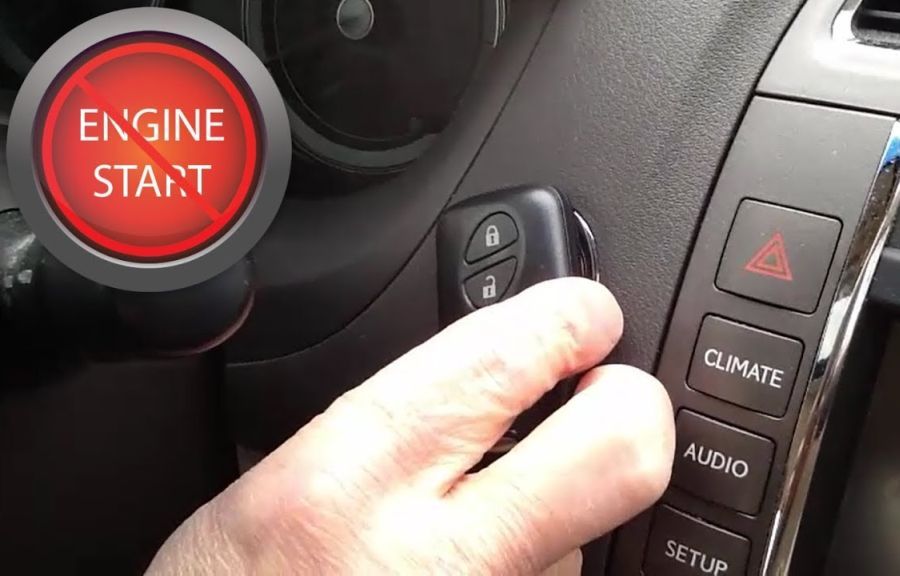
Start & Stop Engine Start Button Failures
Modern vehicles equipped with a Start & Stop engine start button use an electronic system instead of a conventional mechanical ignition switch. The button works together with the vehicle's keyless entry system, immobilizer, brake or clutch pedal switch, steering lock, body control module and engine ECU.
When one of these components develops a fault, the engine may fail to start, the Start & Stop button may not respond, or the vehicle may display messages such as “Press Brake to Start,” “Key Not Detected,” “Steering Lock Fault,” or “Check Start & Stop System.”
The problem is not always caused by the button itself. In many cases, the button is simply the part that receives the driver's command while another component prevents the engine from starting.
How Does the Start & Stop Button Work?
When the driver presses the engine start button, the vehicle's electronic control modules check several conditions before allowing the engine to start.
Depending on the vehicle, the system may verify:
-
Key or key-card authorization
-
Brake pedal position
-
Clutch pedal position on manual transmissions
-
Automatic transmission selector position
-
Steering lock status
-
Vehicle battery voltage
-
Immobilizer authorization
-
Engine ECU communication
-
Body control module communication
If the required conditions are satisfied, the system activates the ignition and starter circuit.
This means that a faulty Start & Stop button is only one possible cause of a starting problem.
Common Start & Stop Button Failure Symptoms
A defective button or a related system fault can produce different symptoms.
The most common ones include:
-
Pressing the button does nothing
-
Engine does not crank
-
Engine cranks but does not start
-
Start button works intermittently
-
Ignition switches on but starter does not operate
-
Start button illumination does not work
-
Key not detected warning
-
Brake or clutch pedal warning
-
Steering lock warning
-
Immobilizer warning
-
“Check Start & Stop System” message
-
Engine starts only after pressing the button several times
The exact symptoms depend on which part of the starting system has failed.
Start Button Does Not Respond
One of the clearest symptoms is when the Start & Stop button appears to do nothing.
You may press the button and see no reaction, or the vehicle may remain in the same ignition state.
Possible causes include:
-
Failed start button
-
Damaged button connector
-
Broken wiring
-
Low vehicle battery voltage
-
Faulty body control module
-
Immobilizer problem
-
Key recognition problem
-
Blown fuse
-
Communication problem between control modules
Before replacing the button, the vehicle's power supply and electronic systems should be checked.
Engine Does Not Crank
If the dashboard comes on normally but the starter motor does not operate when the Start button is pressed, the problem may not be the button.
Possible causes include:
-
Weak battery
-
Faulty starter motor
-
Starter relay problem
-
Starter fuse problem
-
Brake pedal switch
-
Clutch pedal switch
-
Transmission selector position sensor
-
Immobilizer authorization failure
-
Wiring problem
-
Body control module fault
On some vehicles, the ECU will not activate the starter unless all required starting conditions are satisfied.
Engine Cranks but Does Not Start
This situation is different from a starter problem.
If the starter motor turns the engine normally but the engine does not start, the Start & Stop button itself is unlikely to be the primary cause.
The problem could instead involve:
-
Fuel delivery
-
Ignition
-
Crankshaft position sensor
-
Camshaft position sensor
-
Immobilizer
-
Engine ECU
-
Fuel pressure
-
Injector operation
This distinction is important because replacing the Start button would not normally fix an engine that cranks but does not start.
Start Button Works Intermittently
An intermittent Start & Stop button problem can be particularly difficult to diagnose.
The vehicle may start normally several times and then suddenly fail to respond.
Possible causes include:
-
Worn internal button contacts
-
Loose connector
-
Oxidized electrical contacts
-
Damaged wiring
-
Low battery voltage
-
Poor ground connection
-
Electronic module communication problems
If pressing the button repeatedly eventually allows the vehicle to start, the button itself should be inspected, but the surrounding circuit should also be tested.
Start Button Illumination Does Not Work
Many vehicles have an illuminated Start & Stop button.
If the illumination suddenly stops working, the problem may be related to the button's internal LED or the electrical supply.
However, the illumination circuit and the actual start command circuit are not necessarily the same.
Therefore, a button that does not illuminate is not automatically a button that cannot start the engine.
“Press Brake to Start” Warning
If the vehicle displays “Press Brake to Start” even though the brake pedal is being pressed, the brake pedal switch may be the problem.
The Start & Stop system uses the brake pedal signal to determine whether the driver is intentionally attempting to start the engine.
Possible causes include:
-
Faulty brake pedal switch
-
Incorrect switch adjustment
-
Damaged wiring
-
Connector problem
-
Body control module fault
On automatic-transmission vehicles, this signal can be particularly important because the system generally requires the brake pedal to be depressed before starting.
Clutch Pedal Switch Problems
Manual-transmission vehicles commonly require the clutch pedal to be depressed before the engine can start.
If the clutch switch does not provide the correct signal, pressing the Start button may produce no response.
Possible symptoms include:
-
Engine does not crank
-
Start button appears to work but starter remains inactive
-
“Press Clutch” warning
-
Intermittent starting
-
Cruise-control-related problems on some vehicles
The clutch switch and its wiring should therefore be checked before replacing the Start button.
Key Not Detected
A Start & Stop system depends on communication between the vehicle and the key or key card.
A “Key Not Detected” message can prevent the engine from starting.
Possible causes include:
-
Weak key battery
-
Key battery completely discharged
-
Faulty key
-
Radio-frequency interference
-
Faulty keyless-entry antenna
-
Vehicle battery problem
-
Immobilizer or body-control-system fault
Many vehicles provide an emergency method for starting the engine when the key battery is weak. The exact procedure varies by manufacturer.
Weak Vehicle Battery
A weak 12-volt battery is one of the most commonly overlooked causes of electronic starting problems.
Modern vehicles contain numerous electronic modules that must communicate before the engine can start.
When battery voltage drops too low, you may experience:
-
Start button not responding
-
Random warning lights
-
Key recognition problems
-
Clicking from relays
-
Instrument cluster resets
-
“Check system” messages
-
Intermittent starting problems
A battery that can still illuminate the dashboard is not necessarily healthy enough to operate the starting system correctly.
Faulty Start Button Connector
The button is connected to the vehicle's wiring through an electrical connector.
A loose, damaged or corroded connector can cause intermittent operation.
This may happen after:
-
Dashboard repairs
-
Interior trim removal
-
Electrical work
-
Water intrusion
-
Previous button replacement
The connector should be inspected before replacing electronic control modules.
Wiring Problems
Broken or damaged wiring can produce symptoms that look exactly like a failed Start button.
Wiring problems can result from:
-
Mechanical damage
-
Poor previous repairs
-
Connector corrosion
-
Water intrusion
-
Rodent damage
-
Loose terminals
-
Broken wires near moving or stressed harness sections
An electrical continuity and voltage test can help identify these problems.
Steering Lock Problems
Many keyless vehicles use an electronic steering lock.
The vehicle may prevent starting if the steering lock cannot confirm that it has released correctly.
Possible symptoms include:
-
Steering lock warning
-
Start button not responding
-
Engine does not crank
-
Key recognition appears normal but starting is blocked
A steering lock fault may therefore be mistaken for a Start button failure.
Immobilizer Problems
The immobilizer prevents unauthorized engine starting.
If the vehicle cannot authenticate the key correctly, the Start button may work normally but the engine will not be authorized to start.
Possible causes include:
-
Faulty key
-
Immobilizer antenna problem
-
Body control module fault
-
Communication failure
-
Low system voltage
-
ECU or immobilizer synchronization problem
An immobilizer-related fault should be diagnosed with a suitable diagnostic scanner.
Start Button Replacement Is Not Always the Solution
One of the most important points when diagnosing a Start & Stop system is that a starting problem does not automatically mean the button is defective.
The button is only one part of a larger starting authorization system.
Before replacing it, a technician should check:
-
Battery voltage
-
Relevant fuses
-
Brake or clutch pedal signal
-
Key recognition
-
Immobilizer status
-
Steering lock
-
Starter relay
-
Starter motor
-
Wiring
-
Connector condition
-
Diagnostic trouble codes
-
Communication between control modules
This prevents unnecessary parts replacement.
How Is a Start & Stop Button Fault Diagnosed?
A diagnostic scanner can be particularly useful because the starting system may involve several electronic modules.
A technician can check whether the vehicle recognizes:
-
The Start button command
-
The brake pedal signal
-
The clutch pedal signal
-
The key
-
The immobilizer authorization
-
The transmission selector position
-
The steering lock status
Live data can be especially useful for intermittent faults.
For example, if the scanner shows that the brake pedal remains OFF even while the pedal is physically pressed, the problem may be related to the brake switch or its circuit rather than the Start button.
Can a Start Button Be Repaired?
In some cases, the button can be replaced as a separate component.
If the internal contacts are worn or the button mechanism is damaged, replacement is usually more appropriate than attempting an internal repair.
However, some vehicles integrate the button into a larger electronic assembly. In those cases, the repair procedure depends on the vehicle's design.
After replacement, some vehicles may require programming, initialization or configuration, while others simply require installation of the correct part.
What Should You Check Before Calling the Button Faulty?
If the engine does not start, a few basic observations can help narrow down the problem.
Check whether:
-
The dashboard turns on normally.
-
The Start button illuminates.
-
The key is recognized.
-
A “Key Not Detected” message appears.
-
The brake or clutch warning appears.
-
The starter motor makes a sound.
-
The engine cranks.
-
The steering lock releases.
-
The vehicle battery is sufficiently charged.
-
Other electrical systems work normally.
These observations can help distinguish a Start button problem from a battery, immobilizer, pedal switch or starter problem.
When Should the Vehicle Be Inspected?
A Start & Stop system should be diagnosed if the vehicle:
-
Frequently fails to start
-
Requires several button presses
-
Shows intermittent key recognition
-
Displays immobilizer warnings
-
Produces random electronic warnings
-
Fails to recognize the brake or clutch pedal
-
Does not release the steering lock
-
Completely ignores the Start button
If the vehicle suddenly refuses to start, avoid repeatedly pressing the button for long periods. First check the battery, key recognition and warning messages, then have the starting authorization system properly diagnosed.
A Start & Stop button may look like a simple switch, but in modern vehicles it is part of a much larger electronic starting system. Correct diagnosis therefore requires checking the complete circuit and the signals that allow the vehicle to authorize engine starting, rather than replacing the button based on symptoms alone.